
Baby found in Tri-City landfill 37 years ago reburied after DNA testing
AI-generated summary reviewed by our newsroom.
- Othram tested more than a dozen samples but DNA was too degraded.
- Leach said chemicals the body was stored in degraded the DNA.
- Richland officials continue to seek anyone with information and provided a police number.
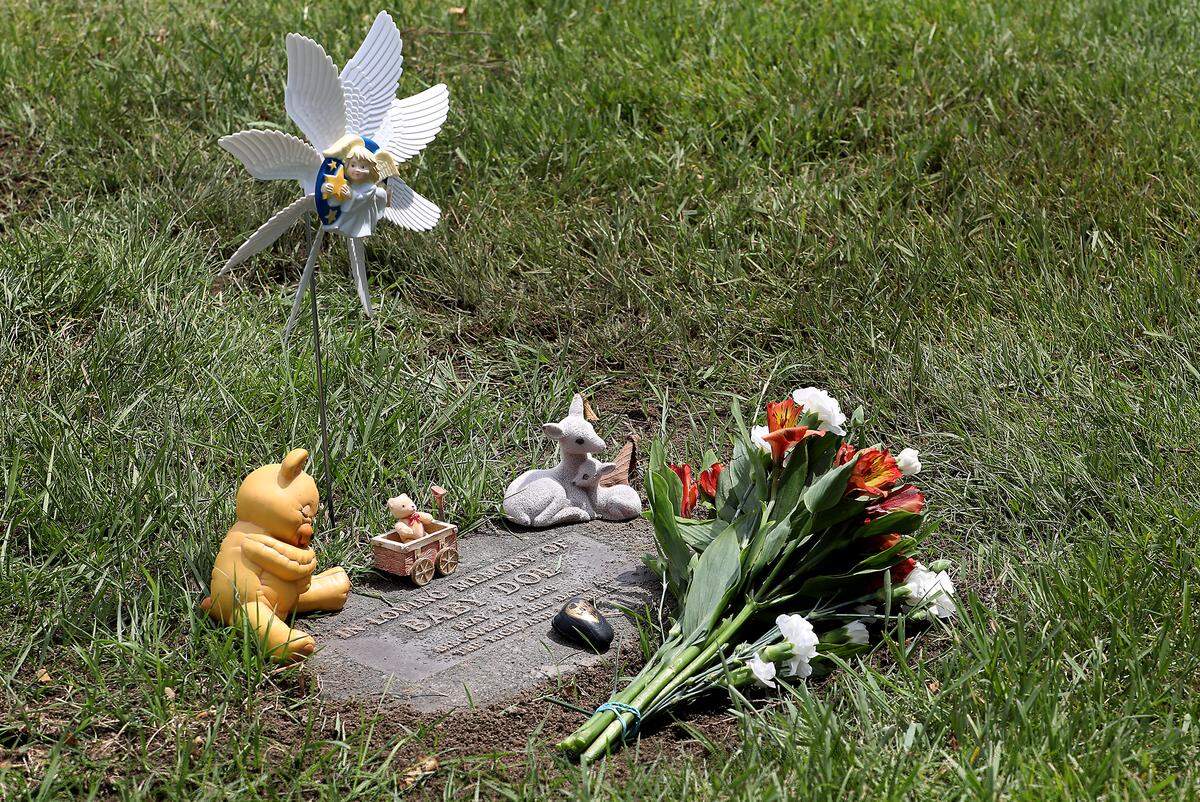
Judi Nelson promised a baby would not be forgotten after it was discovered dead in the Richland landfill 37 years ago.
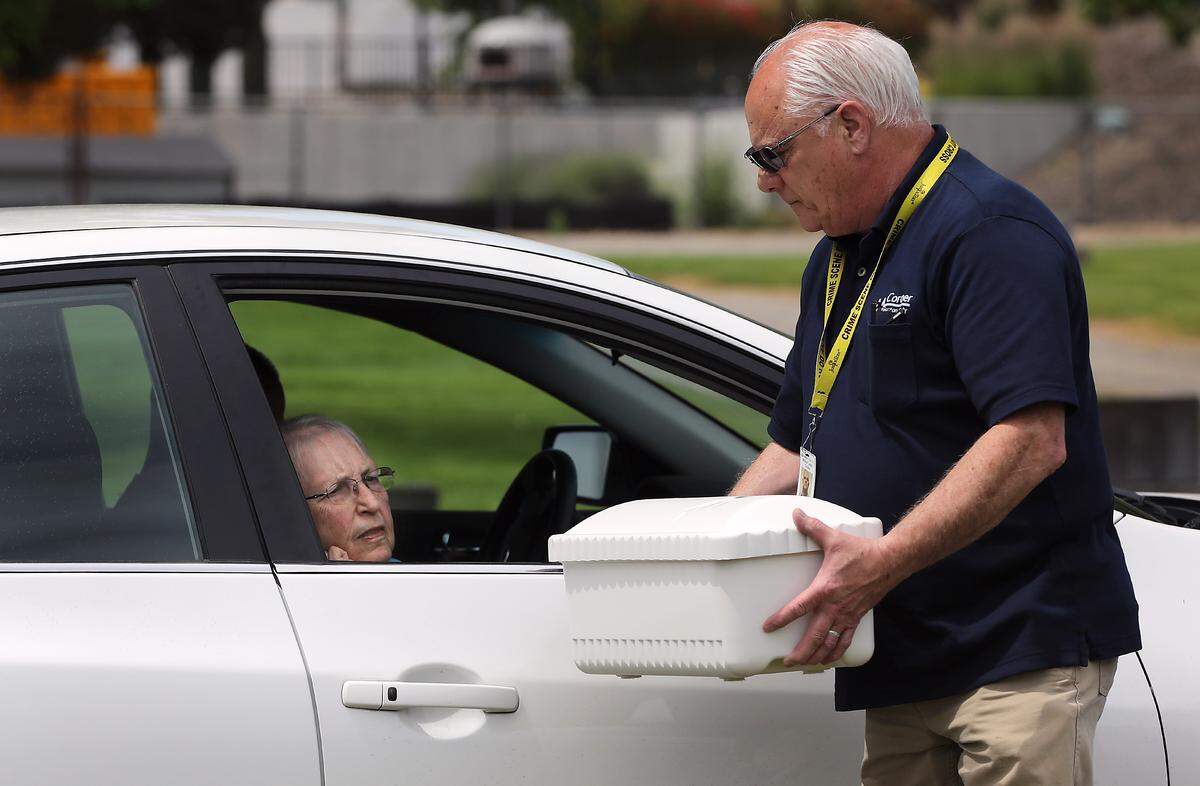
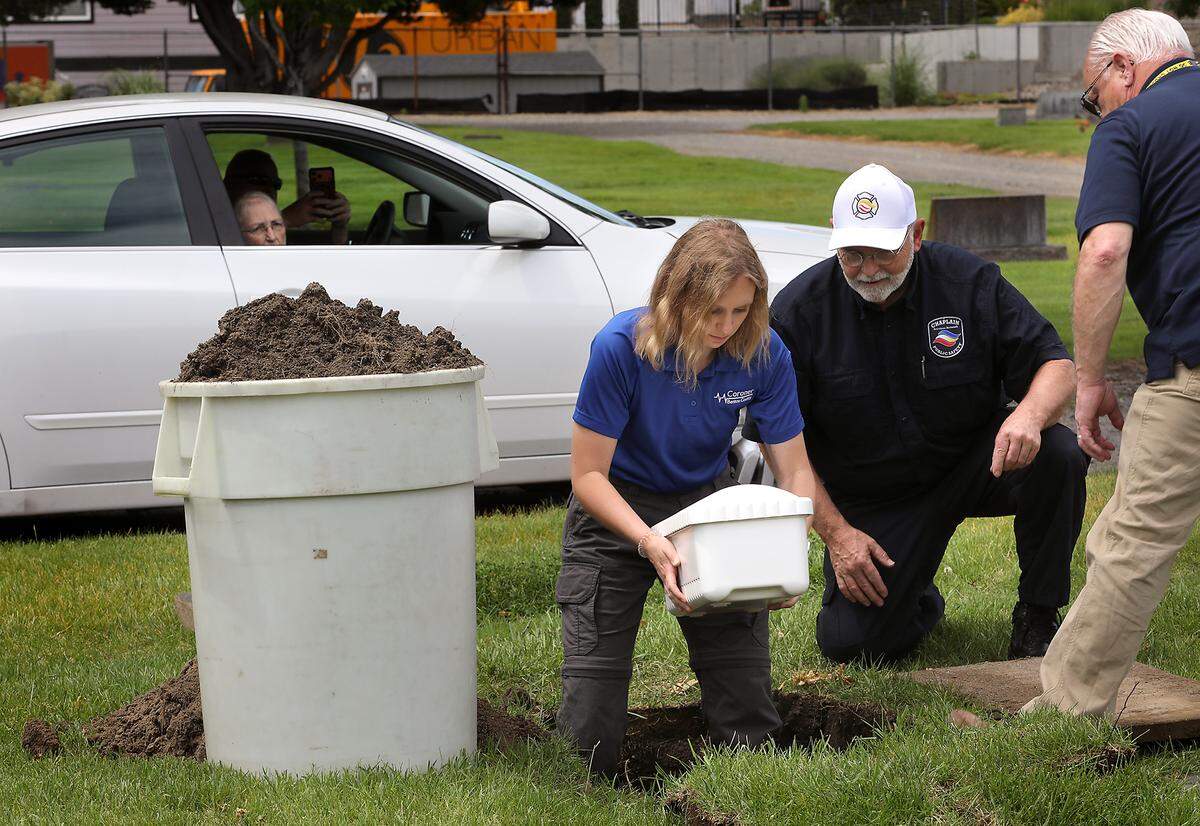
She renewed that promise to Baby Doe as the infant was buried a second time Thursday after a short service in the Resthaven Cemetery.
“I was so sad the baby was exhumed. My soul would just ache,” she said. “I’m so grateful that the remains are back.”
Trying to identify Baby Doe
The mystery of who the child was is no closer to being solved more than a year after the body was exhumed for testing.
Texas-based Othram Labs tested more than a dozen samples hoping to extract DNA, but the chemicals the body was stored in caused it to degrade, Coroner Bill Leach told the Tri-City Herald.
“It’s very disappointing,” Leach said. “I was very shocked that we were not able to find something. I understand sometimes there are situations where the best technology in the world is not going to be able to do what we hope.”
Baby Doe was discovered in May 1989 by a heavy equipment operator at the landfill. The infant was likely a day or two old and still had its umbilical cord. The baby’s gender has never been determined.
The Richland Cemetery Association donated a burial plot for a proper burial and helped pay for a grave marker. Einan’s at Sunset Funeral Home arranged for a graveside service.
Police and landfill employees called the discovery a “freak accident” because of the large volume of garbage coming into the landfill each day, according to a follow-up story written in 2004.
Richland police searched in vain for the child’s identity. Leach said the initial autopsy determined the baby was not born premature and it wasn’t clear if the baby was alive or dead when it was dumped, though there were no signs that it was killed.
Investigators at the time sent samples in for DNA testing, but the technology was still new at the time and it didn’t net any results, said Leach. Even a decade later, there was little hope of discovering the baby’s identity.
The only hope for using DNA to identify the child is an improvement in the technology, Leach said. They’re hoping for a future where that’s possible.
The coroner’s office stored information about the case and the testing, as well as news clippings inside a new vault for the child, Leach said.
Leach is hoping someone knows who the child was and would be willing to share the information. Anyone with information can contact Richland police at the non-emergency dispatch number at 509-628-0333.
“Somewhere out there knows something,” he said. “We just want to put a name with the baby.”
A lifetime of dedication
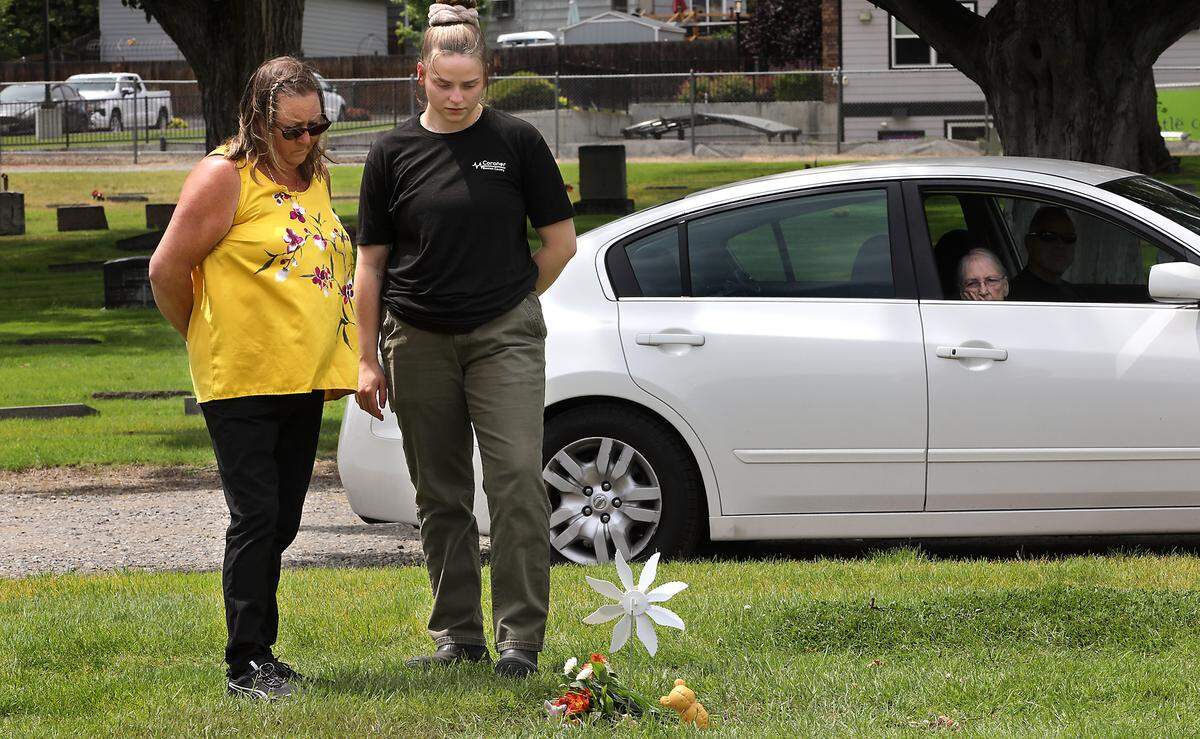
Nelson, 79, has spent the past nearly four decades keeping her promise to Baby Doe. She has decorated the grave, sat nearby and read stories and visited frequently.
“I don’t think anyone should be forgotten,” she said. “We don’t even know the story of what happened. We don’t even know the gender of that baby. I did not feel it was right for a child to be born and thrown in the landfill and have it be a newspaper story for a couple of weeks. .... It just mattered to me that this child was not forgotten.”
Outside of a single holiday, Nelson has not missed visiting the baby’s grave. Every time she left, she made sure to tell the baby that she was still there and that they would be back. Nelson was joined by her husband and son in helping care for the grave.
Her son took her to Thursday’s burial. She sat in the car and watched the service while he decorated the grave.
She plans on passing on the care of the grave to make sure the child is not forgotten.
Othram DNA Testing
The baby’s DNA was the second case the Benton County coroner has sent to the Texas-based laboratory.
The first was from the body of a woman discovered in the Columbia River near the blue bridge in September 1986.
A person researching grave sites discovered the Jane Doe on findagrave.com and called Leach to ask if he had any information about her.
After testing, searching databases and interviews, Leach and Benton County sheriff’s deputies determined it was the body of Patricia Kay Rodriguez. The mother of four disappeared after stopping by a Yakima restaurant on her way to work in 1983. While police weren’t able to use the information to determine how she died, they solved part of the mystery for her children and other family members.
Leach said there are still two unidentified bodies in Resthaven Cemetery. Two men who were discovered in 1963 and 1966. One man was believed to have drowned and the other was found near railroad tracks.
They are hoping to pay to have testing done on one of them next year.
Othram uses forensic genetic genealogy techniques to solve cold cases and to determine the identity of bodies. They compare their samples to publicly available databases looking for relatives.
The lab has solved several cases around Washington state. The Woodland, Texas company’s technology enables the U.S. National Missing and Unidentified Persons System, according to their website.
The laboratory has helped solve a 1978 murder in Spokane, identified the body of a man found in a wooded area near Newport and ID’d a man based on a small fragment of his skull found in the Spokane River.
They also helped identify a body discovered on Franklin County’s Scootney Reservoir in 2021.