
Ex-Hanford worker sentenced for COVID loan fraud for solar-powered wheelchair idea
AI-generated summary reviewed by our newsroom.
- Kennewick man who pleaded guilty to wire fraud conspiracy sentenced to prison
- He and two others fraudulently secured $292,000 in federal COVID-19 relief funds.
- They also had $563,600 in additional federal loan applications denied.
A Kennewick man has been sentenced to a year and a day in prison after pleading guilty to conspiracy to commit wire fraud to obtain money through federal COVID-19 relief programs.
David “Kurt” Schneider, who wanted money to develop a solar-powered wheelchair, also is required to repay nearly $122,000 to the federal government.
He was one of three people in the federal court case accused of fraudulently obtaining at least $292,000 in Coronavirus Aid, Relief and Economic Security Act, or CARES Act, funding in 2020 and 2021.
Kelly Jo Driver, 43, of South Carolina, pleaded guilty to fraudulent claims and was sentenced to five years of probation but no incarceration after preparing falsified documents for Schneider and the owner of a Tri-Cities gun shop to submit with their loan applications. She also is jointly responsible with Schneider for repaying the money.
Leif Gerard Larsen, the owner of Larsen Firearms in Pasco, has pleaded guilty to wire fraud and is scheduled to be sentenced July 30 in the Yakima County Courthouse.
“By stealing nearly $300,000 intended for legitimate businesses, these defendants diverted critical resources at a time when many businesses were fighting to survive,” said Rich Barker, the acting U.S. attorney for the Eastern District of Washington.
The CARES Act was intended to provide emergency financial assistance to the millions of Americans who were suffering the economic effects caused by the COVID-19 pandemic.
%20(1).JPG "SHi_j0225(20) (1).JPG")
The three defendants also applied for additional payments or loans of about $563,600, but those applications were rejected, according to court documents.
They included Paycheck Protection Program loans to small businesses primarily to cover worker paychecks, which were eligible to be forgiven, with no money paid back. The program also offered low-interest Economic Injury Disaster loans
Solar wheelchair obsession
Schneider applied for CARES Act loans for his businesses Solar Mobility, RealNZ Water and Tempest Tactical Solutions using documents created by Driver that falsified payroll information and federal tax forms to claim he had up to 10 employees.
When Schneider was asked for bank records to confirm his payroll, he said that employees of Solar Mobility, his solar wheelchair company, had asked to be paid in cash during the pandemic.
Schneider and Driver also falsely claimed that RealNZ Water, a company to sell water bottled in New Zealand, had 10 employees.
The Washington Department of Revenue had no records of the company existing or reporting revenue and no wages were reported to the Washington state Employment Security Department, according to a court document.
Court documents also said that his business Tempest Tactical Solutions had no business operations and had only been registered with the Washington State Secretary of State to apply for CARES Act money.
The only revenue Schneider reported to the Department of Revenue in 2019 and 2020 were from his wages at a Hanford nuclear site job at the vitrification plant, according to a court document.
Schneider was obsessed with the development of a solar wheelchair to be used by veterans, his attorney, Deric Orr, said in a court document.
He sought a contract for his invention with the U.S. Department of Veterans Affairs, thinking it would make his solar wheelchair a major success and help veterans. But he came to believe the agency was sabotaging his efforts, according to court documents.
Schneider saw the loan money he falsely obtained as a way to keep his business afloat and to fight back against the perceived sabotage, his attorney said.
Other COVID fraud defendants
Driver provided false documents to both Schneider and Larsen for loan applications and then received 10% of the proceeds, according to court documents.
She urged the other defendants in the case to seek higher loan amounts, which also would net her more money, according to court documents filed by Eastern District of Washington U.S. Attorney’s Office.
Driver’s attorney, Jennifer Barnes, argued that she had no criminal record and had a noncancerous tumor that could soon require treatment. Barnes asked for no incarceration.
Schneider told Larsen he also could obtain loans under the CARES Act, which could be forgiven, using false payroll documents created by Driver, according to court documents.
He and Driver submitted applications falsely claiming he had 10 employees at Larsen Firearms and Larsen Gunsmithing & Firearms, according to court documents. He withdrew one application after being interviewed by federal agents.
He received a loan of nearly $150,000 for the other application, according to court documents.
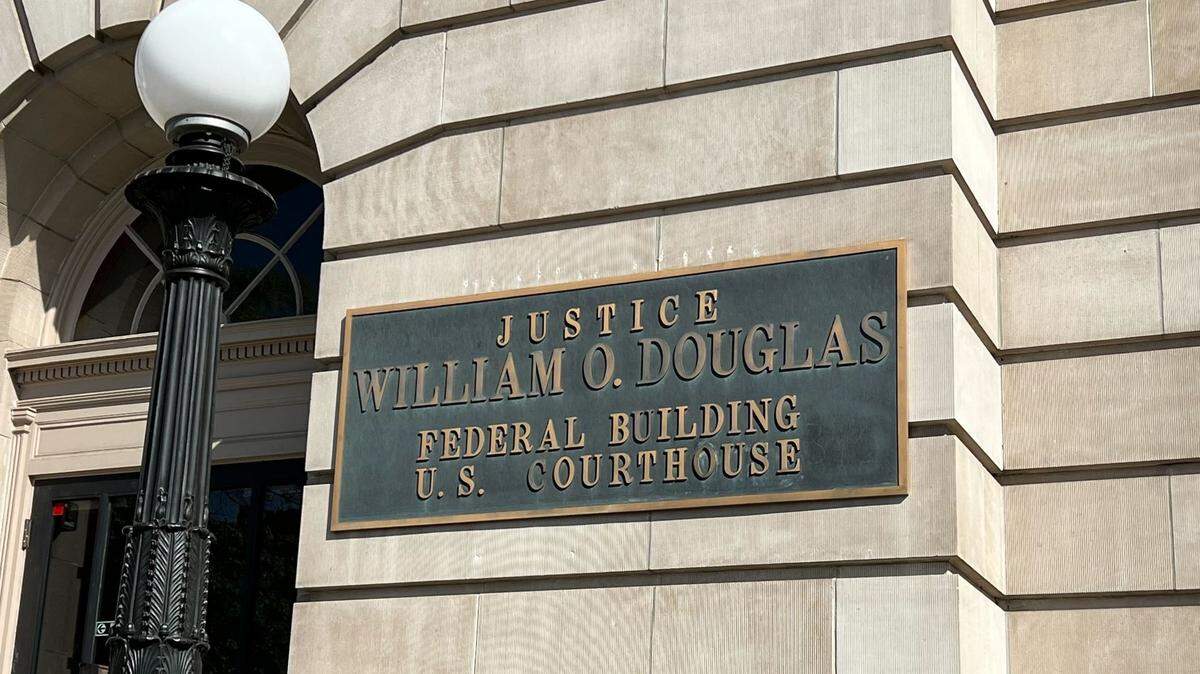
Larsen is scheduled to be sentenced July 30 in the Yakima U.S. Courthouse.
The case was investigated by the Eastern District of Washington COVID-19 Fraud Strike Force, the Federal Bureau of Investigation and the Small Business Administration Office of Inspector General. It was prosecuted by Assistant U.S. Attorneys Jeremy Kelley and Frieda Zimmerman.
U.S. Judge Stanley Bastian in Yakima sentenced Schneider and Driver.
This story was originally published June 3, 2025 at 4:52 PM.