
Tri-Cities man sentenced for making a bomb and making plans to hurt police officers
A Kennewick man has been sentenced to one year in federal prison for conspiring to make a homemade bomb after saying he planned to use explosive devices against police officers.
The attorney for Daniel James Anderson, 28, had asked for a sentence of five years probation.
But prosecutors said only probation would seriously discount the seriousness of Anderson’s actions and they asked for three years and one month in prison.
Anderson’s arrest followed a federal investigation into the “Verified Bois,” a Pacific Northwest group of about 30 involved in anti-government and anti-authority activities, according to court documents.
U.S. Judge Mary Dimke agreed that probation alone wasn’t enough.
“This is too serious for probation,” she told Anderson during a sentencing hearing in the U.S. Courthouse in Richland on Thursday.
But she encouraged Anderson to continue to work to turn his life around as he has the past 18 months, including getting mental health treatment and taking medication.
In addition to the prison sentence, Dimke sentenced Anderson to three years probation.
An FBI Joint Terrorism Task Force Office began working with a confidential informant in spring 2021 to build the cases against Anderson and the leader of the Verified Bois, Connor Duane Goodman, of Auburn, Wash.
Both Goodman and Anderson adhere to the beliefs of the “Boogaloo Bois,” a loosely connected group of people who share anti-government sentiment and advocate violence, according to court documents.
Participants in Verified Bois were waiting for an over-aggressive law enforcement action, such as at a public protest, to target officers with violence, according to court documents.
‘Training to kill’
The Verified Bois held training events, including in Ellensburg and Easton, Wash., to practice raids, firearms handling and survival skills.
But Anderson told the confidential informant that too many members of Verified Bois were not taking training seriously enough and they did not understand the group was “training to kill people right now,” according to court documents.
In July 2021, Anderson received Thundercracker fireworks that Goodman had obtained from a tribal reservation.
Anderson told the informant he used the fireworks to make explosive devices small enough to carry in a backpack when he was on a motorcycle, according to court documents.
Anderson said he could use the devices against law enforcement and then speedily escape on a motorcycle, according to court documents.
Online Anderson called his homemade bombs “distraction devices,” before also posting that they “aren’t training tools. I wouldn’t be anywhere near this thing. It’s going to throw shrapnel like a MF.”
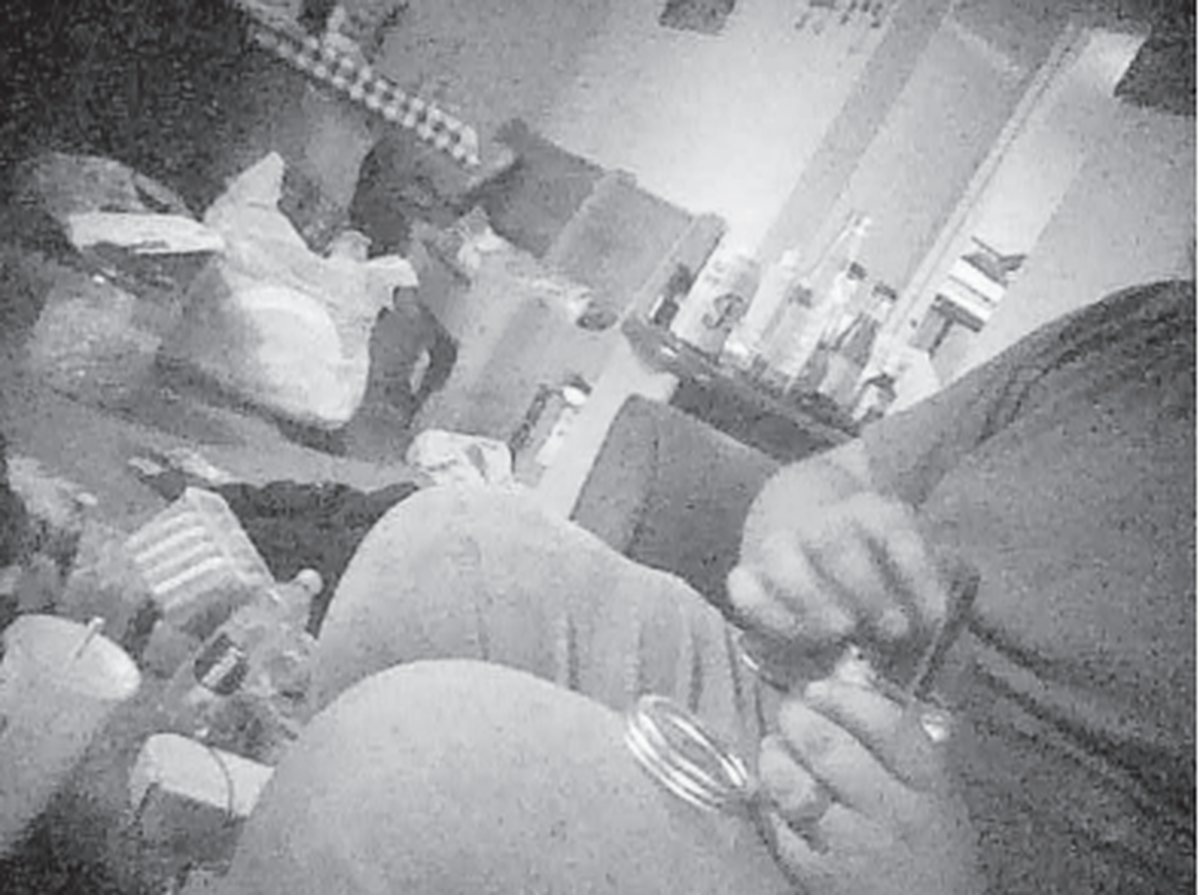
He showed the confidential informant one device, a sealed glass jar designed to explode and send glass fragments and shotgun pellets flying, and the informant was able to capture video of it, according to a court document.
In December 2021, Goodman sold the confidential informant 12 mortar-style fireworks, and Anderson showed him how to extract material from them to make improvised explosive devices, according to a court document.
Thirteen days later federal law enforcement agents searched Anderson’s apartment and found a single improvised explosive device made out of a small glass jar, birdshot and explosive powder, which Anderson said he created using fireworks provided by Goodman, according to a court document.
Anderson told federal agents then that he did not intend to use the device against law enforcement officers.
Defendant was boasting, attorney said
Anderson’s attorney, Nick Mirr of Yakima said in court documents that Anderson needed friends during an isolated period of the pandemic.
“In search of a community, he made vague, boastful claims which he believed would win him the group’s reverence and respect,” according to Mirr, referring to the Verified Bois. “Many of these claims were literally debunked by the paltry amount of evidence found in his house.”
There is no evidence that he built bombs other than the one seized by law enforcement and no evidence that it was tested, brought to a training or part of a specific plan of attack, Mirr argued.
Anderson has struggled with his mental health and self-esteem, but has taken some college classes, held a job after being released from jail pending resolution of his case and has cared for the children he shares with his wife, Mirr said in court documents.
But Assistant U.S. Attorney Patrick Cashman argued in court documents that Anderson “did not simply build a device and play a passive role (in an anti-government group); he was an active participant and organizer.”
Anderson participated in planning to develop training outlines and scenarios, and he discussed how to recruit more members and whether to build relationships with other Pacific Northwest anti-government groups, Cashman said in court documents.
At one point Anderson provided a “homework” assignment to others in the group to identify ways to possibly attack infrastructure, according to Cashman.
Defendant: Choices were harmful
Anderson addressed the judge on Thursday, wiping away tears as he said the choices he made “were incredibly harmful” to those around him and his family.
“I don’t want to downplay anything I’ve done, but I want to say I am not the same person” who appeared before the judge right after his arrest, he said.
Working with his probation officer he has come to respect law enforcement and he no longer wants to harm them, he said.
Dimke said that while his mental health issues may have led him to become involved in an anti-government group, his activities posed a risk to the community.
Not only had he made an explosive device in the furtherance of the goals of an anti-government group but making the device put his family and everyone in his apartment building at risk, she said.
Goodman is also a defendant in the case.
He pleaded guilty to conspiracy to make or possess an unregistered destructive device. His sentencing is scheduled for Aug. 31
In Goodman’s plea agreement, the U.S. Attorney’s Office for the Eastern District of Washington agreed to ask for a sentence of no more than three years and one month in prison.