
Tri-Cities illicit drug dealers lose $133,000 to local police
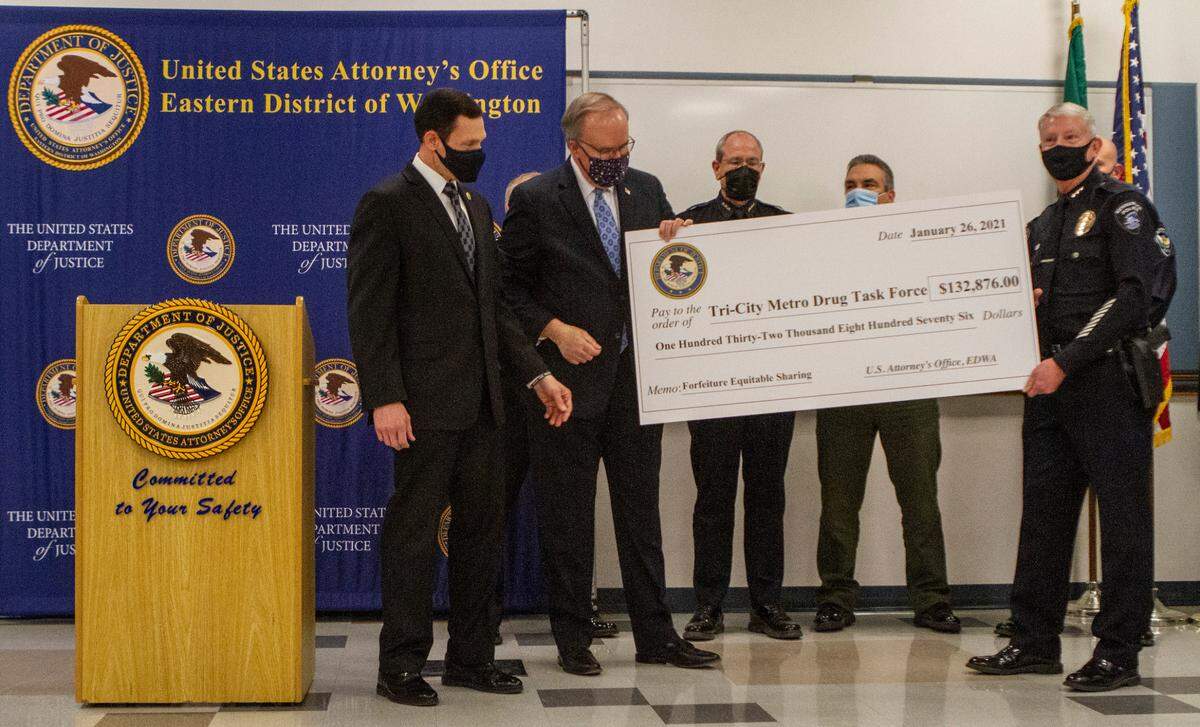
Nearly $133,000 from the sale of synthetics opioids will now help Tri-City police take more drugs off the streets.
The U.S. Attorney’s Office and federal Drug Enforcement Administration announced Tuesday plans to turn over 80 percent of the cash seized in three Tri-Cities cases to local drug investigators.
The money came from three cases involving major fentanyl dealers.
“This was one of the first fentanyl-laced pill drug rings that has been taken down in this area,” said William Hyslop, the U.S. Attorney for the Eastern District of Washington.
The powerful synthetic opioid continues to be a problem in the Tri-Cities, he said a news conference in Kennewick on Tuesday.
One gram of fentanyl, the amount that could fill a sugar packet, can contain as much as 500 lethal doses.
“It is an incredibly dangerous drug that is coming into this area and pills are being sold on the street in these communities,” he said. “They are incredibly dangerous. A person can take a hot pill and drop dead instantly.”
Frank Tarentino, the special agent in charge of the DEA Seattle office, said fentanyl is a growing problem in Eastern Washington.
“In the last year, DEA has seen a 187 percent increase in fentanyl seizures in Eastern Washington,” he said in a release. “Fentanyl continues to be an eminent threat to the public, and its production and distribution is contributing to an increase in crime and violence.”
The money returned Tuesday came from three men — Taylor Fertig, Dustin Alvin Zuhlke and Remijio Morfin-Mendoza.
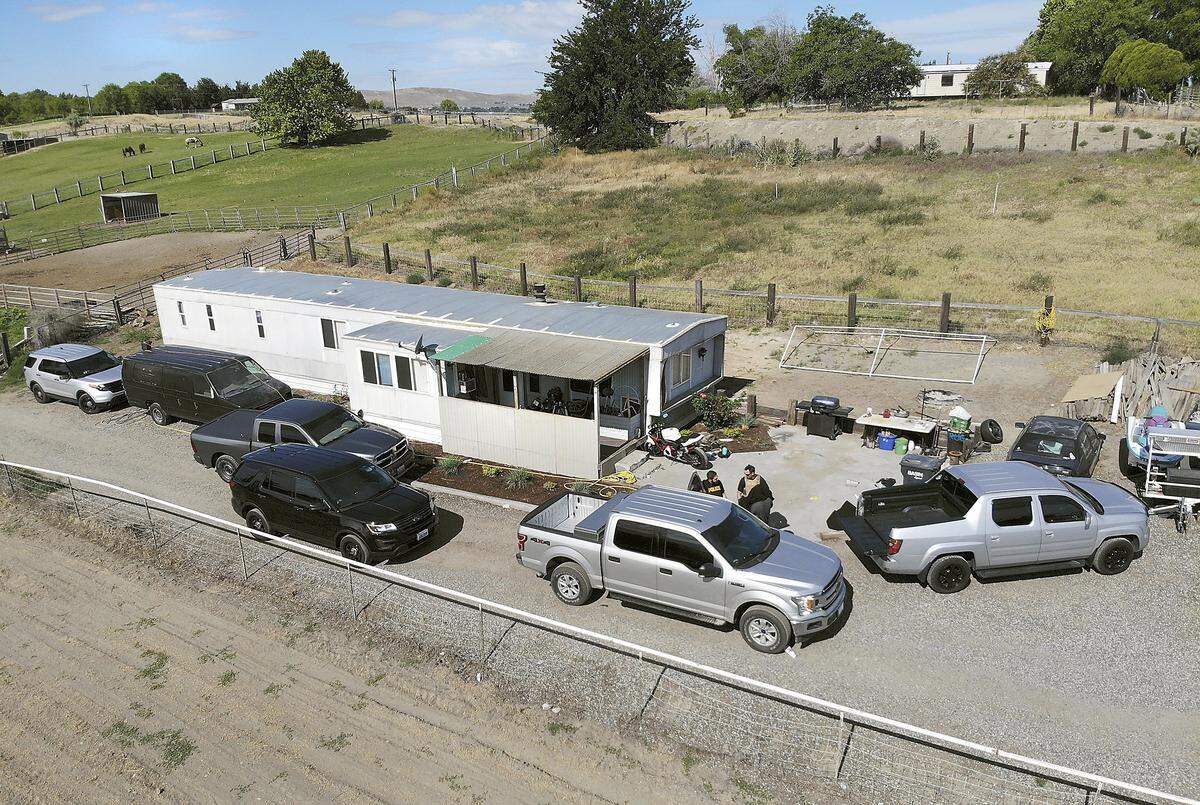
▪ Fertig was arrested after local and federal officers raided a mobile home in Finley. As part of the investigation police found $12,220 in cash.
He pleaded guilty to conspiracy to distribute 400 grams or more of fentanyl and was sentenced to 10 years in federal prison in 2019.
He was identified as one of the first major distributors of fentanyl-laced pills that were designed to look like oxycodone.
▪ Zuhlke, turned over nearly $137,000 after he was arrested in 2018. It was estimated that he was selling more than 1,000 pills a week in 2017.
He pleaded guilty to conspiracy to distribute fentanyl and was sentenced in October 2020. He is serving a four-year prison term.
▪ Morfin-Mendoza remains at large but the U.S. government has seized $17,000 from him. He is facing a 2018 charge of conspiracy to distribute fentanyl and two counts of distribution of fentanyl.
Metro drug task force
The money presented Tuesday will support the Metro Drug Task Force to continue drug fighting efforts in the Tri-Cities region.
The task force formed in 1988 and is a cooperative effort of the Kennewick, Pasco, Richland and West Richland police departments, the Benton and Franklin county sheriff’s offices and the Washington State Patrol.
In 2019, task force officers seized more than 12,000 fentanyl pills.
The Kennewick Police Department heads up the task force, and Chief Ken Hohenberg said while they can’t use the money to hire new officers, they can use it to pay for overtime and other investigation costs.
Hyslop pointed out the money comes from crimes committed in the Tri-Cities and will now be used for the good of the community.