
He’s accused of 2 murders in 1 day. Defense says investigators had ‘tunnel vision’
Two deaths and five other crimes committed in three places — and Hector Orozco Jr. is responsible for every single one of them, the prosecutor said Wednesday.
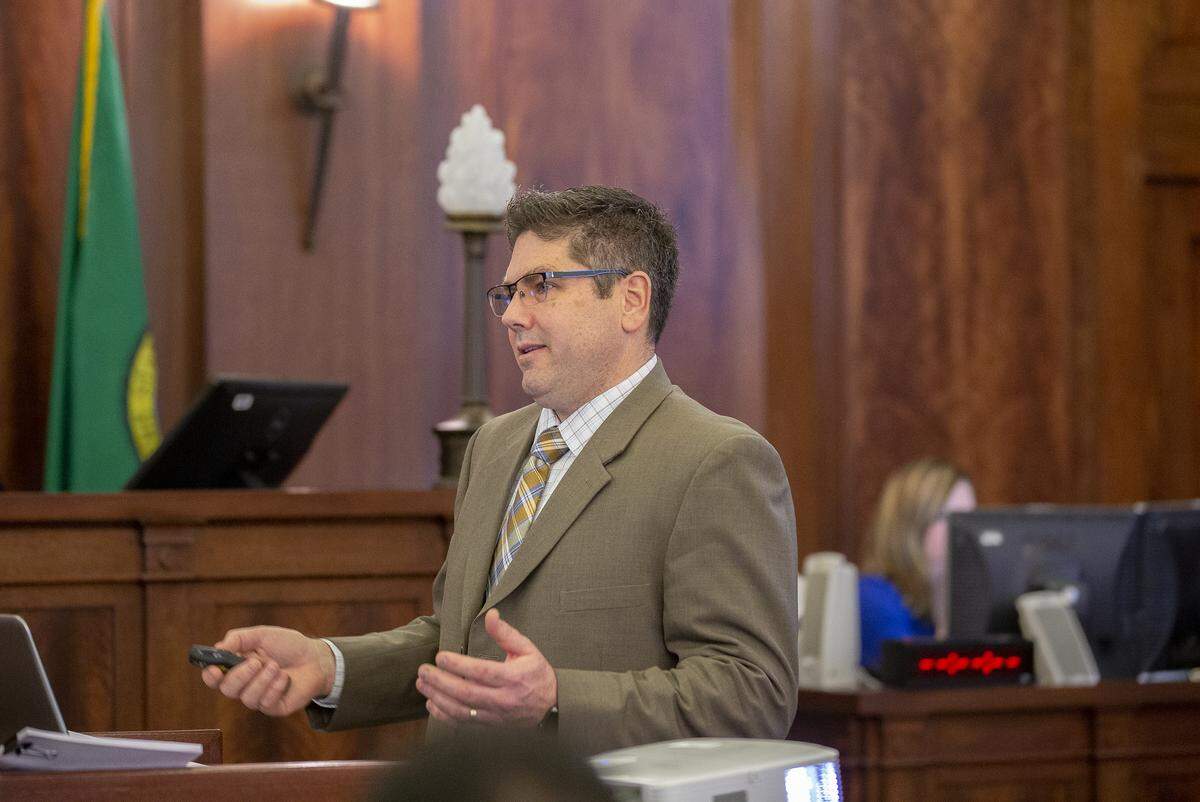
Franklin County Prosecutor Shawn Sant told jurors that they’ve seen enough evidence and heard the witnesses to find Orozco guilty of the Valentine’s Day 2018 crime spree.
Orozco’s lawyers didn’t dispute what happened at Pasco’s Rodeway Inn.
Those four crimes aren’t at the heart of the case, so jurors should not get distracted by them, said defense attorney Daniel Stovern.
The focus should be on the two murders and an attempted murder, and nothing presented in trial over the past two weeks shows Orozco had a role in those, he said.
The Franklin County Superior Court case was handed to the jury at lunchtime Wednesday after nearly two hours of closing arguments.
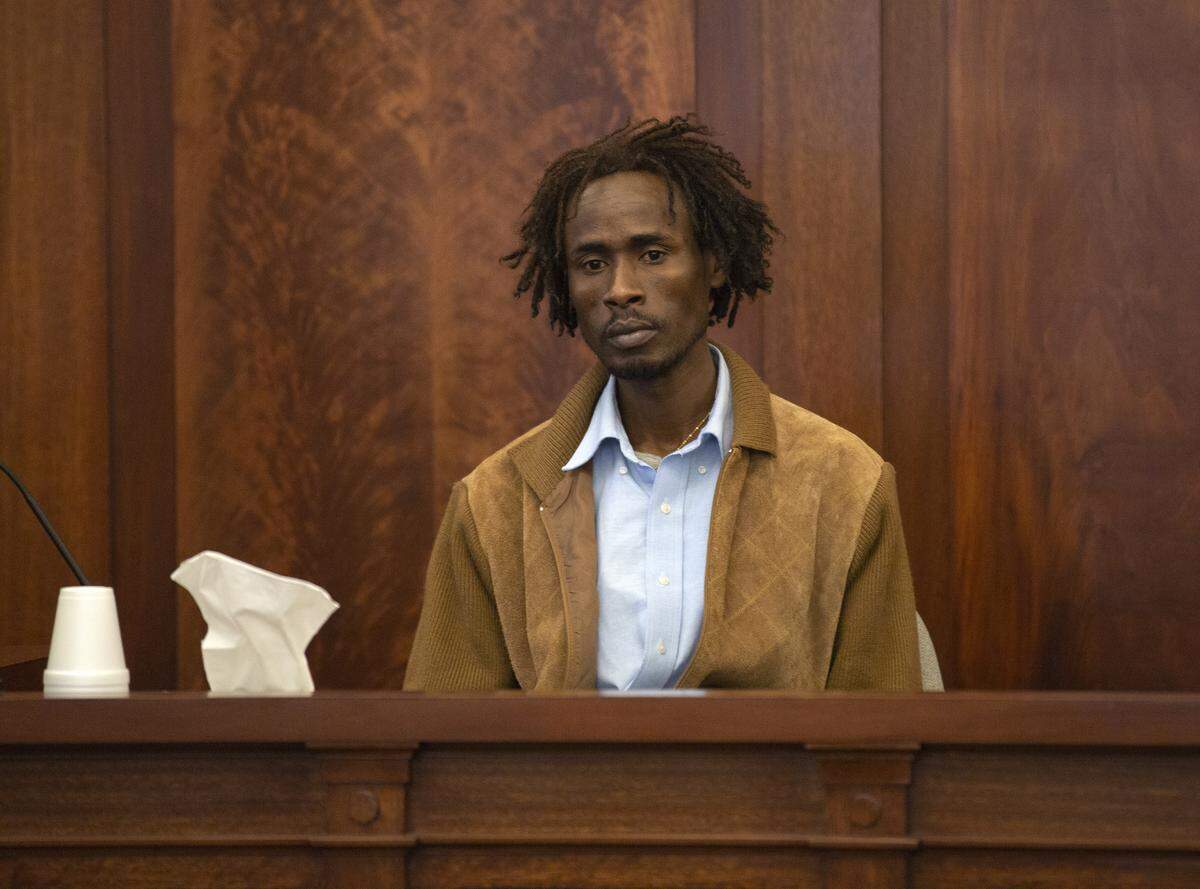
Orozco, 43, did not take the stand during his trial, which started Jan. 14.
He’s been in jail on $3 million bail since his arrest last Feb. 14.
4 felony charges
His felony charges include first-degree murder for Bonnie D. Ross, second-degree murder for Demetrius A. Graves, attempted first-degree murder for Shegow Gagow and the unlawful imprisonment of Anthony Nugent.
Prosecutors say the 82-year-old Pasco woman was killed either during a robbery or burglary at her home.
Orozco also is charged with the fourth-degree assault for Mary Gibson and Nugent, and driving with a suspended or revoked license.
On Wednesday, Sant spent 48 minutes reviewing each crime scene — Sixth Avenue near Clark Street, where Graves was found stabbed to death; Ross’s West Washington Street home; and the Rodeway Inn on North Oregon Avenue.
Sant reminded jurors that Orozco was seen with Graves, who is homeless, and Gagow at the Metro Mart store on Lewis Street at about 2 a.m., before going to Ariel Contreras’ shed to smoke methamphetamine.
The men squeezed into the tight quarters like “10 clowns in a buggy” for about a half hour, then the three left and Contreras heard a fight outside.
Gagow testified that Orozco attacked Graves for no apparent reason as they were crossing Sixth Avenue.
Gagow — who knew Graves, 39, by his nickname of More Money or Mo’ — didn’t actually see Orozco stab Graves with a knife, but saw Graves on the ground asking, “What I did? What I did?”
Then Orozco turned toward Gagow and started chasing him, beating him as the two fell to the ground together, Sant said. Gagow was able to get away and eventually found a way to call 911 to report that Graves was dead.
Ten hours later, police were watching the Rodeway Inn for Orozco when he drove into the lot and went into a room. Officers saw Gibson run out to get help and a bloody Nugent was later found in the room, said Sant.
Orozco was driving Ross’ car when he was arrested at the motel, but a detective who visited her house the next day saw nothing wrong and didn’t have a legal reason to go inside.
On Feb. 16, her relatives and neighbors realized Ross hadn’t been seen in a couple of days and she was found dead in her house.
Sant said investigators linked her death to Orozco when her son found a record of a call to an unknown number at 9:14 a.m. Feb. 14. That number belonged to Orozco’s mother, and Ross likely was dead at that point, he told jurors.
Investigators believe Ross was beaten, stabbed and likely strangled some time between 8:55 a.m. — when she left a message for her son, Anthony — and 9:14 a.m. when Orozco used her phone to call his mother.
Final message to her son
Sant played Ross’ last message to her son on Valentine’s Day for the jury:
“I just want you to know I’m thinking of you, and I hope your heart is happy so you can have a happy hearts day today,” she said. “Always know that you are loved.”
In a later recorded conversation between Orozco and his girlfriend, he said he didn’t know why his mother was subpoenaed to testify at his trial but acknowledged it might be related to the call he made from Ross’ house. He also claimed he had permission to use Ross’ car that day.
Sant also asked jurors to focus on the DNA evidence, including Ross’ DNA in three different spots on Orozco’s jeans, and DNA that was a familial match to Orozco on a drawstring believed used to strangle Ross.
Too many unanswered questions, defense says
Stovern tried to poke holes in the prosecution’s case, questioning some of the evidence, or lack thereof, and the police department’s failure to investigate other potential suspects.
Orozco and Graves were good friends, said Stovern, with Orozco regularly loaning his car to Graves and Graves trusting Orozco’s girlfriend to hold on to the money he received every month.
“There was never any DNA from Mr. Graves found on Mr. Orozco, and this was a very bloody crime scene,” he pointed out.
Stovern suggested that Gagow had a role in Graves’ death, saying Gagow lied to police and the jury about his drug use that night and his injuries.
Gagow eventually admitted that he smoked meth that night, and that he grabbed evidence out of Orozco’s car to connect him to the murder scene, said Stovern.
In multiple interviews with police and prosecutors, Gagow never mentioned that he planted evidence, said Stovern. He thinks Gagow left Orozco’s court paperwork near Graves’ body, saying it is hard to believe the prosecution’s theory that Orozco held the binder while stabbing a man and then dropped it as he ran away.
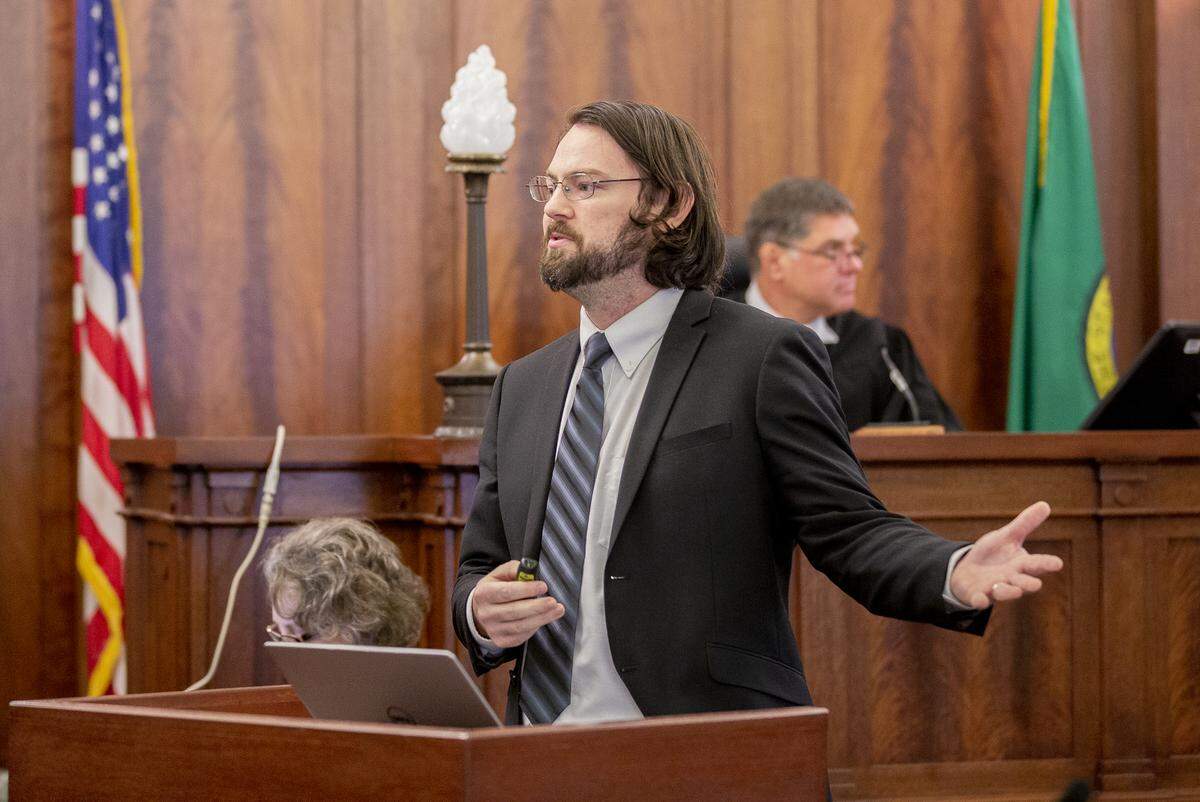
“Mr. Orozco had no motive to kill his friend Mo’,” said Stovern, who noted that police did not take Gagow’s DNA or test his own clothes. “Mr. Gagow is the only eyewitness to what happened at the Graves crime scene.”
There were no fingerprints or DNA linked to Orozco found inside Ross’ home, he said. And the drawstring recovered in the autopsy also had the DNA of two other males, yet prosecutors are choosing to focusing on the third male’s DNA.
Stovern reminded jurors that a convicted knife-wielding rapist was found by neighbors and police outside Ross’ home three times the day she died. But the man, who was chased off each time, was never brought in for questioning once police discovered Ross was dead, the lawyer said.
There are just too many unanswered questions, said Stovern, adding that the knife used in both killings was never found.
“The state has some tunnel vision on this case. They dug deep on Mr. Orozco, stacked up some evidence, then worked backwards to connect the dots,” he said. “You, as the jurors, cannot have a whole picture to say beyond a reasonable doubt what happened here.”
This story was originally published January 30, 2019 at 8:04 PM.