
Washington families wait months to learn why their loved ones died. Here’s why
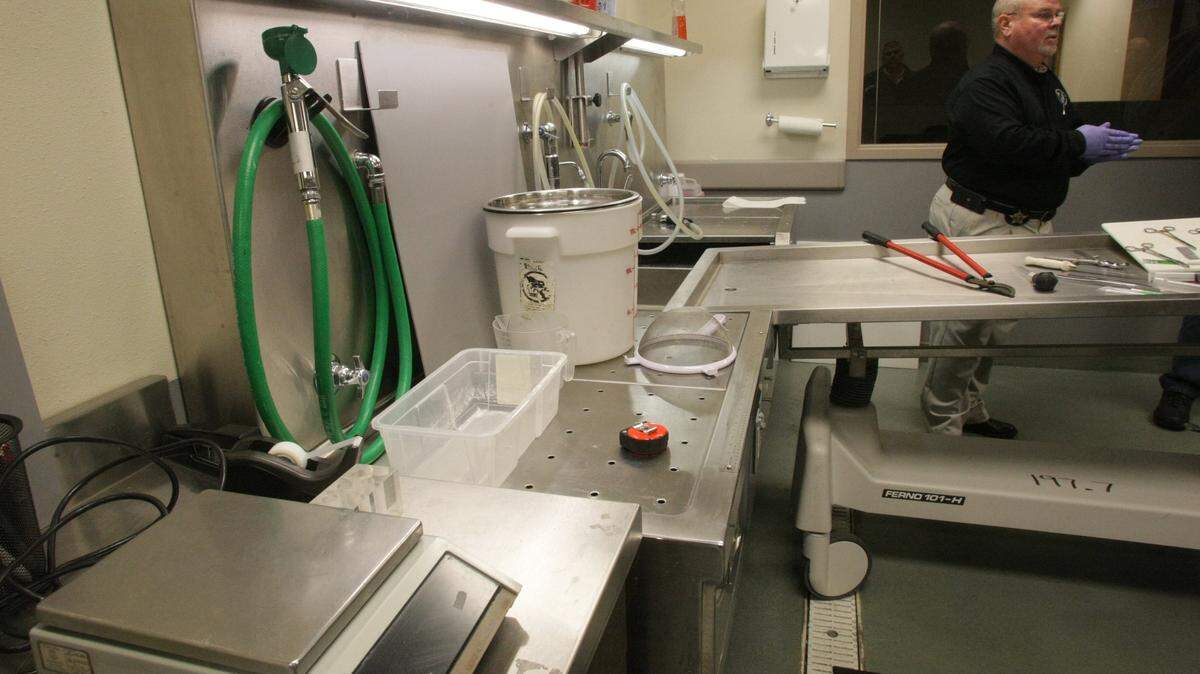
Imagine getting a phone call in the middle of the day that a loved one was rushed to the hospital.
In this case, a husband, in his mid-30s, who left to work a regular shift at an Oregon company when he collapsed. He was on his way to the hospital when his heart stopped.
He was rushed to Kadlec Regional Medical Center where he died.
Roughly four months later, no one can say for certain why he died, and it could take another month before the Benton County Coroner’s Office will be able to give his family a definite answer, Deputy Coroner Bill Leach said.
This is the case for dozens of families in Benton and Franklin counties who are waiting for blood tests from the Washington State Patrol Crime Lab.
In many cases, those tests are the last item before coroners and medical examiners can sign off on a death certificate — the thing relatives need most to claim insurance benefits, finalize estates or to learn why their loved one died.
Benton and Franklin coroners investigated more then 1,300 deaths in 2017. The majority needed lab tests.
During the past five years, the wait to receive results back has nearly doubled from two to three months to five months, Leach said.
And there’s no sign of it getting any faster.
Why so long?
The state labs handled 15,945 cases in 2017, about 2,764 more than they did in 2015, said state patrol spokesman Kyle Moore.
WSP officials told the Spokesman-Review, the Columbian and the Yakima Herald-Republic that there are a number of reasons for the increase.
The first, and largest, goes back to the legalization of marijuana.
State officials told the Spokesman that police increasingly draw blood samples in DUI cases instead of using field sobriety tests or breathalyzers.
Those two methods are designed to catch drunk drivers. Cannabis takes either a blood test or an officer trained in drug recognition.
Though the state is training more officers to be drug recognition experts, it’s a slow process, officials said. Even then, many officers still will get blood drawn from the driver.
For death investigations, officials are doing more tracking to see if people are dying from opioids like fentanyl and heroin.
Attorneys also are making more requests of the state lab, slowing down the work, officials told the Columbian.
The end result has been a mounting backlog of samples at the toxicology lab that started in April.
The median time to get a sample for a death investigation processed has grown from 18 days in 2015 to 84 days this year.
More than 3,500 cases are waiting to be processed since April, according to the Herald-Republic.
Chipping away
Additional money to pay for more staff from the Legislature and grants may help ease the backlog, Moore said.
The lab has 14 forensic case work scientists. Temporary money is expected to add another six people.
The lab should be able to house the increase in staff, but Franklin County Coroner Dan Blasdel is skeptical.
Blasdel, the vice chairman of the Washington Association of Coroners and Medical Examiners, said it’s unlikely that the lab will be able to catch up on the backlog with just people.
Space matters too, Blasdel said, and the Seattle-based lab is running out.
One of the options being pursued is creating regional labs across the state, and taking the burden off of the Seattle lab. He suggested creating it in Spokane.
“That one lab (in Seattle) is doing all of the testing for law enforcement, all of their DUI and marijuana tests, and all of the death investigation samples from all of the coroners,” Blasdel said. “It’s a high priority, especially when it’s affecting widows and facilities from getting their benefits.”
One solution: pay up
It’s an important issue for the association. Coroners and medical examiners pay about 72 percent of the budget going into the crime lab.
While death investigators could send the samples out to a private lab, it would cost them about $300 per test, which isn’t affordable.
Death investigations are actually finishing quicker than tests for DUI cases and drug-facilitated sexual assault cases, Moore said.
Those cases take about 10 days longer to process than death certificate cases.
Any of the solutions offer little comfort to the families looking for closure, Leach said.
The Oregon man’s sample to a local lab will be sent to a local lab, he said..