Franklin Co. board makes swift decision in WA senator’s address challenge
AI-generated summary reviewed by our newsroom.
- The Franklin County Canvassing Board made unanimous decision on residency challenge.
- Petitioners have to provide proof beyond a reasonable doubt.
- Recent state law changes raise the challenger's burden of proof and may affect future.
The debate over whether a Tri-City lawmaker lives in her new district is over for now.
A Pasco voter failed to provide evidence proving without a reasonable doubt that state Sen. Nikki Torres, R-Pasco, does not live where she says she does.
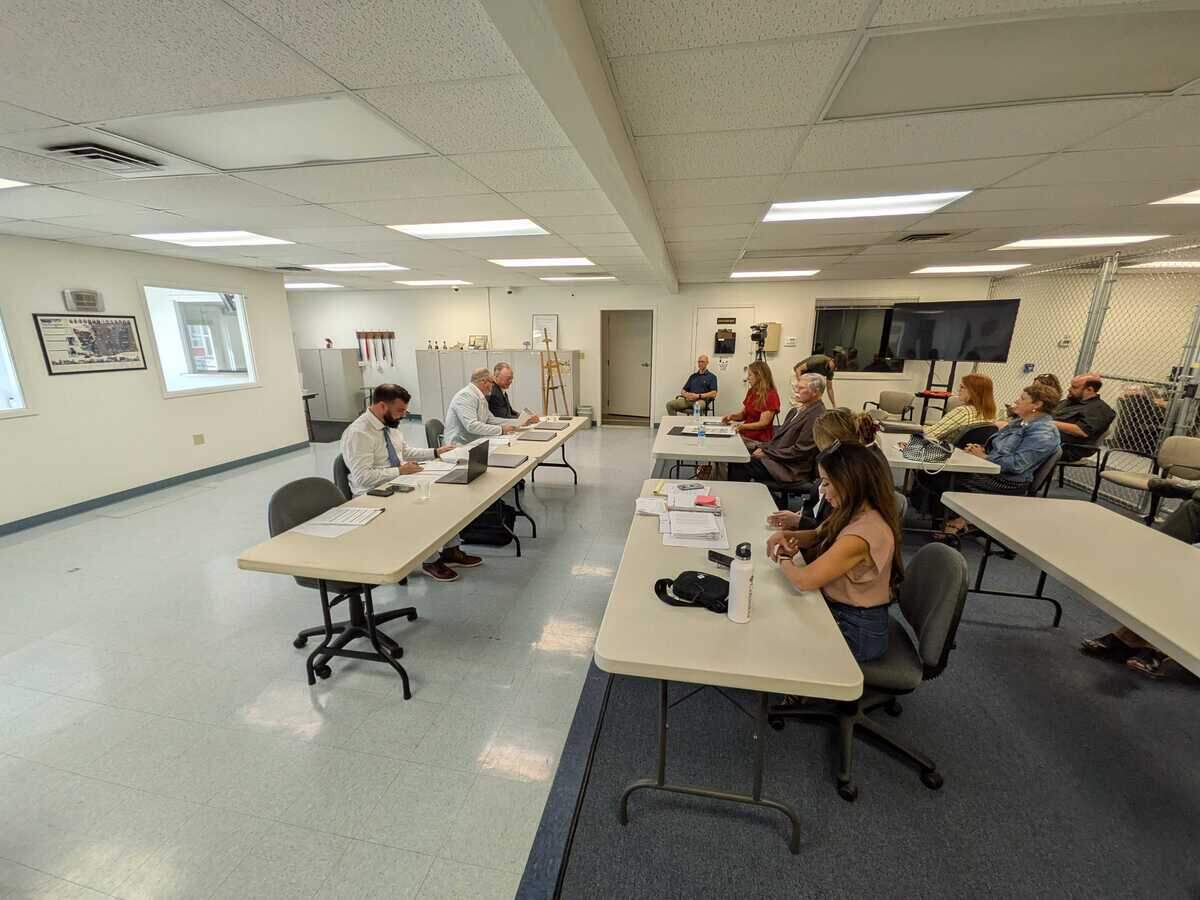
Following a Wednesday morning hearing that lasted less than an hour, the Franklin County Canvassing Board voted unanimously to dismiss the voter registration challenge submitted by Richard Weiss against the legislator.
The challenge was an effort by some in Torres’ own party to disqualify her from running in the 8th Legislative District after she changed addresses earlier this year to a new home on Road 64. Washington state officeholders must be a voter and reside in the district they represent, but there is no duration requirement.
Weiss tried to cast doubt on Torres’ registration at the hearing by pointing to a flurry of paperwork changes, news articles and fundraising forms that showed Torres was weighing runs in other legislative districts.
But after 20 minutes, he failed to convince the board made up of Auditor Matt Beaton, chief civil deputy prosecuting attorney Jeff Briggs and county commission Chair Rocky Mullen that Torres did not live where she votes.
“I’m satisfied with the result,” Torres told the Tri-City Herald.
Torres disclosed additional evidence including HR forms, a declaration, her driver's license and attestation from the property owners and her neighbor, Felix Vargas, that she rented the house and planned to stay there for the long term.
“Ms. Torres has not been shy about saying that she has moved,” said her attorney, Ashley Burman. “She intends to make this her home and she’s running for office in the 8th Legislative District, and there is nothing in any rule anywhere that says that someone cannot move, establish residency in a place and then run for office there.”
Weiss voiced frustration with the process after the canvassing board’s vote. Some observers who showed up to the Franklin County Elections Center confronted board members to challenge their decision and the heightened standard of proof that they required.
“The challengers have the deck stacked against them,” Weiss told the Herald. “It’s just a he-said, she-said type of deal.”
When asked if he felt he presented a strong case, Weiss responded, “not with their criteria.”
Weiss and other Tri-City Republicans believe Torres actually lives at a home she owns that’s currently occupied by her daughter and granddaughter. The property had been previously listed on Torres’ PDC forms several years ago when she served on the Pasco City Council.
A Kennewick man was arrested in April and later charged with stalking, a gross misdemeanor, after he was seen parked outside the home over the span of three days, which spooked Torres’ daughter and made her fear for her safety. The man was allegedly directed to gather evidence that Torres lived there by her opponent’s campaign.
Gabe Galbraith, who currently serves as the Kennewick School Board president, is challenging Torres for the 8th Legislative District’s Senate seat after Matt Boehnke announced his run for Congress. While both Torres and Galbraith are Republicans, the race has quickly turned from a bitter contest to a statewide controversy.
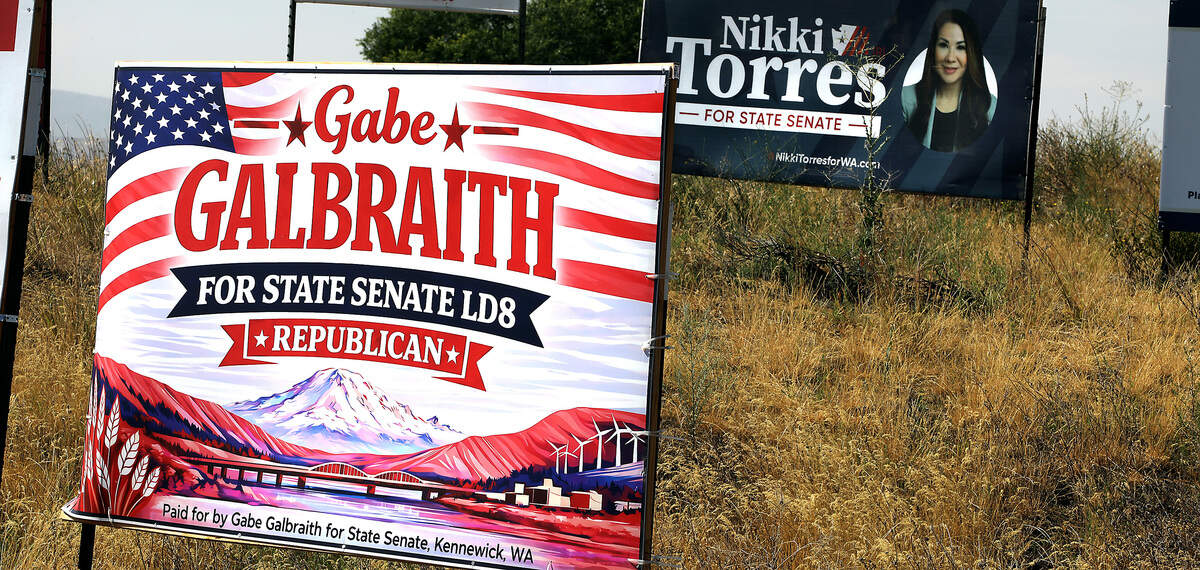
Galbraith and his campaign aide, Benson Behen, are being investigated by Pasco police for potential stalking and harassment charges. Neither have publicly commented on the investigation nor allegations.
During the hearing, Weiss voiced frustration with the county’s unwillingness to provide guidance on what type of evidence would be sufficient to prove Torres’ residency false. Both Beaton and Briggs responded that their offices cannot give legal advice to the public, but Beaton emphasized that voter registration challenges is one of the few processes to protect the sanctity of Washington’s voter rolls.
“So, if we try to check we could get arrested, right, which did happen. But you guys can’t check, so what are people supposed to do?” Weiss asked.
Beaton said that was a question Weiss had to take up with state lawmakers. The Franklin County Prosecutors Office does have the power to file voter registration challenges of their own.
Briggs emphasized throughout the hearing that the canvassing board needed some “first-hand knowledge” from Weiss that proved Torres didn’t reside at the place she listed.
Recent changes to state law now require a higher burden of proof from the challenger rather than the “clear and convincing” standard that had been used for years in registration challenges. Briggs said he was unsure if this case would have made it to a hearing under new standards, and warned that future challenges brought without a reasonable basis in fact or law could come with penalties.
Weiss could choose to appeal the canvassing board’s decision in Franklin County Superior Court.