
WA Supreme Court weighs if huge wind farm by Tri-Cities lawfully approved
AI-generated summary reviewed by our newsroom.
- Court will decide whether the state's approval of Horse Heaven complied with law.
- Plaintiffs say officials prioritized generation over tribal, wildlife and visual harms.
- Former Gov. Jay Inslee rejected recommendation to halve number of turbines.
The Washington Supreme Court is set to decide whether Washington state followed the law when it approved the state’s largest wind farm project to date, the Horse Heaven wind farm proposed for the ridgeline just south of the Tri-Cities.
It heard arguments Thursday in Olympia on whether approval of the project relied on improper procedures and considerations.
The court could make a decision before the end of summer.
If the court sides with the state and the wind farm developer, it could be the last legal hurdle Scout Clean Energy needs to clear before starting construction.
But the court instead could reverse former Gov. Jay Inslee’s approval of the project and require a state agency to make corrections to the process it used that resulted in the Horse Heaven Clean Energy Center being approved.
The Yakama Nation, Benton County and a local opposition group, Tri-Cities Community Action for Responsible Environmental Stewardship, or Tri-Cities CARES, filed a lawsuit against Canadian-owned Scout Clean Energy and the Washington state Energy Facility Site Evaluation Council, or EFSEC.
Scout has proposed the Horse Heaven Clean Energy Center stretching along 24 miles of the Horse Heaven Hills starting near Finley east of the Tri-Cities to near Benton City west of the Tri-Cities.
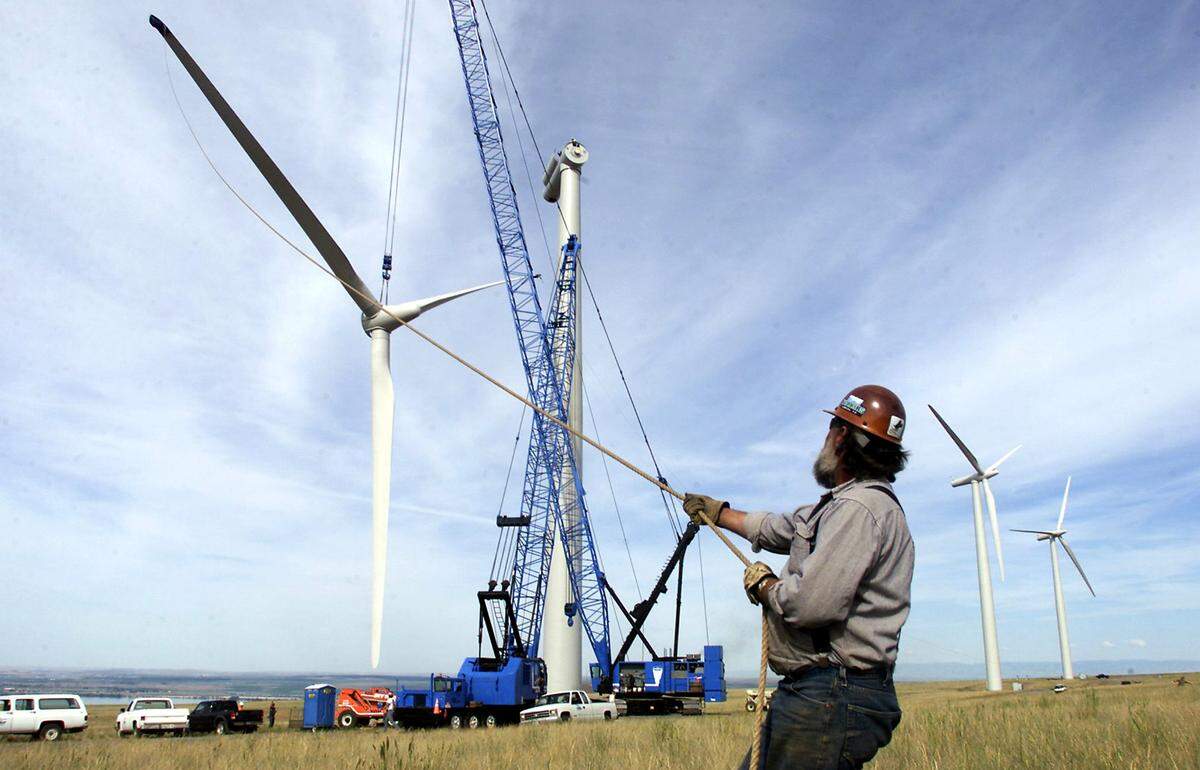
It has proposed installing either up to 222 turbines about 500 feet tall or 147 turbines that are 670 feet tall, plus solar arrays and battery storage. The project also would include solar panels and battery storage.
EFSEC’s 1st recommendation rejected
EFSEC spent three years evaluating the project, including required adjudicative proceedings and an environmental review, before a voting in April 2024 to recommend that Inslee approve a scaled-down project.
As recommended then by EFSEC, the project would have to eliminate about half the turbines Scout wanted.
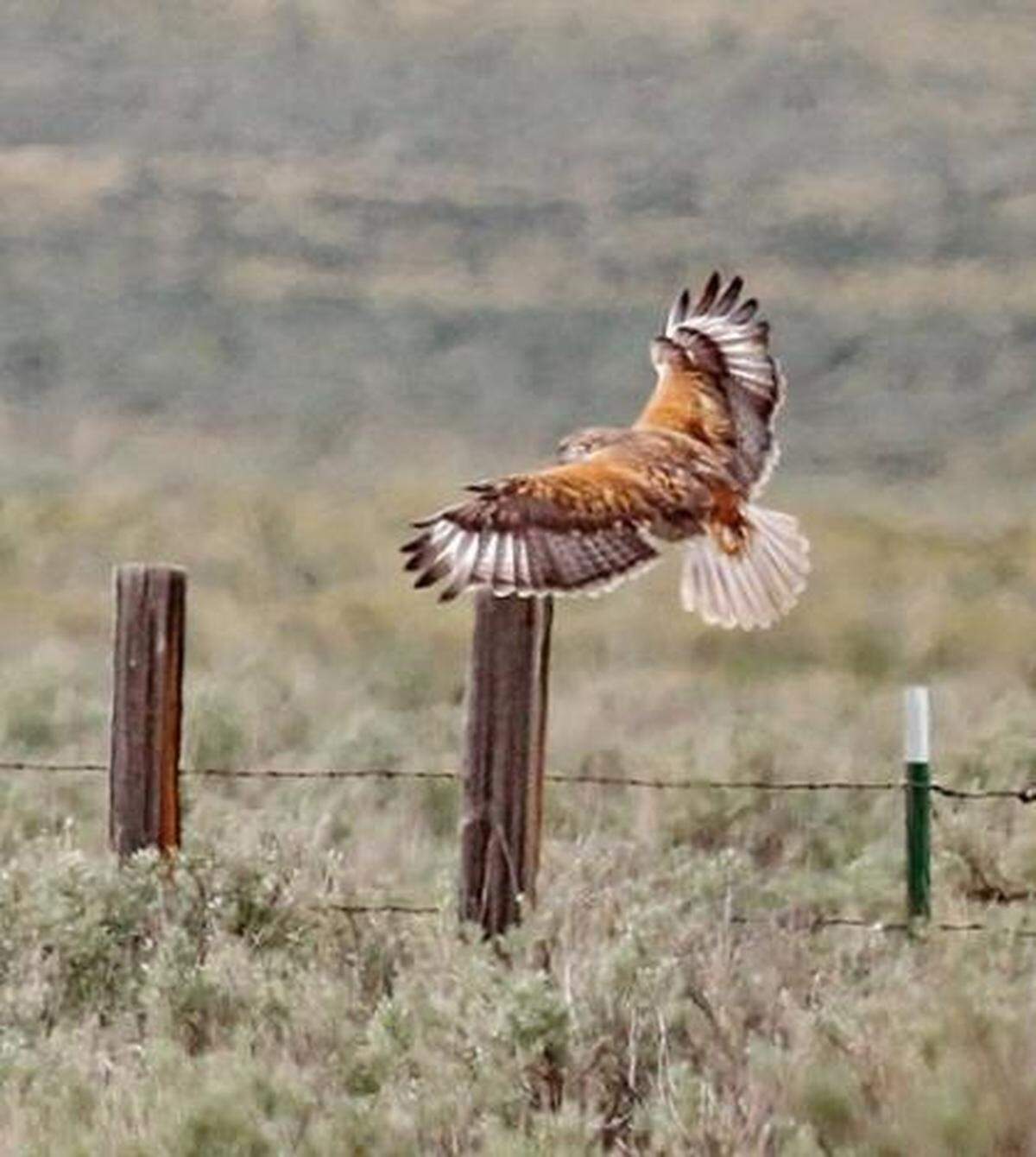
That would provide mitigation measures for endangered ferruginous hawks, Yakama Nation traditional cultural properties, the impacts of turbines on fighting wildfires and the visual impacts of the turbines to residents of the Tri-Cities and nearby areas.
But Inslee rejected the recommendation and sent it back to EFSEC, saying he needed to see a recommendation for approval “that appropriately prioritizes the state’s pressing clean energy needs.”
EFSEC complied, sending a new recommendation with fewer restrictions to Inslee, which he approved.
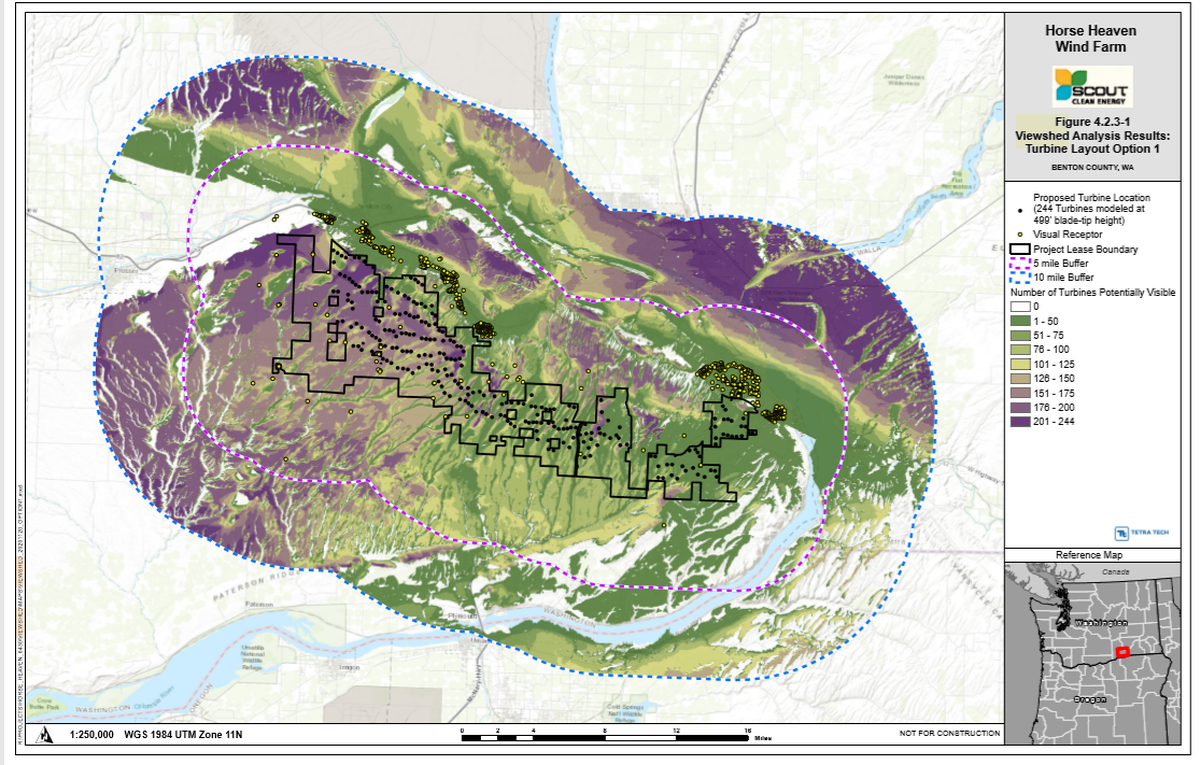
It could result in 114 of the 671-foot-high wind turbines along the Horse Heaven Hills ridgeline, according to Tri-Cities CARES.
Scout Clean Energy has not said what height of turbines it plans to use, but taller turbines have become the industry standard.
Plaintiffs in the case are arguing that the focus on meeting clean energy needs with maximum electricity production was not appropriately balanced with other needs EFSEC must consider and protect.
WA Supreme Court arguments
“Approving the Horse Heaven Hills project as it currently stands means approving well-documented, enduring significant harm to the Yakama Nation,” Shona Voelckers, attorney for the Yakama Nation, argued June 11 before the Washington Supreme Court.
“The Washington Legislature required EFSEC to balance the state’s energy needs against the environmental harms of the largest wind, solar and battery storage project ever proposed in the state,” she said.
State law also requires that EFSEC give special consideration to impacts on energy projects to overburdened communities, which include the Yakama Nation, she said.
“That did not happen here,” she said.
The first recommendation made by EFSEC avoided the highest impacts to wildlife, tribal cultural resources and the view of the Horse Heaven Hills, but then it violated the law by slashing those protections because of the governor’s personal policy goals to allow the project to move forward at near full generation capacity, Voelckers said.
Inslee did not have the authority to demand that EFSEC follow a new standard of maintaining generation capacity, she said.
The attorney for Tri-Cities CARES, Richard Aramburu, told the court that EFSEC initially voted that serious mitigation in Scout Clean Energy’s plans was needed to protect tribal interests and the 300,000 people in the Tri-Cities area whose southern view would become turbines along the ridgeline.
The former governor dismissed visual impacts as “limited and subjective,” according to Tri-Cities CARES’ court documents.
EFSEC took the governor’s initial decision for what it was — a directive to eliminate mitigation for visual and aesthetic impacts, according to Tri-Cities CARES court documents.
The entire council, made up mostly of state officials, voted for the first recommendation to the government except for two members who thought it should have even more restrictions, Aramburu said. That was after an eight-day administrative hearing with 34 witnesses, he said.
Benton County believes that the decision to allow the wind farm violates the Washington state Growth Management Act, which protects certain agricultural land from development.
It argues in the lawsuit that EFSEC made procedural errors.
It improperly proceeded with adjudication on contested issues without waiting for a final environmental impact statement to be issued, the county said.
Under the recommendation approved by the former governor, a technical advisory group was formed to make decisions on shrinking buffer areas required around previous nests of ferruginous hawks should they be used again by the hawks.
The group was given unprecedented authority and its meetings were illegally closed to the public, according to the county.
EFSEC defended
But attorney representing Scout Clean Energy, Philip Talmadge, told the court that “opponents of this project are not here to improve it, they’re here to kill it. They’ve told you very directly that they want the approval overturned.”
They want additional processes to be required to derail the project by delaying its start until the Trump administration has ended significant tax credits for renewable energy projects, he said.
The process to approve the project worked, he said. After meaningful consideration of different factors, significant areas of the project have been excluded from having turbines, he said.
Assistant Attorney General Jonathan Thompson, arguing for EFSEC, said that the final decision to approve the decision was correctly made because EFSEC followed the required processes, made a thorough record for that decision and appropriately balanced competing issues.
The former governor then used his broad policy perspective to understand the urgency of adding clean energy facilities and meeting the electricity demands of the state, Thompson said.
He pointed out that the governor’s final decision did not remove all mitigation measures. He said that as many as a third of the originally proposed turbines would not be allowed to be built.
This story was originally published June 12, 2026 at 10:51 AM.