
Go fishing, earn money. Top OR and WA angler brought home $159,000
AI-generated summary reviewed by our newsroom.
- Tips for catching and turning in qualifying pikeminnow.
- Program pays $6 to $10 per fish, with some tagged for $500 payout.
- Pikeminnow bounty station in Tri-Cities has opened early.
A program that pays a bounty for northern pikeminnow caught in the Columbia and Snake Rivers has opened for the current fishing season in the Tri-Cities area.
Although the 2026 Northern Pikeminnow Sport-Reward Fishery officially opens May 1, stations at Columbia Point in Richland and at the Umatilla boat ramp in Oregon are among a few that opened early.
The early opening in the Tri-Cities area allows anglers to take advantage of prime spring fishing conditions now through June for pikeminnow in this part of Eastern Washington.
Anglers are paid for each qualifying northern pikeminnow they catch, with payouts increasing as they catch more fish.
The pay is $6 for each of the first 25 fish, $8 for each fish from 26 to 200, and $10 for every fish over 200. Anglers can also catch tagged northern pikeminnow worth up to $500 each.
To be eligible for the bounty, anglers must register each day they want to fish and turn pikeminnow in fresh on the date and station indicated by their registration. A fishing license is required.
Pikeminnow must be at least nine inches long and caught within the program boundaries. The program stretches from the mouth of the Columbia River upstream to Priest Rapids Dam and on the Snake River from its mouth upstream to Hells Canyon Dam.
Northern pikeminnow are native to Washington and Oregon, but they are voracious predators of juvenile salmon and steelhead, consuming millions of them each year in the Columbia River Basin.
The goal of the program is not to eradicate them but to remove 10% to 20% of the larger pikeminnow each year. The smaller pikeminnow consume fewer salmon and steelhead smolts.
“For over three decades, anglers have logged more than a million trips and removed nearly six million northern pikeminnow from the Columbia and Snake rivers, reducing predation on young salmon by up to 40% compared to pre-program levels,” said Eric Winther, pikeminnow program manager with the Washington state Department of Fish and Wildlife.
The top earner last year caught 15,715 pikeminnow and was the second highest earner in the program’s history.
State officials have not released his name, but said he is a pipefitter who takes pikeminnow fishing very seriously, living on his specially equipped boat for five months of the season.
A boat helps to locate the high numbers of pikeminnow needed to bring home big reward money, but the program also has more modest earners who don’t use a boat.
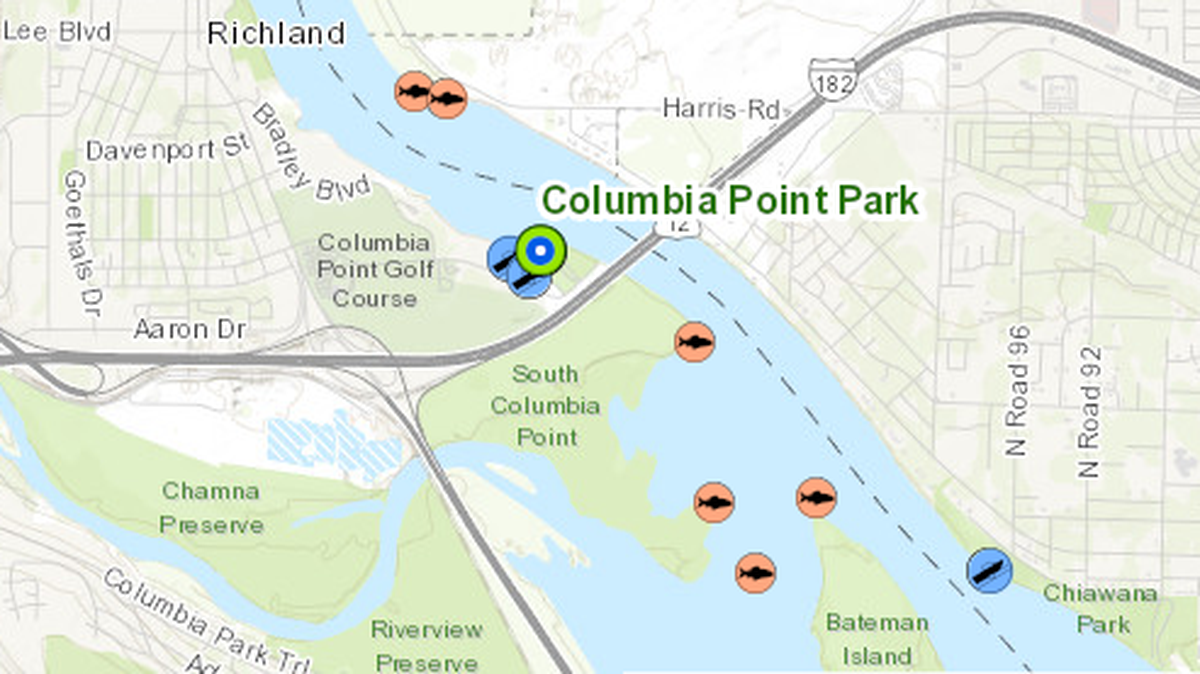
Registration for each day of the program can be done using the Pikeminnow Registration mobile app or at 21 registration stations.
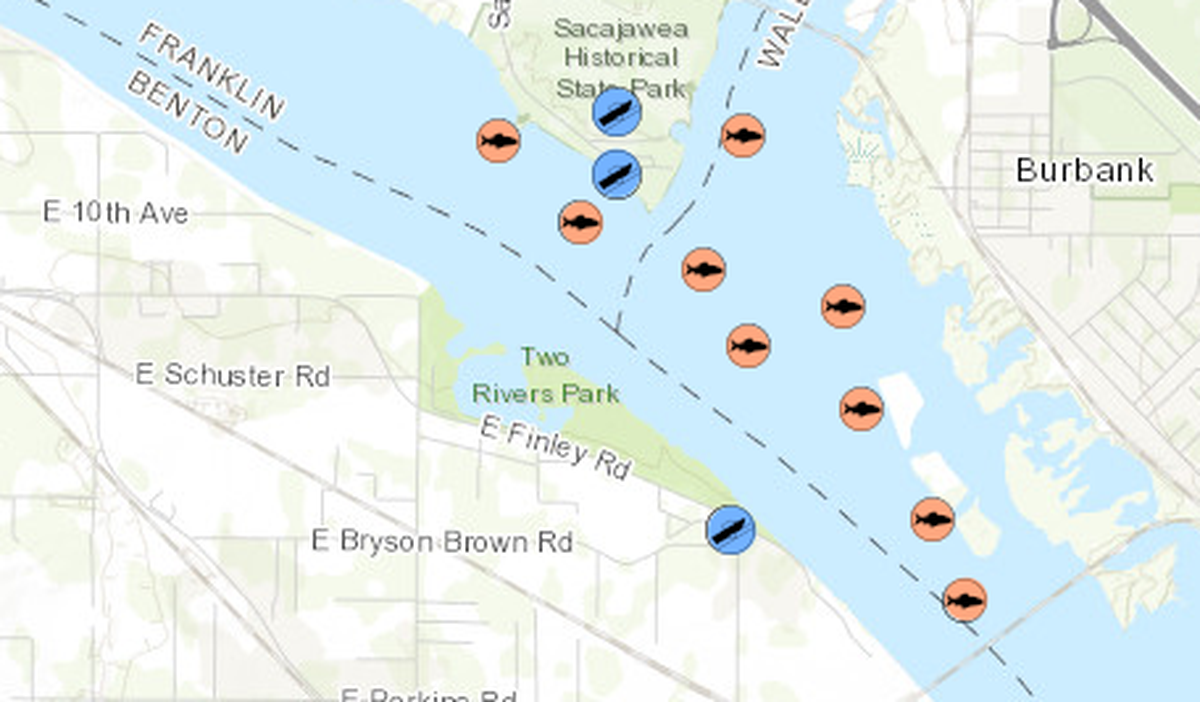
The closest stations to the Tri-Cities, in addition to the Columbia Park and Umatilla boat ramp stations open now, are at the Vernita Bridge Rest Area, opening May 1 ; at Lower Monumental Dam on the Snake River opening Aug. 1; and at Hood Park in Burbank opening June 1.
All stations and hours are posted at pikeminnow.org/stations-maps/columbia-point-park/.
Where to find pikeminnow
Near the Tri-Cities, good places to catch them have included near Bateman Island, at least before the removal of the causeway to the island this year, and near the confluence of the Snake and Columbia rivers.
Northern pikeminnow congregate in rocky areas with fast currents near dams, islands, stream mouths, points, eddies, rows of pilings, and ledges or bars in the river. Most fish are caught in 7 to 25 feet of water. They move to feed on concentrations of smolts, freshwater clams and crayfish. After fishing an area for 30 minutes to an hour without good results, try somewhere upstream or downstream, advises the reward program.
Sunrise, sunset and night are generally the best fishing times and the pikeminnow may be in shallower water then.
The rewards program posts information online on how to fish with bait, grubs and lures for pikeminnow at pikeminnow.org/resources/how-to. Complete information is posted at pikeminnow.org and a hotline also is available at 800-858-9015.
The Bonneville Power Administration pays for the program to help mitigate the impact of the Columbia and Snake River hydroelectric dams on salmon.
The program is administered by the Pacific States Marine Fisheries Commission, along with the Oregon and Washington Departments of Fish and Wildlife.
This story was originally published April 23, 2026 at 12:00 PM.