
The search for segregated Pasco’s long-destroyed Black community landmarks
AI-generated summary reviewed by our newsroom.
- Community event aims to document East Pasco's history through oral stories and mapping.
- Organizers seek photos, stories and lost business locations for a historical map.
- Urban renewal in 1968-70 razed homes and dispersed East Pasco's Black community.
Before urban renewal began in the late 1960s, Pasco had the largest per capita Black community in the Pacific Northwest.
On Saturday, the Hanford History Project and Morningstar Baptist Church are inviting longtime residents, family members, community historians and anyone else interested to come to a Community Memory Project event.
Organizers hope to collect stories and documentary evidence, such as photographs of East Pasco, that they can copy.
A primary goal is to produce a map of the former streets that no longer exist and to pinpoint locations of former businesses, which opened to serve Blacks who were not welcome at other stores, restaurants and bars in the Tri-Cities.
As the Black population began to increase during WWII, signs started popping up around Pasco saying, “No colored businesses solicited,” or “We are open for white trade only,” said Robert Franklin, the assistant director of the Hanford History Project at Washington State University Tri-Cities.
Franklin documented some of the history in his book “Echoes of Exclusion and Resistance,” which was edited by WSU Tri-Cities Professor Robert Bauman and Franklin.
The Hanford History Project previously has worked to collect information on the East Pasco community, the only place that Blacks were allowed decades ago to live in houses in Tri-Cities.
The project has worked with the African American Community Cultural and Educational Society, AACCES, to collect oral histories from people who lived in the Tri-Cities during segregation.
Participants told rich stories about not just migration to the Tri-Cities during World War II, segregation and civil rights, but also stories of daily life.
Vibrant Black community
Before WWII, only 27 Blacks lived in Pasco.
But then DuPont needed to fill as many as 53,000 jobs to build and staff the Hanford site facilities that would produce plutonium for the atomic bomb dropped on Nagasaki, Japan.
About 15,000 Blacks arrived in the Tri-Cities in two years starting in 1943, mostly recruited from the South, as Bauman wrote in “Jim Crow in the Tri-Cities, 1943-50,” a paper published in the Summer 2005 Pacific Northwest Quarterly.
Some lived in segregated barracks at Hanford, and others, particularly those with families, lived in East Pasco. The small nonwhite community of Pasco, including Japanese and Chinese families, was already living mostly east of the railroad tracks that divide Pasco.
Other Blacks came to work at the Pasco Naval Air Station during WWII.
The influx of Black workers and families in WWII created a community that was vibrant and connected, according to the B Reactor Museum Association, despite having almost none of the basic infrastructure built for other Tri-Cities residents.
Ramshackle houses, no running water
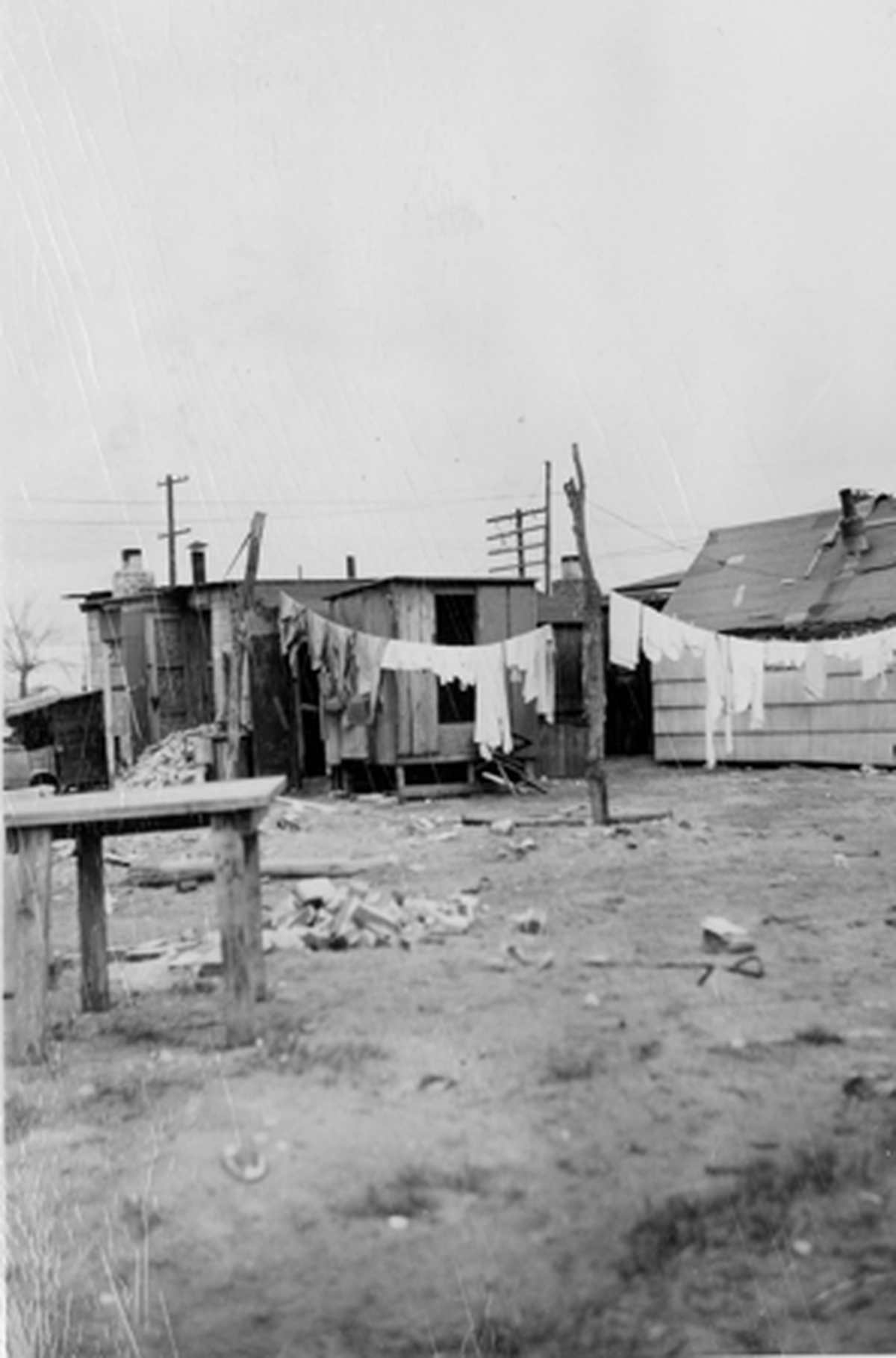
In the late 1940s, residents of East Pasco had no running water, no regular garbage service and no mail service, according to research by Bauman.
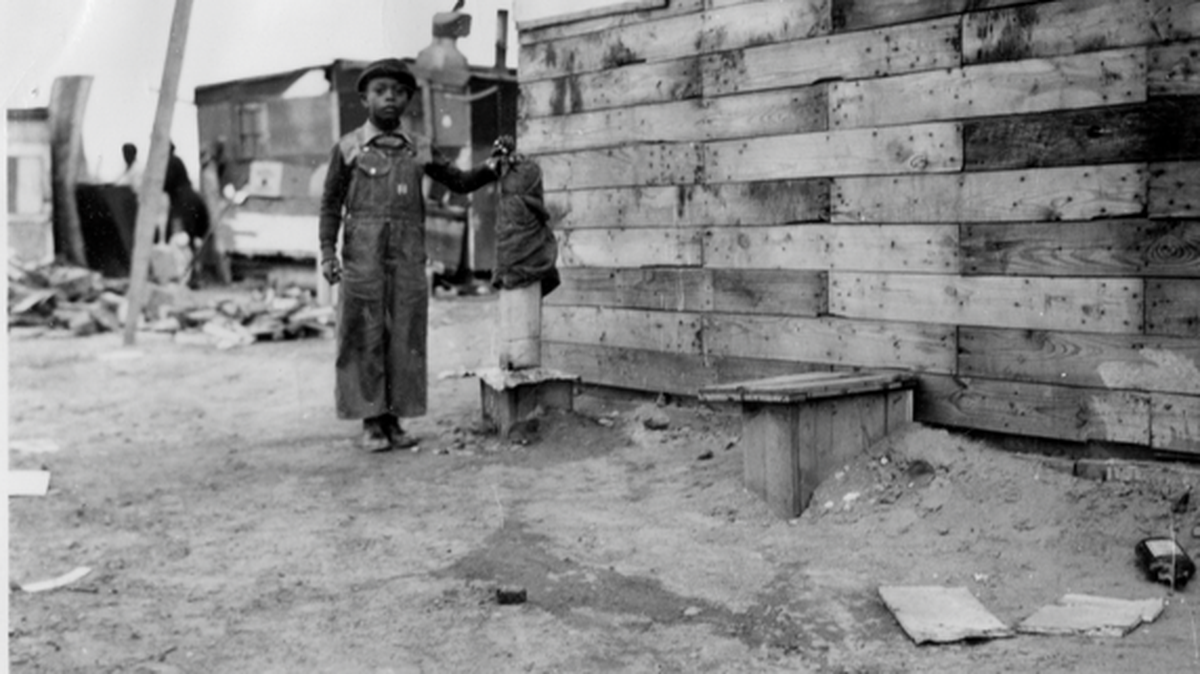
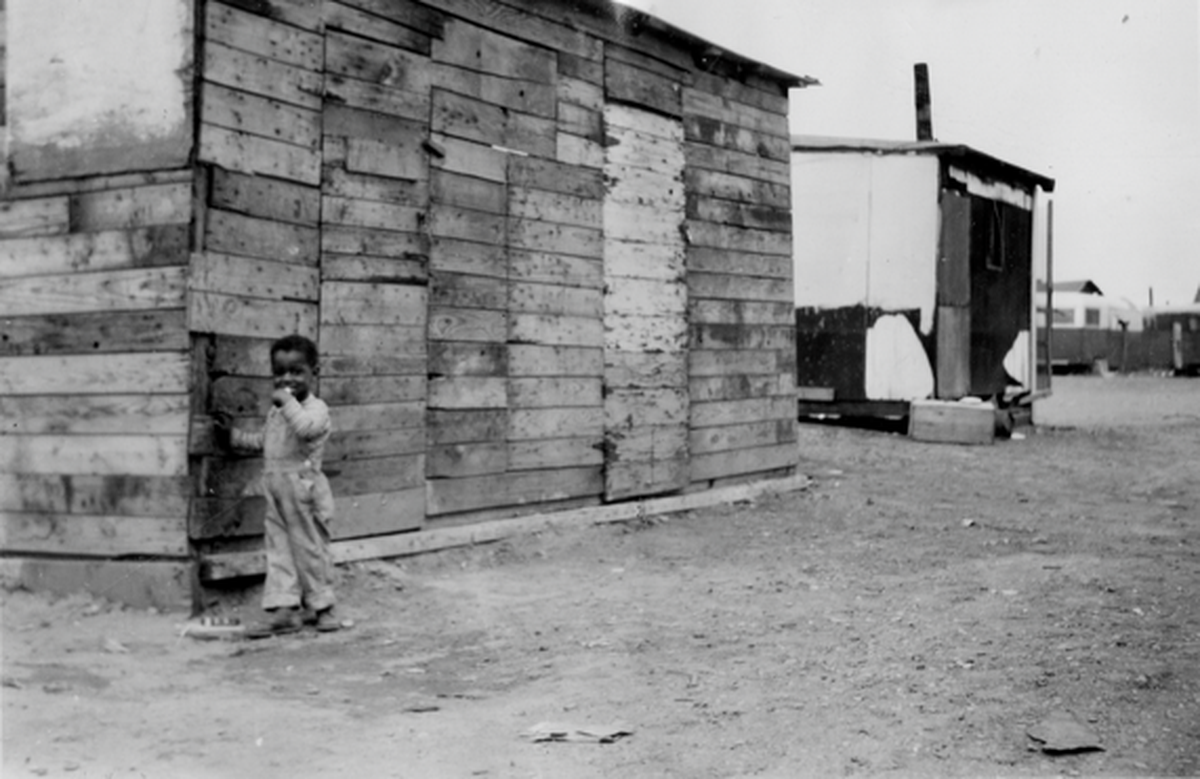
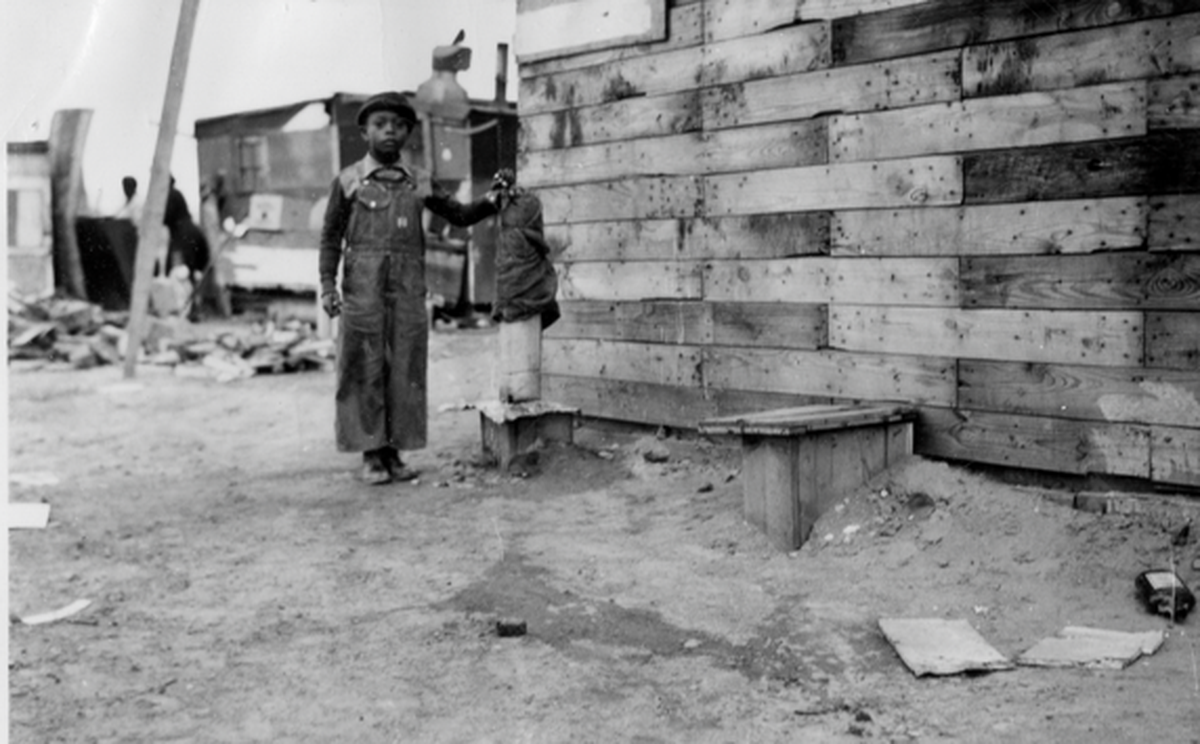
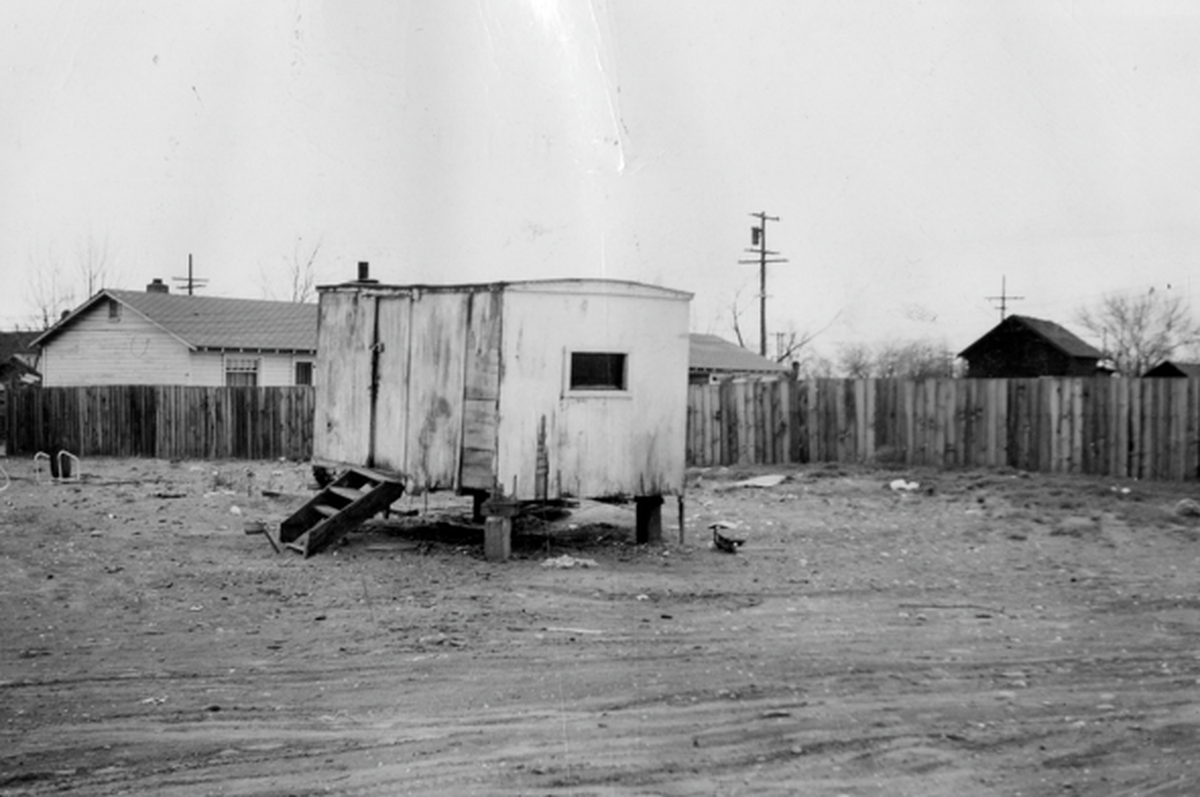
Photos from the era show ramshackle huts pieced together with sheets of plywood sitting in fields of dirt. Some 78% of Black families lived in one room, according to a Washington State College study on racial tension.
But with few stores and no restaurants willing to serve Black customers, some Black people, like Virginia Crippen, saw opportunity.
“I heard there was work here and wasn’t no place for Blacks to eat, so I come to better my condition,” she said, as recounted in “Echoes of Exclusion and Resistance.”
In 1948 she opened the Montana, but customers called it “Virginia’s Chicken Shack.” It served fried chicken, barbecue and biscuits and allowed teens to hold sock hops.
Other businesses including Johnny Reed’s Dance Club, the Queen Street Diner, Hugh’s Women’s Apparel, Tate’s Restaurant, Jack’s Tavern, Tommy Moore’s Hotel and Mrs Wright’s Trailer Court did brisk business, according to the book edited by Bauman and Franklin.
Urban renewal comes to Pasco
The passage of the 1968 Fair House Act brought urban renewal to East Pasco.
The aim was to redevelop blighted areas to create economic vitality by rezoning for commercial use and moving residents out of substandard housing, Franklin said.
In the interest of “urban renewal,” 78 homes in East Pasco were destroyed by 1970, and just eight were rebuilt.
“It did the job of getting rid of blight, but it also fragmented the Black community,” Franklin said. “It was no longer headquartered in East Pasco.”
Segregation ended, but the East Pasco community was fractured, he said. “There’s a real sense of loss there.”
The event Saturday will help preserve the history of East Pasco, a place where few photos were taken due to its blighted condition and the locations of some of the businesses that once served its population have been lost.
The Franklin County Historical Society and Museum will provide a large-scale historical base map, and participants will work together to add locations of former homes, businesses and gathering places.
Organizers are hoping to hear stories about what made each location meaningful and the connections that wove the community together.
The memory project is open to all and will be from 10 a.m. to 4 p.m. at Morningstar Missionary Baptist Church, 631 S. Douglas Ave., Pasco.
This story was originally published August 29, 2025 at 5:00 AM.