Soldier’s 2008 death resurfaces in vet’s run for Richland office. Here’s his side
Kyle Saltz believes a painful part of his past is behind him.
While serving 17 years ago as an Army counterintelligence agent at Fort Bragg, Saltz and six others were charged with involuntary manslaughter by the government for their role in restraining a fellow soldier outside a bar in Fayetteville, N.C.
The group hauled him back to the barracks, but found him unconscious and dying as they pulled him out of the vehicle. Despite attempts to resuscitate Pfc. Luke Brown, 27, he was later declared dead.
Saltz — who lives in Richland and now works as a Hanford Patrol officer — took a plea deal on a lesser assault charge for “restraining” Brown’s arm.
But his decision to run for a seat on the Richland City Counil has brought renewed interest in his role in Brown’s death.
In a interview with the Herald, Saltz described a nightmare where leading military prosecutors charged a group of soldiers who were just trying to do what they were told.
The case called into question the efficacy of the Army’s buddy system, a century’s old code to “leave no man behind,” either during rowdy nights out at bars or in the throes of battle.
Saltz asserts the group was presented with an impossible task to bring a hulking, combative and inconsolable soldier back to the barracks Fort Bragg’s 82nd Airborne Division’s Headquarters. They also feared he might harm himself or someone else.
Only one soldier, Sgt. Justin Boyle, ended up upconvicted of involuntary manslaughter. He was convicted for twice placing Brown in a rear martial arts choke hold, an act prosecutors argued contributed significantly to his death.
An initial autopsy by a military medical examiner listed Brown’s cause of death as “undetermined” — a panel of doctors couldn’t determine if he had died of asphyxia or of a cardiac arrhythmia, according to reporting at the time by the Los Angeles Times.
But after reviewing witness statements, the doctors changed the finding to asphyxia by choking, a homicide.
The 6-foot-3, 250-pound man had multiple heart conditions. Saltz said the family told him Brown lied about having Guillain-Barré Syndrome, an autoimmune disorder, when he enlisted in the military.
Saltz says the court ordered him demoted to specialist, to pay a $1,100 fine and to work 30 days of service. A sympathetic sergeant didn’t require him to work most of the extra duty.
Boyle was convicted by a military jury. Other soldiers took plea deals or were convicted of lesser charges.
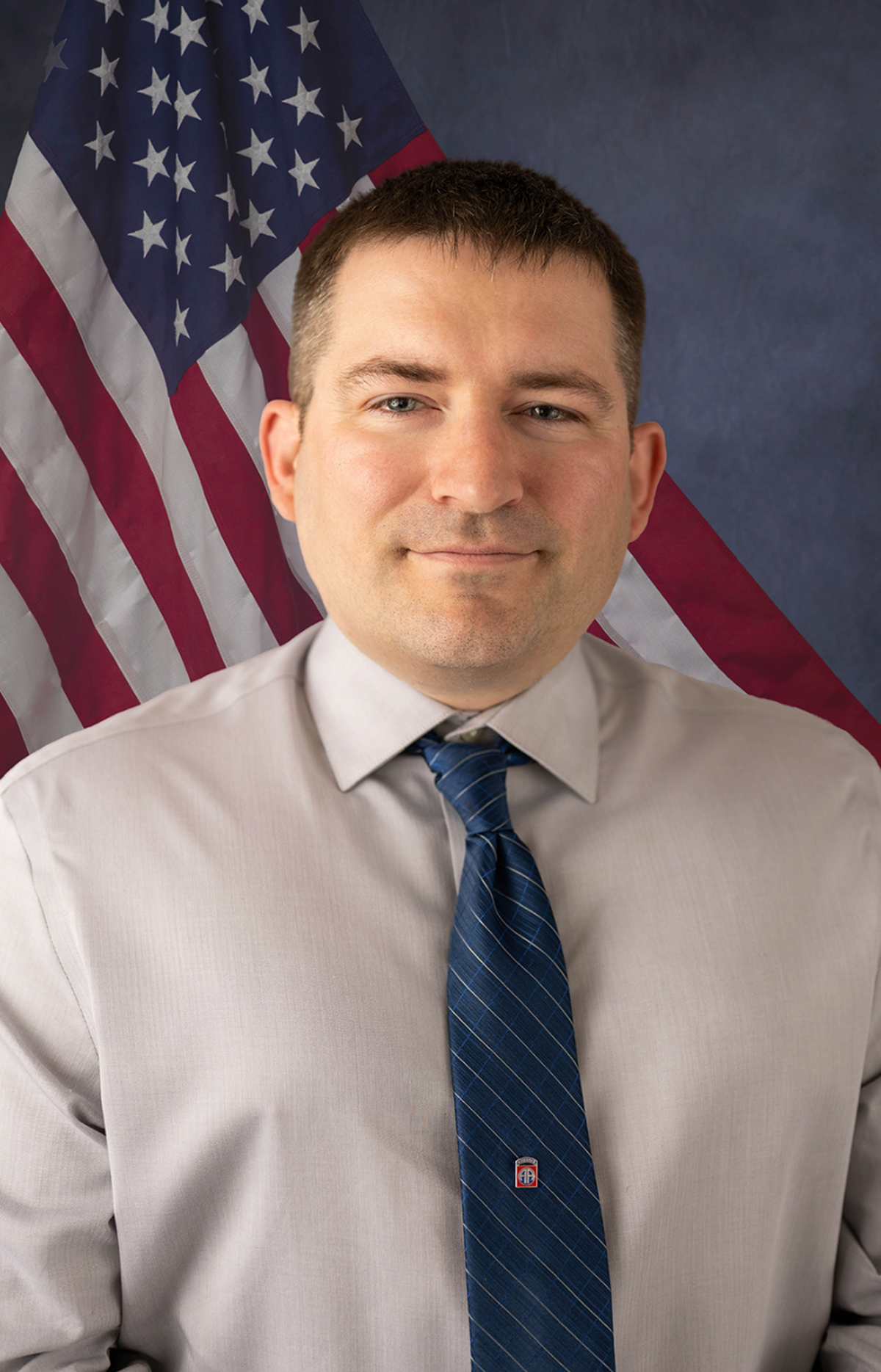
Proud military career
Today, Saltz, 41, looks back on his 11-year, active-duty military career with pride and accomplishment. He feels he’s lived his life in a way that makes him worthy of redemption “within the eyes of God, the Army and the community.”
“I’ve done every thing I can to try to redeem myself and to kind of help others along the way as well,” he said. “I didn’t allow the court martial to define who I am. I was utterly ashamed. When I came home (to Richland)... It was insanely shameful for me.”
Saltz contends that media reports at the time told only half the story in shallow detail. The details surrounding Brown’s death, he argues, are much more nuanced.
He holds issue with the reported cause of Brown’s death, the way he and his fellow soldiers’ roles were described in testimony and the shifting conclusion of the multiple autopsies. The judicial process, Saltz argues, was a miscarriage of justice and littered with corruption.
Brawl at the Ugly Stick Saloon
A 2009 article in the Los Angeles Times detailed Sgt. Boyle’s court martial. Saltz characterized the article as unreliable because it was based on one soldier’s “worst-case” testimony.
Brown died July 20, 2008, after a “rowdy” night of drinking at the Ugly Stick Saloon in Fayetteville. According to witnesses, he had become violent and inconsolable.
The article describes soldier testimony from that night as an “hours long chase through dense woods at night as Boyle and fellow soldiers in his intelligence unit tried to corral Brown, a hulking soldier built like an NFL lineman.”
Things first began got dicey after Brown began complaining about beer prices. He downed another soldier’s drink, began breaking furniture and got into a fight with the bouncers. He reportedly threw one person against a pickup truck.
That’s when he became emotional, and reportedly began saying he wanted to die and that nobody loved him. Soldiers tried to calm him and get him to get into a vehicle to return to the base.
Witnesses and soldiers testified that Brown ran into the woods about 2 a.m., then began screaming for help.
Saltz said he didn’t see him run into the woods. There were two groups that had gone out for drinks. A younger group of soldiers approached Saltz and some non-commissioned officers for help.
Men from the 82nd Airborne chased after Brown. At one point, Brown began choking another soldier and continued until he was tackled by Boyle.
That’s when Boyle locked Brown in the first of two martial arts choke holds, according to the Times story.
“While other soldiers held Brown down, they said, Boyle straddled the big man from behind, wrapping his legs around him and locking an arm around Brown’s neck,” the Times reported. “The others punched and kicked Brown in the stomach, torso and legs.”
Saltz told the Herald that Boyle put Brown in a defensive, controlled hold, and did not choke him. There were no marks on his body to indicate a fight occurred, he said.
“The autopsy actually cleared us. Private Brown was never beaten, he was never choked,” Saltz said.
Brown reportedly recovered from the hold but became aggressive again. Boyle applied a second hold, according to the Times.
The men loaded Brown into a vehicle to leave the bar and bound his wrists with plastic zip ties. A prosecutor alleged the second hold caused “a significant brain injury,” and that Brown was in the process of dying while in the vehicle.
Back at base, the soldiers noticed Brown was not breathing when they took him out of the vehicle.
Boyle performed CPR until military EMTs arrived.
Blood tests last showed Brown’s blood-alcohol level was from 0.14% to 0.19% when he died, said the Times report.
Saltz testified that he checked in on Brown while they were driving back. Brown was still alive moving his head and even muttered an obscenity.
Saltz says a night of drinking Vodka Red Bulls and running around in the woods is what likely put stress on Brown’s heart. He also says due to Brown’s hysteric actions, that the paratrooper may have ingested other substances earlier, but reports don’t mention any drug use.
A defense forensic pathologist argued in Boyle’s trial that Brown’s death was a freak accident caused by cardiac arrhythmia from heart disease.
Saltz says Brown’s medical records suggest he shouldn’t have been allowed to serve in the military and that his heart issue was a “ticking time bomb.”
Saltz is critical of the battalion commander’s decision to charge the group before Brown’s full autopsy was released. He believes they “jumped the gun” on charging the group.
He said key witnesses for government prosecutors were contradictory and motivated by immunity. The witnesses were used to justify the autopsy differences, he said.
Saltz said one of those witnesses, Sgt. Mitchell LaFortune, who was not charged, changed his statement “three different times.”
Conviction and clemency
Boyle was convicted of involuntary manslaughter in September 2009, and sentenced to two years. He had served four tours in Iraq and Afghanistan, and is credited with capturing more than 400 insurgents.
He showed remorse for his actions, saying what he’d gone through “matters nothing to how much I miss my friend,” and that he was “trying to keep him safe,” said a release at the time.
Brown was raised near Fredericksburg, Va., a home-schooled boy who was active in the Church of Jesus Christ of Latter-day Saints.
He enlisted in the Army in 2007 and assigned to Fort Bragg as an intelligence analyst after basic training and airborne school.
His family advocated against the court martial of the seven soldiers, according to blog post from a group that advocated for Boyle’s release.
Fort Sill Maj. Gen. David Halverson, acting in part on the wishes of Brown’s family, granted clemency to Boyle in October 2010, about six months before he was set to be released.
Richland City Council race
Saltz is running for Richland City Council Pos. 6. He and Joshua Arnold are challenging incumbent Kurt Maier in the Aug. 5 primary.
The Richland veteran brought up details of Brown’s death in an endorsement interview with the Benton County Republican Party when they asked him if there were issues in his past that could be raised by opponents.
Saltz told the Herald he knew Brown for about a year or so before he died, but was unaware of his struggles with alcohol.
He told local Republicans he’d eventually learned Brown had relapsed after graduating twice from an Army substance abuse program.
“He gave me a Valentine card because we kind of looked alike... I was his ‘Mini Me’ — it was a joke,” Saltz joked. “Private Brown, I considered him a friend, and the whole court martial proceedings was an absolute travesty, in my point of view. It was a tragedy and I did everything I could to save his life that night, and there was a lot of stuff that didn’t get put out.”
‘I wanted to finish my time’
Saltz stayed in the military for five more years after the death and eventually worked his way up to the staff sergeant rank. He later attended U.S. Defense Language Institute, studying French.
The Richland veteran says he earned an honorable discharge and used his Post-9/11 GI Bill benefits to go back to school and obtain two master’s degrees, one in criminal justice.
As a counterintelligence agent, Saltz says he was deployed multiple times to Afghanistan.
Since 2017, Saltz has worked with the Hanford Patrol Tactical Response Team. The armed protective force provides security for the 580-square-mile defunct nuclear site adjacent to Richland, and are tasked with protecting radioactive waste and classified materials. He holds a top-secret clearance with both Department of Energy and the Army.
A couple years ago, he enlisted in the Army Reserves.
“At 40 years old, I went back into the military because I wanted to finish my time,” said Saltz, who admits he’s more comfortable in the military environment.
Saltz highlights his current work with the veteran community here in the Tri-Cities, too. He’s served more than a decade in elected leadership with the Veterans of Foreign Wars, and is also involved with the Benton County Veterans Therapeutic Court mentor program and Mid-Columbia Love on a Leash.