
Tri-Cities at rising risk for blackouts. But $100M Badger Canyon project draws concerns
AI-generated summary reviewed by our newsroom.
- BPA plans $107M project to raise Tri-Cities grid capacity by 66%
- Transmission upgrade could reduce blackout risk, help recruit industry
- Landowners concerned over route impacting homes and farms
The Bonneville Power Administration is proposing a $107 million transmission project for the Tri-Cities area that would help solve two problems — the Tri-Cities growing risk of blackouts and the lack of electricity available to attract new industry.
Construction could start as soon as spring 2026 on the project just south of the Tri-Cities. It would increase BPA’s transmission capacity in the greater Tri-Cities area by 66%.
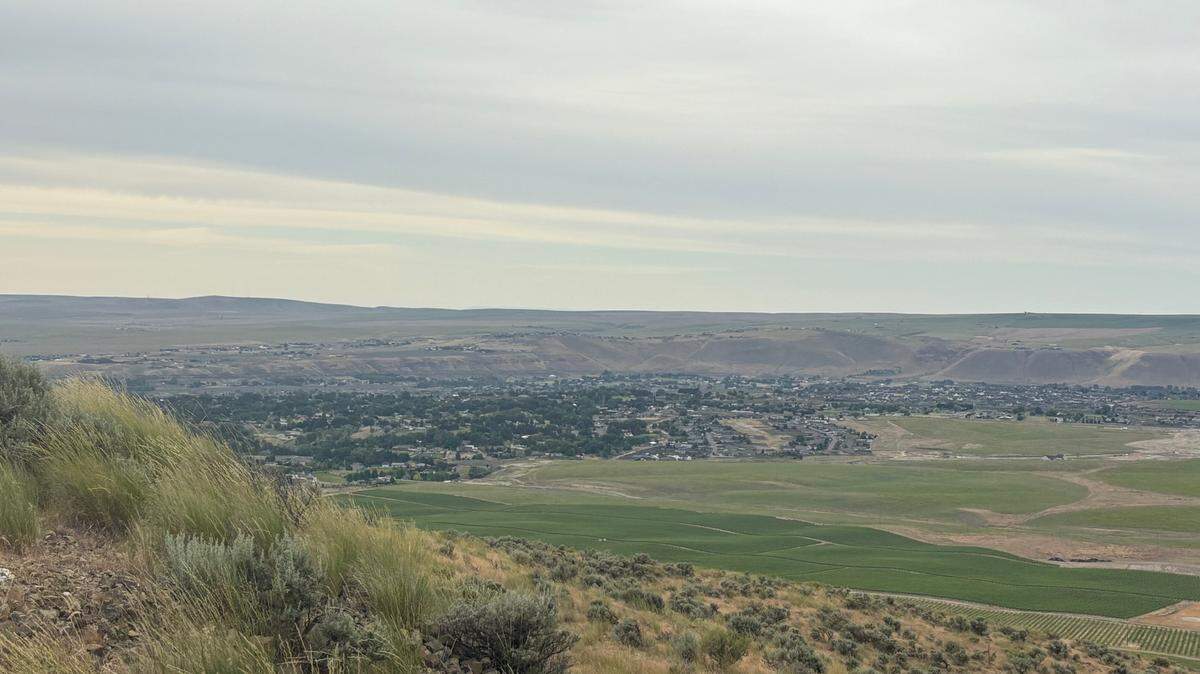
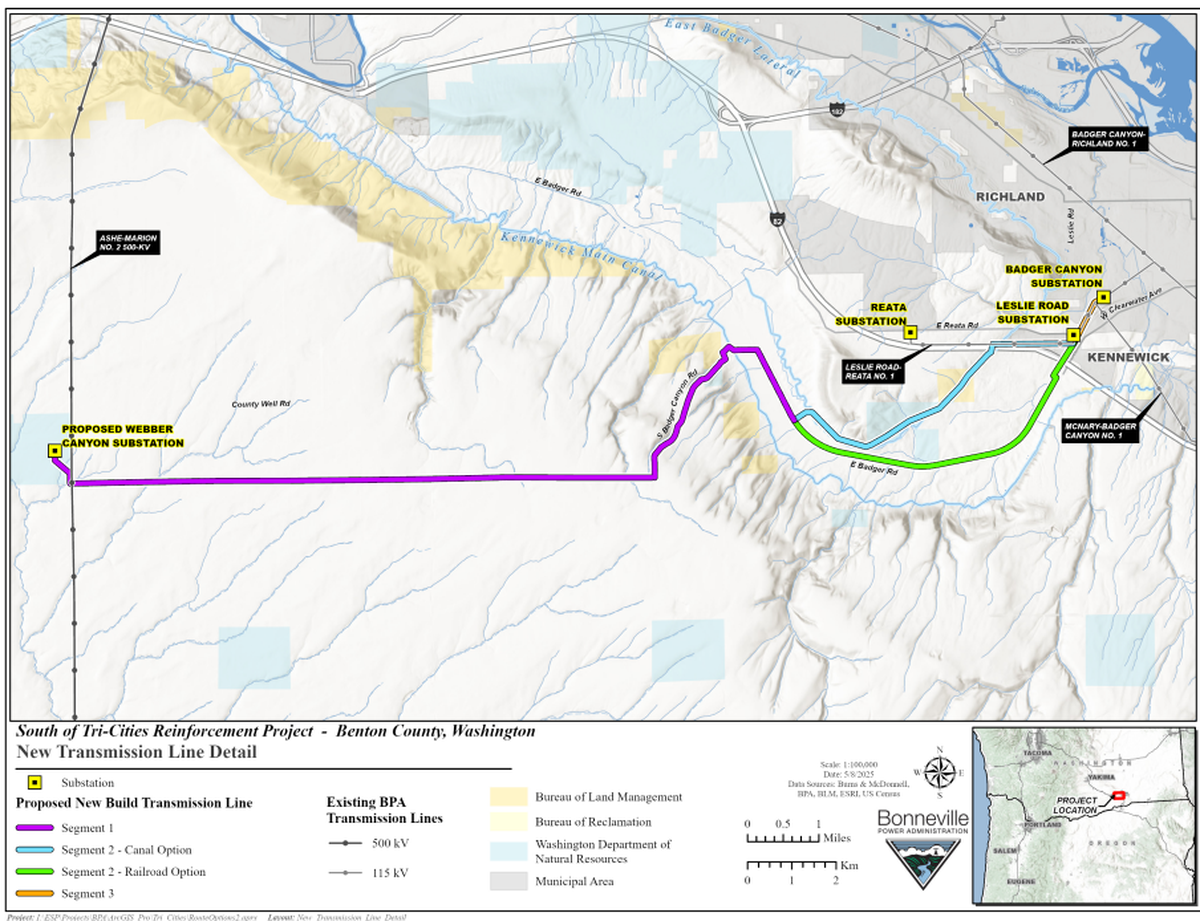
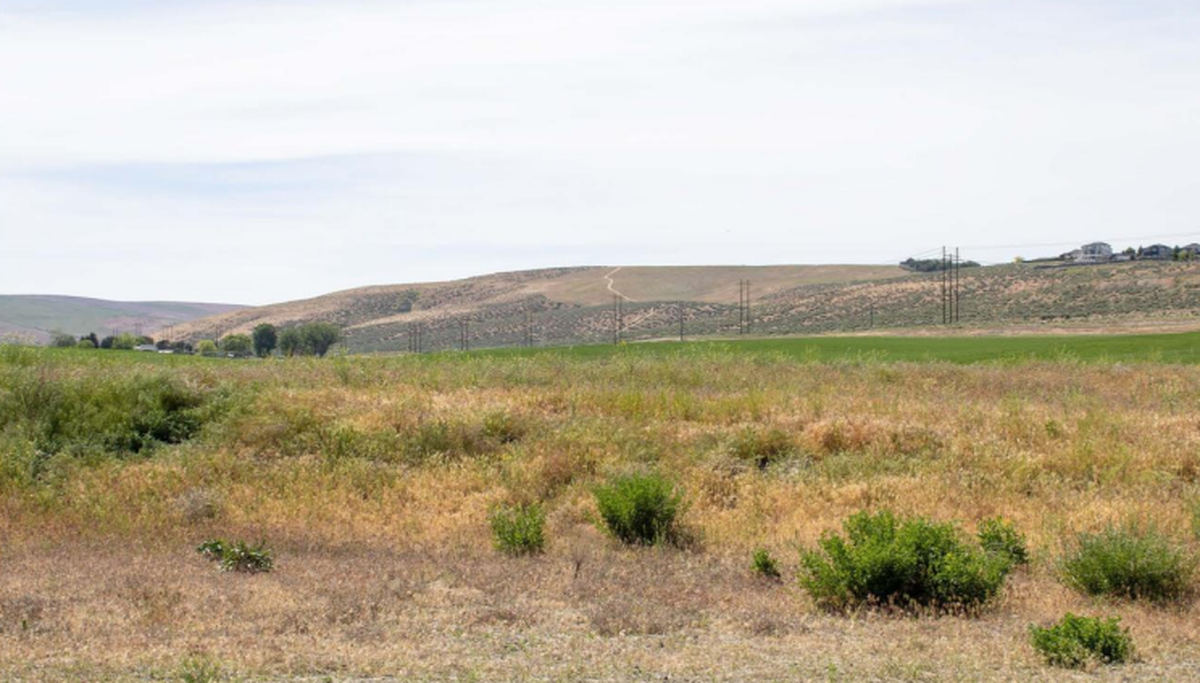
The 18-mile long, 115-kilovolt transmission line would start at the Badger Canyon Substation on West Clearwater Avenue, and be built through Badger Canyon south of Richland, Then it would go through Webber Canyon in the Horse Heaven Hills and west to a proposed Webber Canyon Substation near County Well Road.
The only part of its route not yet decided is a stretch just south of Richland where some farmers and homeowners are concerned it would be built too close to their homes or require some of their land.
“This line is all about making sure there’s sufficient transmission capacity to keep the lights on in the Tri-Cities area,” said Jeff Cook, an acting BPA vice president, in a statement. “It also would help local utilities keep pace with growth and provide electric service to new and existing end-use customers.”
Now the transmission lines that bring power into the Tri-Cities are at risk of becoming overloaded during periods of high electricity use, leading to potential black outs in the area, according to BPA.
When loads surpass 1,100 megawatts in BPA’s Tri-Cities service area — which includes Benton, Franklin, Walla Walla and Grant counties — a single transmission line outage can cause system operating limits to be exceeded, which can lead to a loss of power.
Risk of electricity black outs
Loads in the Tri-Cities area have surpassed 1,100 megawatt on hot days every summer for the past 10 years, according to BPA.
During a July 2017 heatwave, a combination of high electricity use and equipment failures came close to triggering load shedding — interrupting the flow of electricity to prevent overloading the grid.
BPA has developed procedures since then to reduce that risk, but “the situation remains tenuous,” according to the BPA’s draft environmental assessment determination for the South of Tri-Cities Reinforcement Project.
BPA expects the greater Tri-Cities area to reach the 1,100 megawatts threshold with increasing frequency as the demand for electricity continues to grow over the next decade, putting long-term reliability of the grid at risk, the draft assessment said.
Taking one BPA line serving the Tri-Cities area out of service for regular maintenance also increases chances that other lines become overloaded.
As a result, maintenance of BPA systems has been put off, increasing the risk of equipment failure, the draft assessment said.
Now maintenance must be avoided during high demand times — both the heat of summer and cold of winter — and also when there are seasonal restrictions on producing hydropower to help endangered salmon.
Clean energy development and data centers in the area also would be addressed by the proposed new transmission project.
Requests to integrate new power generation sources, such as wind and solar projects like the Horse Heaven Clean Energy Center, into BPA’s transmission system are contributing to anticipated capacity issues in the greater Tri-Cities area, the draft assessment said.
And data center demands from the Boardman and Umatilla, Ore., areas are increasing the strain on the transmission lines through the greater Tri-Cities area, according to the draft assessment.
Electricity for Tri-Cities development
The 66% increase in BPA’s transmission capacity to the Tri-Cities area would be welcomed by business interests.
The Tri-Cities needs significantly more transmission capacity if it is going to attract large industrial projects that offer family wage jobs, said David Reeploeg, a Tri-City Development Council vice president. TRIDEC supports the proposed transmission project.
The project also is important to support the future growth of Pacific Northwest National Laboratory based in Richland, Reeploeg said. The Department of Energy lab has a $1.6 billion annual research budget and about 6,400 employees.
It also could help Atlas Agro, which is considering the Tri-Cities for its $1.1 billion green fertilizer plant, and needs the transmission project completed before it moves forward, he said.
“In the short term, it provides a significant addition to the regional capacity,” Reeploeg said.
It would support industrial projects underway or planned now and provide some additional margin to attract new industrial projects, he said.
But long term TRIDEC wants the additional generation that would be provided by advanced nuclear projects to meet power production demand created by Washington state’s decarbonization goals, companies looking for large electric loads for data centers and new large industries, he said.
Badger Canyon concerns
Public comments submitted to BPA on the proposed project have focused on support for the project and concerns about the location of the project from the Leslie Road Substation in Richland to several miles to the west.
BPA is considering one route for that section of the project that would follow railroad tracks from near Kennewick’s Cottonwood Elementary along East Badger Road.
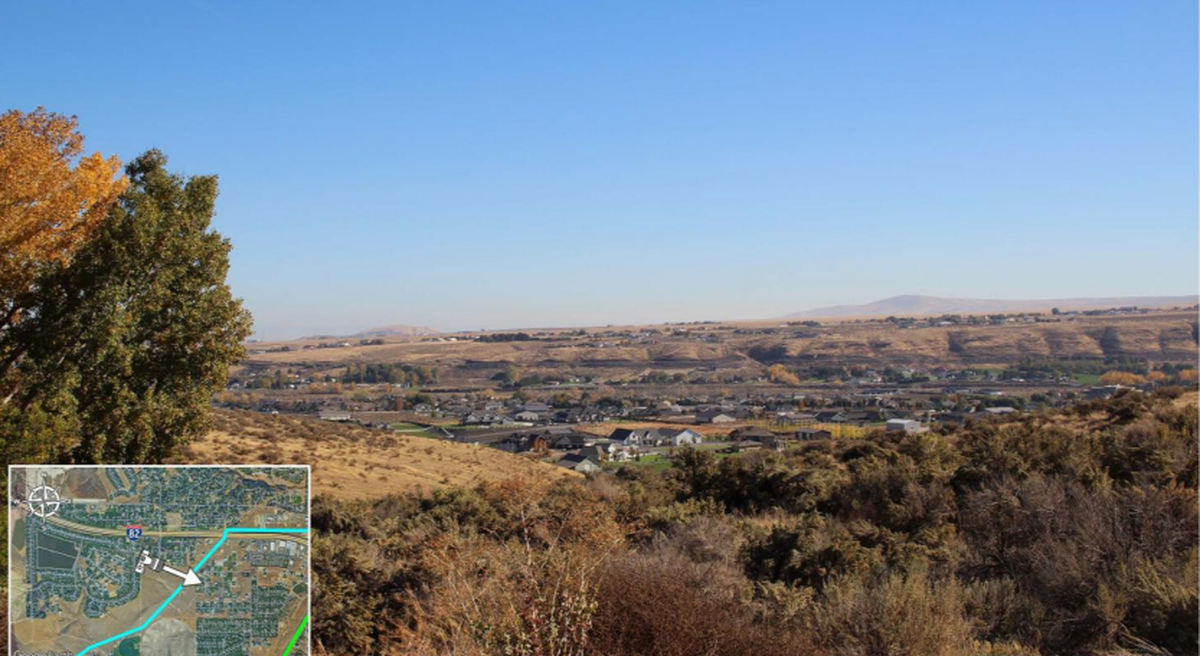
A second alternative to the north of East Badger Road would parallel the north side of a Kennewick Irrigation District canal.
The draft environmental assessment of the project found the railroad route to be the best option, but BPA is not bound to that recommendation.
The railroad option would disturb less vegetation and wildlife than the canal option’s route through 680 acres of high quality shrub steppe habitat, the draft assessment found.
Landowners along the canal option route have opposed that option, saying some of their land would be needed for the project.
It includes part of the six acres where Linda Utley has a greenhouse and other farming operations to grow plants, berries and florals for her shop, the Badger Canyon Tea Co. in Kennewick.
The Utleys have lived in Badger Canyon for more than 50 years, the last 30 years at their current location.
The Utley home would be 250 feet from transmission lines, which would run along two sides of her property because the route turns there, she said. Humming from the lines could create a sound problem, she said,
Arleen Fetrow said her house would be even closer at 150 feet from transmission lines.
Utley is also concerned about preserving 250 30-year-old Austrian pines that line the private gravel road that provides access to homes along that section of the canal.
The public can comment on the transmission line project’s draft environmental assessment, including whether it should use the railroad or canal route, until June 21.
Call 800-622-4519 or post online at publiccomments.bpa.gov. Written comments may be sent to Bonneville Power Administration; Communications – DKS-7; P.O. Box 14428; Portland, OR 97291-4428.
This story was originally published June 8, 2025 at 5:00 AM.