
Norovirus stomach flu sickening schools, nursing homes in Tri-Cities
If you’re in the Tri-Cities and have been feeling ill, it may be norovirus.
The Benton Franklin Health District reports a sharp rise in the highly contagious stomach bug throughout the two counties.
It has been reported recently in schools and long-term care facilities, according to the district.
Symptoms are unpleasant — watery diarrhea, explosive projectile vomiting and stomach pain.
You also may have a fever, body aches and tiredness.
However, for most people the illness passes quickly, often within one to two days.
But the virus lives on.
Norovirus ‘tough to kill’
“One of the reasons norovirus spreads so easily is because it’s extremely tough to kill,” said Dr. Steve Krager, health officer for the Benton Franklin Health District.
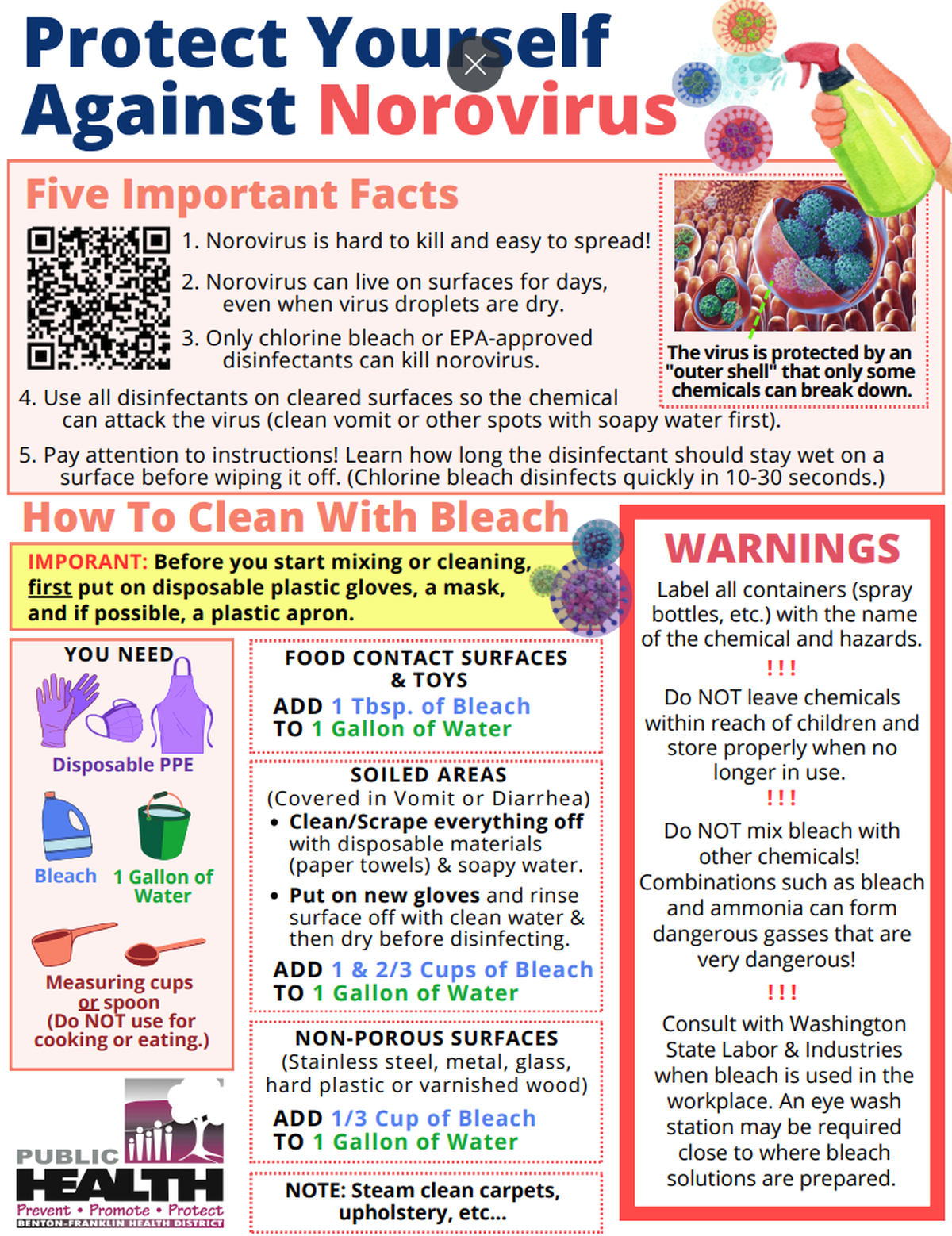
“The virus has a protective outer shell that makes it resistant to many common disinfectants and alcohol-based hand sanitizers,” he said.
It can survive on surfaces for days, potentially infecting people who touch them. And people who fall ill with norovirus are contagious from the time they start feeling ill to a few days after they recover.
The virus is easily spread through direct contact with infected people, touching contaminated surfaces or eating food prepared by someone who is infected. Symptoms can develop within 12 to 48 hours of exposure.
The virus is highly contagious, with as few as 10 viral particles causing infection out of more than 100 million particles in a vomiting episode.
While most people recover quickly, it can cause severe illness in young children, older adults and those with weakened immune systems.
“In those groups, norovirus can lead to serious dehydration and may require medical attention,” Krager said.
Norovirus usually peaks in the winter, but it is present all year.
The recent outbreaks appear to be isolated, but because norovirus is so contagious, the health district continues to monitor conditions at facilities with outbreaks and provide education on the best sanitation and cleaning practices and other ways to limit the spread.
Outbreaks are most commonly reported by schools, long-term care facilities, restaurants and other places people gather which have state requirements to report clusters of illnesses, according to the health district.
The health district investigates if two or more similar gastrointentinal illnesses are linked to a common exposure.
Preventing norovirus
Thorough handwashing with soap and water — particularly after using the bathroom, changing diapers and before eating or preparing food — is the best way to protect yourself or others from norovirus.
Hand sanitizer does not work well against the virus, warns the Benton Franklin Health District.
The district also advises staying home for at least 48 hours after symptoms to prevent spreading it to others.
The virus can be tough to clear from surfaces, and routine cleaning will not be enough.
Only chlorine bleach — use a solution of about 5 to 25 tablespoons in a gallon of water — or disinfectants approved by the Environmental Protection Agency can kill the virus.
Soiled clothes or linens should be washed at the hottest available temperature and then dried at the hottest heat setting, according to the Centers for Disease Control and Prevention.
Contact a healthcare provider if suspected norovirus causes a high fever, bloody stool or vomit, vomiting or diarrhea that lasts more than two days, or signs of dehydration such as dry mouth, dizziness or no urination or wet diapers for hours.
This story was originally published May 19, 2025 at 4:16 PM.