
See an ice age mammoth dig site near Tri-Cities. Tickets are on sale
Tickets have gone on sale for summer and early fall tours of the Coyote Canyon Mammoth Site, where the bones of an ice age mammoth are being painstakingly unearthed within a couple of miles of the Tri-Cities.
A few remaining spots on late May and early June tours that were opened for registration earlier this year also are still available.
Tours include time at the dig site and a visit to the MCBONES Research Center, or “dig house,” with a presentation about the history, discovery and findings at the site; a guided tour of the laboratory activities and displays of key bones and specimens.
Not only are the bones of an ice age mammoth being unearthed, but small objects, such as beetle wings, ground squirrel teeth, mice bones and mollusk shells, found in the soil are being collected.
Changes in objects at different levels of the dig provide information about the changing environment of the Tri-Cities area over thousands of years, including the environment at the time the mammoth lived 17,000 years ago.
Money raised from the tours will be needed as MCBONES has radiocarbon dating done on some of its finds. It also will need to pay for professional identification of some microbiology species.
The tour cost is $10 per person, whether adult or child, and organizers recommend registering as soon as possible to get the tour date you want.
Go to mcbones.org/public-tours.html and click on “See Scheduled Public Tours” on the right side of the screen.
Public tours are set for 9 a.m. and 11 a.m. on some Fridays, Saturday sand Sundays through Oct. 18. The tours last about 90 minutes to two hours.
After registering, directions to the dig will be sent.
About the mammoth
The mammoth being unearthed appears to be a male, because bone growth plates take longer to fuse in males. He likely was about 40 years old when it died with a front leg growth plate still unfused.
The animal was large, likely standing 10 to 13 feet tall at the shoulder, making it bigger than modern day elephants.
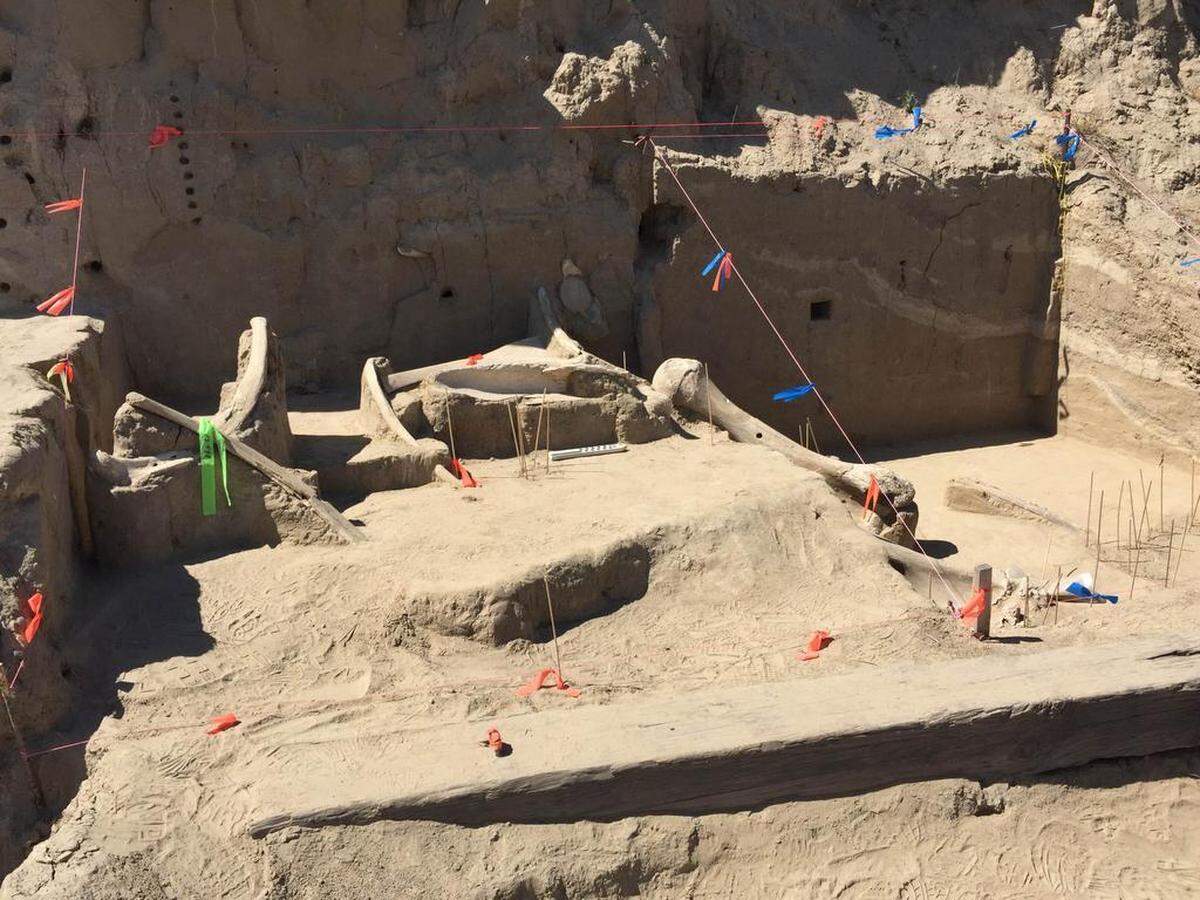
During the ice age flood water backed up as it hit the narrow Wallula Gap to cover what is now the Tri-Cities. The dig site is at an elevation of about 1,060 feet, and floods may have been deep enough to reach the area about seven times.
The mammoth could have been drowned in the flood, and then the carcass was deposited on the hillside as waters receded.
The bones have been found relatively intact — the ribs somewhat jumbled, for example, but not scattered over a wide area.
This story was originally published May 10, 2025 at 5:00 AM.