
Paddle sport popularity, and deaths, on the rise in WA. Here’s the reason
Paddle sports like kayaking, paddle boarding and canoeing have been on the rise in Washington state. According to a study from the Recreation and Conservation Office at Washington State Parks, paddle sports have become one of the most popular recreation activities in the state.
This is based on the results of a resident survey, in which more than half of the respondents said they participate in paddle sports. The study showed a 28% increase from the last study conducted in 2017.
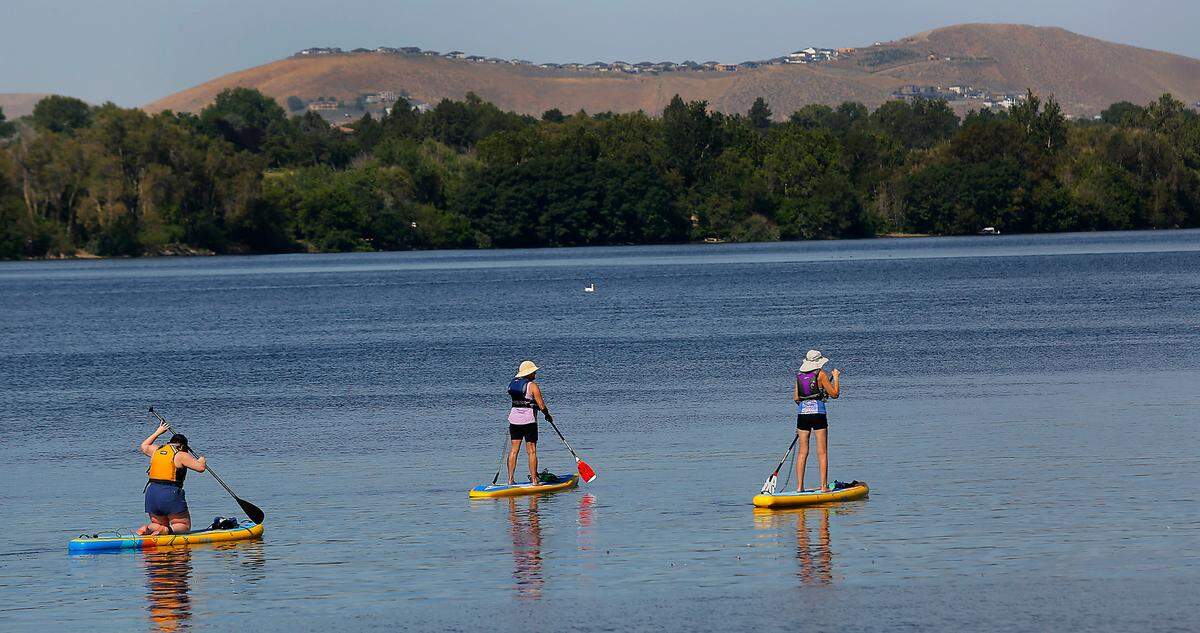
In Tri-Cities, the paddling is particularly favored, and a common pastime on the Columbia River as soon as waters are warm enough.
One local paddler, Alisha Grow, runs both the community paddling group Paddle Tri-Cities and Aqueous SUP, a certified paddleboarding company in Tri-Cities. She told the Herald there has been a “noticeable rise” in paddleboarding here in the past few years.
“Years ago, I would go out and I would see a paddleboarder, and I knew who they were,” Grow said in an interview. “Now, I don’t. I don’t recognize people, because there’s just so many people.”
Paddle sport safety in Washington
The growing popularity of paddle sports has also brought a growth in dangerous incidents, prompting the state to increase its safety campaigns. Paddle Safe Week is going on its seventh year now, and goes over proper paddling practices and requirements in Washington waters.
Additionally, the Recreational Boating Safety Program is launching an additional campaign this year, focused specifically on wearing a life jacket while out on the water.
Kicking off the campaign is a statewide survey, open to all residents, aimed at better understanding the safety habits of Washington’s water sport enthusiasts. According to the State Parks press release, the survey takes about five minutes, and the results will be used to inform the program’s safety and education efforts.
There is a clear need to increase safety.
The most recently available data on reportable boating fatalities in the state, from 2023 to 2024, shows that 61% of those fatalities involved paddle sports. Of the 22 paddle sport fatalities recorded in that time, 18 involved recreators who were not wearing a life jacket, according to the Parks study.
While you have to take a safety course and obtain a boater education card in order to drive a boat in Washington, there are no such requirements for paddle sports. Because of this, paddlers may not know about the laws and recommended safety practices they should follow on the water.
Recommended paddle sport safety
Whether you’re paddleboarding, kayaking or taking part in other water activities, under Washington state law you must have a life jacket.
“What folks might not know when getting out on the water is they are required to carry a life jacket with them by law,” the Parks Recreational Safety Education Coordinator, Derek VanDyke stated in the press release. “But having it with you won’t save a life in case of an emergency — you have to wear it.”
You’re also required to carry a sound device like a whistle for emergencies. When out at night, you also need a navigational light and a visual distress signal. Aqueous SUP’s Grow also recommends taking a distress flag, a phone or VHF radio for emergency communications, and a quick release leash, which connects a person to their board with the option for a fast emergency release.
It’s important to choose the right life jacket, the best paddle type for your purposes, and understand all your gear. Additionally, Grow says to dress for the temperature of the water, not the temperature of the air. At this point in spring, paddlers should be wearing full wet or dry suits to avoid hypothermia and cold shock.
The Benton-Franklin Health District (BFHD) also recommends getting familiar with boating hand signals. There are also paddlesport-specific hand signals that Grow teaches in her safety courses.
Grow told the Herald she will sometimes run into paddlers without life jackets, who she will try to inform about the law.
“I usually hear, ‘Well, I’m a great swimmer,’ but I mean, you don’t want to take that chance,” Grow said. “So life jackets, in our eyes, are non-negotiable, as far as with the business. They’re the single most important piece of safety gear that a paddler can have, and it needs to be properly fitted and Coast Guard approved. It gives you that critical chance to recover or be rescued if something goes wrong.”
In fact, even the strongest swimmers can get pulled under a current or lose their strength in cold water, as BFHD’s Public Health Educator Sierra Kempney told the Herald.
Grow said she’s a great swimmer herself, but has experienced places on the Columbia where the water gets swift, and the next time she looked down, it was like she was flying over rocks. These few occasions have made her wonder about what could happen.
“What if I were to fall and hit my board and get knocked out? I want that life jacket on, I want that security,” Grow said.
On the Columbia River, you never know when something can go wrong. You could float into a more dangerous stretch of water, or the conditions could change quickly. It only takes one disaster scenario for things to take a turn, so it’s better to be prepared every time you go out.
“The Columbia River is beautiful but powerful — with swift currents, cold water temperatures, and sudden drop-offs that can be dangerous, especially for children and inexperienced swimmers,” Kempney said. “Drowning prevention on the river starts with education, supervision, and proper equipment.”
BFHD recommends recreating in groups and designating “Water Watcher” shifts when taking kids on the water. The Water Watcher supervises any children in the group when in or around the water, without distractions. Since drowning is a top cause of accidental death among children in Washington, according to BFHD, extra vigilance should be used when supervising kids around water.
The key is wearing life jackets. Life jackets save children and adults alike in dangerous scenarios.
“For our paddlers, a life jacket isn’t just for beginners or big adventures; it’s for every paddler, every time…” Grow said. “We are actively working to normalize wearing them as part of paddle culture.”
Life jackets required in WA waters
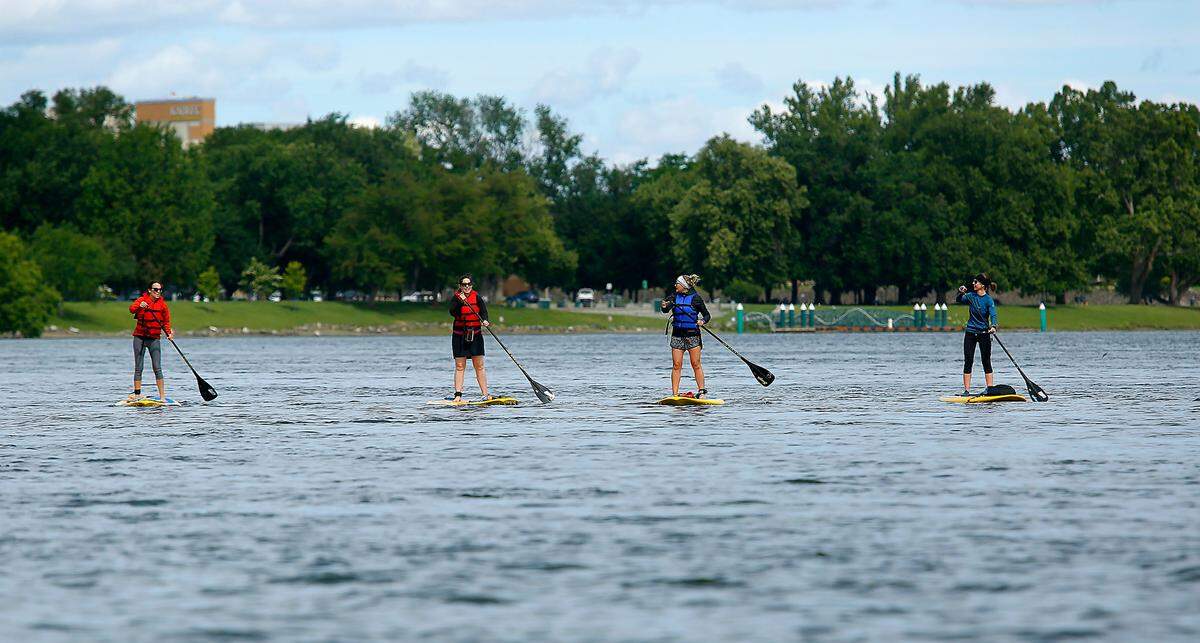
Before getting in the water, state law says you should have a flotation device. The easiest option for compliance is a U.S. Coast Guard-approved life jacket. Be sure it fits you snugly and securely, and check the inside label for that Coast Guard approval.
Compliant life jackets come in different types, reflecting different buoyancy needs for different activities. The Benton-Franklin Health District recommends Type III or V life jackets for paddle sports.
There are a handful of different Type V life jackets, which have restricted use recommendations. Belt pack-type flotation devices are Type V life jackets, but Grow does not recommend them for paddle sports.
She says one of the most dangerous scenarios occurs when a paddler becomes disoriented, injured or unconscious, which can happen for various reasons while on the water. Flotation devices significantly improve the chance of recovery in these scenarios.
Belt packs and similar flotation devices require an action from the wearer to inflate, making them ineffective in such scenarios, unless they were inflated in advance. Grow prefers Type III life jackets and recommends NRS gear, though some use Type V options for comfort.
She clarified that any life jacket is better than none, however.
“They’ve come a long way with life jackets,” Grow said. “I don’t even notice that mine’s on anymore. It’s just a piece of gear that I’m used to, and when I don’t have it on, it does not feel right.”
The Health District has free life jacket loaner stations throughout the area, with a range of sizes for infants, children and adults, according to Kempney. When recreating around water in Benton and Franklin counties, you’re encouraged to borrow a life jacket and return it when you’re done.

Paddle sport tips in Tri-Cities
The State Parks’ Recreational Boating Safety Program offers Paddle Safe courses, a hands-on training program for youth interested in paddle sport safety. Upon course completion, kids will get a life jacket to take home, along with their new safety skills. Stay tuned for upcoming information on the dates and locations for these courses.
There are also local companies operating primarily out of the Columbia River, like Aqueous SUP. Grow offers dedicated safety courses through Aqueous SUP, from beginners to advanced paddlers.
In the basic safety course, you’ll learn essential topics like selecting and using the proper gear, navigating tough conditions, understanding local hazards and weather, and how to self-rescue. The advanced safety course builds on that knowledge, geared toward more experienced paddlers. It covers risk mitigation, hazard awareness and practical rescue techniques, according to Grow.
Aqueous SUP also regularly posts educational blogs for paddle sport recreators in the area, with recent topics including protecting waterways, dressing for spring weather, a guide to spring paddle locations, training tips and more.
It’s also important to know the area you recreate in. Since that’s most often the Columbia River, water sport enthusiasts in Tri-Cities should know the river’s access points and safer areas. Grow recommends spots like Two Rivers, Clover Island and Columbia Point.
Additionally, remember that the Columbia River is monitored for toxic algae over the summer and fall. Look for posted warning signs, and observe any water before getting in. If it looks suspicious, stay out of the water and call 509-460-4200.
This story was originally published April 24, 2025 at 10:05 AM.