
WA drought means tough irrigation outlook for 62,000 Tri-Cities area customers
The first water supply forecast for the upcoming irrigation season for the Kennewick Irrigation District and other irrigators who depend on Yakima River water does not look good.
The U.S. Bureau of Reclamation announced Thursday that the water supply forecast in the Yakima Basin for April through September will not be enough to fully meet irrigation demands.
While those holding the oldest water rights from the Yakima basin will get 100% of the water they are entitled to, those with junior water rights should expect to receive only 48% of their entitlement.
That’s significantly lower than the 72% forecast last March for those with junior water rights for Yakima basin water.
The early spring forecast is similar to that of the drought of 2015.
Then the supply outlook dropped to 47% for junior water rights holders in April. That summer a strict watering schedule was enforced, but there still were six times when so little KID water was available that the supply was shut off.
KID is grouped with junior water right holders, but it gets the irrigation water that returns to the Yakima River between the Parker Gauge downriver from Union Gap and the Prosser Dam. Historically, it has gotten a little more water than the percentage available for holders of junior water rights.
KID serves 62,000 customers and delivers water to about 32 square miles.
Outlook prompts voluntary restrictions
KID announced Thursday after the Reclamation water report was released that this irrigation season will start April 1 with a voluntary watering schedule in place in response to worsening drought conditions across the state.
But a mandatory watering schedule may be inevitable, it said.
If KID water users follow the voluntary watering schedule, however, it could reduce overall water usage enough to ensure a reliable supply throughout the summer, KID said.
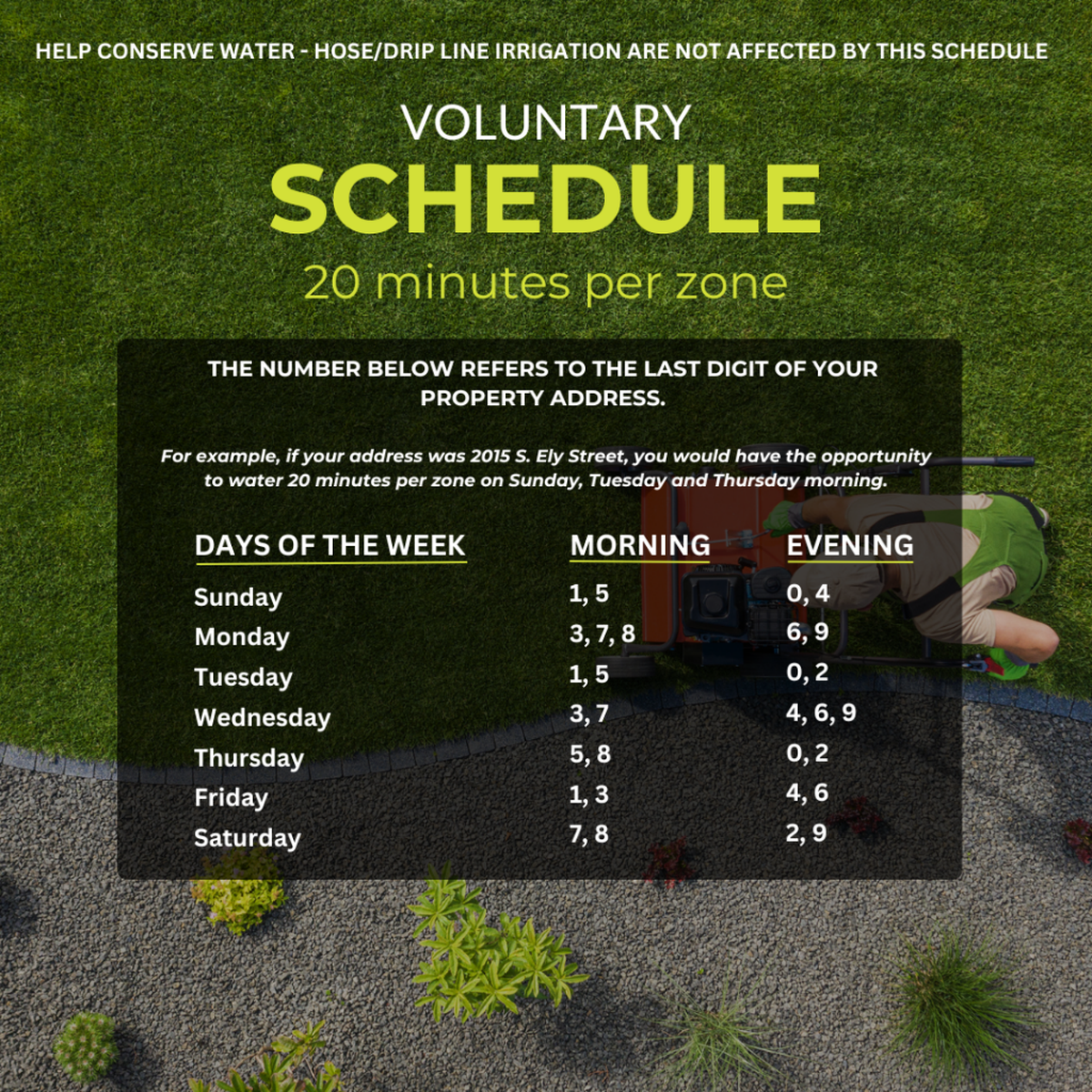
The voluntary watering schedule is similar to last summer’s schedule and based on the last digit of home addresses. It calls for 20 minutes of watering each zone three days a week on a morning schedule from midnight to noon or an evening schedule of noon to midnight..
If everyone waters their lawns at the same time, which typically is in the morning, a surge in demand can lower water levels in canals and cause low pressure.
Using a drip system or a hose from the irrigation valve is not affected by the schedule
The amount of water in the snow pack that feeds the Yakima River is not too bad at 81% of average.
Reservoir water low
But water levels in the Yakima Reservoir system are at levels far below usual.
The Bureau of Reclamation recognized the potential for drought in 2024 and prepared in 2023 by strategically holding back some of the reservoir water for 2024.
But because of the severity of the 2024 drought, reservoir levels now are at or near record lows.
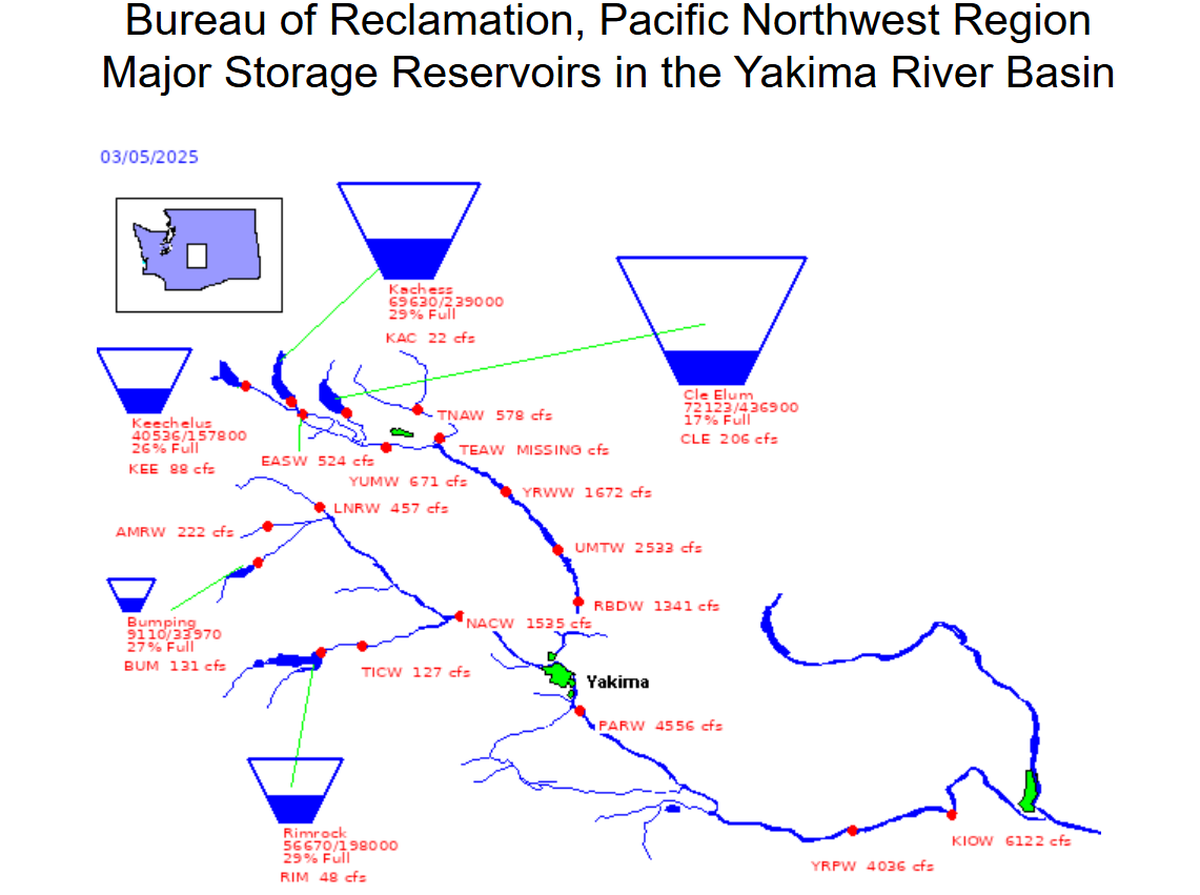
The five Yakima Project storage basins — Kachess, Keechelus, Cle Elum, Bumping and Rimrock — were 22% full combined at the start of this month.
They had 229,000 acre-feet of water, which is 36% of average.
To address water shortages KID has been lining and widening its main canal with the intention of building a 12,000-acre-foot reservoir.
It would be roughly the size of the water between the cable and blue bridges.
KID does not have water rights to use the Columbia River, which it sits above.
Last irrigation season KID started out with a voluntary watering schedule, but it became mandatory starting July 7, 2024, as the drought worsened.
And no, residents will not pay less because of restrictions, whether voluntary or mandatory..
In fact, they will pay more this year.
KID assessments are up
The low-water irrigation season comes as KID is raising its annual assessment by 8% to 18% this year, following modest or no increases in recent years.
Since 2020, annual increases have been 1% to 3%, with no increase in 2023 to help ratepayers hurting financially from the COVID pandemic, according to KID.
This year’s assessment generally starts at 8% for smaller land parcels and increase for larger parcels.
The larger-than-usual increase this year will address inflation that has caused the Consumer Price Index to increase about 20% since 2019.
The new schedule of rates and charges is posted at kid.org/rates.
Assessments are based on parcel size and infrastructure needed to deliver water to the structure.
Testing of part of the system will start March 10, and residents of the district may begin to see water in some canals then.
This story was originally published March 7, 2025 at 10:57 AM.