WSU cuts ties to Tri-Cities Master Gardener nonprofit over ‘disputes’ and ‘rivalries’
The financial arm of the Master Gardeners of Benton-Franklin Counties will dissolve after 24 years of local support, citing a deteriorating relationship, years of tension and disagreements with Washington State University.
The university claimed in an August non-compliance report that the Master Gardener Foundation of Benton-Franklin Counties was failing to meet requirements laid out in its contract. The foundation, it said, had overstepped its authority and was resisting change.
WSU Extension of Benton-Franklin Counties, which oversees the local Master Gardeners program, ultimately chose in December to terminate its contract with the foundation, effective Jan. 8.
That happened despite efforts through legal mediation to resolve their differences.
The university alleges the foundation lacked structure and communication, as well as operating procedures and clear responsibility. The foundation’s board held closed-door meetings away from program leadership and members, and had created new events without program approval, placing WSU in an awkward position.
“Limited progress has been made on building a positive working relationship between the program and the foundation,” the August report said.
“This negative culture impacts WSU Extension’s ability to serve its educational outreach mission, causes undue stress on volunteers, staff, and faculty, and reflects poorly on WSU’s brand. As such, WSU is seriously considering terminating its relationship with the foundation. Furthermore, depending on how the foundation responds, [it] may be forced to close the program,” it continued.
The university requested the foundation remove its then-president, Gloria Johnson, from the board in addition to several other items to remedy the non-compliance.
Disputed performance
Johnson tells the Herald she was punished for label placements at the plant sale and allegations she allowed another Master Gardener to take home several bags of soil that the foundation had purchased for the sale. She declined a request by the university to sign a letter of reprimand. She denied the claims and was ultimately pushed out.
“I don’t believe my actions deserved this type of punishment,” she said. “I’d been a Master Gardener for 13 and a half years.”
Johnson says the foundation flourished under her leadership and they had set lofty goals to become self sufficient, building their account reserves up to more than $180,000. She served as foundation president from 2020 until she was ousted in August. In July, the university revoked her Master Gardeners certificate.
“They accused me of things that I didn’t do,” she said. “It just snowballed.”
Current foundation board members declined to speak to the Herald on the record individually, citing fear of retaliation for current volunteers, but summarily refuted all claims made by the university. They say the university has engaged in bullying and defamation tactics.
“WSU MG program leadership actions have furthered a hostile and divisive relationship,” wrote the foundation’s board in an October response to the report.
“The foundation strongly disputes the accusations contained in this noncompliance report. While seemingly specific, the cited claims only partially relate to the foundation; they contain untruths and misrepresent situations that distort the foundation’s actions,” it read.
Dissolving the foundation
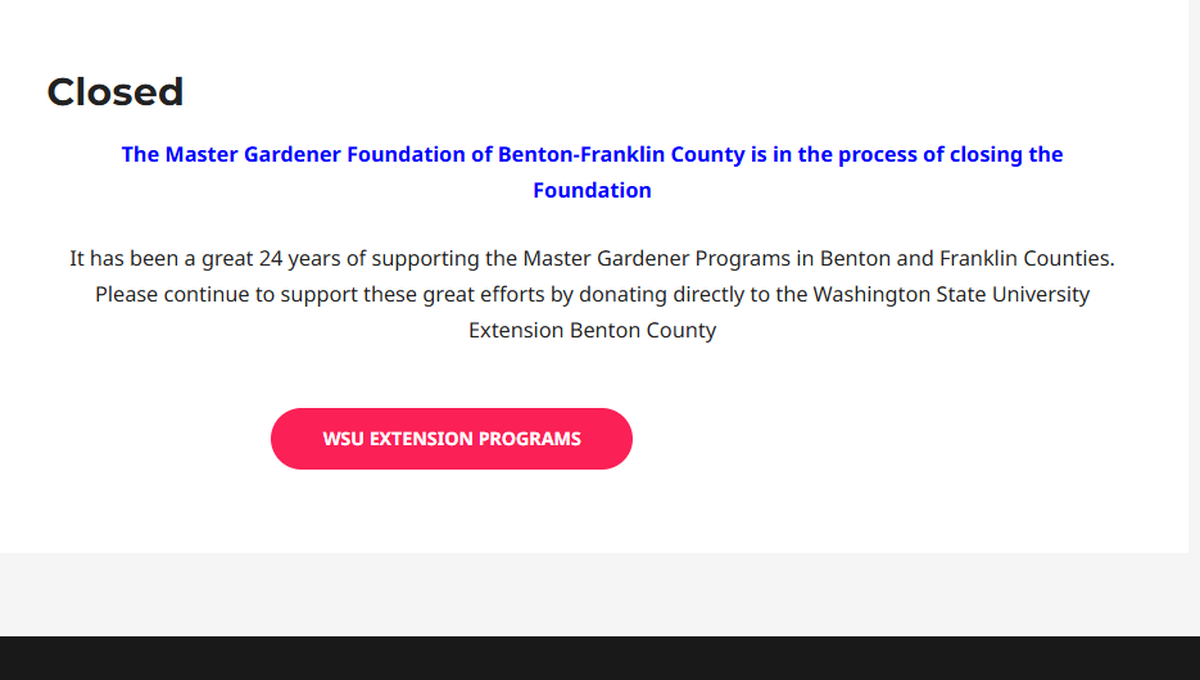
Left with a null contract, as well as no purpose and unable to use the “Master Gardener” name, the foundation’s board has chosen to dissolve the organization.
The nonprofit model allowed the local program to raise tax-deductible money in the form of donations, events and grants to support volunteers and their work directly.
It raised upwards of about $30,000 a year, according to a current foundation board member. That money benefits garden and sustainability education, classes, community gardens, youth outreach, demonstrations and food grown for local food banks.
Still, Benton-Franklin Master Gardeners events and programs will continue uninterrupted, according to Wendy Powers, WSU’s dean of College of Agriculture, Human, and Natural Resource Sciences.
That includes the foundation’s marquee fundraising event: the annual May plant sale at the Mid-Columbia Libraries Kennewick branch. Volunteers already are busy planning for the event.
The foundation operates independently and its dollars do not flow through the university, Powers said.
“We look forward to seeing the Master Gardeners program grow because we know it has tremendous impact for those counties and statewide,” she told the Herald.
‘Some concern and distrust’
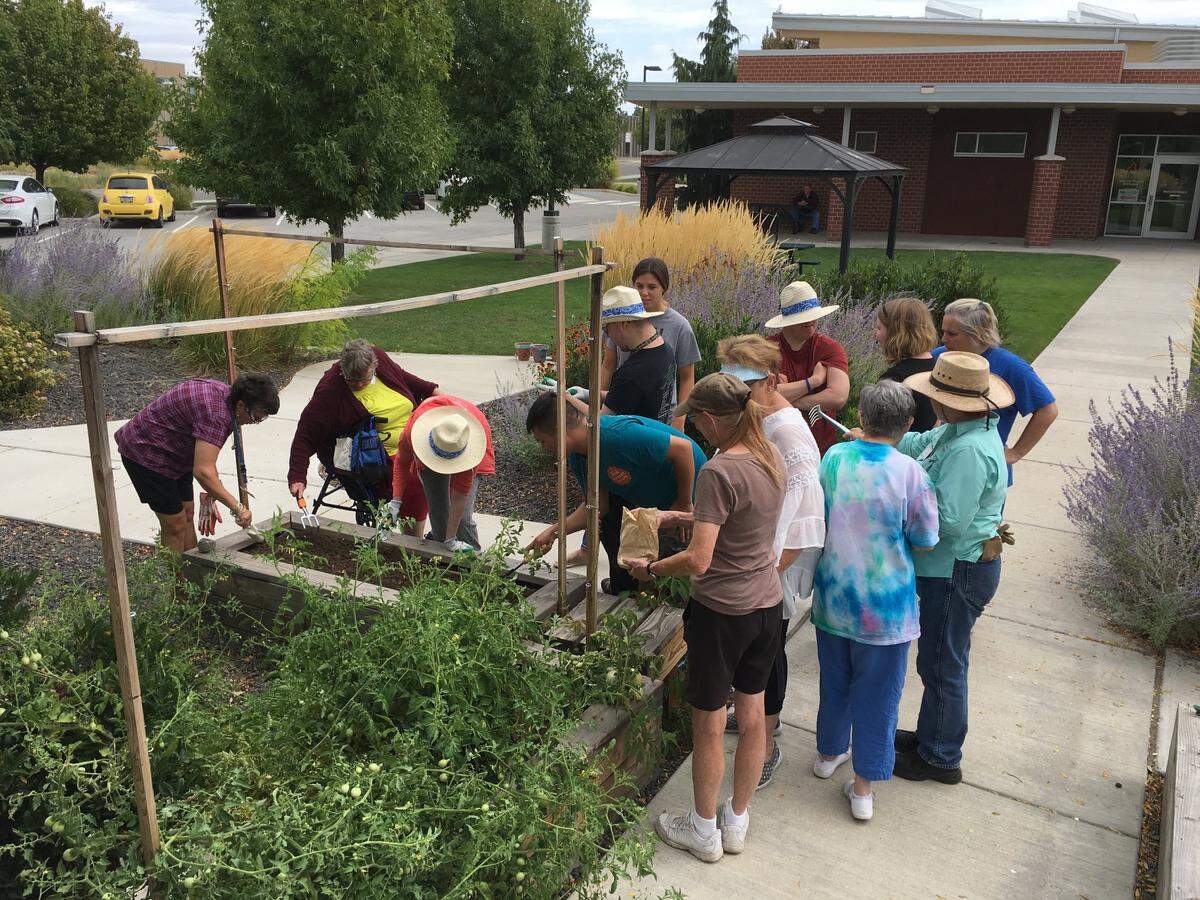
The WSU Extension Master Gardeners of Benton-Franklin Counties offers gardening resources, education and event opportunities to thousands in the Mid-Columbia region.
Its Plants Grow Children program has served Tri-City students for more than 20 years.
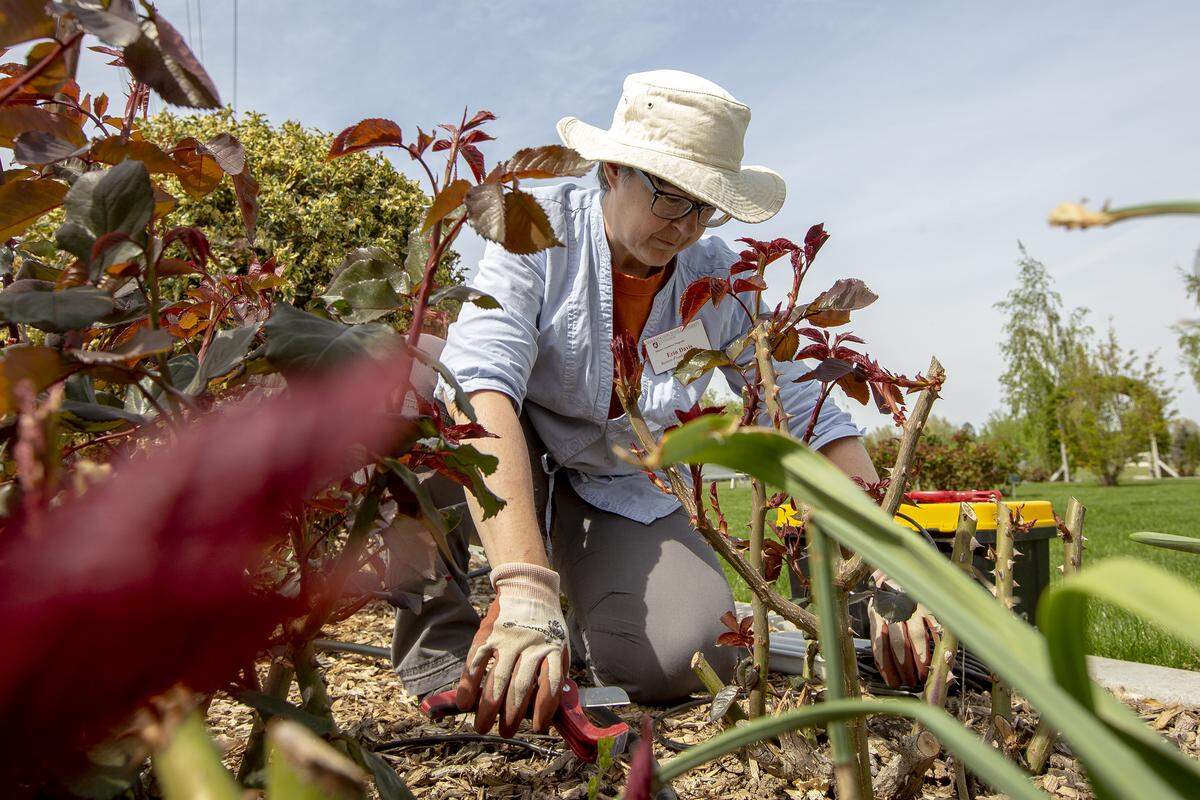
The Master Gardeners have incubated and helped more than 50 community gardens throughout the region. And its demonstration garden in the Highlands Grange Park features 50 trees, 100 shrubs and 800 roses.
More than 4,000 volunteers statewide are involved with the WSU Master Gardeners, which has been “cultivating plans, people and communities since 1973.” More than 100 volunteers serve in the Tri-Cities. Washington is also birthplace to the national Extension Master Gardener program.
A 2019 “listen-and-learn” session with Jennifer Marquis, the then-new Extension Master Gardener program lead, revealed “turmoil” in the Tri-Cities linked to “structural, process and human resources factors.”
“New staff, proposed changes, and misunderstandings or miscommunications regarding line of responsibility, accountability and authority between volunteers and staff and the program and the foundation have created some concern and distrust,” a summary of that meeting reads.
That report said there was some “confusion” about where the authority of the foundation ends and where the university program’s begins, due likely to its contract and the nonprofit’s bylaws.
One example was the foundation’s previous operation of the food garden program. The foundation, the report argued, was responsible for fundraising, not the educational work and program approval of the Master Gardeners.
A 2023 university analysis with volunteers of the Master Gardeners of Benton-Franklin Counties included comments that the relationship with the foundation had become “adversarial” and that there were “internal disputes and rivalries.”
This story was originally published January 8, 2025 at 2:56 PM.