Kennewick council latest to toughen laws on illegal campers in city parks and more
The Kennewick City Council on Tuesday threw out a rule that severely restricted how the city cracks down on illegal camping.
The change to the city code passed unanimously, 7-0, and goes into effect in five days.
It follows similar rule changes in Richland.
The move is in direct response to June’s U.S. Supreme Court decision in Grants Pass v. Johnson, which affirmed the rights of governments to impose fines or criminal penalties for acts like camping or sleeping in public areas.
Those penalties, the court ruled, do not violate Eighth Amendment protections against cruel and unusual punishment.
That Supreme Court decision overturned precedent in the Martin v. Boise decision, a 2019 Ninth Circuit Court ruling that had become the new normal for how cities and counties enforced homeless activities.
That decision limited a municipality’s actions against someone camping on a public sidewalk, for example, if there was no available homeless shelter beds available for the person to stay at.
The Tri-Cities is reportedly the only urban area in Washington without a so-called “low-barrier” shelter, defined as a place for homeless people to seek refuge without having to qualify, according to previous Herald reporting.
This week, Kennewick eliminated a code originally passed in 2021 in response to the Martin decision — but now city staff say the burden of providing proof of the availability of a bed is no longer required.
“The result of this ordinance that’s proposed to council will just remove this additional hurdle,” explained City Attorney Lisa Beaton. “It doesn’t mean that we’re going to go out there and be aggressive in reviewing cases for charges. It’s just simply this is no longer a requirement for local governments to have in place.”
The amendment does not change the city’s current process for clearing homeless encampments, according to council documents, but it does make it easier.
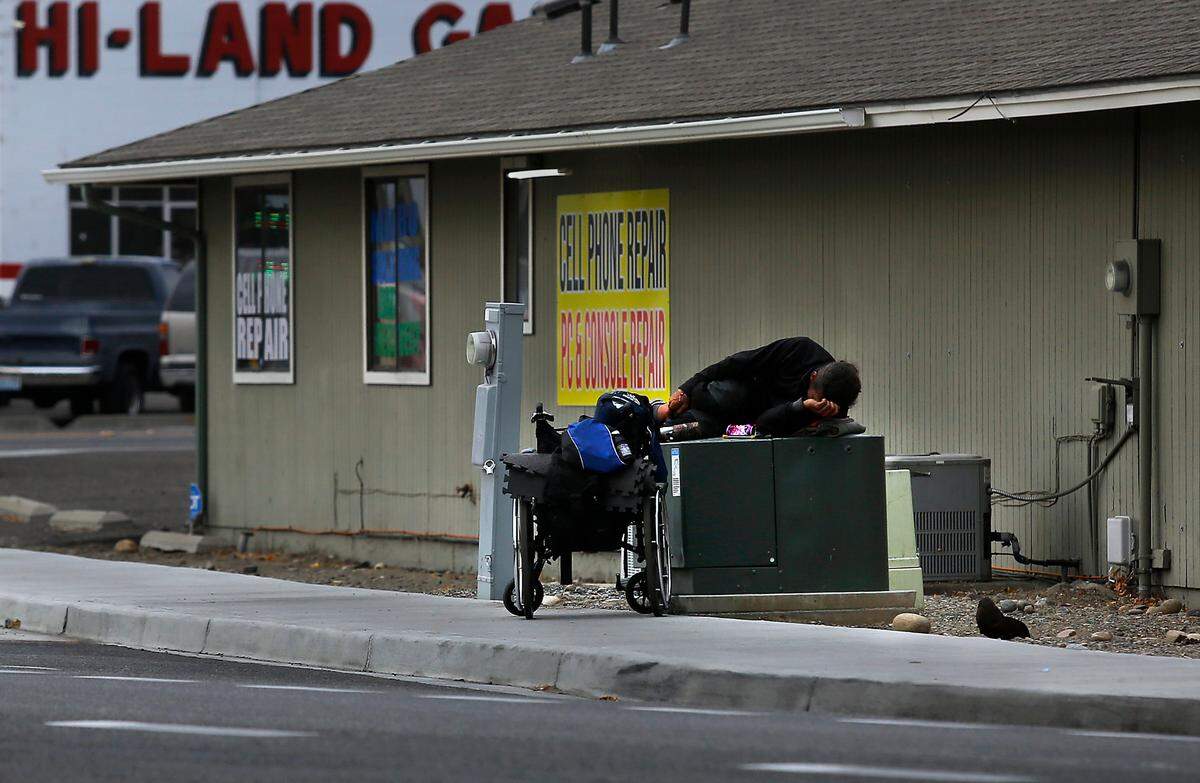
Kennewick’s current practice allows staff and police to remove any encampments or personal belongings from city-owned spaces if it results in an “immediate or significant risk of harm” to the public or passing vehicles, provided that a 72-hour notice is given to the individual.
It is currently illegal to camp in any Kennewick right-of-way, along trails or in public parks, on publicly-owned parking lots, or on any property maintained or owned by the city.
Any personal property recovered during an encampment sweep is stored by the city for a minimum of two months before it’s disposed of.
Beaton said Kennewick doesn’t have “significant repeat offenders” of their camping laws.
“We’ve not charged anyone with a violation yet. We typically will first provide notice, remove the encampment and allow them to pick up their personal items,” she said.
Violations of the city’s public camping laws are a misdemeanor, punishable by up to three months in jail or a $1,000 fine.
WA illegal camping laws
This year’s Point in Time Count reported about 95 individuals were homeless in all of Benton County based on a count in January during a cold snap.
However, a recent snapshot by the Washington state Department of Commerce of people engaged with various benefit programs showed more than 5,000 in the Tri-Cities are considered at risk of becoming homeless or are already unsheltered — an increase of more than 400 from last year.
Last school year, the Kennewick School District — which also includes large swaths of unincorporated Benton County — reported that nearly 450 of its students, or about 2% of its total enrollment, were homeless.
And Kennewick police regularly team up with service providers to offer help to people living on the streets. Chief Chris Guerrero said their weekly outreach program on average contacts about 26 people and most are individuals they’ve talked with before.
Kennewick isn’t the only city changing its laws in response to the Grants Pass case.
In August, the Richland City Council made a similar change. Its ordinance helped lower the barrier for police and park rangers to enforce their 72-hour limit on camping on 5 square miles of public spaces.
Lakewood, a city of about 62,000 in Pierce County with no shelter beds and a nominal homeless population, recently approved a ban on sleeping and camping in public spaces, according to the Seattle Times. That ordinance also allows police to remove camps and personal belongings with as little as 24 hours notice.
Beaton says with cities adopting new laws around camping that it’s possible the Washington Legislature may step in during the upcoming 2025 session to try to codify portions of the Martin ruling into state law.
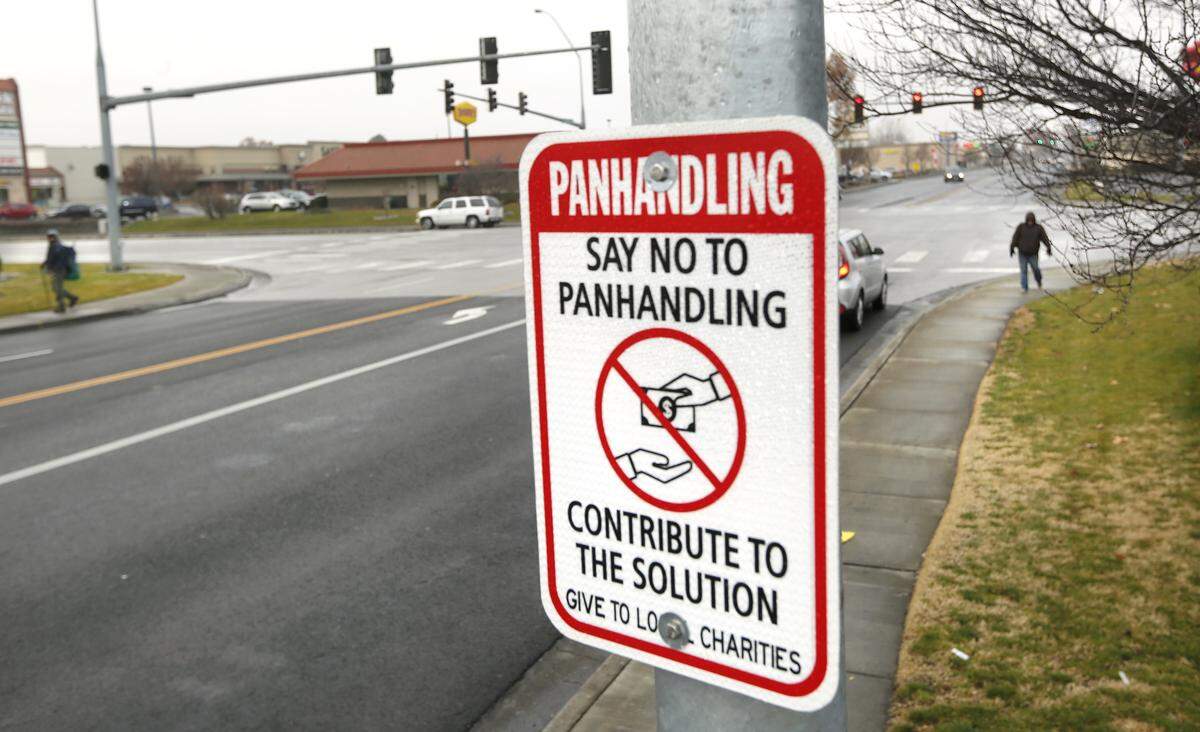
Kennewick does not have any laws on the books prohibiting panhandling, but does restrict sitting and lying around downtown businesses during certain times.
This story was originally published September 18, 2024 at 12:51 PM.