
Highly destructive Japanese beetle found in Kennewick for 1st time, worrying officials
The first Japanese beetle has been discovered in Kennewick, potentially meaning trouble for homeowners and farmers.
It follows sightings of the highly destructive beetle in Pasco and Richland.
If Japanese beetles become established in Washington it would have serious trade and economic impacts in addition to direct damage to numerous Washington-grown crops, according to the Washington state Department of Agriculture.
The beetle can also result in costly quarantines and increased management costs for farmers, making it difficult for them to process and move crops out of the area.
Agriculture officials are hoping the Kennewick sighting plays out more like Richland than Pasco.
In Richland one Japanese beetle was found near Target in 2022, but then no others. Agriculture officials concluded it likely was a stray that came into town with stock for a nearby plant nursery and was not able to mate.
But in Pasco, an infestation appears to be spreading. As of mid-July, 34 had been found and they had spread up to a mile from where they were initially known to be.
“This is obviously a huge issue, and we’re seeing this infestation unfold in real time,” Camilo Acosta, Japanese beetle eradication project coordinator for the Washington state Department of Agriculture, told Franklin County commissioners last month.
Now a Japanese beetle has been found in a trap across the Columbia River by Hawthorne Elementary School, on West John Day Avenue and North Neel Street, in Kennewick.
The insect was found about 10 days ago. More traps have been set in the area with no additional Japanese beetles found so far.
Japanese beetles have been found in Washington along about 65 miles of the Interstate 82 corridor, mostly in Yakima County and the western edge of Benton County.
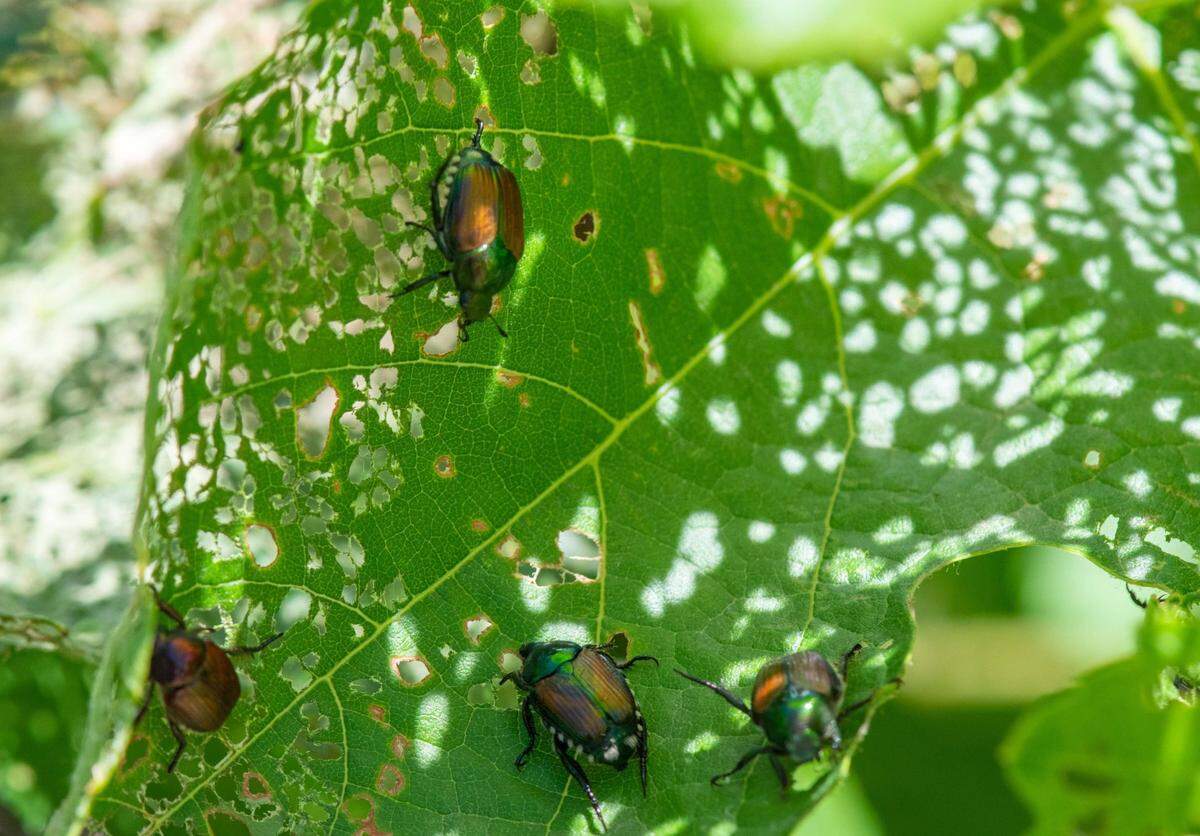
Two beetles were caught in Grandview and Sunnyside in 2020. Mass trapping followed, finding as many as 24,000 a year, most in a gradually expanding area of Yakima County and just over the county line in Benton County.
What to look for
The beetles, native to Japan and southeast Asia, are metallic green and copper and have little tufts of white hair on their sides as adults.
Roses are their favorite host plants, but they eat grapes, hops, sweet corn, raspberries and about 300 other plants, turning them into skeletons as they consume the foliage, flowers or fruit.
They lay eggs primarily in lawns, and the developing larvae, or grubs, eat the roots and can destroy grass in yards, parks and golf courses.
Hundreds of yellow and green traps have been hung throughout the Tri-Cities to help detect the beetles. The traps will be up throughout the adult beetle flight season, which lasts at least through September.
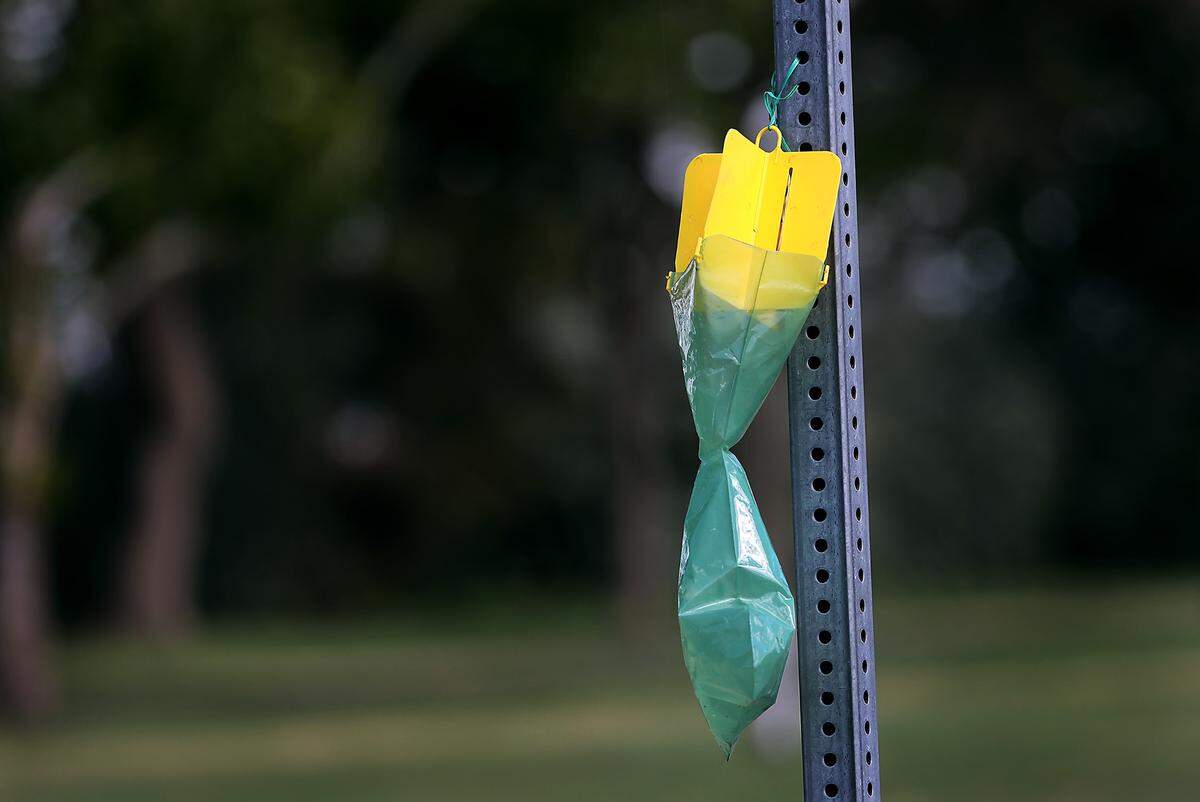
The Washington state Department of Agriculture is urging Tri-Cities area residents also to keep an eye out for Japanese beetles and report them when spotted.
If you suspect you have seen Japanese beetles, take a photo and report the sighting at agr.wa.gov/beetles or email the photo along with the location of the sighting topest@agr.wa.gov.
If you find a Japanese beetle on your property, it can be killed by putting it in soapy water.
Washington State University Extension also has information on treatment options for infestations of grubs or adults.