Clear weather prompts Tri-Citians to don glasses for 1st solar eclipse in 7 years
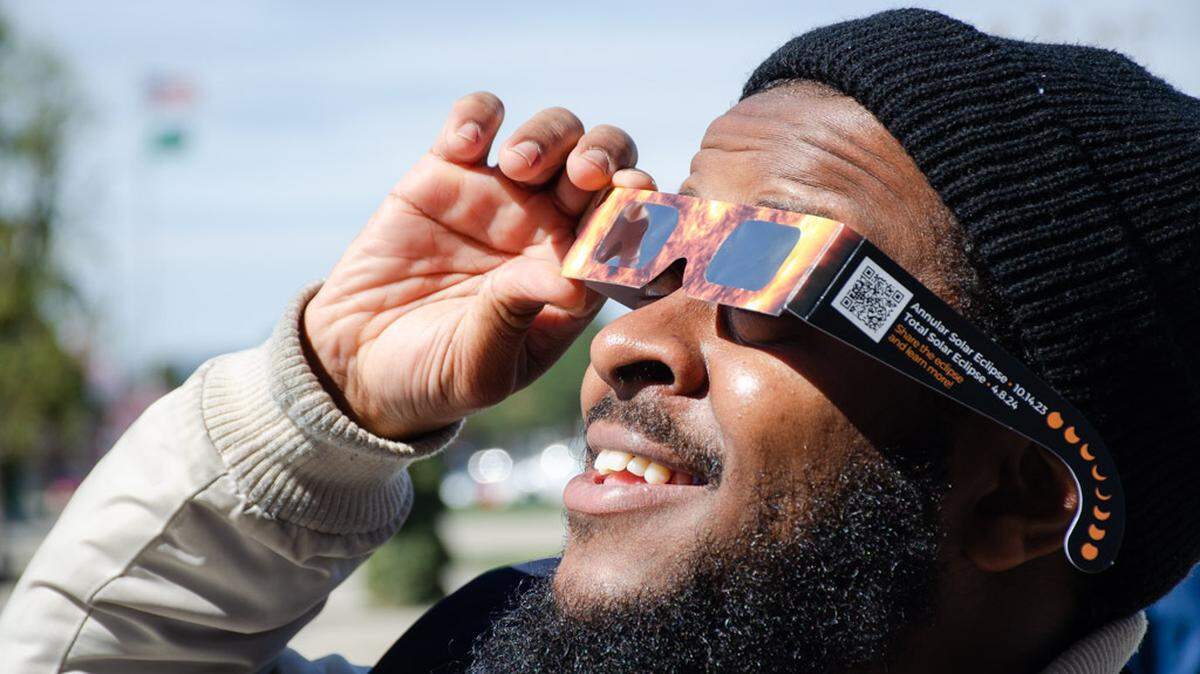
With mostly sunny skies, Tri-Citians dusted off their filtered glasses to view the first total North American solar eclipse in nearly seven years on Monday.
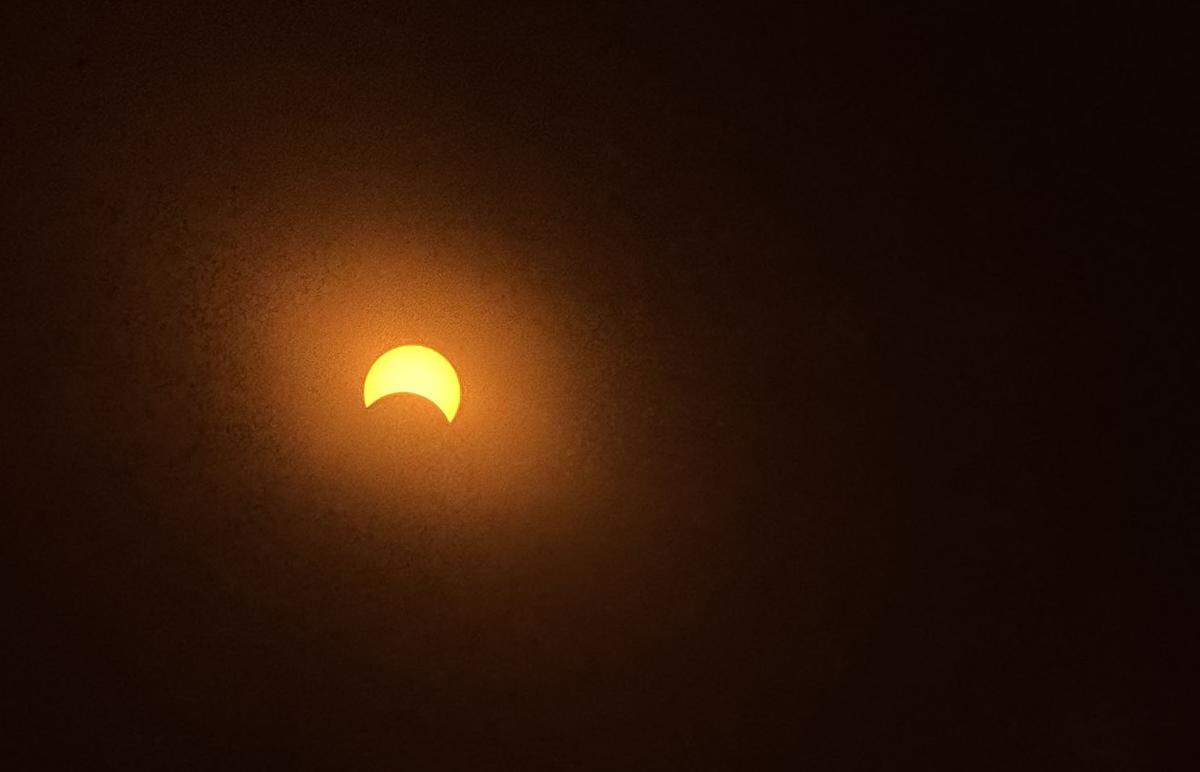
The eclipse peaked in Washington about 11:30 a.m., allowing anyone with a clear view the opportunity to see the moon block out about a quarter of the sun. Partly sunny skies in Southeast Washington made viewing the phenomenon possible.
The eclipse’s magnitude, or the percentage of the sun’s width blocked by the moon, was 37.5% at the peak.
A solar eclipse occurs when the moon passes between the sun and the earth, blocking out the sun’s light for a brief period of time on the planet’s surface.
Nearly all of North America got a view of the natural phenomenon on Monday.
But the path of totality slid across much of the south and Midwest, entering the U.S. and continuing through Arkansas, Illinois and Indiana before skirting along the Canadian border in the northeast.
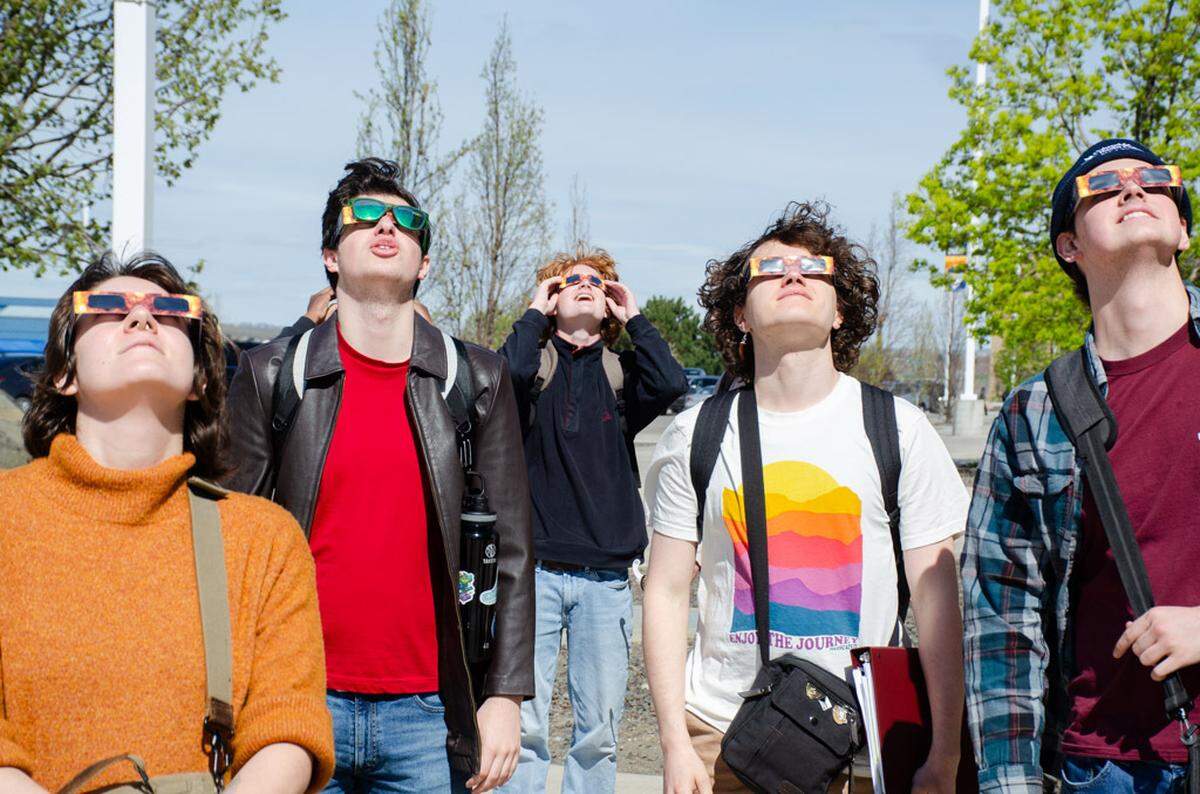
That didn’t stop some Tri-Citians from organizing events to view it.
Kalid Hussein, a Columbia Basin College student and NASA Solar System Ambassador, handed out eclipse glasses to passing students and staff at the Pasco campus.
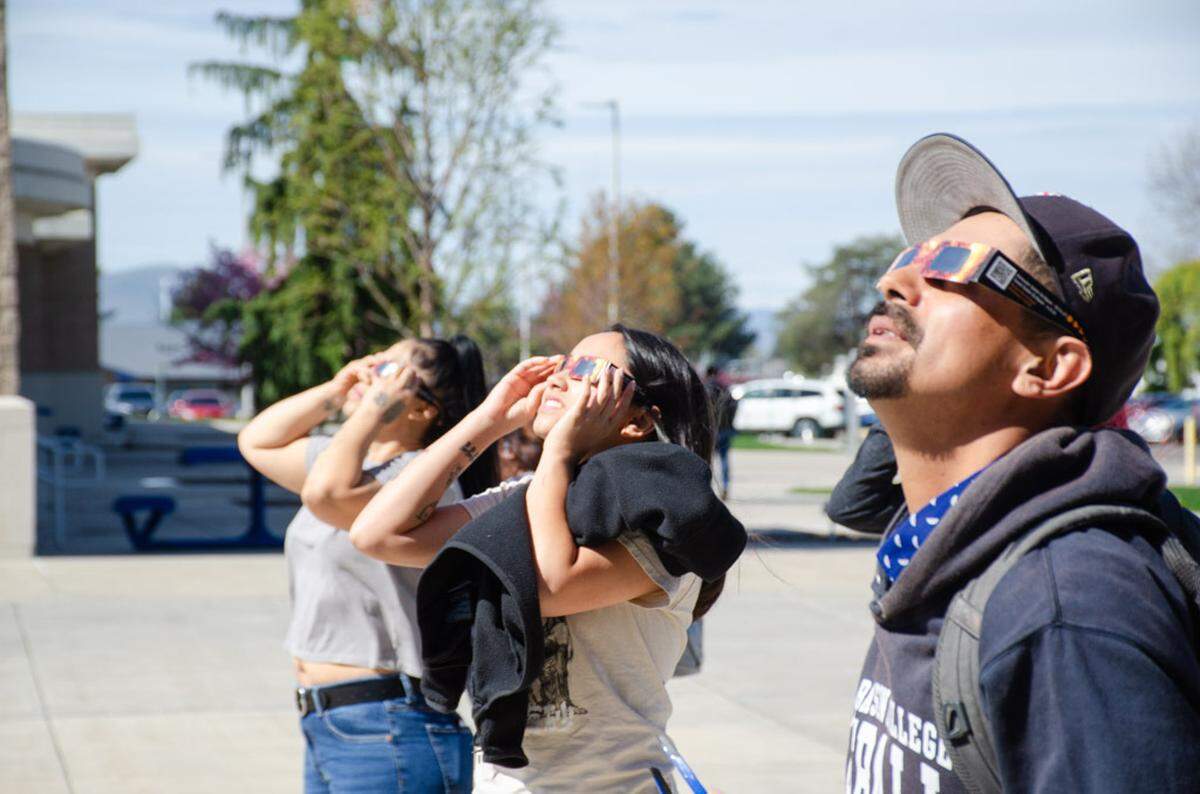
Outside, they stopped in place and pointed their glasses toward the sky to see the event. Some even attempted to take photos by aiming their cell phone cameras through the glasses.
Some K-12 classes across the Tri-Cities also took the chance to implement the natural event into their lessons. But schools also warned parents and staff about the possibility for eye-related injuries that can happen from staring at the sun.
“While observing an eclipse can be an exciting experience, it’s crucial to remember the safety risks involved, especially for our children,” wrote the Pasco School District administration in an email. “Directly looking at the sun, especially during an eclipse, can cause serious or permanent damage to their eyesight.”
The last full solar eclipse occurred Aug. 21, 2017.
That one crawled west to east, spanning from Lincoln City, Oregon, to Charleston, South Carolina. It was the first visible in U.S. skies in nearly four decades, according to CBS News.
The next time a total solar eclipse will span from coast to coast will be Aug. 12, 2045.
This story was originally published April 8, 2024 at 12:58 PM.