
See Ice Age mammoth bones unearthed near Tri-Cities. More tours open for 2023
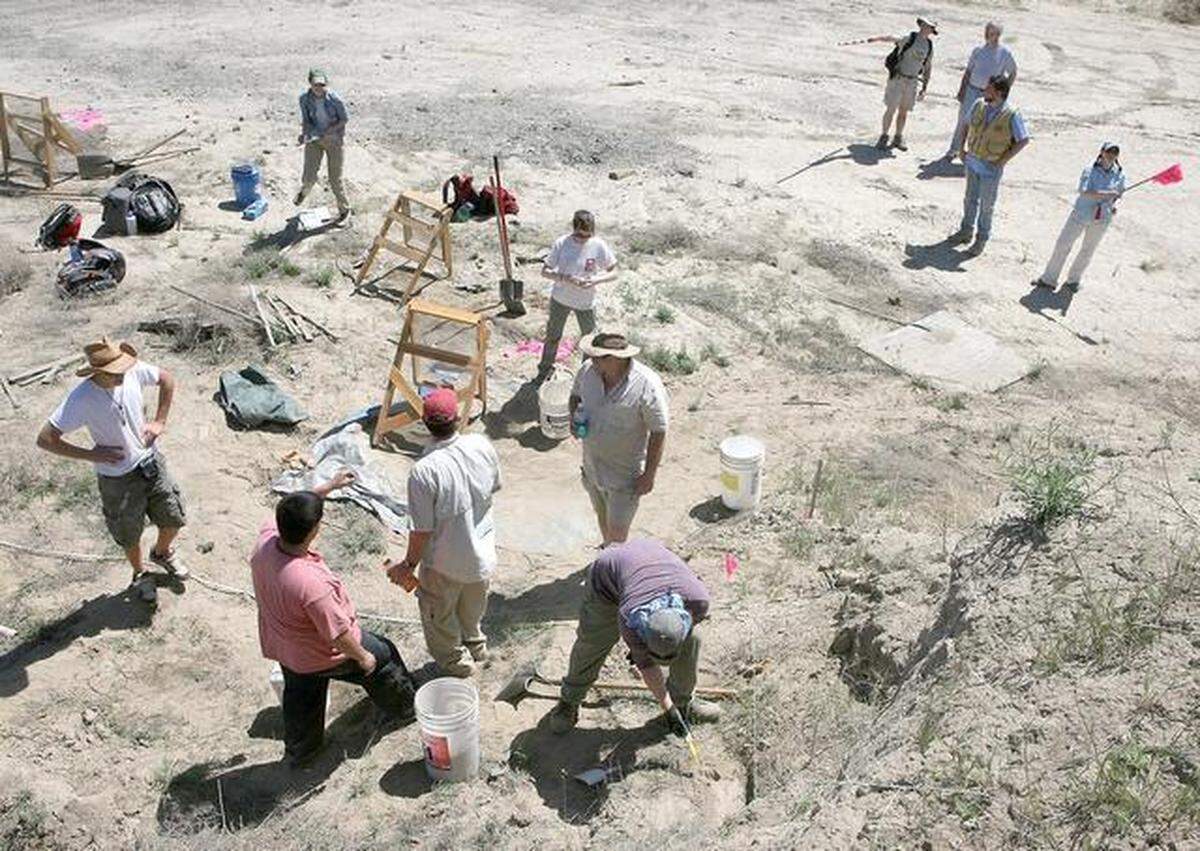
.JPG "The bones of an ice age Columbia mammoth are being carefully dug out of a hillside near the Tri-Cities. Tours of the site are offered.")
The last sign up of the year for tours of the Coyote Canyon mammoth dig site and and MCBONES research center just outside the Tri-Cities starts June 1.
Beginning in July the tours will no longer be free, unless you are age 10 and younger.
The nonprofit Mid-Columbia Basin Old Natural Education Sciences Research Center Foundation plans to start charging $10 for anyone older than 10.
School tours will continue to be offered at no cost.
The dig to unearth the bones of an ice age mammoth and research, including learning about the changing environment of the Tri-Cities area over thousands of years, is done entirely by volunteers.
But the MCBONES team will need some lab testing and scientific expertise that it will have to pay for, which the new tour charge will help cover.
The charge also may help deter the limited number of people who reserve seats on individual and group tours and then do not show up.
MCBONES is preparing to have radiocarbon dating done by a laboratory on some of its finds as it clears dirt layers by about 4-inch a layer.
All the dirt taken from the hillside where the mammoth bones are being unearthed in a canyon is collected in buckets and brought to a canopy-covered area a few yards away. There it goes through the “wet screen” process, where sediment is washed off.
The remains are then examined to find small objects, such as the wing of a beetle, the tooth of a ground squirrel or a mollusk shell.
Changes in objects at different levels of the dig provide clues to past changes in climate conditions in Eastern Washington.
To get definitive dates at different layers of the dig, MCBONES is going to sacrifice some specimens unearthed that are plentiful, such as the front leg bones of mice, said Gary Kleinknecht, education director. The carbon dating process is destructive.
MCBONES also will need to pay for professional identification of some microbiology species.
About the mammoth
The mammoth being unearthed appears to be a male, because bone growth plates take longer to fuse in males. He likely was about 40 years old when it died with a front leg growth plate still unfused.
The animal was large, likely standing 10 to 13 feet tall at the shoulder, making it bigger than modern day elephants.
During the ice age flood water backed up as it hit the narrow Wallula Gap to cover what is now the Tri-Cities. The dig site is at an elevation of about 1,060 feet, and floods may have been deep enough to reach the area about seven times.
The mammoth could have been drowned in the flood, and then the carcass could have been deposited on the hillside as waters receded.
The bones have been found relatively intact — the ribs somewhat jumbled, for example, but not scattered over a wide area.
Mammoth bones found so far
The last major bone to be unearthed since excavation of the site began in about 2010 was a large vertabrae that erosion had partially exposed at the dig site during the COVID-19 pandemic.
Work to carefully remove that bone began in 2021 and was completed in 2022.
The vertebrae, which was from the mammoth’s mid to upper back, was sticking out of the vertical dig wall and at risk of damage. It was already broken, which is not unusual, Kleinknecht said.
What bones they could uncover next is a mystery.
The soil could still hold leg bones, the pelvis, the cranium, tusks and more ribs and vertebrae.
Among bones already retrieved are a left shoulder blade, two upper front leg bones, two tail bones, two foot bones and numerous ribs and vertabrae.
Some bones, including the lower jaw bone, ended up in private hands before the MCBONES Research Center Foundation took control of the site.
The initial discovery of mammoth bones at the site was made in 1999 during excavation on private property.
Excavation halted, and when the land went up for sale a local farming family purchased it to turn it into a nonprofit research center for teachers, students and community volunteers.
In 2008, MCBONES was established as an educational nonprofit, and work to recover the bones began a couple of years later.
Mammoth dig tours
Tours sign-up times open June 1 and will be on selected days through October. Traditionally they have been on Saturdays.
The sign up will be open for a week and then a drawing will be held to select people allowed on the tour. In the past tours have filled very quickly on a first come, first served basis, giving people who registered shortly after midnight the edge in getting a place on the tours.
Go to mcbones.org and click on the menu on the top of the page and then “Tour & Dig Days.”
On the same page of the site is a link to inquire about scheduling a community group tour for 10 to 30 people.
People who have a place on tours will be sent information on how to find it before the tour starts. MCBONES limits public information about the site location to prevent vandalism.
The tours take about 90 minutes and include a presentation about the history, discovery and findings at the site and then a guided tour of laboratory activities and displays of key specimens.
Public tours are scheduled when digging is underway and they can participate in the wet screening process. However, group tour participants may not see digging being done.
This story was originally published May 16, 2023 at 5:00 AM.