Retired Benton prosecutor saw his share of horrific crimes. Some still haunt him after 36 years
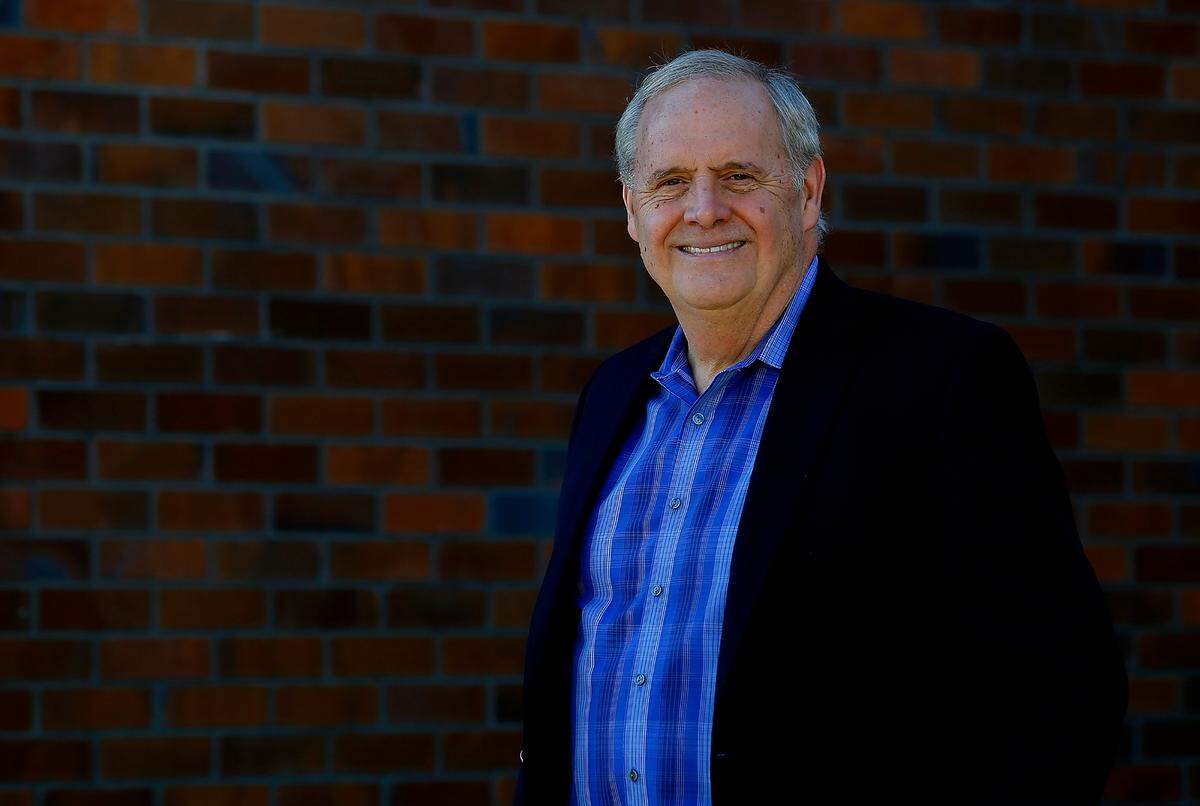
This month has been a time of transition for Andy Miller.
For over half his life — more than three decades — Miller filled his days prosecuting the most high-profile crimes in Benton County. It was a steady beat and often all-consuming.
In the two weeks since he’s retired, he’s stayed busy remodeling his childhood home in north Richland. The five-bedroom house along the Columbia River is just a stone’s throw away from the old ferry terminal site that once served as the link between the two counties.
The old rec room where he would host “epic table tennis battles” in junior high is now a library.
“I’m kind of going back home,” Miller told the Herald.
It’s something of a storybook ending for the 69-year-old stalwart of the Tri-Cities legal community. Since taking public office in 1986, Miller has proven to be a staunch advocate for crime victims, child witnesses and drug and mental health courts.
In the courtroom, he was passionate, used his photographic memory and was always zeroed in on the details of a case, said retired Superior Court Judge Carrie Runge.
“You would not want to be a criminal defendant being cross examined by the Andy I know,” said Runge, who also worked 17 years for Miller as a deputy prosecutor before she became a judge. “He was an awesome boss, a great mentor. I got to second-chair many murder cases with him. He’s an amazing trial lawyer.”
She’s never seen another lawyer “finesse the way Andy can finesse a witness.”
Gov. Jay Inslee highlighted Miller’s tenure and dedication to public service in a Nov. 18 letter, recognizing him as the “longest serving elected prosecutor in Washington.”

“It is also a reflection of the trust the community has placed in your leadership,” Inslee wrote.
‘A two-way street’
Why stay in the same high-pressure post for 36 years?
As Miller puts it, it was a “two-way street” — he loved the job because “no two trials are the same” and felt he was making a difference, and voters kept supporting him.
“I never got bored,” he said. “There were some times when the stress got to me, from time-to-time, but I found ways to deal with the stress.”
That’s partly why Miller picked up triathlon racing in his 40s. He enjoys the competition and being humbled.
He considered retiring four years ago, but the consensus was “the office wasn’t really ready for me to leave.” Miller, a Democrat, says he was only challenged on the ballot once during his tenure.
Miller’s parents, Norm and Shirley Miller, met at Kansas University and moved to the Tri-Cities after his dad was hired at the Hanford site.
Prior to passage of the Civil Rights Act of 1964, the Tri-Cities was an especially racially segregated region. Kennewick and Richland had histories of being “sundown towns.”
And his parents took up anti-segregation efforts when they arrived to Eastern Washington, placing pressure on rental and real estate companies that were denying homes to Black and Asian families.
“That’s how I was raised — to not accept things the way they are, but to try to change things,” he said. “I tell people it was like I grew up in Beaver Cleaver’s family (in the late 50s TV series) if the Cleavers were also on the picket lines against discrimination. I felt like I had the best of both worlds.”
Miller completed his undergraduate work at the University of Washington and went on to law school at Willamette University in Salem, Ore.
But his love of the Tri-Cities ultimately brought him back.
Storied career
The case that sticks out most in Miller’s memory is the first and only death penalty case he tried.
Triple murderer Jeremy Sagastegui was ultimately convicted and sentenced to death in the 1996 killing of 3-year-old Keiven Sarbacher, the boy’s mother, Mellisa, 21, and her friend Lisa Vera-Acevedo, 26.
Sagastegui was the babysitter that night. And he never showed remorse for the killings.
“I’ll never forget that crime scene, and I’ll never forget the process of going through the death penalty. And it’s no secret ... that I have conflicting opinions about the death penalty,” said Miller, a Methodist Christian.
It was ultimately the brutality of the murders and the “extreme cruelty” to the toddler that made Miller advocate for the death penalty. And he attended Sagastegui’s lethal injection execution in 1998.
“I think a lot of death penalty opponents do not give proper consideration to the families who have lost a loved one to murder. So, I think this whole issue of the death penalty is a very nuanced thing, and I took a nuanced view of it throughout my career,” he said.
After Sagastegui, only two more murderers were executed before the Washington state Supreme Court decided in 2018 that capital punishment was unconstitutional.
Miller also tried the case against Phiengchai Sisouvanh Synhavong, who’s currently serving a life sentence without parole for the gruesome 2008 killing of Araceli Camacho Gomez.
Synhavong gave a ride to the pregnant Tri-Cities woman, then killed her in Columbia Park and cut the nearly full-term baby from her womb. The boy survived but Synhavong failed to pass him off as her own newborn.
Miller didn’t pursue the death penalty based on several factors including the desire of the victim’s family but he convinced the jury to soundly reject her claim of insanity. They reached a verdict in less than six hours.
There also was the case of Francisco Resendez Miranda, who also was sentenced to life without parole in prison for gunning down three Pasco friends in a cornfield in 2015. One victim was almost nine months pregnant.
Runge said, “I think it’s very unusual for the top prosecutor to continue to try cases throughout his or her career, which Andy did, and then to stress the importance of not just the trial work, but the importance of keeping open communication with the victims of the crime.”
Increases in crime
But Miller’s tenure wasn’t without its controversies.
In 2019, a Richland city council candidate, Lisa Thomas, accused him of inappropriately touching her 16 months earlier at her house. She filed a police report but the department ultimately closed her complaint due to insufficient evidence.
Miller accused her of making the allegations in retaliation for his involvement in the domestic violence investigation of Benton County Sheriff Jerry Hatcher, who was ultimately ousted from office in a recall election.
In the years leading up to Miller’s retirement, he stepped back more from prosecuting homicides himself, though he speaks proudly of his office’s record in getting convictions and delivering justice.
This last year in office has been particularly challenging with the county’s record-high 19 homicides.
The reason for the increase has mystified police and prosecutors, with no clear trends for the violence. Six are linked to gang activity, four involved domestic violence and two appeared to have been in self-defense.
Still, Miller said their partners in law enforcement have done a stellar job in catching suspects.
Miller believes there’s no county prosecutor who has a better working relationship with law enforcement than his office.
“I think that’s one reason we’re successful in getting so many cases charged, and I think that’s also one reason why Benton County has such a successful trial record in our major cases,” he said.
New leadership
The transition of the office to newly elected Prosecutor Eric Eisinger has gone fairly smooth, Miller said.
Eisinger, a Republican and private partner at a Richland law firm, defeated Miller’s assistant chief deputy prosecutor, Ryan Lukson, also a Republican, in November.
Miller still believes Eisinger needs more felony trial experience to be an effective prosecutor, but he highlighted the office’s experienced cast of deputy prosecutors.
“I think the reason I feel good is because Eric wants to keep all the prosecutors who were trained by me,” he said.
Miller admitted to being disappointed that Eisinger didn’t take him up on his offer to continue helping as a special prosecutor in one of last year’s most high-profile murder cases — the deadly shooting inside the Richland Fred Meyer.
The family of murder victim Justin Krumbah developed a close bond with Miller and had wanted him to continue with the case. Aaron C. Kelly is charged with murder and attempted murder and is currently undergoing mental health treatment at Eastern State Hospital.
Miller said he’s received some of his best retirement advice from another high-profile Tri-Citian.
Jim Mattis, the former U.S. secretary of defense, bestowed some much-needed counsel to Miller after he announced his retirement. Over a couple beers, Mattis said this: Don’t do anything for three months.
“He said ‘get bored,’” Miller recalled.
It was a hard sell, but he’s trying to take it to heart.
This story was originally published January 15, 2023 at 5:00 AM.