
Tri-Cities earns national honor given to just one place in Washington state
The role the Tri-Cities played on the home front during World War II — and its ongoing efforts to preserve the WWII history that shaped it — has received national recognition.
This week the National Park Service announced that it has been designated as the only American World War II Heritage City in Washington state.
The heritage city recognition program was started by an act of Congress in 2019 to recognize the importance of the work on the home front in WWII and ensure the continued preservation of the defining period in American history.
Just one city may be picked by the Secretary of the Interior for each state.
“World War II permeated every aspect of American life and resulted in a large migration of people within the United States,” the National Park Service said in its announcement this week of 18 newly designated communities, bringing the total to 19.
“Individuals and families relocated to industrial centers for good-paying war jobs and out of a sense of patriotic duty,” the park service said. “... Workers from around the nation had to intermingle with each other and overcome differences in order to meet war demands, forever changing the cultural landscape of the United States.”
WWII home front in Tri-Cities
The race to produce an atomic bomb ahead of Nazi Germany brought 120,000 workers to the Tri-Cities area of Eastern Washington to work long hours building facilities at the Hanford site, many of them living in trailers, tents, dormitories and Quonset huts.
Most Black workers and their families were forced to live in huts and other substandard buildings lacking basic city services in east Pasco during and beyond the war years.
The workers built B Reactor, the world’s first production scale reactor, along the Columbia River and then two more by the time the war ended to produce plutonium to fuel atomic bombs. Each reactor complex was the size of a small city, said the National Park Service.
In addition, the Naval Air Station Pasco as one of the three busiest Naval aviation training centers during the war. It trained new pilots for combat and retrained established pilots on new aircraft, the park service said.
Pasco also was the site of one of the largest and busiest Army depots of World War II, using 1 million square feet of warehouse space in the area called “Big Pasco.”
Due to wartime worker shortages, 300 Italian POWs labored there in 1944 and 1945.
Residents sacrificed, supported war effort
The Tri-Cities National Parks Committee, an initiative of Visit Tri-Cities, nominated Kennewick, Pasco, Richland and West Richland for the heritage city honor.
The nomination submission pointed out that the area’s contribution to the war started not with physicists, scientists and construction workers who built the nuclear complex and created plutonium in a remote area of Eastern Washington, but with the 1,500 settlers and the Native Americans who had used the site that was turned into a secret nuclear reservation.
Settlers had spent decades developing the infrastructure to support an agriculture economy, lobbying for access to the transcontinental railway system and building towns and communities. They were given small settlements and ordered to leave their homes and farms within 30 to 90 days.
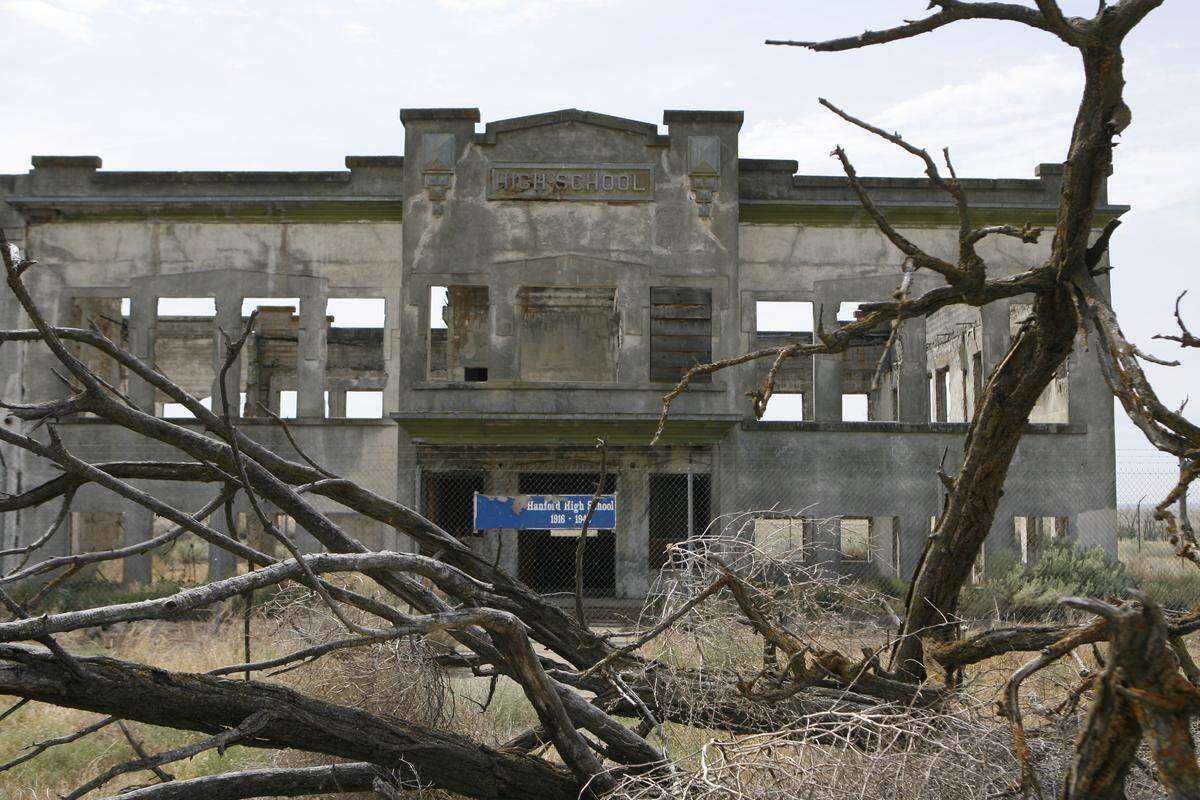
The Army also barred Native Americans from returning to their traditional land.
During the war Hanford workers and Tri-Cities residents ran war bond drives and, over a month, about 51,000 employees contributed a day’s pay to purchase a bomber.
It was christened Day’s Pay and flew 60 missions in Germany. Hanford workers tracked its missions and sent care packages and letters to its crew.
Today the Tri-Cities embraces its WWII history.
WWII leaves mark on Tri-Cities
The Naval Air Station became the Tri-Cities Airport. But the WWII control tower has been preserved and the Pasco Aviation Museum, with vintage airplanes, has been created at the restored tower.
Big Pasco retains some of its historic use, providing warehouse space to manufacturers, shippers and produce packers.
In Richland, the “Gold Coast” area has been placed on the National Register of Historic Places. The federal government built housing for Hanford workers in the then government-owned town of Richland, with different models named for letters of the alphabet.
Many managers were assigned to “Gold Coast” alphabet houses near the Columbia River.
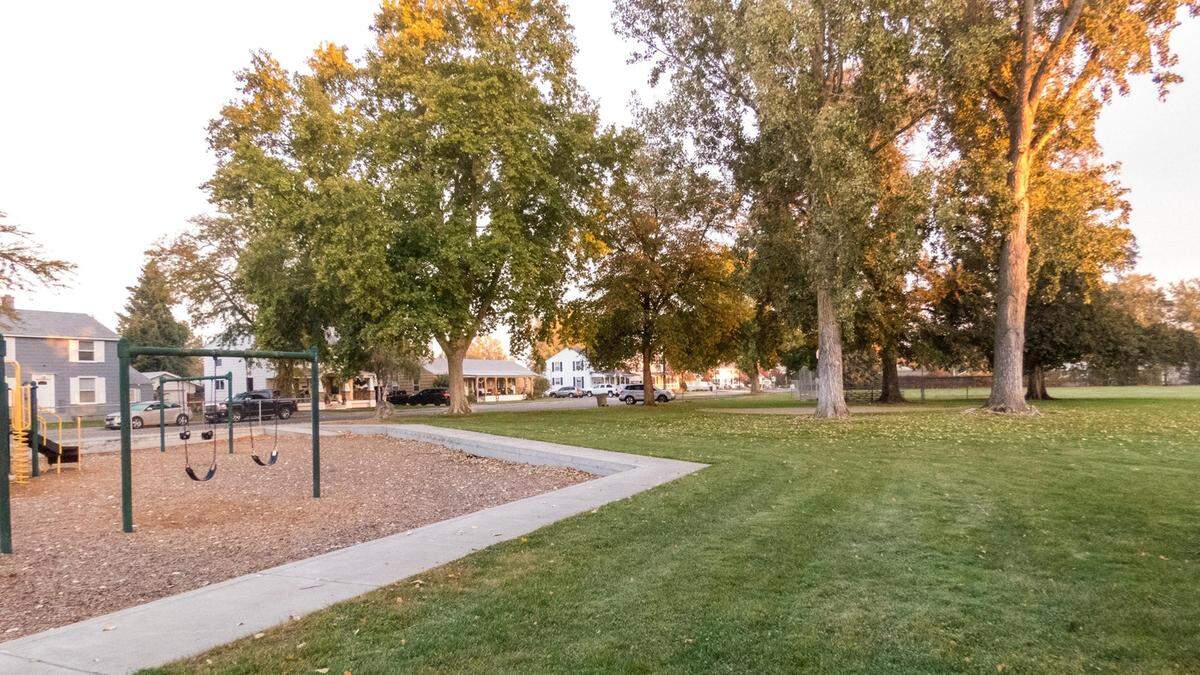
Secrecy, as Hanford continued to produce plutonium through the Cold War, kept public recognition of Hanford facilities at bay, according to the nomination.
In 1991 the B Reactor Museum Association was formed to save B Reactor from destruction during a time when DOE said that it was “not in the museum business.”
It took until late 2014 to designate the reactor and other historic areas of the Hanford site as part of the new Manhattan Project Historical Park.
“The history of the Hanford site and its top-secret World War II mission has set the Tri-Cities on a unique path of hosting and supporting continued scientific discoveries across a wide spectrum,” the nomination said.
Pacific Northwest National Laboratory grew out of Hanford work, with over 5,000 staff now developing scientific and engineering solutions to global problems.
The LIGO observatory, which detects gravitational waves from violent collisions of black holes and neutron stars, was built at Hanford.