
‘Unsung hero.’ Leader who set Tri-Cities on its current bright economic course has died
The man who fought to give the Tri-Cities the strong, post Cold War economy it enjoys today and protect the environment from Hanford site contamination has died.
Mike Lawrence, the Department of Energy manager of the Hanford nuclear reservation site as the Cold War ended, died Saturday.
“He was a vocal advocate for cleaning up Hanford and advancing our community’s clean energy future, including nuclear energy,” said Jud Virden, associate lab director for energy and environment at Pacific Northwest National Laboratory in Richland.
Lawrence, 75, had been in treatment for advanced pancreatic cancer since March 2021 and had recently entered hospice care at his West Richland home.
He was the top manager at Hanford from 1984 to 1990, leading the transition from plutonium production to environmental cleanup at the nuclear reservation. Today the work receives about $2.5 billion in federal spending annually.
But at the end of the Cold War, the Department of Energy said Hanford’s military mission was over. With the Tri-Cities economy then closely tied to Hanford jobs, local leaders feared for the future of the community and workers feared for their jobs.
But Lawrence fought for a new mission of environmental cleanup at what’s been called the most contaminated site in the Western Hemisphere.
“He was an unsung hero of building the Tri-Cities to what it is today as he fought for an economic future for the Tri-Cities at no small personal cost to his own career,” said Jack Briggs, former publisher of the Tri-City Herald.
Hanford Tri-Party Agreement
He signed the Tri-Party Agreement in 1989 on behalf of the Department of Energy, setting the Hanford site on a long-term mission of environmental cleanup of extensive radioactive and hazardous chemical waste and contamination.
“He really didn’t get the credit at a time when things were boiling over in the Tri-Cities for forging the Hanford Tri-Party Agreement, when in actual fact it built a future for the Tri-Cities at a site that had been designated as a no-mission site,” Briggs said. “It had no future.”
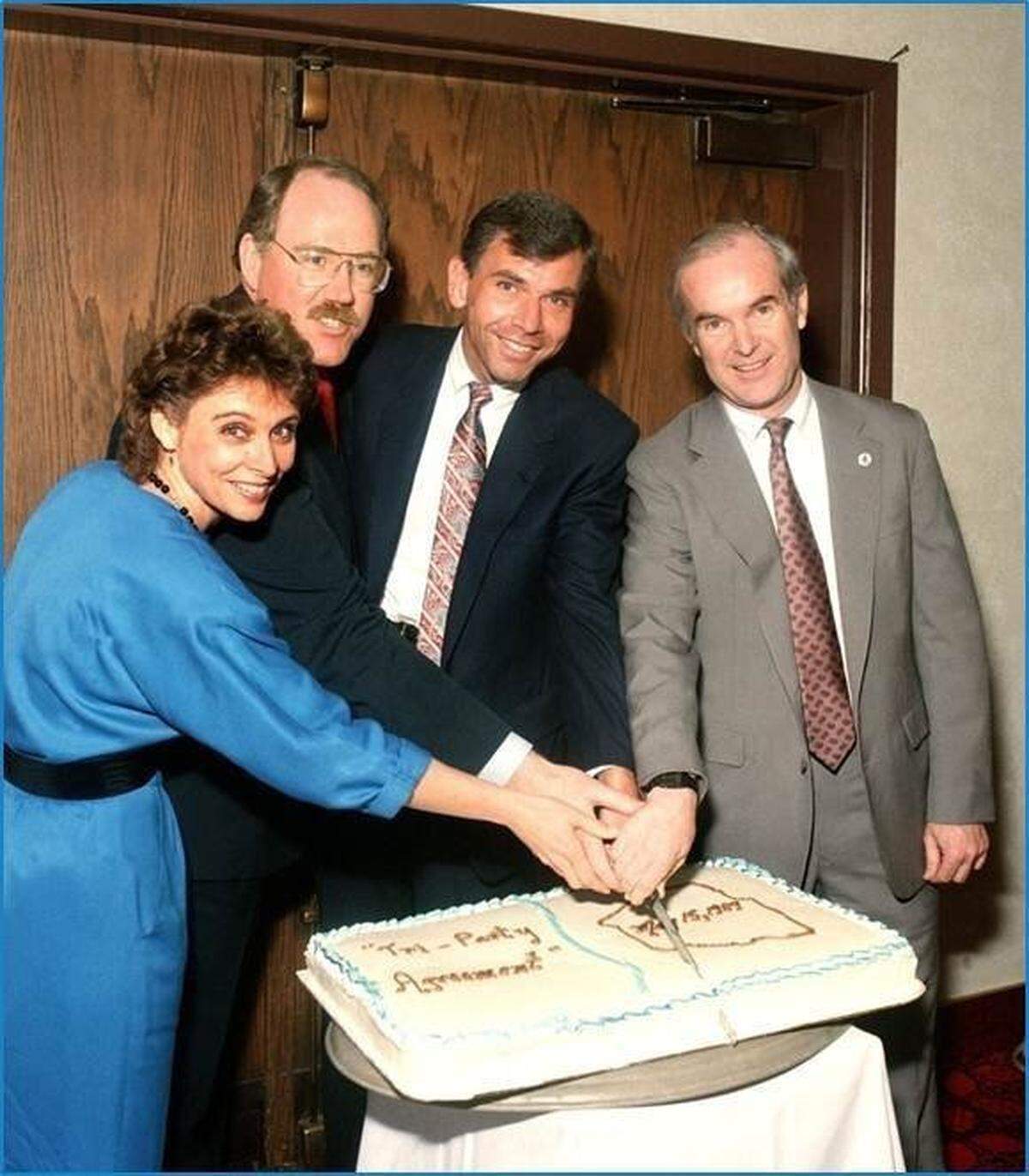
But Lawrence would not accept that and insisted that the Tri-Party Agreement be signed following years of tense negotiations, despite objections from DOE headquarters, Briggs said.
“He wasn’t afraid to stick his neck out,” said Roger Stanley, former program manager for the Washington state Department of Ecology’s Nuclear Waste Program, as quoted on the Ecology web page.
“When he reached agreement out here (in Washington state), he had to sell it back East, and he had a lot of selling to do,” Stanley said.
Other signers of the Tri-Party Agreement included then Washington Gov. Booth Gardner; then Attorney General Chris Gregoire, who would later become governor; and Robie Russell, Environmental Protection Agency regional administrator.
Lawrence said in 2015 that the agreement had exceeded expectations, despite environmental cleanup taking much longer than projected in 1989.
When the agreement was signed, launching the Hanford cleanup mission, the extent of contamination in the ground and groundwater at Hanford were unknown. Signers did not know how cleanup would be done or what technology would be used. They also did not know how to protect workers in often hazardous conditions.
But they outlined a legally binding plan between DOE and Hanford regulators to restore the 586-square-mile site.
In an op-ed published in the Tri-City Herald in 2019, but Lawrence and Gregoire said they were “driven by a common commitment to the protection of our Northwest environment, the people of the Tri-Cities and our mighty Columbia River.”
“The work between the federal government and the state of Washington will result in the most complete, the most protective and the most expensive cleanup of a site like Hanford anywhere in the world,” they said.
Also as Hanford manager, Lawrence volunteered in 1985 to declassify and release tens of thousands of pages of Hanford documents with information on radioactive releases from the site, after concerns were raised by those living downwind of the site and in news reports.
Lawrence said during a Hanford History Project interview that DOE was accused of hiding information until an environmental group filed a request for documents.
But DOE had already agreed to release the information and was close to completing declassification and release of 19,000 pates of information, he said.
“Mike Lawrence helped set the stage for the cleanup era and public engagement,” said Brian Vance, the current DOE Hanford manager. “His legacy lives on in the vital cleanup mission we are progressing at the Hanford Site, and in many of our best practices in public involvement.”
Lawrence left DOE the year after the Tri-Party Agreement was signed but continued to be an advocate for responsible Hanford cleanup.
He also would continue his leadership in the nuclear field, including for the U.S. State Department. He later would join Pacific Northwest National Laboratory, the DOE national lab in Richland. After retirement, he served as the chairman of Tri-City Development Council’s Mid-Columbia Energy Initiative from 2011 until 2020.
Richland School Board recall
Most recently he was one of four Richland residents to pursue a recall of three Richland School Board members who voted in February to make masks optional, despite a state mandate.
Their decision led the Richland superintendent to close schools for two days and put the district in risky legal territory.
The recall is pending an appeal in the Washington Supreme Court.
Lawrence told the Tri-City Herald in May that public officials should not pick and choose the rules and regulations they follow.
“I worked for the government for 25 years. I worked for Republicans and Democrats,” Lawrence said. “I believe it’s very important for anyone in public service to follow the law and rules for the position they’re in.”
Mike Lawrence ‘a gentleman’
Lawrence’s friends and colleagues were remembering him this week not just for professional achievements and leadership on Tri-Cities issues, but as a person who was widely admired and liked.
“He was just one heckuva great guy to be around,” Briggs said. “His word was his bond, his friends were abundant — and his smile was rarely absent from his face.”
Given Lawrence’s leadership at Hanford, PNNL and in the community, including at TRIDEC, he will be remembered “as one of the most impactful people in the Tri-Cities’ history,” said David Reeploeg, TRIDEC vice president for federal programs.
%20(1).JPG "Hi_j0155(95) (1).JPG")
“Most importantly, Mike was a great person who cared deeply about our community, and who will be dearly missed,” Reeploeg said.
Virden, who worked for Lawrence when Lawrence was associate laboratory director at PNNL, called Lawrence “an incredible leader, manager, creator and mentor. Mike was always positive, sincere and authentic. He cared about the people in our community. I will miss his wonderful sense of humor that would always put a room at ease.”
Mike Kluse, the director of PNNL until his retirement in 2015, said Lawrence was always a gentleman.
“Everything he touched he made a positive, significant difference,” Kluse said.
Hanford, PNNL, State Department career
Among Lawrence’s jobs after serving as DOE’s Hanford manager from 1984 to 1990, was as the nuclear policy counselor from the U.S. State Department in Vienna, Austria, from 1991 to 1995.
He returned to the Tri-Cities to serve as executive vice president for British Nuclear Fuels Inc., with responsibility for its activities at Hanford related to early plans for the vitrification plant.
He was named business leader of international nuclear programs at Pacific Northwest National Laboratory in Richland in 2000 and then associate laboratory director for energy and information services.
The lab said in an an announcement when Lawrence joined PNNL that he brought expertise gained assisting the International Atomic Energy Agency in creating and implementing international nuclear policy for nonproliferation and safety and serving as the U.S. expert for an international study on nuclear waste storage and transport.
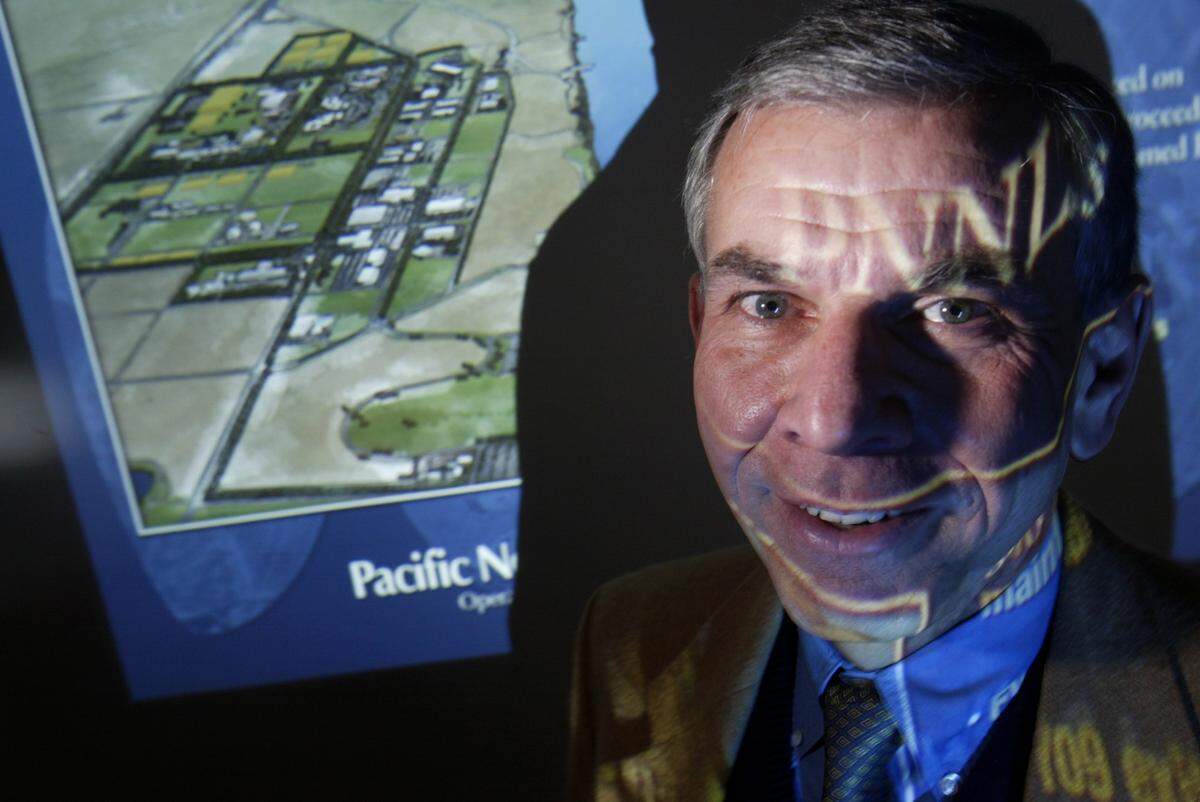
Among his work at PNNL was responsibility for the team helping to build a new confinement structure that was was placed over the Chernobyl Nuclear Power Plant in Ukraine after an explosion and fire demolished the reactor building and spread radiation.
Lawrence later would oversee work to replace old PNNL buildings and laboratories on Hanford land with modern facilities on the Battelle campus in Richland. He also worked with Washington State University Tri-Cities on the Bioproducts, Sciences and Engineering Laboratory, or BSEL.
In 2009 he took a job as managing director of the United Kingdom National Nuclear Laboratory, after working on the Battelle bid to manage the project.
He retired at the end of 2010, returning to the Tri-Cities.
Tough cancer battle
He said then that he planned to spend time with his grandchildren, ride the weekly ski bus to Mission Ridge and write letters to the editor at the Herald. But he soon was working with TRIDEC on clean energy initiatives.
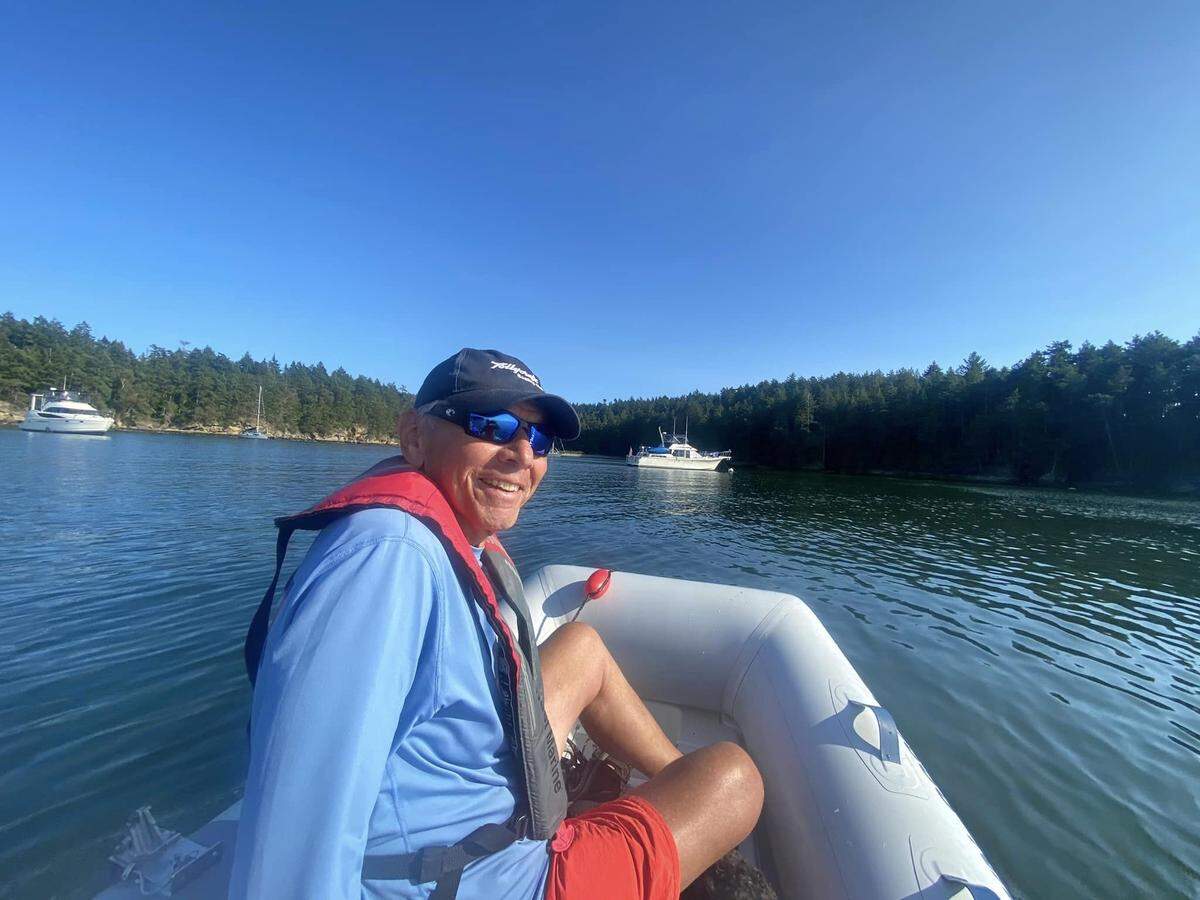
Lawrence enrolled in a clinical trial at Virginia Mason Medical Center in Seattle after he was diagnosed with cancer and split his time between a houseboat in Seattle and the Tri-Cities.
Even after he entered hospice care a month ago, he held out some hope that he would regain some strength and return to a treatment regiment.
“He fought a long tough battle, but his spirit remained high and positive throughout and his sense of humor never changed,” Kluse said. “He was an inspiration to all he met and he taught me many lessons.”
His family told friends that he died peacefully Saturday, surrounded with immediate family at his home. He is survived by his wife Cindy and their grown children Emily, Jeff and Matt.
A memorial service is planned at the Einan’s at Sunset event center in Richland at 1 p.m. Sunday, Dec. 18.
This story was originally published December 5, 2022 at 12:50 PM.