NW tortoise with collapsing shell gets 2nd chance thanks to 4 WSU Tri-Cities students
She’s got a “beautiful soul” and an appetite to match.
And, thanks to a few new friends, she’ll soon be walking on her own.
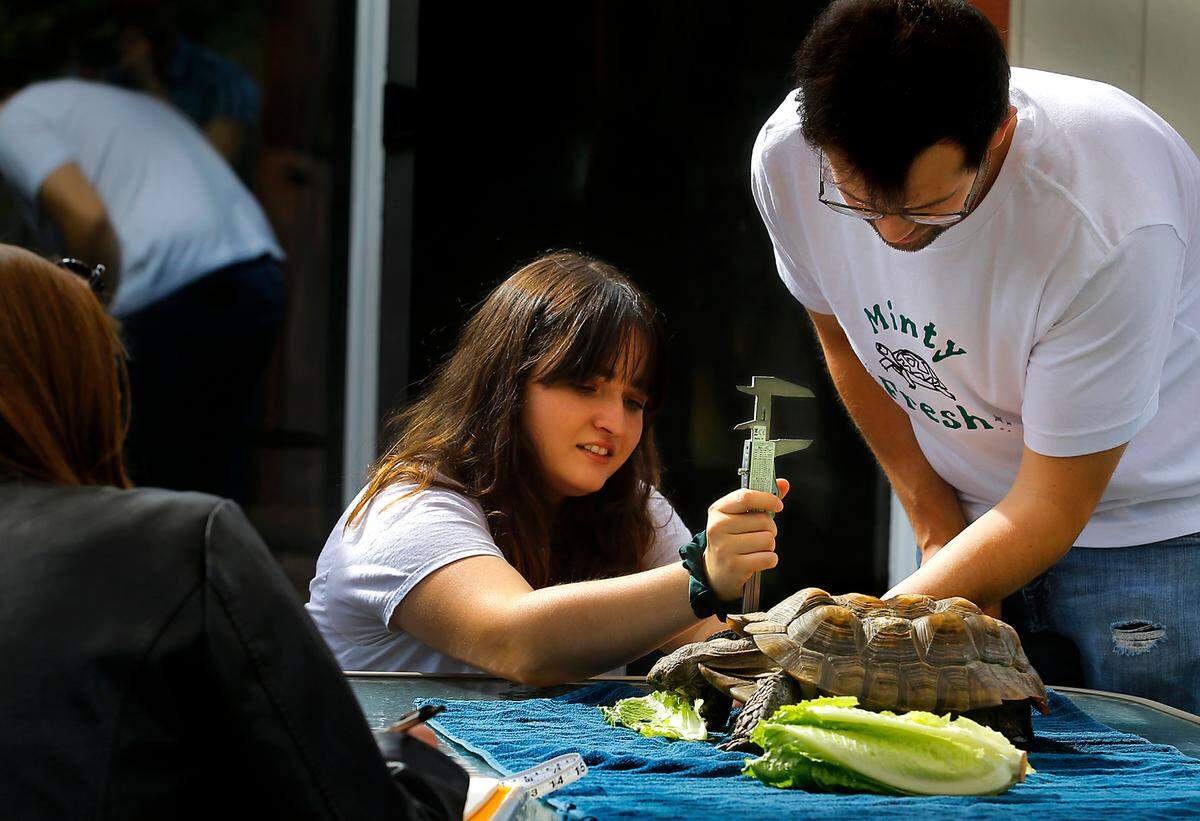
Four mechanical engineering students at Washington State University dropped by Northwest Tortoise nonprofit in Kennewick last week to take measurements of Minty, a young gopher tortoise.
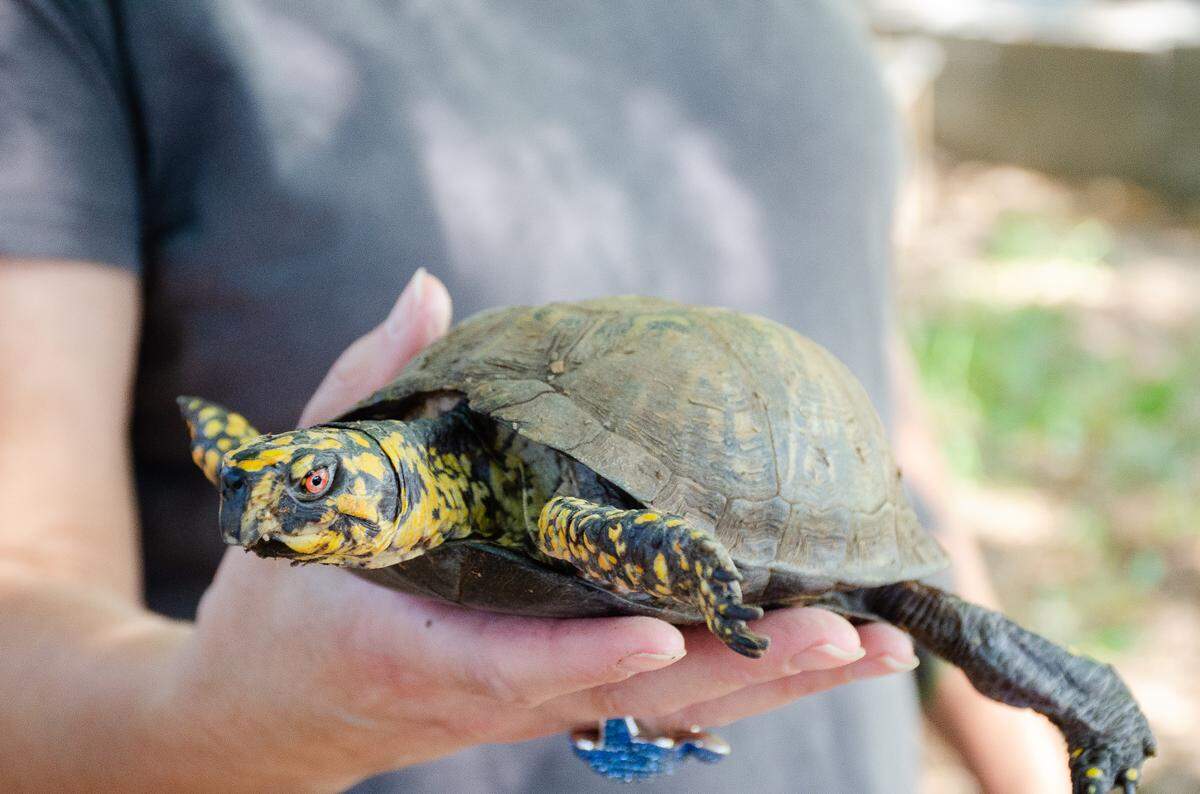
Minty suffers from a bone development disease caused by malnutrition. Years of a poor diet caused her shell to collapse and fracture her spine, making it impossible to crawl around without any support underneath her.
But the four seniors — Sprout Stokes, Abdullah Alsheri, Andrew Zapata and Emma Waldroup — plan to develop a prosthetic that will get Minty crawling around in no time.
The endeavor is part of their undergraduate capstone project and is supported by Hanford contractor Washington River Protection Solutions (WRPS). They hope to finish the prosthetic by the end of November, near the end of the semester.
“I’m very thankful,” said Terese Meyer, founder of Northwest Tortoise. “It’s been a two-year search for me.”
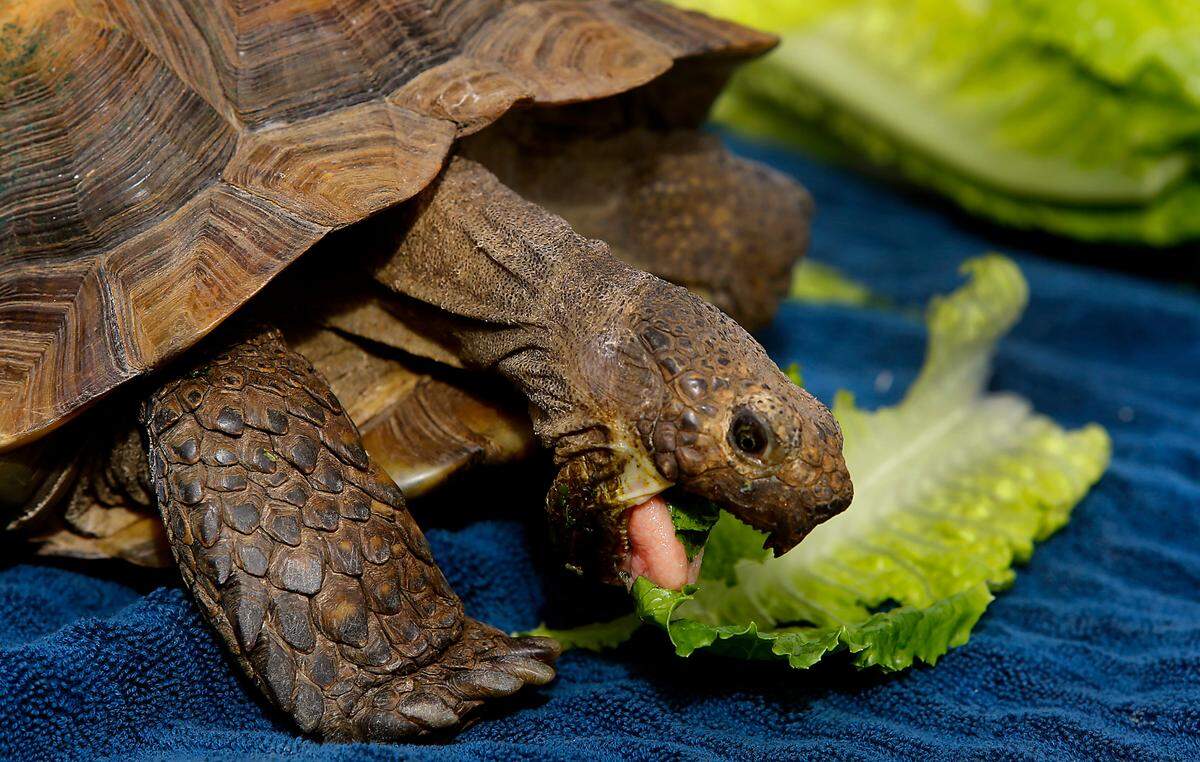
Unable to walk on her own, Minty was relinquished to Northwest Tortoise three years ago. The nonprofit cares for about 200 tortoises.
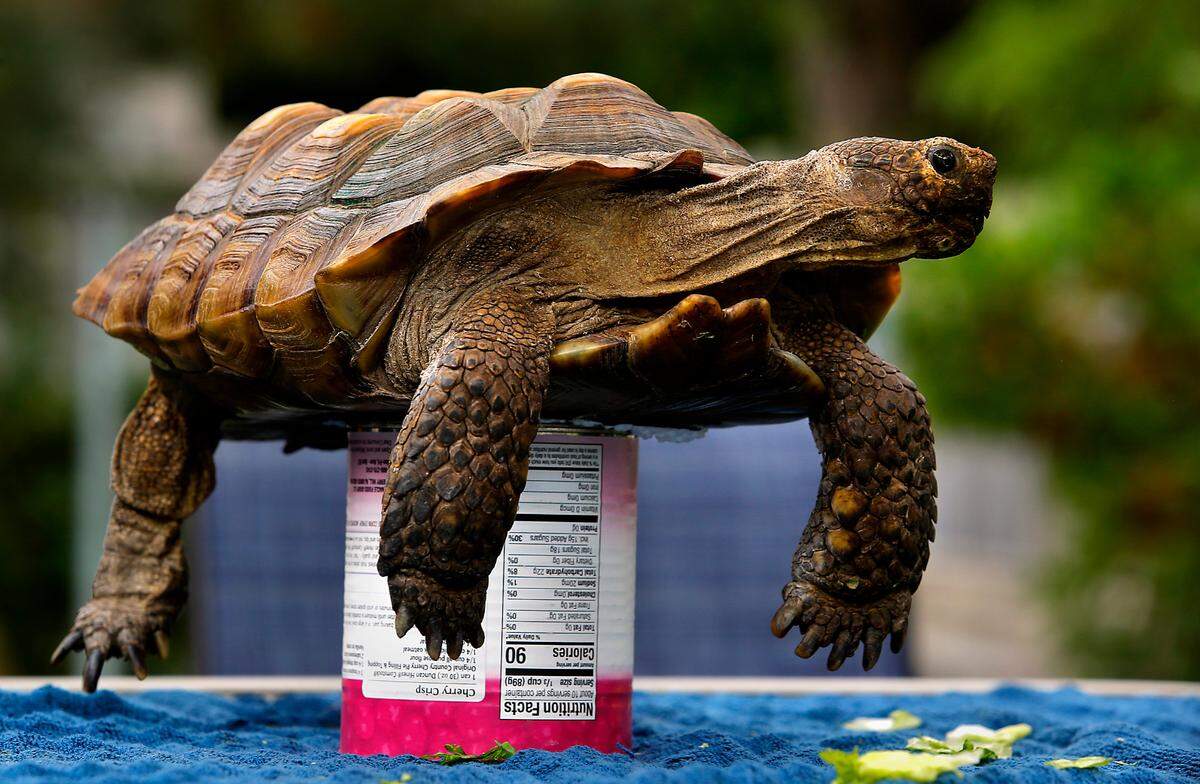
Since then, Minty has had a piece of styrofoam stuck to her belly with double-sided tape to help her scoot around. The foam provides weight relief to her nerve-shocked feet.
Meyer said there’s no prosthetics available commercially that could help with Minty’s mobility issue.
“The concept of modern tortoise care is very, very new,” she said.
The styrofoam block is not a permanent solution, though. And while she can get around on Meyer’s concrete patio well with it, there are challenges in rougher parts of the yard where other tortoises roam freely.
“In the future, hopefully they can build upon the work and implement it for others,” said Doug Reid, a project engineer at WRPS and WSU adjunct professor.
The plan
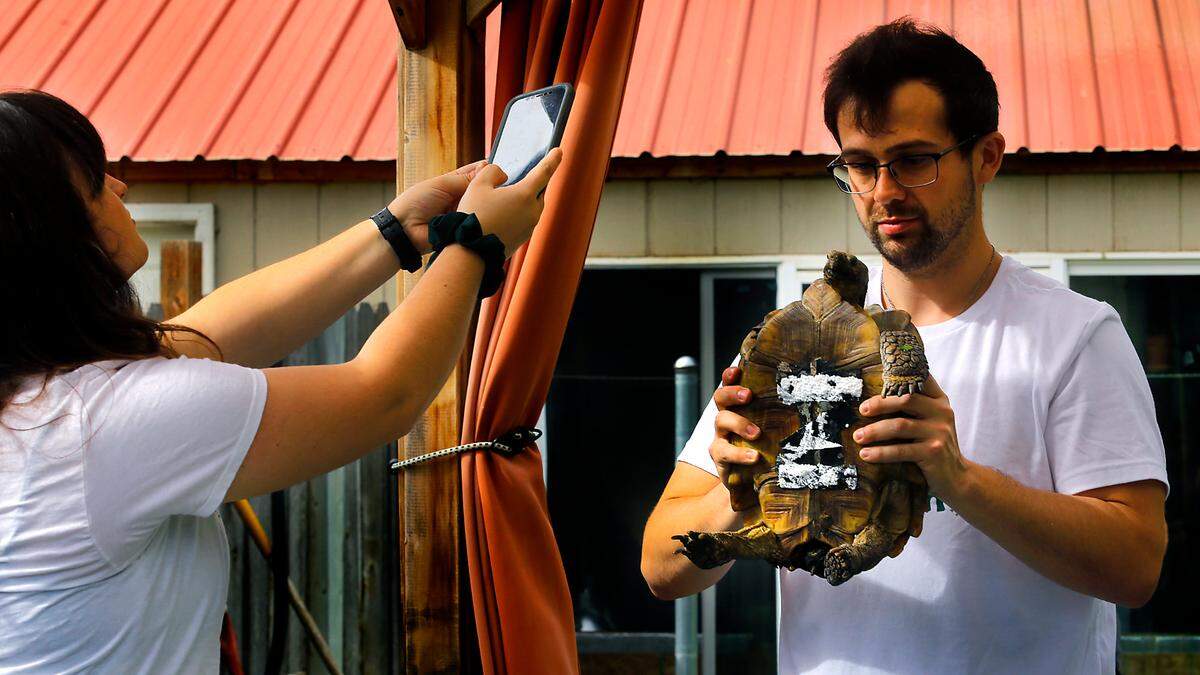
Sporting white T-shirts with the phrase “Minty Fresh” on them, the enthusiastic group of WSU seniors got to work measuring, scanning, photographing and feeding the warmhearted reptile.
Here’s the working plan: render a model of the tortoise, use a 3D printer to create a replica of her shell, brainstorm prosthetic solutions, create and test prototypes, narrow down the best solution, test it again and make revisions, and then complete the project.
The next time they see the young tortoise, they hope to have a final prototype ready for her to wear.
Zapata said he was stoked and “so happy” to be chosen for this project. He’s a former pre-vet student and has background in biological studies.
“I definitely rubbed it into people’s faces a little bit,” he said.
The group has already ruled out a couple concepts: No drones, tank treads or skateboards for this young tortoise.
“The first thought was let’s see how many Tech Decks we could strap to her,” Waldroup said jestfully.
Unfortunately, she won’t be the next Tony Hawk or Ryan Sheckler. Developing a prosthetic that can get her around on every surface will be the largest challenge for them.
“Grassy terrain is very unpredictable,” Waldroup said.
The concepts currently under heavy consideration are either a sled or a mouse trackball that would be affixed to the underside of her shell. They would provide the simplest solutions with the least amount of moving parts.
This is one of the more “out of the ordinary” projects WSU engineering students have worked on. But the four were confident they would find a good solution to get Minty walking independently by the holidays.
Minty’s life
Meyer has a saying at Northwest Tortoise: “We don’t give up until they do.”
Minty was relinquished to the nonprofit about three years ago by a single mother who worked full-time, unable to meet the time commitment and care pet tortoises need.
Minty’s true age is unclear due to inconsistencies in her paperwork, Meyer said. But she’s likely 29 to 43 years old, which is a young age range for a gopher tortoise. Tortoises can live well past 100.
“I am so thankful I finally found someone that will giver her what she deserves,” the woman wrote in a letter provided by Northwest Tortoise. “She is such a beautiful soul and she brought a lot of peace to my life.”
The woman originally came into ownership of Minty by way of her mother, who nursed the hatchling with white bread and lettuce for several years.
Minty’s original owner also lived without stable housing, in tents and vans, for several years.
“I took (her) and all my mom’s pets into my care about five years ago. My mom was once again living in her van with all her animals and I could not bear to see it,” the woman wrote. “She has come a long way with me, but I know I am not providing her with what she needs and that is why I contacted you.”
Minty’s favorite foods include fresh plums, fresh lettuce, green beans, dandy lions and clover. She also has a sweet tooth for bananas.
Her soft, deformed, pyramid-shaped shell has gone through a lot of wear. In addition to her poor diet, her shell was spray painted and, likely, something heavy fell onto her. The vet also reportedly removed parts of her shell.
Tortoises need healthy, round shells to survive. It’s part of their body, Meyer said.
Minty and dozens of other tortoises at Northwest Tortoise suffer from metabolic bone disease, a deformation of bones and shell caused by poor diet and environmental conditions. Oftentimes, tortoises shells will collapse under the weight of themselves, killing the animal.
“It’s like adding a skyscraper to a root system that can’t support it,” Meyer said.
Minty doesn’t appear to be in much pain these days. She’s still cognizant, moves her legs around to walk and is filled with attitude and sociability.
“I’ve never had to put a tortoise down. Ever,” Meyer said.
Minty does have the largest mobility issue of any tortoise at the nonprofit. A large, 20-year-old sulcata tortoise named Lewis may run into the same mobility issues down the line, though.
Northwest Tortoise nonprofit
Tucked behind an inconspicuous home in a Kennewick cul-de-sac is Northwest Tortoise, a nonprofit sanctuary and rescue serving ill and abandoned tortoises.
It’s the only organization of its kind in the Pacific Northwest and is not open to the public.
A revolving assortment of tortoises from all over the Northwest occupy a backyard retrofitted by founder Meyer, a Tri-Cities native.
As the sole worker, Meyer pours about 30 hours each week into her nonprofit and doesn’t take a dime in salary. During the day, she works in administrative work for a company at the Hanford nuclear site.
With its dry, arid summers, the Tri-Cities makes for one of the best places in the U.S. for tortoise sanctuaries. The reptiles can stay outside nine months out of the year.
Donations to Northwest Tortoise can be made via PayPal or on the nonprofit’s website.
This story was originally published October 2, 2022 at 5:30 AM.