Rent prices are skyrocketing across the U.S. How does Tri-Cities compare?
Rising rent costs and a tight housing market have renters stressed about what will happen as their lease comes up for renewal.
But signs are pointing to a slowdown in both areas.
Apartment vacancy rates are still tight in the Tri-Cities, but this spring they reached their highest point in nearly a decade. At the same time, steep rent increases rose at a more manageable pace.
For the past several years, rental data has shown the Tri-Cities with a vacancy rate hovering between 1% to 2%, meaning prospective renters faced lots of competition trying to find a new place.
That’s particularly frustrating for many renters, who are moving to the area or see increases to their monthly rent force them to find a new place to live.
New data from Washington State University shows that vacancy rates for apartments in Tri-Cities rose to 3.5%. The current rate is the highest it’s been in the Tri-Cities in more than five years. This time last year the rate was at 1%.
They estimate the Tri-Cities went from having less than 100 units open on average, to about 400 this spring.
The data comes from a semi-annual survey of apartments across Washington state. They measure rent prices, availability of units, size and type of apartments and more.
Dramatic rent increases
Earlier this year, experts began sounding the alarm about a nationwide trend of dramatic rent increases, with the nationwide average pushing close to 20%.
The Tri-Cities seems to be faring a little better than other areas in Washington, but Kennewick Housing Authority Director Lona Hammer said the most vulnerable are seeing disproportionate impact.
“What we are seeing in our area that is quite disturbing is that some rents on our fixed-income families who are elderly and/or disabled, are increasing by as much as $500 a month,” Hammer said. “These increases can make rents not affordable for these families. Can you imagine paying 75% of your adjusted gross income for rent?”
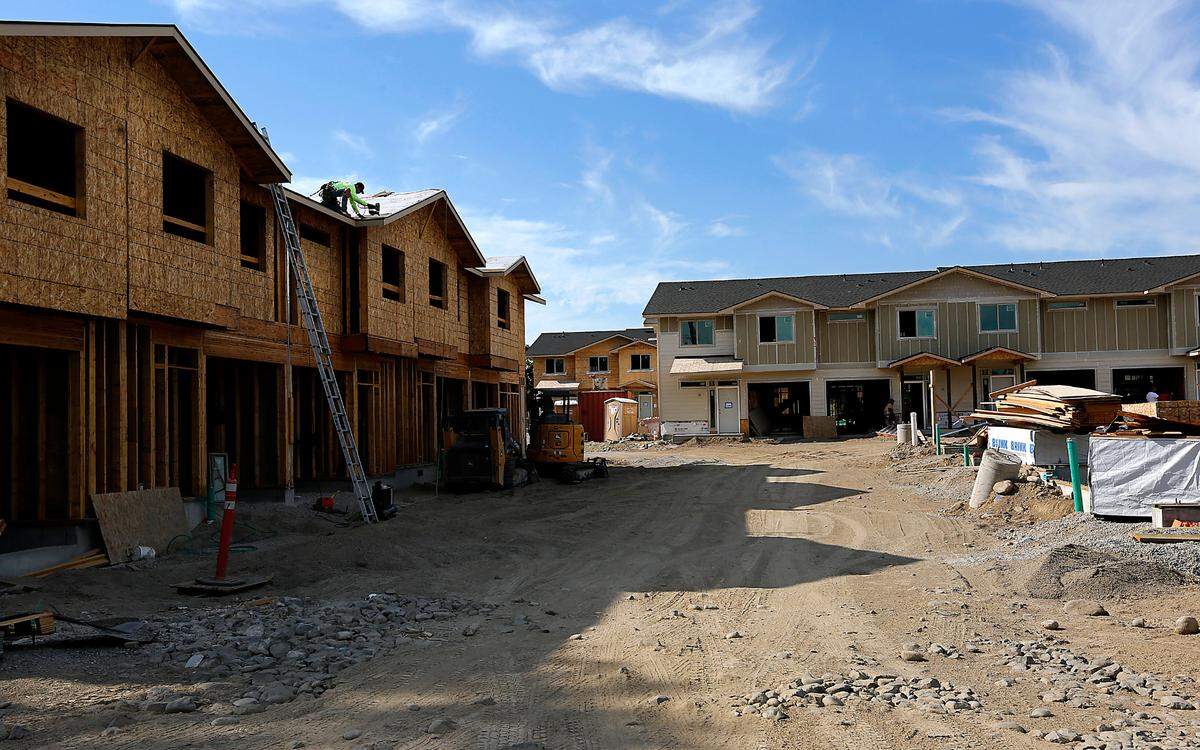
Hammer said that while the Tri-Cities is seeing a boom in higher-end apartment construction, it’s new low- to middle-income rentals that are most needed right now.
While the housing authority has a voucher program designed to help residents struggling with rent, Hammer said the availability of units that meet the criteria for voucher use is small, leaving many clients with vouchers but no apartments that will accept them.
Hammer said they’ve even tried to offer more incentives to rental agencies, such as helping to pay deposits.
Using 2022 HUD numbers, a family of four needs an income of $70,000 to not be considered low-income in the Tri-Cities.
The 2022 HUD guidelines show that a family of four with income of $69,850 or lower is considered “low income” in Tri-Cities, up more than $7,000 from last year’s numbers.
Rent prices soar
Year-over-year rent increases saw their smallest increase in five years.
From spring 2020 to 2021, apartment rent in the Tri-Cities rose a staggering 14.4%, according to WSU.
This year saw an increase of 4.28%, the lowest level since at least 2018.
The average monthly cost for a one bedroom rose from $1,027 to $1,071.
The average for all unit sizes went from $1,140 monthly to $1,222. That includes studios, one, two and three bedroom apartments.
By comparison, from 2020 to 2021 rent for the average one-bedroom apartment rose from $898 to $1,027. The average cost for all apartments went up $118 monthly from 2020 to 2021.
Rent prices vary by market, but the Tri-Cities seems to have seen less drastic increases than most mid-to-large markets in Washington state.
The average for all apartments in Spokane rose from $1,098 to $1,202.
Clark County and the Vancouver area saw increases from $1,443 to $1,497, King County rose from $1,795 to $1,936. Thurston County and Olympia saw a jump from $1,210 to $1,310 for one-bedroom apartments.
The spring 2022 Data for apartments in the Puget Sound area was sourced from commercial real estate broker management firm CoStar. Puget Sound area average rents actually show a small drop for most counties from 2020 to 2021, before spiking back up in 2022.
The housing market in the Tri-Cities is more resilient due to the large share of government contracts and diversity of industry, real estate broker Tim Ufkes told the Herald earlier this year.
A similar pattern was seen after the real estate market crashed in 2008. It took Clark County and the Puget Sound area until 2014 to fully recover to pre-crash home sale values, while the Tri-Cities’ home sale prices simply leveled off before beginning to climb again.
Ufkes, senior vice president of National Multi Housing Group with Marcus & Millichap, is the broker for the largest portion of the Broadmoor development in Pasco.
“It’s almost recession proof, when things start to slow down in the rest of the US, it doesn’t here,” he said.
About 2,000 apartments are expected to come online in the Tri-Cities over the next two years.
The majority of those are aimed at either high-income renters or senior living. Fortify Holdings is also converting half a dozen old motels into micro-apartments.