
New $8.1M science and space exploration center opens for kids, others near Tri-Cities
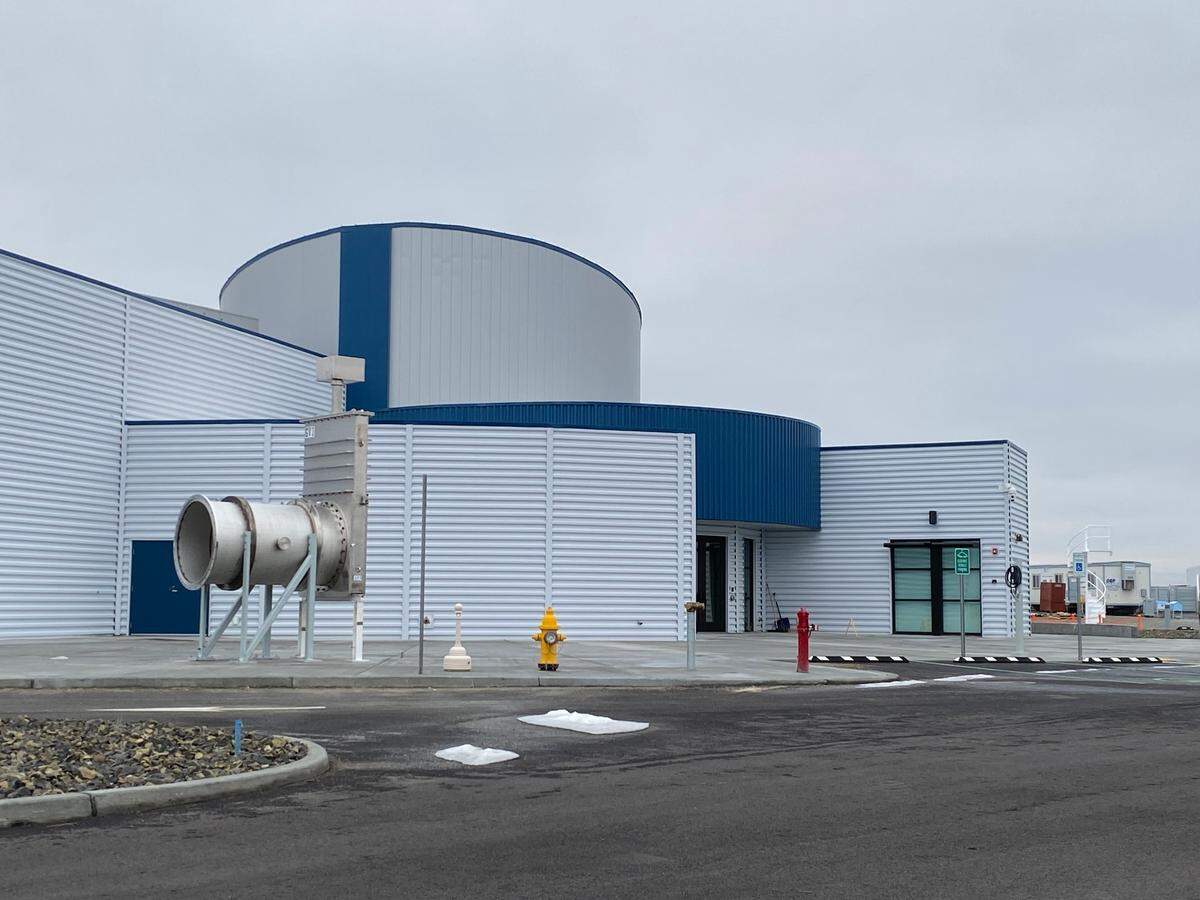
The observatory just north of Richland that made scientific history in 2015 finally has a center the public can visit to explore and learn more about the scientific concepts at the core of the LIGO Hanford observatory and its discoveries.
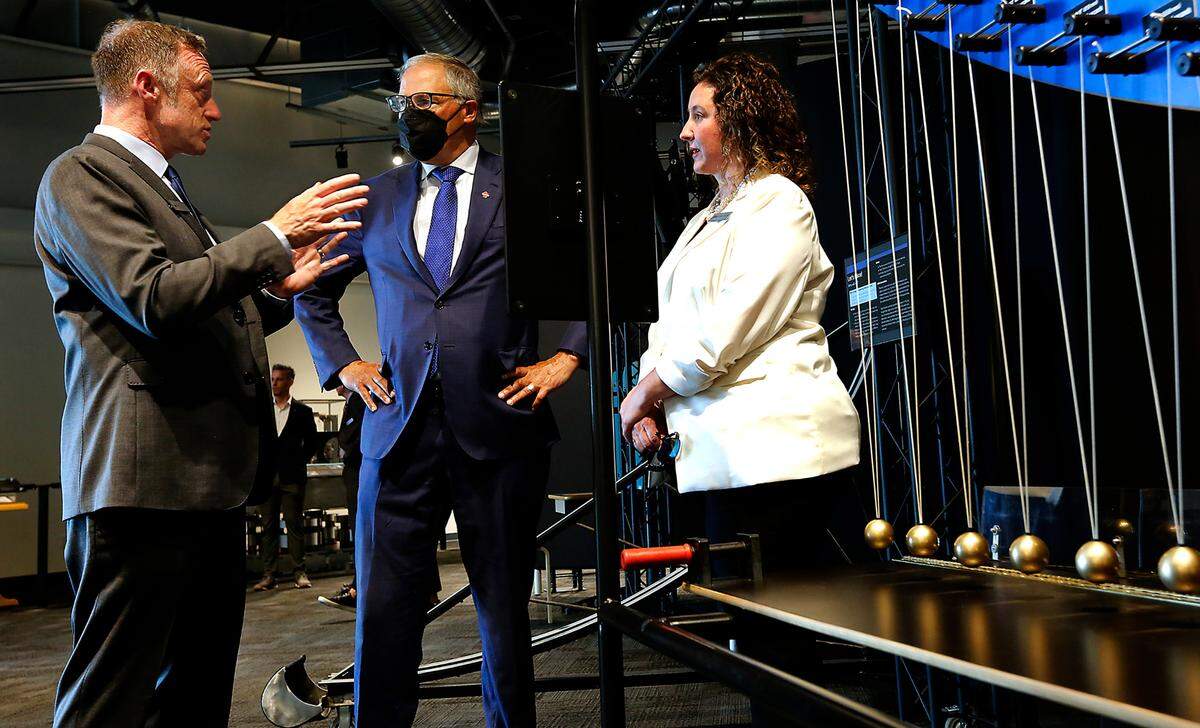
At the new Hanford LIGO Exploration Center, a giant Slinky stretches across the room for a hands-on demonstration of what happens to waves of traveling energy.
Rubber balls can be dropped to roll and spin around each other in a gravitational field.
A wave machine can be manipulated to show who the amplitude of gravitational waves are affected by the energy from the event that caused them and by the distance the wave has traveled.
Those exhibits and dozens more will help the public, including bus loads of school children, learn some of the principles of physics that are being used to detect infinitesimal gravitational waves that pass through Earth.
The first gravitational waves were detected at the Laser Interferometer Gravitational-wave Observatory (LIGO) at Hanford and its twin in Louisiana after the ripples through time and space had traveled for 1.3 billion years to the Earth.
The discovery of those waves, from black holes that spiraled together and collided, provided physical confirmation of Einstein’s theory of relativity a century earlier.
Center’s grand opening
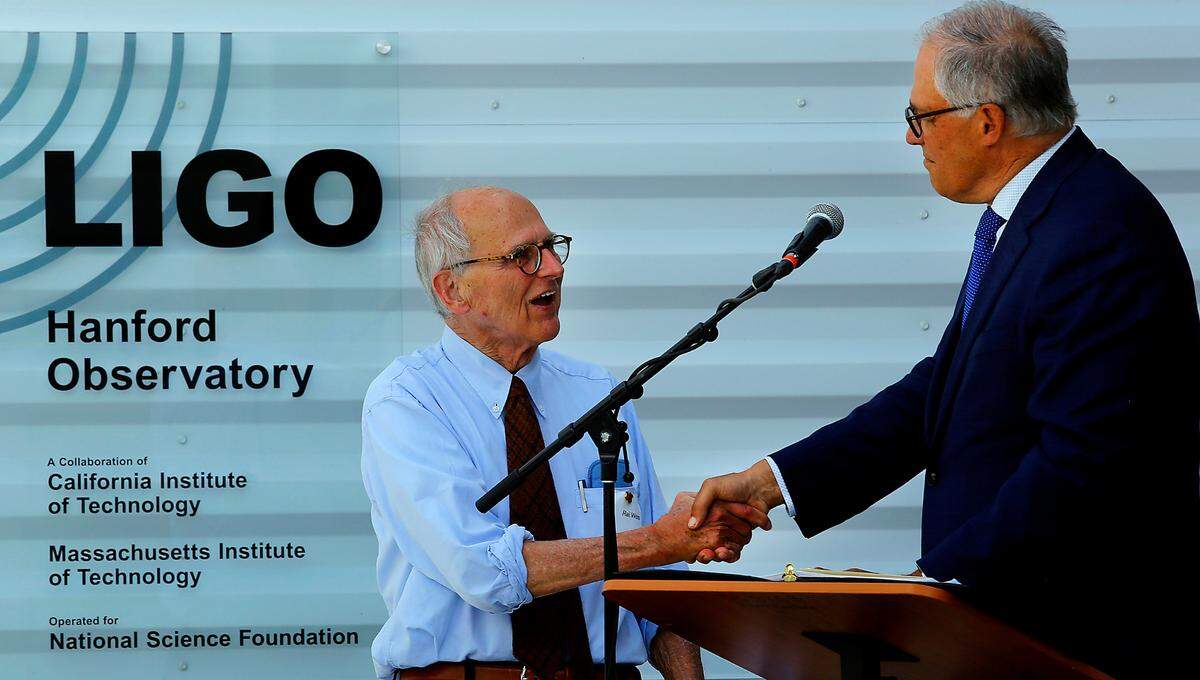
On Thursday the grand opening of the LIGO Exploration Center or LExC — pronounced Lexi — was celebrated by visitors that included Washington Gov. Jay Inslee and Rainer Weiss, a Nobel laureate, whose medal is displayed at the center.
However, the center will not be open for drop in visitors until September, when popular tours of LIGO also will resume, as the observatory ramps up public visits after they were stopped during the COVID-19 pandemic.
However, some private tours for groups of 15 or more people are being scheduled now.
Visiting a museum with scientific and technology exhibits created the spark of interest that caused Rainer Weiss to pursue a science career, said the professor emeritus of the Massachusetts Institute of Technology.
He was one of three U.S. professors emeritus to be awarded the Nobel Prize in Physics for their work to design and build the two LIGO observatories with funding from the National Science Foundation.
Now LIGO Hanford has a center that will spark curiosity in both children and adults, he said.
Life is more interesting if you have a deeper understanding of the world around you and “how science does its tricks,” he said.
Albert Einstein understood that human intelligence is not proven or demonstrated by knowledge, but by imagination “and that is what LExC is going to fire,” said the Washington governor.
David Tirrell, provost at the California Institute of Technology, said one colleague told him that black holes may be surpassing dinosaurs as the object of imagination for young children.
Inslee sees the new center, made possible by an $8.1 million grant from the state of Washington, as a way to inspire students to pursue careers in science, technology, engineering and math to help find solutions to issues like the existential threat of climate change, he said.
10,000 student visitors
LIGO scientists had tried to secure money for a visitor education center as early as 2009, but it took former Washington state Rep. Larry Haler of Richland to doggedly champion the education center to obtain Washington state money.
“Previously, we had been hosting 3,000 to 4,000 K-12 students a year, in addition to bringing our scientists into classrooms,” said Amber Strunk, education and public outreach lead at LIGO Hanford Observatory, before the opening of the center.
“But with the growing interest in LIGO and its ongoing discoveries, we wanted to reach and inspire even more students of all ages,” she said.
Up to 10,000 students a year are expected to visit the center on field trips each year.
Chris Reykdal, Washington state superintendent of public instruction, said at the center’s opening that he wants continued state funding to build on and improve exhibits and for a partnership to make exhibits mobile, spreading knowledge and interest in science to students in rural communities.
“This is awesome,” he said.
The 5,000-square-foot center was designed by architect Terence Thornhill with two circular areas merging in the lobby, mimicking the mergers of black holes and neutron starts observed by LIGO.
Since 2015, LIGO has observed 90 gravitational wave events.
Science gamble on LIGO
But its success was not a sure thing.
The National Science Foundation supported and invested in LIGO over three decades, spending $1 billion toward the detection of a gravitational wave before LIGO made its first observation.
“It was a very risky piece of science,” Weiss said. “When it was first proposed people had no idea whether there would be sources or not and then they looked at the the technology of it and said ... you guys are crazy.”
A discovery of gravitational waves would require measuring one-thousandth the size of a nucleus.
To do that the LIGO near Richland has two vacuum tubes that extend for 2.5 miles across the Hanford shrub steppe at right angles. At the end of each, a mirror is suspended on fine wires.
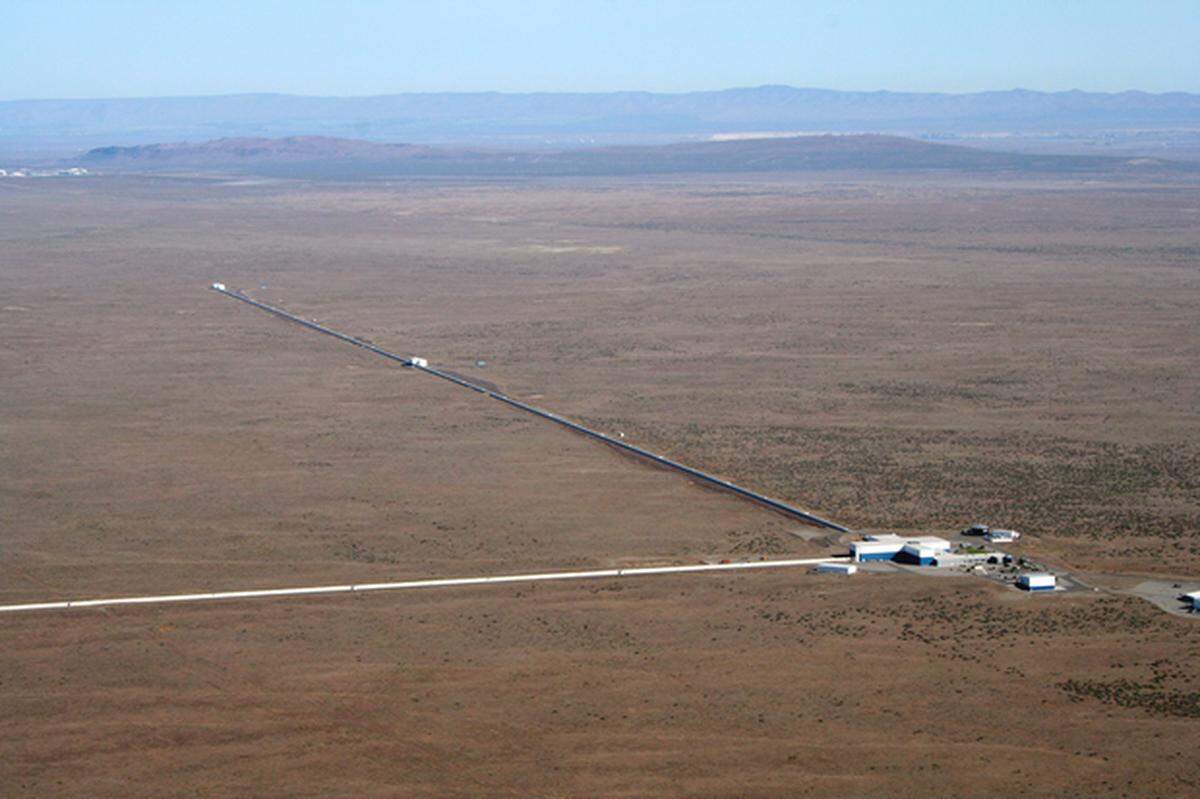
A high-power laser beam is split to go down each tube, bouncing off the mirrors at each end. If the beam is undisturbed, it will bounce back and recombine perfectly.
But a gravity wave pulsing through the Earth stretches objects lengthwise and causes them to compress sideways. A circle would become an ellipse.
At LIGO Hanford, one arm would become longer and the other shorter. The laser beams would no longer perfectly combine.
Data at the LIGO and now other international observatories are compared to confirm gravitational waves and help determine where the waves originated.
This story was originally published June 3, 2022 at 5:00 AM.