
His birth was celebrated in Tri-Cities. His parents want his death at 21 talked about too
Cannon Cartier was the Tri-Cities’ baby.
Listeners to his parents’ popular radio show welcomed him at a community baby shower at the Gaslight Bar and Grill in Richland, which he slept through to the disappointment of those who attended.
They had followed along as his parents Curt and Shannon Cartier discussed plans for his birth, with Lourdes Health Center in Pasco comping his delivery in exchange for all the free publicity.
After his birth, his parents would bring him with them to the studio for their 6 a.m. radio program. They would prop a mic up next to him to alert them when he woke, and his coos and cries punctuated the broadcast.
From the second he was born, he was “the life of the party kid,” said his mother, Shannon Cartier.
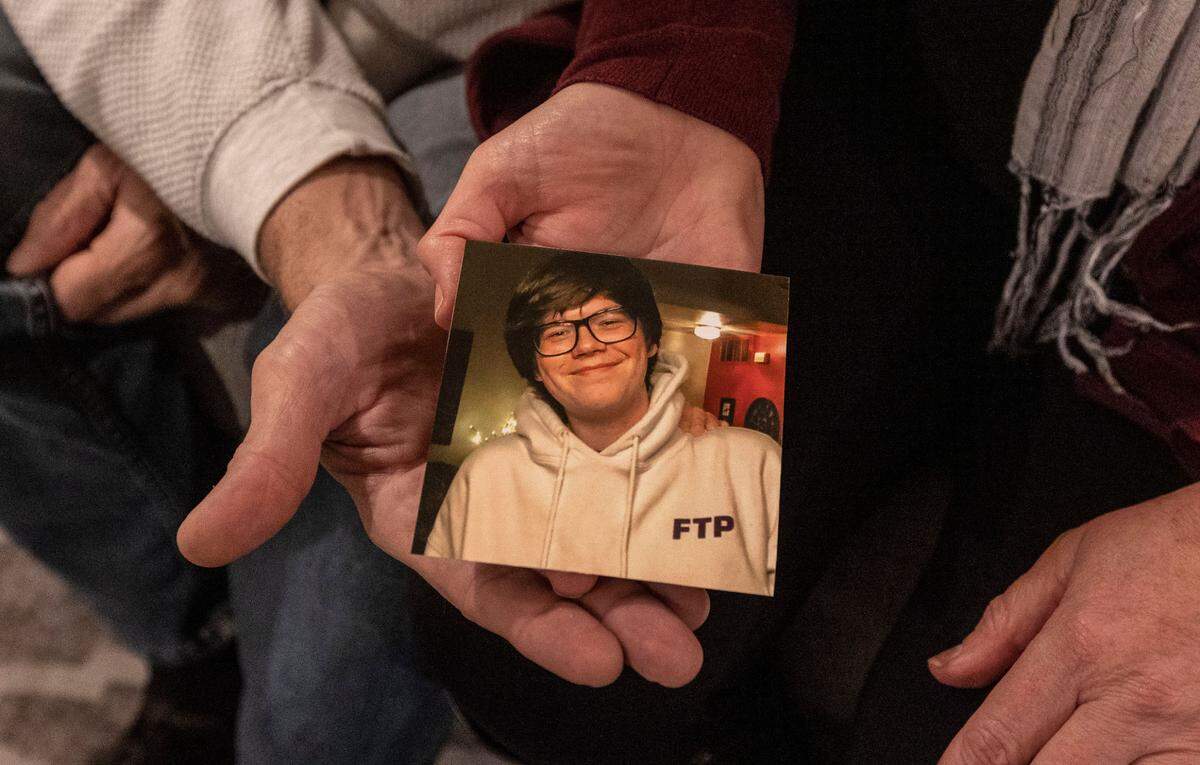
But the baby who stole so many Tri-Cities hearts for 21 years became part of a tragic statistic with his death one year ago.
He was discovered dead in the bathroom of the home he shared with his girlfriend after overdosing during what had appeared to be a promising stretch of sobriety.
Shannon Cartier remembers having a meltdown in Target just before Christmas last year. She was buying new Christmas stockings for the family and fell apart, knowing she wouldn’t be filling one for him.
“The grief that we live with now will never leave us and it didn’t have to be this way,” she told the Herald. “But we don’t know what could have fixed it.”
His overdose death was one of a record-breaking number last year in the nation.
The Centers for Disease Control and Prevention projects that when data compilation is completed for 2021, the total will be well over 100,000 deaths, up from about 72,000 the year before.
The CDC said that illicitly manufactured fentanyl, the substance that killed Cannon Cartier, was the main driver in the increase in overdose deaths.
In Washington state the death tally from drug overdoses is expected to be about 500 greater than the 1,726 deaths in 2020.
Overdose death awareness
That means more than 100,000 families with loved ones who died of overdoses just that year are suffering as Cannon’s family is, said Shannon Cartier.
“We’re in this really lousy club that we never wanted to be in,” said Curt Cartier. “It will be exacting emotional dues for the rest of our lives.”
His parents, who divorced many years before his death, remain at a loss, unable to agree on what they could have done differently to save their child.
But they hope talking about their son, his struggle with addiction and the grief they now live with will help ease the pain of other families.
“The more it is talked about, the less stigma it has,” Shannon Cartier said. “And I feel very strongly about that.”
“Please don’t ever think this can’t happen to you,” Curt Cartier said.
Cannon was full of energy and had “a million friends,” as a child, his mother remembers. “He was super outgoing.”
But by sixth-grade he began being labeled a “difficult kid,” she said.
His parents would not learn until he was 11 that he had been sexually abused by a family friend for several years starting at age 7.
The older he got, the more he acted out.
Cartier family seek help
Shannon Cartier moved to Coeur d’Alene, Idaho, with Cannon and his sister about that time, hoping to give him a fresh start.
But he continued to have troubles in the four years they lived there before returning to the Tri-Cities.
His family believes that his addiction started with self medication as he struggled with depression and became increasingly anxious.
His mother found some marijuana when he was in middle school in Idaho.
By ninth-grade, back in the Tri-Cities, he was drinking alcohol. He then progressed to benzos, or benzodaizepine, an addictive drug used to treat severe anxiety.
“He was terrified of needles so he never used anything that you would inject,” Shannon Cartier said.
Late in his addiction he likely was at least dabbling in opioids.
His father said that if something “was put in front of him, whatever it was, he would do it and do all of it.”
Nothing his family tried seemed to help.
“You cannot love somebody out of addiction,” Curt Cartier said.
They attempted interventions and arranged for counseling for a dual diagnosis of depression and substance abuse.
They sent him to a therapeutic wilderness program in Utah, and to both inpatient and outpatient chemical dependency programs.
He was enrolled in drug court, an intensive treatment and life skills program lasting up to a year, but failed the program and ended up in juvenile detention multiple times.
His parents arranged for other treatment programs.
But they found programs that cost $10,000 a month were not covered by their insurance and as a middle class family they did not qualify for Medicaid, limiting what they could arrange for their son.
Wake up call
There were still some good times.
Cannon was a voracious reader up until about high school.
He liked to travel, especially to cities. Every year, starting when he was 5 months old until his late teens, he traveled with his parents — and later with his mother — to Cannon Beach on the Oregon Coast.
He liked skiing, video games, roller coasters and watching the Seahawks with his dad.
The worst time was when he was 20 and had a girlfriend his mother described as “a nightmare.”
Shannon Cartier would smell what she thought was popcorn, but was actually “mexi,” a fentanyl pill, his girlfriend was burning on foil, she said.
“It was amazing how naive I was,” she said.
One night Shannon Cartier woke up to dogs barking and men’s voices downstairs in her house.
The girlfriend had overdosed, and Cannon had called 911 and started CPR.
Paramedics were able to revive her but the incident was a wake up call for Cannon, his mother said.
Fresh start in Colorado
His father found a rehab program in Colorado and convinced Cannon he had to go or he would die.
His parents paid for a month, but Cannon checked himself out after a weeklong detox.
He hitchhiked to the house of a gamer friend and started a new life for himself.
He made sober friends and found a job he excelled at as a technician at Primus Aerospace. He bought his first car on his own and paid for the insurance.
He found a psychiatrist, showed up for his appointments and was taking medication for depression.
For perhaps the first time he was acting like a responsible adult and was apparently drug free.
“You can’t work full-time and do fentanyl,” his father said.
His new friends said he was not using, his mother said.
But about nine months after he arrived in Colorado, something changed.
He contacted his old drug dealer in Washington state and secretly used the drugs in his bathroom the night of April 27, 2021.
“We don’t know why he all of a sudden took whatever he took,” Shannon Cartier said.
An autopsy concluded that it was an accidental overdose. He was 21.
“We’ve learned since then it is shocking how little fentanyl it takes to kill someone,” Shannon Cartier said.
Fentanyl, which is legitimately used to relieve the pain of hospitalized cancer patients, can be up to 100 times stronger than morphine, according to the CDC.
It may be mixed with other drugs, such as heroin, to increase their potency, and users may not be aware they are taking it.
Friends, family grieve
His parents are at a loss as to what else they should have done or not done for their much-loved son.
Curt Cartier ended his 27-year stint at 97Rock after his son’s death. He no longer had the heart to entertain.
“What is ultimately deflating to me is that he is dead and we have no answers,” said Curt Cartier. “I am as befuddled as I’ve ever been.”
He knows something of what his son struggled with as a recovering alcoholic himself, and thinks his son left treatment in Colorado without developing the skills he needed to stay clean.
Cannon’s new friends in Colorado invited his parents to a memorial service on a mountain side with a potluck at a trailhead.
More than 150 people attended a memorial in the Tri-Cities.
Shannon Cartier said at the service that she was proud of their son.
“He might not have been society’s definition of an inspirational human being, but he fought hard,” she said.
This story was originally published May 9, 2022 at 5:00 AM.