
‘Pretty cool.’ Northern lights put on shimmering show in Eastern WA
The northern lights danced Wednesday night for photographers who were waiting in rural areas without light pollution outside the Tri-Cities and in other parts of Eastern Washington
There were reports of sightings across Washington state, but not all parts of the state had the clear skies on the east side of the state.
“It was a short show but really worth it,” said Shuttha Shutthanandan, by day a materials scientist at Pacific Northwest National Laboratory in Richland and off work a hobby photographer.
He went to a favorite spot for capturing the northern lights — Washington state Highway 260 between Connell and Kahlotus in Franklin County. He saw about five other people along that stretch of road watching for the light show.
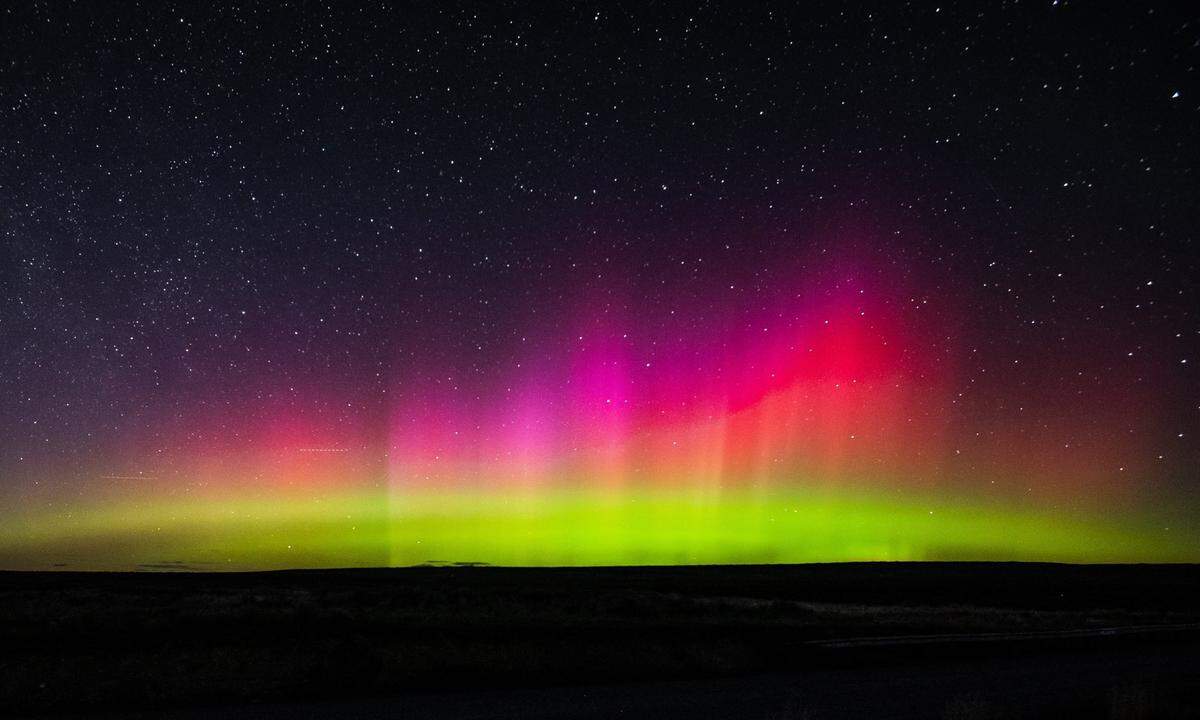
With the naked eye the lights of the aurora borealis appeared white, but with the help of a long camera exposure Shutthanandan captured a spectacular band of lime green lights topped with tall spikes of hot pink lights fading into purple.
But even without a camera, the show was vivid enough that a friend who accompanied Shutthanandan jumped in excitement at the sight of changing vertical white pillars, he said.
“When you see them dancing they are so nice,” he said.
It was the first time that Shutthanandan’s friend had seen the Northern lights, but Shutthanandan has chased them previously and captured images of them from the Tri-Cities in October.
The NOAA Space Weather Prediction Center issues alerts when there is solar activity that could make Northern lights visible.
For Wednesday it had predicted a G3, or strong, geomagnetic storm that might be visible as far south as Oregon in the Pacific Northwest.
“Yesterday everything cooperated nicely,” Shutthanandan said.
Not only was the the geological storm strong, but there was little moonlight, no wind and a clear sky.
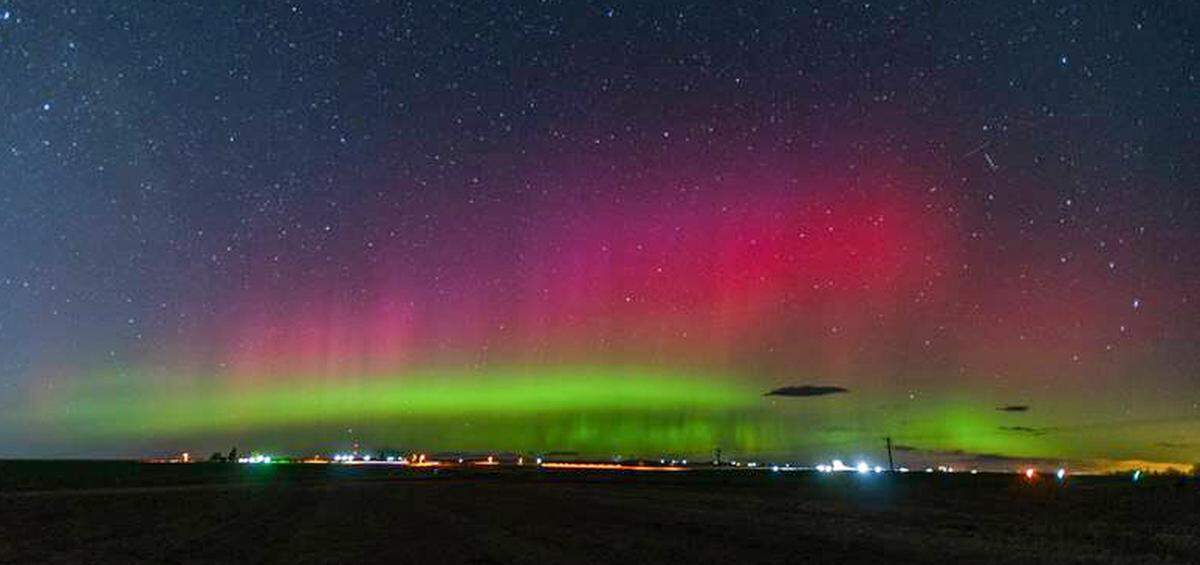
He watched the sky from 8 to 11:30 p.m., with the lights peaking around 9 p.m., he said.
The Northern Lights are created when the sun releases a coronal mass ejection. A large quantity of hot gases shoots out from the sun’s surface, like a fireball or flare, and is ejected into space.
The enormous amount of energy enters our atmosphere and interacts with ions, causing them to illuminate.
Two ejections from the sun traveled toward the Earth at about 1.9 million mph to provide the Wednesday night light show, according to Livescience.
Forecasts for Northern lights visible in the Tri-Cities area do not always pan out.
But Shutthanandan recommends Tri-Cities residents take a chance on seeing them next time there is an alert.
“It is pretty cool,” he said.
Tri-Cities residents don’t have to drive as far north as he did for a view, he said.
There are areas with little light pollution just north of Pasco, he said. Others recommend heading up into the hills south of the Tri-Cities or to the east of the Tri-Cities.
You can get the latest information on aurora events at the Space Weather Prediction Center https://www.swpc.noaa.gov/
This story was originally published March 31, 2022 at 12:52 PM.