Exclusive | What happened to talk of a 4th Tri-Cities Columbia River bridge?
When the state allocated $17 billion in transportation funding earlier this month, no new dollars were directed toward the Tri-Cities.
That’s left cities like Richland trying to find solutions to traffic issues on their own. But a new bridge over the Columbia River isn’t one of them.
About half of the transportation funding in the multi-year “Move Ahead Washington” plan was for roadways across the state. The only money the Tri-Cities will receive for roadways in the state’s budget is money already earmarked for finishing projects in progress.
“Every 8 to 10 years or so, the state does a major investment project in transportation, and they’re essentially delivering zero money to the Tri-Cities this time, and that’s a big problem,” said Richland Public Works Director Pete Rogalsky.
“We’re not very happy about it, that’s not the way it should be,” he told the Herald. “We’re a growing area, and a big economic engine. They shouldn’t invest that kind of money in the state and put none of it here.”
Rogalsky told the Herald that the city has been working to ease congestion along the major thoroughfares in a way that makes sense and can be locally funded.
Now, they’ll have to wait for the 2023-25 biennium budget for another chance at state funding.
Traffic woes
The primary traffic flow issues in Richland are along Highway 240 and George Washington Way, which are the most traveled city streets in Tri-Cities.
An estimated 42,000 vehicles a day pass through the intersection at the southern end of George Washington Way where it meets Aaron Drive and Columbia Point Drive and connects with Highway 240 and Interstate 182.
Thousands of those drivers are workers commuting through Richland daily to and from the Hanford nuclear reservation site and the Department of Energy’s Pacific Northwest National Laboratory.
While many Tri-Citians are quick to tell you a fourth bridge over the Columbia River is the solution for diverting many of those drivers, that idea died quietly in 2019.
The Benton Franklin Council of Governments helped lead a study that concluded in December 2019 that found, of several options for easing congestion in Richland, a bridge over the Columbia River in north Richland was the lowest ranked option.
A new bridge also is estimated to be more expensive than the other five options combined.
.JPG "Hi_j0110(3).JPG")
Rogalsky told the Herald getting a new bridge would mean making their case to the state, and even if they were successful it could take more than a decade just to get started — if the process for replacing the Interstate 5 bridge from Portland to Vancouver was any indication.
Discussion of a new bridge has been a staple of water-cooler gossip for decades. At one point there was even talk of making it a toll bridge.
He said when it comes to evaluating their actual needs and the possible solutions, a new bridge over the Columbia River loses every time.
“That north Richland Bridge has been the topic of several planning efforts in the last decade or so, none of which have ended up highlighting it as a top priority ...,” Rogalsky said.
“No credible transportation planning person is putting any energy into that,” he said.
Traffic-easing options
Instead, Richland is looking to begin work on two of the other options that were ranked against the potential bridge, and plans to begin searching for funding for the others.
The proposed location of the bridge was just over a mile north of Horn Rapids Road, and would have connected Richland to Pasco near the north end of their Broadmoor development project.
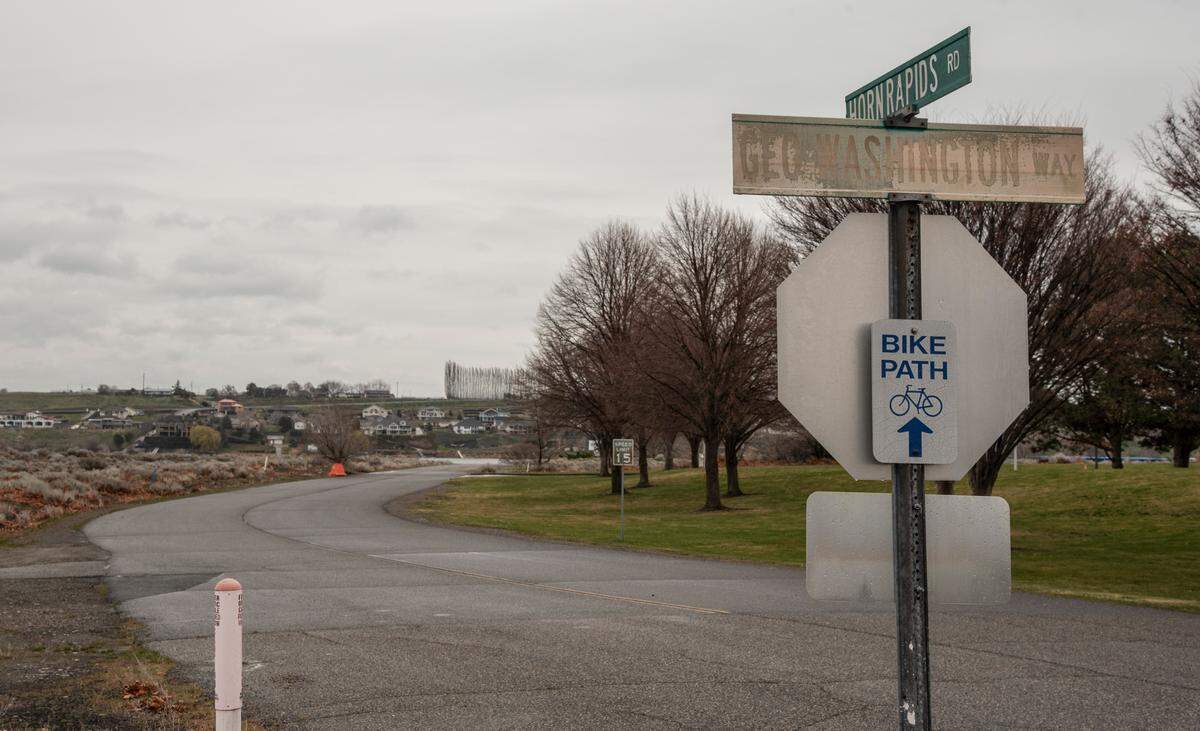
The major projects Richland is currently working toward are the Highway 240 and Aaron Drive interchange improvements and a number of improvements to George Washington Way.
These two projects were the second- and third-highest ranked, and are intended to help better manage “choke points” during heavy traffic.
Options in the Regional North-South Travel Capacity Survey:
- Highway 240 bypass — $132.3 million. Possible overpasses and underpasses to eliminate cross traffic.
- Aaron Drive/Highway 240/I-182 Interchange — $29.9 million. Reconfigure the intersection, most likely adding a roundabout.
- George Washington Way/Columbia Point Drive intersection — $12 million. Add lanes and reconfigure the intersection.
- Kingsgate extension — $83.4 million. Extend Kingsgate Way from Highway 240 to Keene Road.
- Widen Highway 240 Southbound — $25.1 million. Add another southbound lane on Highway 240 from north of Vantage highway to I-182.
- North Richland bridge — $270-450 million. Bridge would be 1.25 miles north of Horn Rapids Road and cross to Columbia River Road/Road 68 in Pasco.
The options were ranked using a variety of factors, including: pedestrian safety, environmental impact, intersection delay, frequency of wrecks, traffic volume, complexity of the project, cost and more.
“The punchline of all these studies is, if someone decided to spend $500 million to put that bridge up there it would help fewer people than what we’re going to do with $40 million on the south end at 240 and Aaron Drive,” Rogalsky said. “Any new route is going to connect some people to some other places, but the relative value of the bridge is lower.”
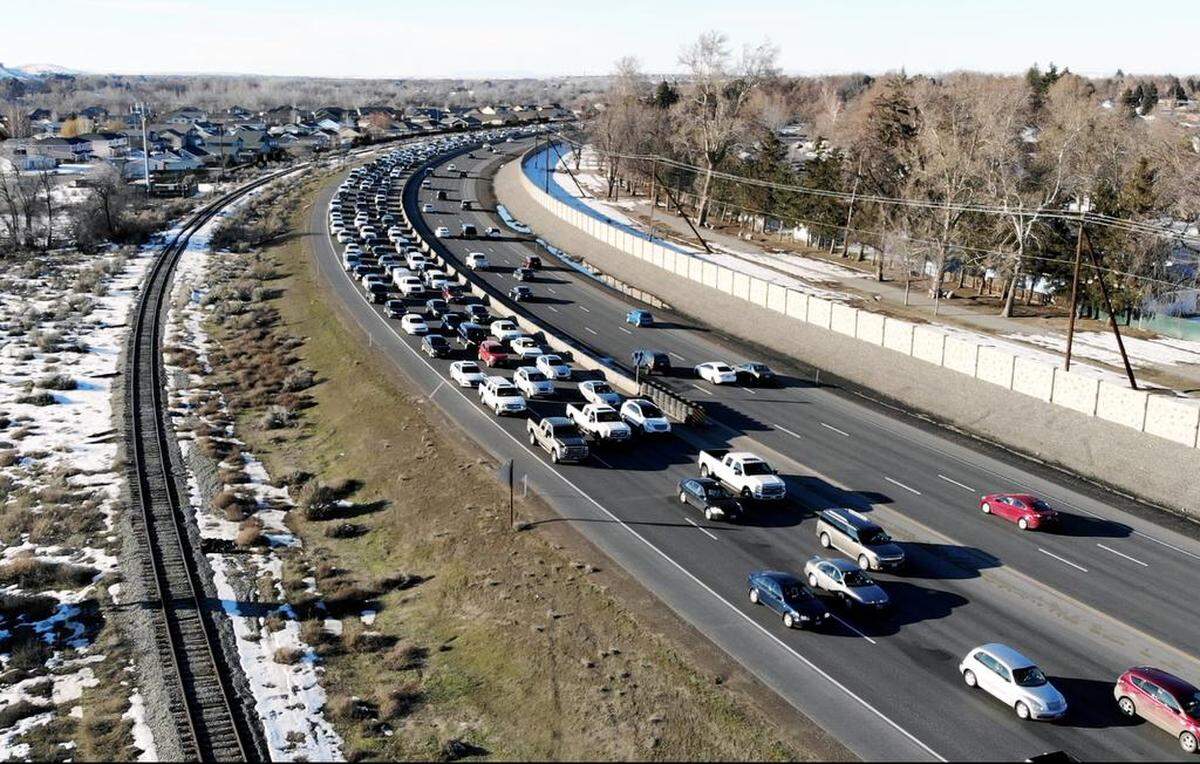
Rogalsky said the city has an approved design for the changes at Highway 240 and Aaron Drive, and the city council recently approved an engineering contract for design improvements to the south end of George Washington Way, where it connects to Columbia Point Drive.
“We don’t have the money to do construction for G-way at this point but we’re going to be doing design work and chasing grant possibilities,” he said.
“The second project is 240 and Aaron, that’s a significant congestion choke point,” he said. “We have an approved design concept with WashDOT to make dramatic improvements to those intersections.”
Rogalsky said they made their case to state legislators for funding for the Aaron and Highway 240 project this year, but were unsuccessful.
He said the city tries to be reasonable with requests, asking for funding for mid-tier projects totaling $30 million to $50 million each. In the last round of funding, the Tri-Cities received about $100 million total.
While the city can manage funding some of the George Washington Way improvements with the help of grants, Highway 240 is managed by the Washington State Department of Transportation and will need to be funded through the state’s coffers.
Rogalsky said their best course of action at this point is to work with WSDOT to make the case for including it in the next smaller infrastructure funding package. State officials estimate the project will cost about $30 million.
Long-term plans
After the Highway 240-Aaron Drive interchange improvements are funded, the next step will be making improvements to the Highway 240 bypass.
Those improvements would include grade separation, such as overpasses and underpasses, and road widening projects. Rogalsky said the idea is to begin at the south end and work their way north.
The bypass grade separation project would eliminate the traffic signals on the Highway 240 bypass by shifting traffic over or under intersections, and cost an estimated $132 million.
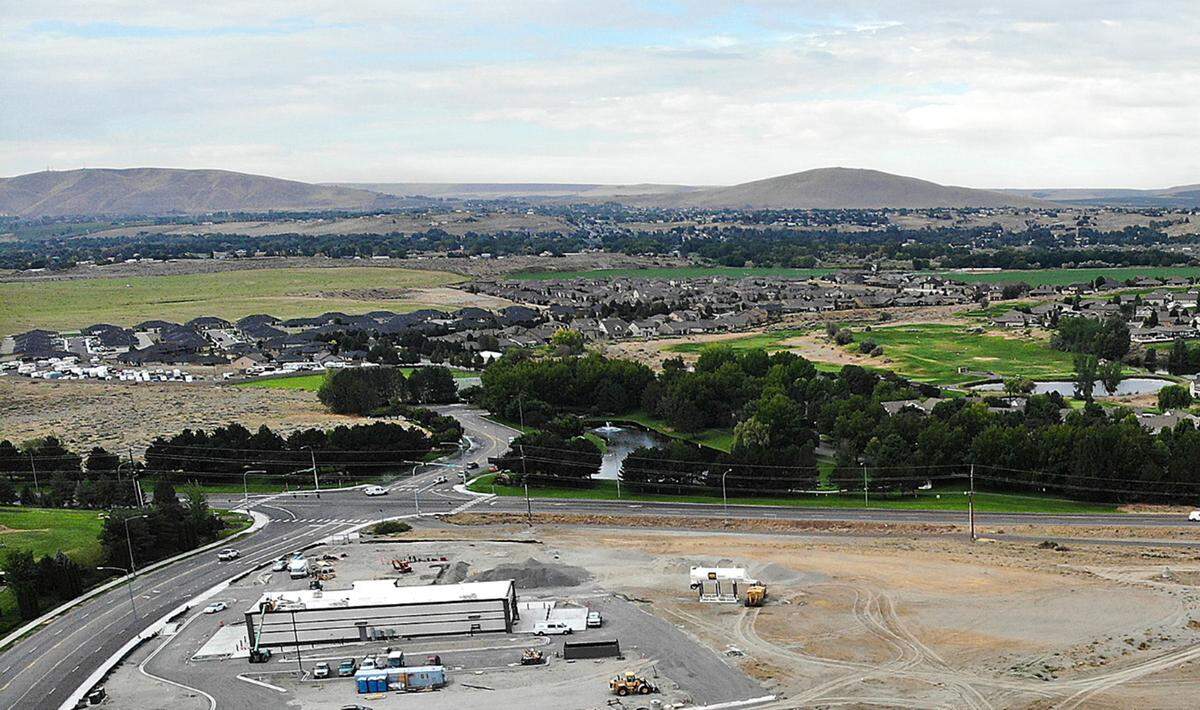
Of all the options weighed in the 2019 study, the bypass work ranked highest by a wide margin.
“The reason why 240 and Aaron is the first place to start is that it’s at the connection to the other major state highways, and is a major bottleneck at that south end of 240,” Rogalsky said.
“If you went up to Van Giesen or Stevens, but didn’t do anything at Aaron, all you’d be doing is making it easier and faster to get to a worse spot.”
Eventually they also hope to see Highway 240 widened, adding an additional southbound lane from north of Vantage Highway to Interstate 182. That project would cost about $25 million.
The last major project is an extension of Kingsgate Road.
The project would see Kingsgate extended south from Highway 240 to Keene Road. It has a cost estimate of $83.4 million.
The Kingsgate extension would move about 1,000 vehicles off Highway 240 during rush hour, which is about one-third of the estimated traffic volume in the area during rush hours.
The Kingsgate extension was delayed beyond Richland’s current 6-year program, so work is not likely to begin until at least the end of this decade.
This story was originally published March 26, 2022 at 5:00 AM.