
Rare plant that grows only near Tri-Cities might be saved by $2.7 million plan
The U.S. Fish and Wildlife Service is proposing a $2.7 million plan to save a rare plant known only to grow near the Tri-Cities.
In 2013 the White Bluffs bladderpod, which grows on the Hanford Reach National Monument on the bluffs above the Columbia River, was declared an endangered species.
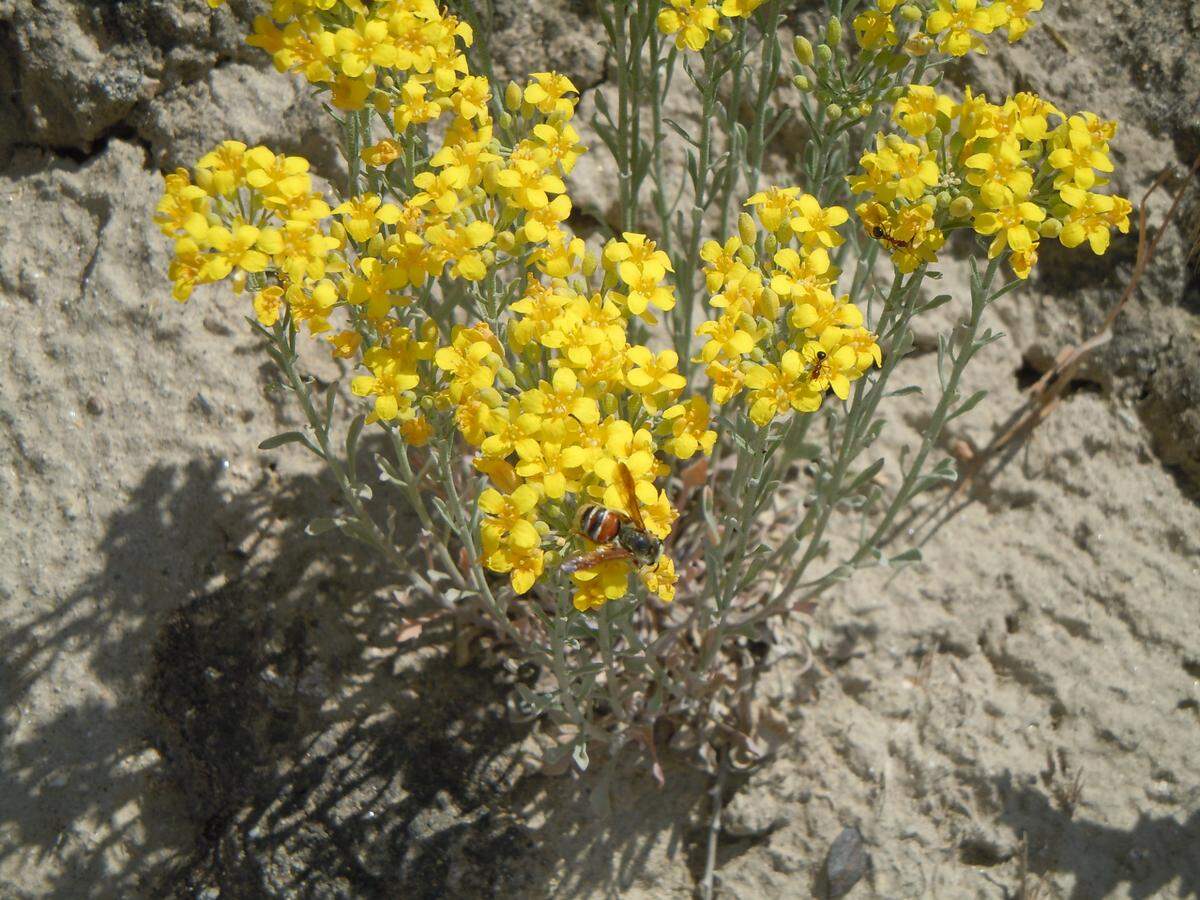
The low-growing plant is a perennial with gray-green leaves and showy yellow flowers that brighten the shrub steppe landscape once a year, sometimes twice.
The plants number in the thousands, but they are only known to grow naturally in places along a single, narrow strip about nine miles long on the steep, dry hillsides overlooking the production portion of the Hanford nuclear reservation.
Populations have been reduced by wildfires, human recreation and competition from invasive species.
Increased enforcement and fences have reduced off-road vehicles in the White Bluffs area since the plants were listed eight years ago, but other threats have not been significantly reduced, according to the draft plan to recover the plants.
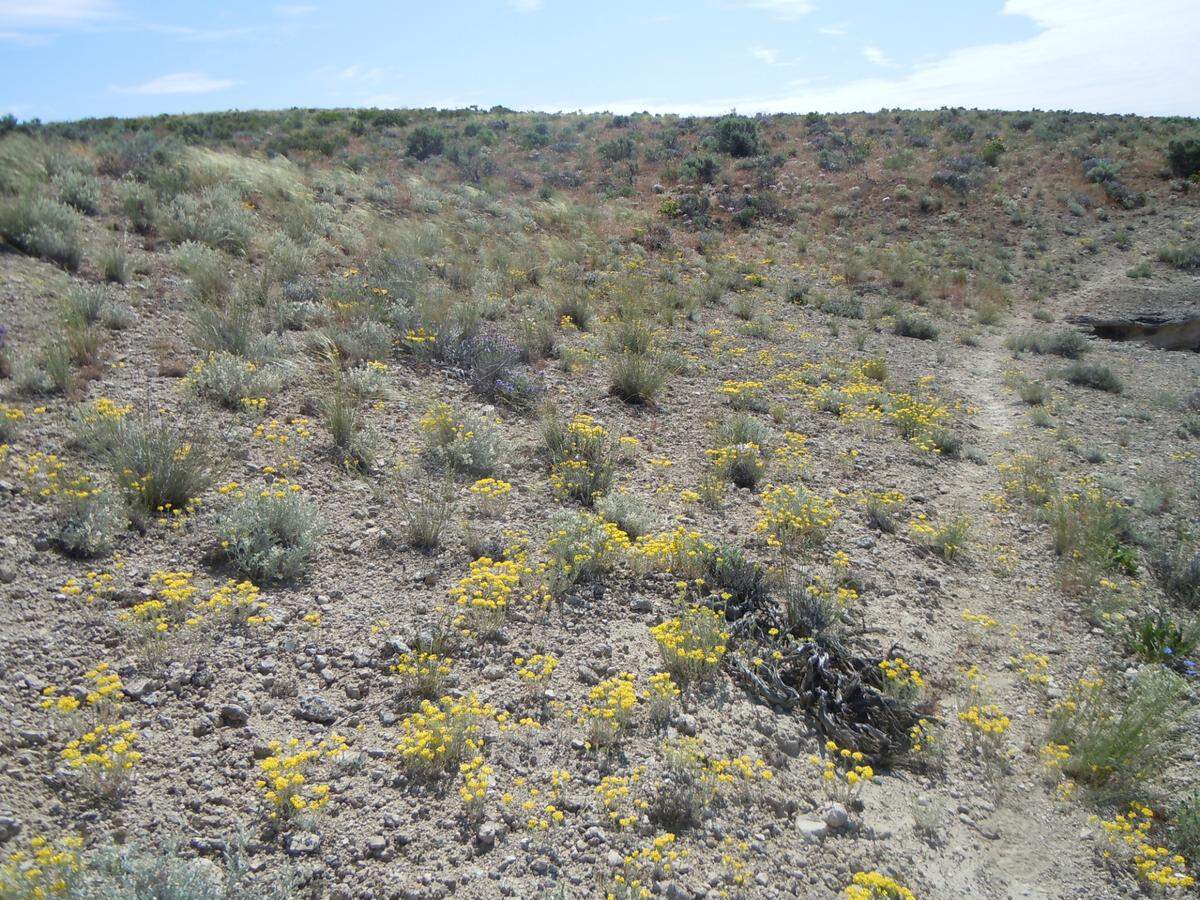
There have been two wildfires where the White Bluffs bladderpod grow since 2007.
The plants grew back, but non-native cheatgrass also increased. Cheatgrass not only competes with native plants but allows future fires to spread more easily.
In some areas nonnative plants are crowding out White Bluffs bladderpod.
Landslides also pose a threat to the rare plant.
The White Bluffs are unstable and some large landslides have reached the Columbia River below.
Some small landslides on the bluffs may have permanently destroyed habitat for White Bluffs habitat, according to the draft recovery plan.
Fish and Wildlife has worked to decrease the landslides, some of them caused by saturation with water from irrigation above the slope, by installing water control structures.
A minimum of 20 years will be needed to fully recover the White Bluffs bladderpod, the draft recovery plan.
The estimated $2.7 million cost includes Fish and Wildlife staff time with volunteer support and possible expenses related to the Natural Historic Preservation Act.
“Costs could be significantly lower or higher depending on who does the work, how many people are needed and for how long,” the draft plan said.
Fish and Wildlife have already succeeded in growing a patch of White Bluffs bladderpod about nine miles northwest of the area where the plant grows naturally.
The University of Washington and the National Laboratory for Genetic Resource preservation in Colorado have about 30,000 seeds stored that were collected by Fish and Wildlife and Washington Rare Care, a plant conservation partnership program.
Saving bladderpods
Efforts to collect seeds and to grow more bladderpods in the White Bluffs area would continue under the draft recovery plan, along with monitoring of the plants.
Research also is proposed to better understand the genetic diversity of the plants and how factors such as climate and pollination affect them.
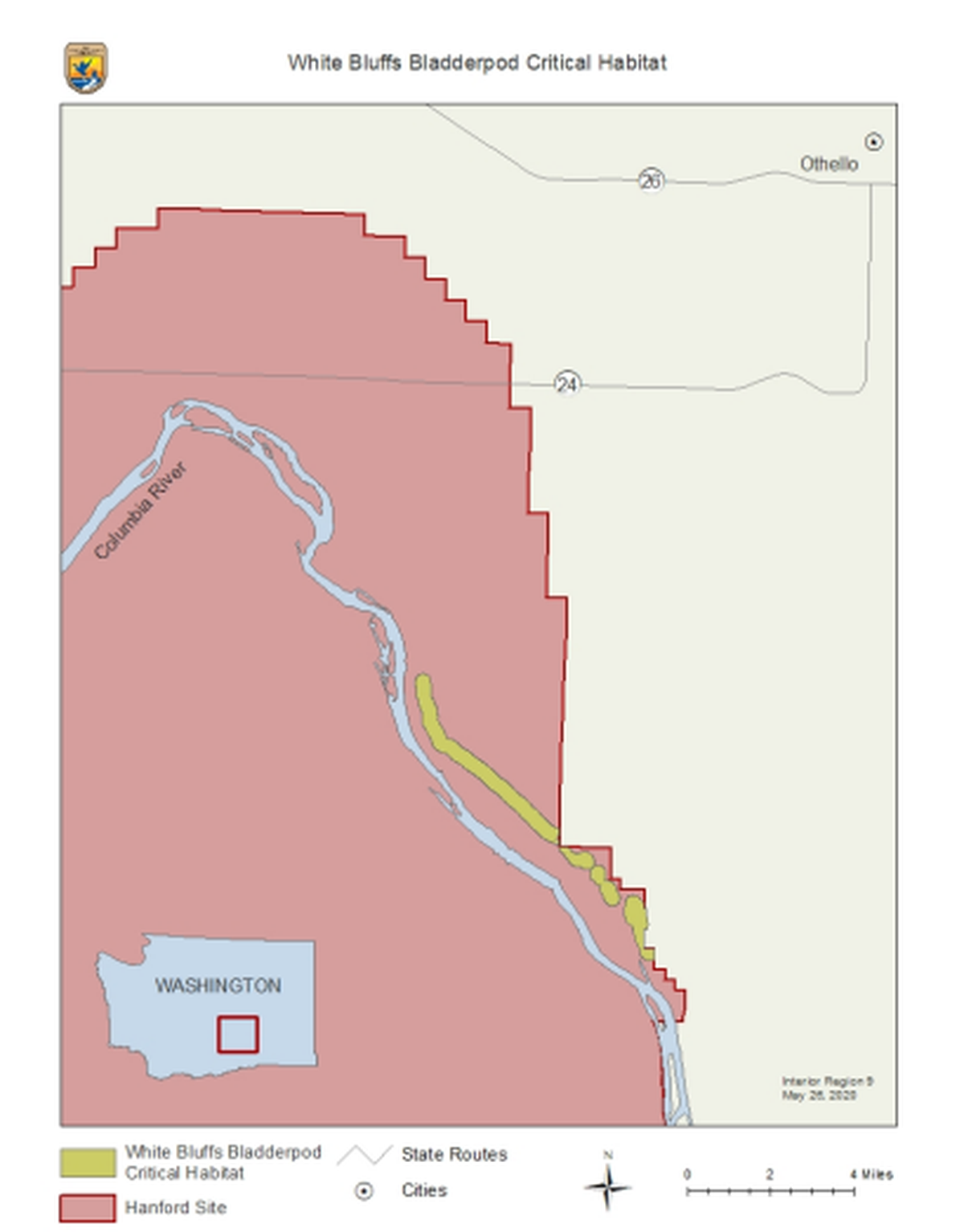
Addressing threats to the plant’s habitat will be critical to recovering populations, the draft report said.
“By addressing environmental threats, the overall quality of White Bluffs bladderpod habitat will improve,” it said.
Recommendations include the difficult task of making the landscape less susceptible to wildfires.
Investigating whether new landslides are occurring and what can be done to lessen them is recommended.
More work should be done to reduce non-native plans and increase native plants, the draft report said.
Because off road vehicle riding continues in the area where the White Bluffs bladderpod grows, the draft plan proposes a updated evaluation of how and where trespassing is occurring to come up with new strategies to prevent it.
The public may comment on the draft plan, but the comment period closes Monday, Oct. 4.
Comments may be emailed to WFWO_LR@fws.gov or mailed, postmarked by Oct. 4, to U.S. Fish and Wildlife Service, c/o Jeff Krupka, 510 Desmond Dr. SE, Suite 102, Lacey, WA 98503.
This story was originally published October 3, 2021 at 12:28 PM.