
50+ year legacy of CBC arts teacher and leader lives on after his death
The legacy of artist Ted Neth lives on in the Tri-Cities — in his artwork and his influence at Columbia Basin College over 51 years of teaching and leadership.
Neth died recently at the age of 84.
He worked as a designer and illustrator with General Electric and later Battelle Northwest, before joining CBC as an instructor in visual arts in 1968. He taught graphic design, drawing and sculpture to thousands of students.
He became instructional director when the college’s Performing Arts Center was completed in 1971, with Neth contributing to its design. He told the Tri-City Herald then that the square building was “a fortress for creativity.”
He also was instrumental in developing its programs, according to CBC.

He initiated the Winter Art Show, the Summer Showcase and CBC-sponsored tours to Europe. He supported the creation of Jazz Unlimited, The Blue Ladder Players touring children’s theater troupe, and the Community Lecture Series.
He retired as dean in 1998, but continued to teach art appreciation at the college until 2019.
“I’ve always been more of an art educator,” he said in his retirement announcement. “For me, it’s very exciting to take young people and urge them to grow and develop artistically.”
He also helped develop CBC’s Fitness Center and its nuclear tech, computer-aided drafting and hazmat education programs.
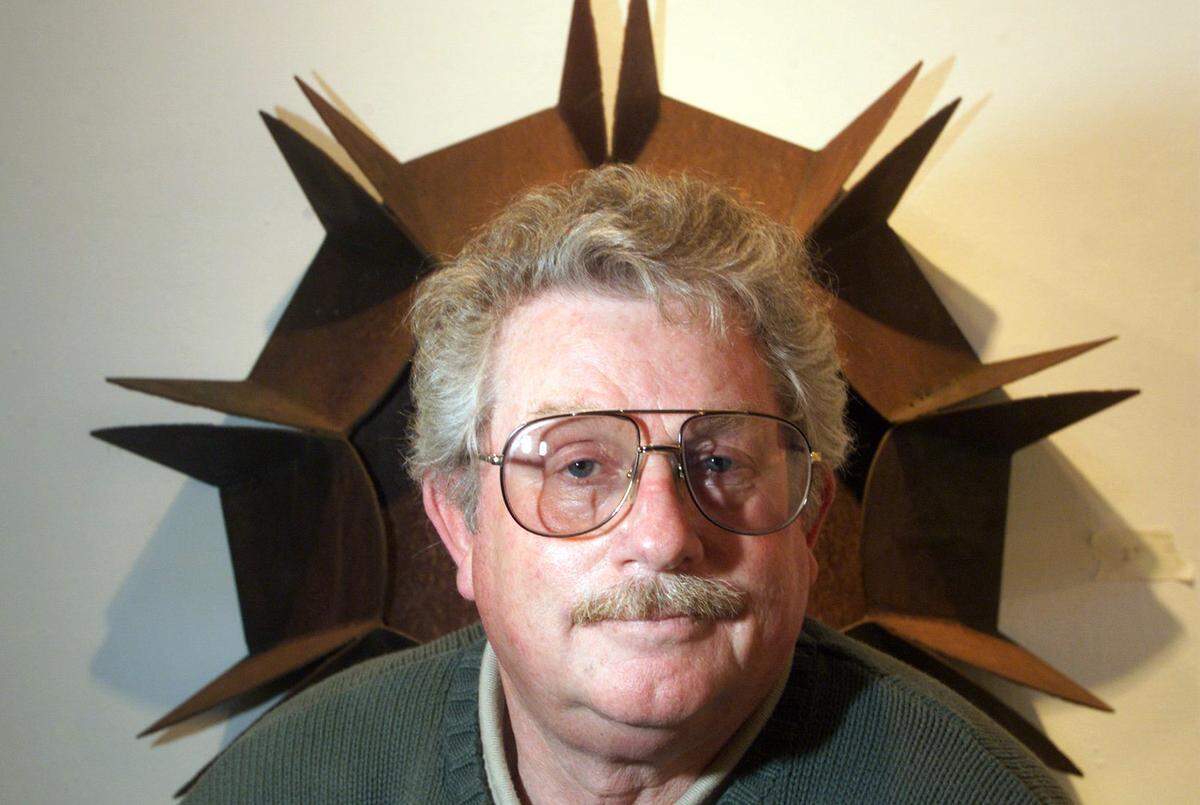
He left a body of work that included designing a configuration for reactor rods in nuclear power plants, said Ginny Quinley, a CBC professor. The project used his university education in art and physics.
His art expressed ideas based on abstraction through simplification of natural and human-made forms, according to information compiled by CBC.
“His goal was to develop a deeper understanding of natural structures and human relationships to nature,” according to CBC.
He designed and created most of the winning trophies for the Columbia Cup hydroplane races for almost 30 years, as well as annually designing the Tri-Cities Wine Festival award.
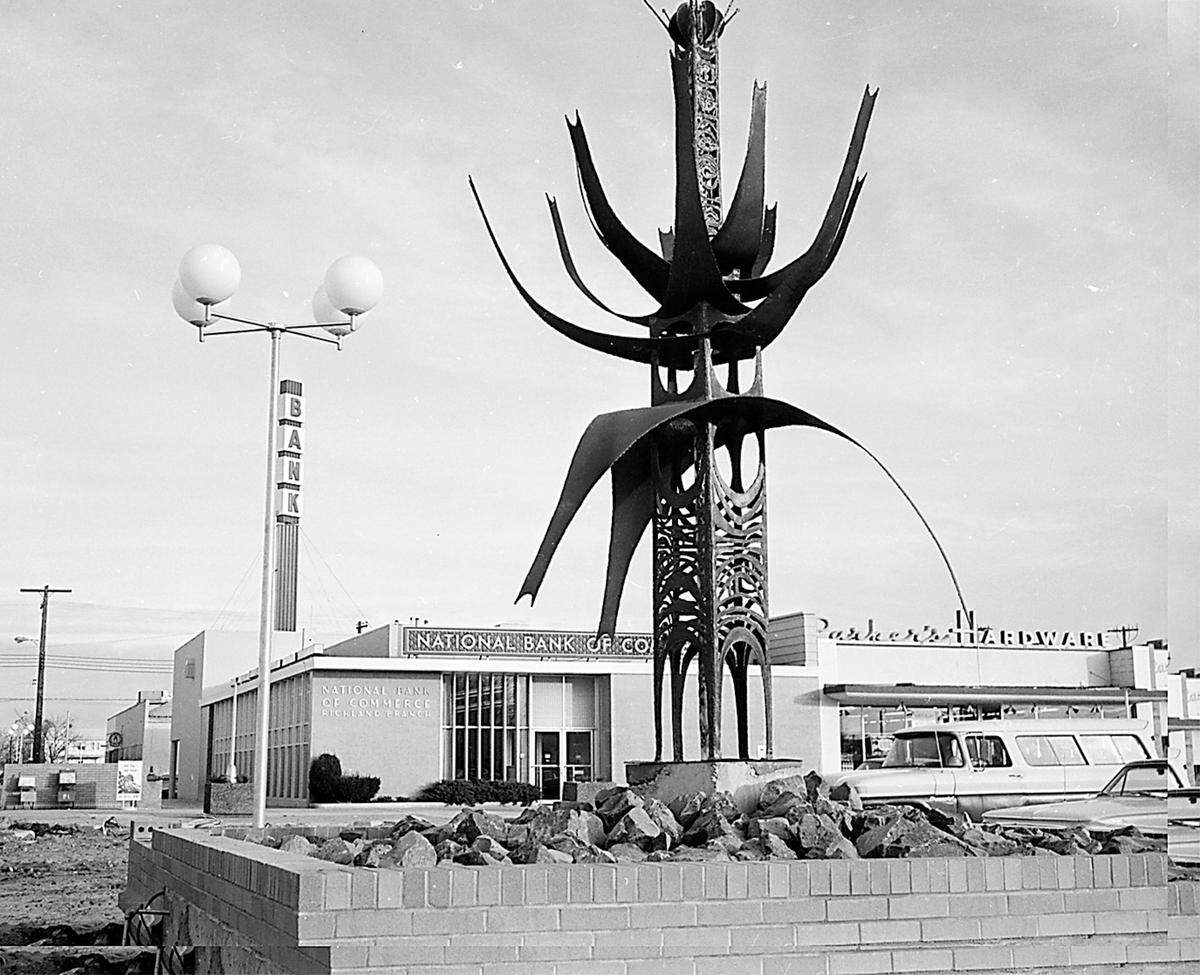
One of his most visible works in the Tri-Cities is the 1967 metal sculpture called “Reaching” he created while working as head of the Battelle-Northwest model shop.
It initially was a fountain at the Uptown shopping center and has since been moved to Community First Bank on Jadwin Avenue in Richland.
His three-dimensional artwork also can be seen inside the Kennewick Sterling’s restaurant, the lobby of the Tri-Cities Cancer Center and Richland city buildings. He also created the geese at the Marineland Plaza in Kennewick.
“Ted was very interested in making CBC accessible to the community,” said Polo Coronado, the chief academic officer at CBC when Neth was an administrator.
“He was instrumental in bringing the beauty of visual art to the campus with the help of the student body,” Coronado said at the time.