
Tri-Cities mural meant to be ‘emblem of hope’ now forced to cover up
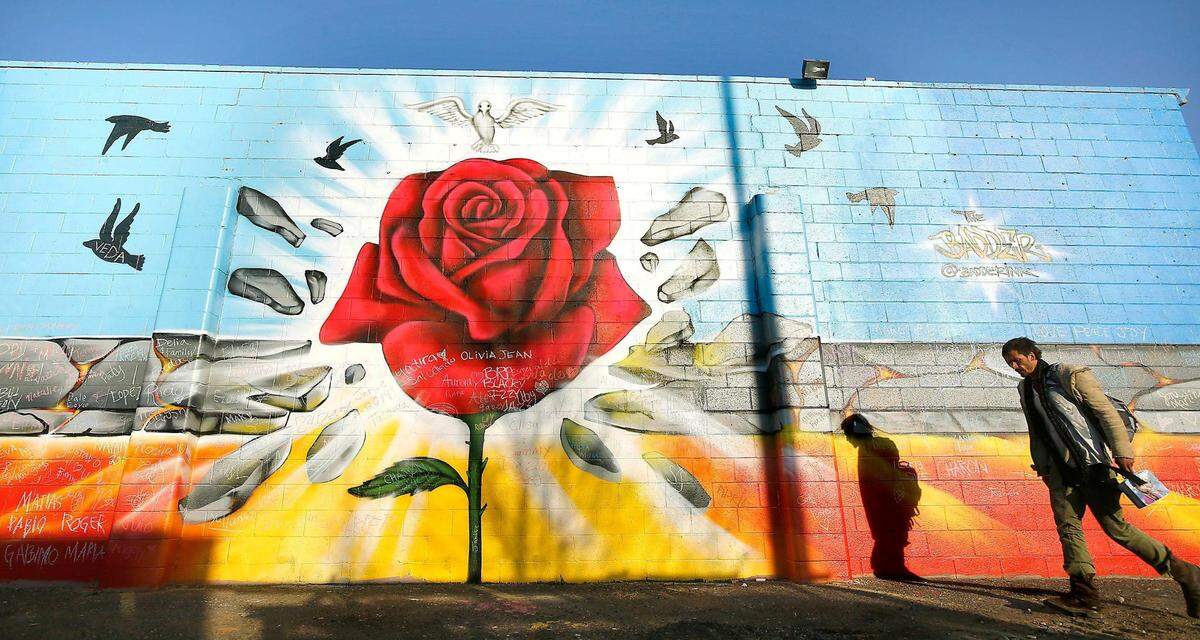
The Community Hope Wall mural in Pasco has been partially painted over, just a year after it was unveiled.
Blue paint now covers what used to be an image of a sidewalk, a shattered wall and birds outside Vinny’s Bakery, Cafe & Bistro.
Still showing is a blooming rose in the center of the art project.
The change has drawn surprise and outrage online, including criticism of city officials who posed in front of the mural when it was painted but recently forced the change.
City officials say the organizers of the project have known from the start that city rules require any sign, including murals, to take up no more than 25% of a wall.
The change was made about two months before a scheduled hearing that could have fined the owner of the building.
Rick White, Pasco’s Community and Economic Development director, said the organizers signed the permit with the requirements.
But the two of the public faces behind the project — City Councilwoman Blanche Barajas and activist Jordan Chaney — don’t agree on what happened.
Chaney, a poet and motivational speaker, said the city knew and agreed to the size before they even started the project. He said the sketch in the plans matched what ended up on the wall.
“It looks like how it has looked for the last year,” he said. “I feel sorry for Pasco. It was the only mural. ... People email me all of the time about how much that mural meant to them.”
Barajas told the Herald in an email that everyone involved knew the mural could cover only a quarter of the wall, but the artist and one of the four people involved with the project decided to ignore the rules.
“The original message was a message of hope and resilience for the incarcerated youth. The final product was a message of defiance and a political statement by the individual in charge,” wrote Barajas, though she did not say who she was referring to.
A July 2019 city permit for the mural was not immediately accessible online but some documents filed in February 2020 included a sketch that covers the entire wall. On the drawing, there is a note saying it can only cover 238 square feet.
And a notice issued June 2 again says the mural can’t be larger than 25% of the wall.
Message of hope
Chaney spearheaded the Community Hope Wall, which was intended as a project for teens in the Benton-Franklin Juvenile Detention Center as a way to help them heal.
Chaney, who works with the youth at the center, also helped to create an art dojo and put together a book along with the mural.
At the time it was unveiled, Chaney said the mural was meant to unite people.
“Despite all the forces that aim to drive us apart, I see people across all lines reaching back for one another — practicing forgiveness, failing at forgiveness, then trying again cause instinctively we all know it’s worth it,” he wrote in a Tri-City Herald column before it’s unveiling.
The location was symbolic because Antonio Zambrano-Montes was shot and killed by Pasco police officers in front of the bakery. The mural could serve as a kind of salve for the wound left in community.
Symbols of unity were incorporated into the design, said Chaney. That included using red and blue, which are the rival gang colors.
Now that most of it is gone, Chaney said he’s not discouraged or angry, but disappointed that the city believed getting rid of it was that important. He called it a cultural loss for Pasco.
“The message of hope doesn’t stop,” he said. “The Community Hope exists in the art gallery of the people’s heart.”
He doesn’t intend to fight the issue but believes if people in Pasco want to restore the wall, they should.
Act of defiance
Barajas said the people planning the mural were aware of the requirements when she submitted the permit.
“However due to other responsibilities and a resource fair to plan on the same day, I focused on that and with an understanding of the allowed parameters. We each focused on different aspects of the project,” Barajas said in her written message to the Herald.
While she did not name any of the people involved in the project, she did say one of them “decided to go a different route” on the mural.
One of the initial sketches on the wall was far too extreme, and had to be changed.
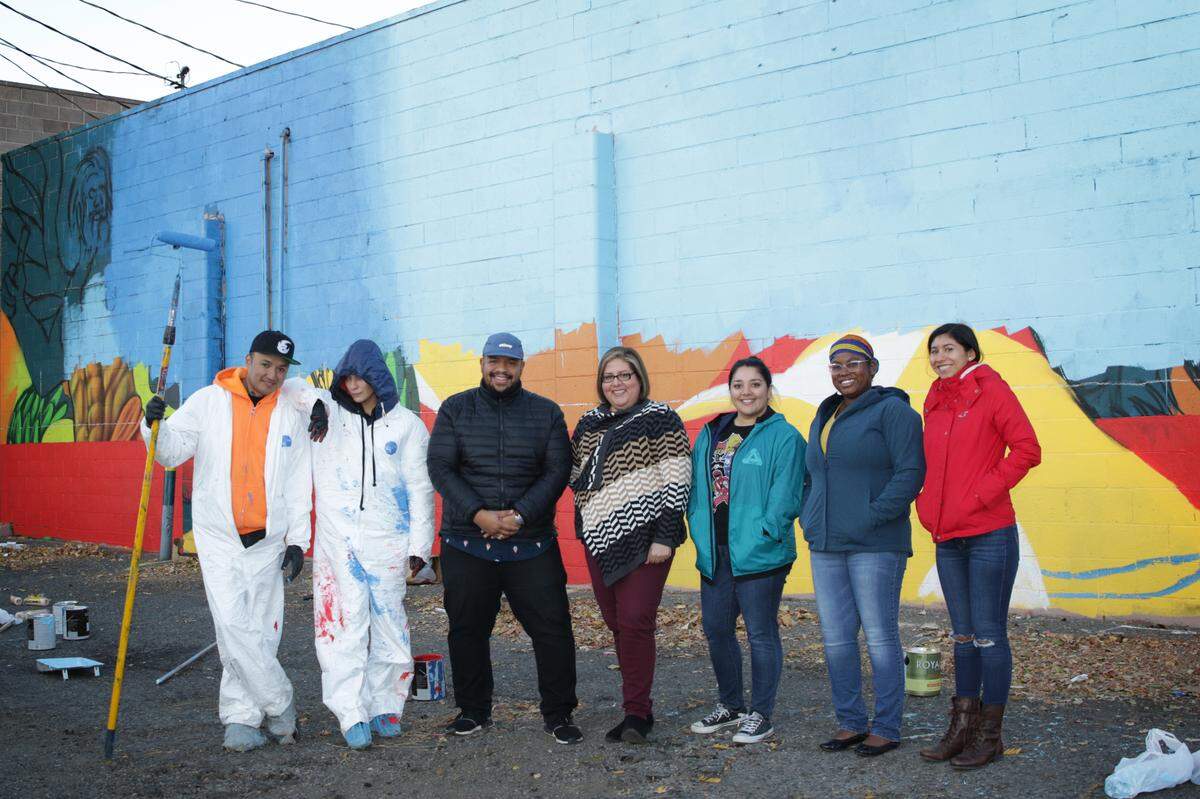
“We held a meeting where I made sure to convey the message that we need to stick to the original sketch, as that is what we told city we would do,” she said.
The outline on the wall was painted over, but when it was finished the art covered the wall. Other members of the group did not know that is what was going to happen, she said.
“Unfortunately this person’s decision has affected the property owner and the business owner as well,” she said. “Situations like this are why there are strict rules and guidelines and why murals have not been allowed in the past. If we want art to continue to be a positive voice in public places we need to follow the codes and guidelines.”
Sign codes
While the city codes for signs can be hard for some to understand, the rules say that any sign on the wall of a business can only cover a quarter of the surface, White said. That applies to both commercial signs and murals.
In this case, the mural could only cover about 238 square feet of the 953 square-foot wall, according to city records.
Normally the city relies on someone to complain before they seek out violations, White said. The city doesn’t have enough staff to scour for people breaking the rules.
While in this case no one complained, the mural was simply too big and too prominent of a violation to ignore, he said.
“Code enforcement staff cannot ignore things that they know are violating city codes,” he said. ”If we ignore something as visible as this, we’re just inviting more violations. People would say, ‘Well if I have to be 25 percent, why don’t they have to be 25 percent.’”
But it’s possible the rules around murals may change next year, White said. The city hired an attorney that specializes in sign codes to review with laws.
Along with making the law simpler to understand, she is expected to look at revising the rules as well, he said.
“This requirement is going to be looked at and possibly revised,” he said.
This story was originally published September 28, 2020 at 5:00 AM.