
‘Time is running out.’ Hundreds of Tri-Cities gym workers are laid off as clubs fight to open
There is a financial crisis in the making the longer Tri-Cities health clubs are closed, say the owners of local fitness centers.
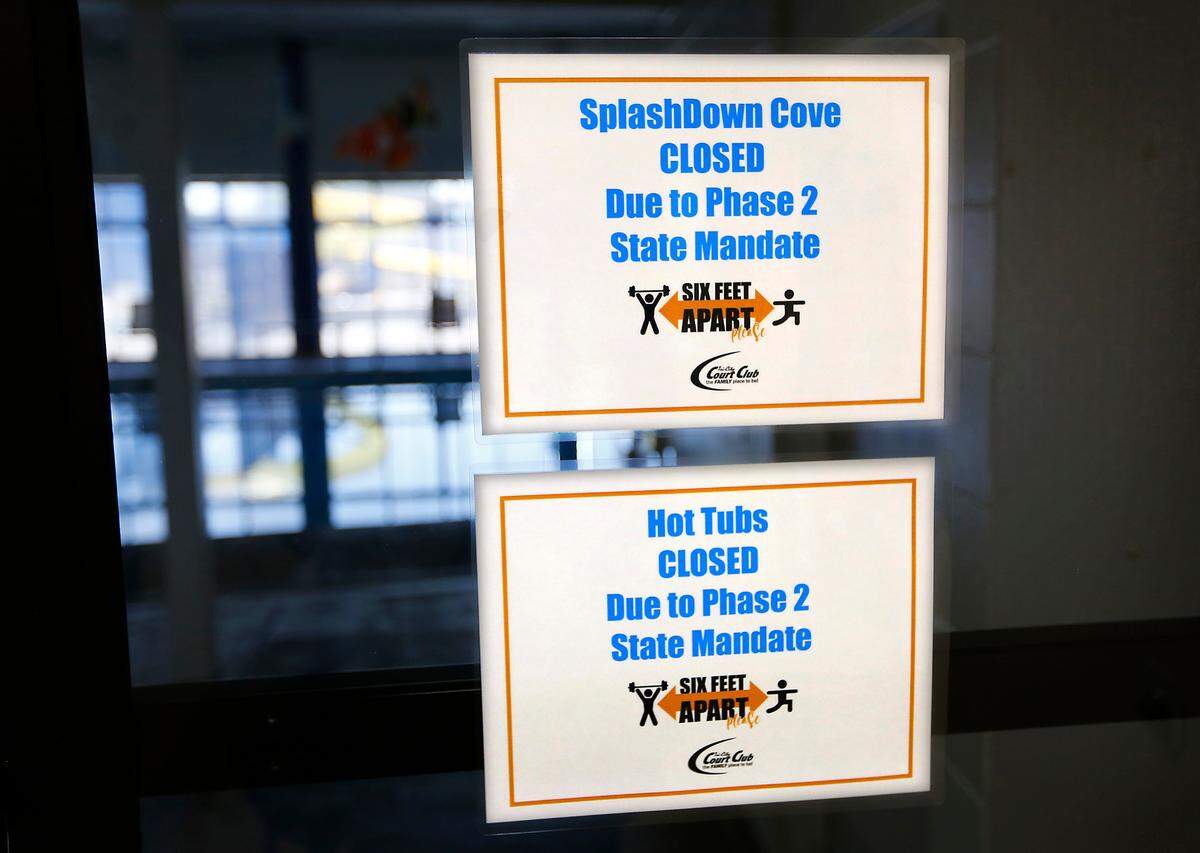
Indoor gyms were shutdown in March as part of Washington’s Stay Home order to prevent the spread of the coronavirus. They aren’t scheduled to reopen until Phase 3 of the state’s Safe Start reopening plan.
The two largest locally-owned Tri-City gyms have joined the effort to persuade state health officials to move the industry to Phase 2, where they say some other states have included fitness clubs.
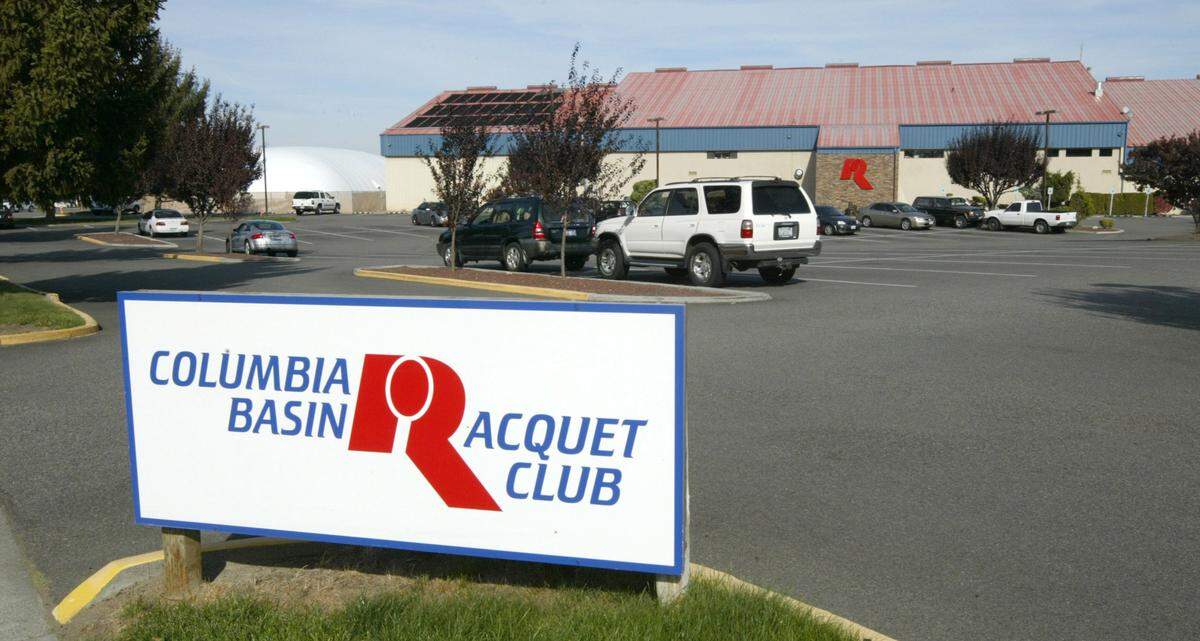
The Tri-City Court Club in Kennewick and the Columbia Basin Racquet Club in Richland say it is financially imperative they open soon. And both say they can make it safe for customers and employees.
But, as it stands, with Benton and Franklin counties only in a modified Phase 1, fitness centers and swimming pools cannot be open at all.
As a result, those two clubs alone have laid off nearly 400 people.
“I had to call our employees to tell them that we had to cancel their health insurance,” said Janelle Klashke, the general manager of the Tri-City Court Club for 31 years and with the company for 38 years.
The Court Club was paying all its employees’ health insurance during the coronavirus shutdown, regardless if they were working. The club was helped with a Payroll Protection Program loan from the Small Business Association, but it wasn’t enough to sustain the business without any money coming in.
And when Klashke realized the COVID-infection numbers in the Tri-Cities were not going in the right direction for reopening, she knew she needed to make plans with the expectation they might not reopen for months.
She said she realized, “We are going to run out of money if we don’t lay everyone off.”
The now club has let go all but seven of its 200 full- and part-time workers — and those who remain are on limited hours.
“If the closure goes much longer than a couple of months, we are going to run out of cash,” she told the Herald. “We are trying to conserve cash as much as possible.”
“Otherwise, it’s going to be really a dismal story,” she said.
Klashke said not only has the club’s savings been drying up, but because they weren’t able to fulfill PPP guidelines on the percentage used to keep employees paid for the loan to be forgiven, the SBA loan will eventually need to be paid back — bringing their expenses to $1 million during the COVID closure.
She said the loan was needed just to maintain ongoing overhead costs, such as electricity for the swimming pool pumps.
Safe reopening
The Tri-City Court Club joined other gyms statewide, as well as industry organizations, in sending a letter June 1 to Gov. Jay Inslee, the state Secretary of Health John Wiesman and other state officials appealing to them to reclassify the industry.
Klaske said there’s been no response from the state.
Officials with the state health department also had no immediate response to Herald questions on whether they are considering allowing gyms to reopen partially in an earlier phase.
Unlike other industries such as construction — there is no lobby to work on their behalf.
“We were trying to get movement going to why clubs should be considered essential,” Klaske said. “We got a road block and didn’t get anywhere.”
Cole Willis, general manager of the Columbia Basin Racquet Club, said a key argument they’re making is that exercise is a critical factor in addressing some of the underlying health conditions putting people at higher risk for COVID-19 complications.
Some of those conditions include diabetes and heart disease.
“Is (exercise) an immunity blanket? No,” he said. “But it gives them an advantage and gives them a higher level of protection.”
“I know many members are struggling. They are struggling to do it on their own, as are employees,” Willis said. “Routines are out of whack, and it is coming out in stress and not sleeping well and having less patience — all the things exercise can combat. We are running risks by not allowing it.”
CBRC also has laid off all but four of its 210 employees.
“Time is running out — you can only be without revenue for so long. There are number of expenses that don’t go away just because the doors close,” said Willis, who has been the general manager since 2014 but started working at the club in 1994 as a lifeguard.
Club changes
Both Willis and Klashke emphasized that indoor gyms can easily make changes to reduce the risks — such as blocking off every other workout machine, installing more barriers, adding new cleaning procedures and UV lights and more.
But really, cardio — where there is the most risk with heavy exercise — is what members want the least, Willis said.
He said conversations with other club owners have shown that members are not as keen to heavy exercise around other people — since people can opt to run or bike outside instead.
Things that are not easily accessible such as tennis, swimming pools and weights are what members want access to again.
Besides, Willis maintained that at any given time except peak hours, the club is rarely at 50 percent of its total capacity — the capacity allowed for gyms to reopen in Phase 3.
“People are anxious to get back open in a limited capacity,” Klashke said. “Our members are anxious for us to open. One member said they had gained 22 pounds. For another in a wheelchair — the only form of exercise is lap swimming.”
Although there are a limited number of fitness activities that can reopen in Phase 2 or even a full modified Phase 1, such as small group swim lessons, it’s not clear when Benton and Franklin counties will get to that point.
Moving it forward would allow clubs to operate at the same safety levels, but sooner.
“We might be treating one pandemic, but there is another pandemic that we haven’t been addressing as a county,” Willis said. “We need to be able to get back to exercise and helping people heal their bodies.”
This story was originally published July 13, 2020 at 12:52 PM.