
Fight to keep Snake River dams is not over. Supporters told to send comments to feds
The fight to keep the four lower Snake River dams from being breached is not over, despite a long-awaited federal report that the dams should continue to provide low-cost, clean hydropower.
Those who see breaching the dams as the best option to restore salmon populations and the endangered killer whales that feed on them, will be working hard to get that determination changed, said Mike Gonzalez, spokesman for Franklin PUD.
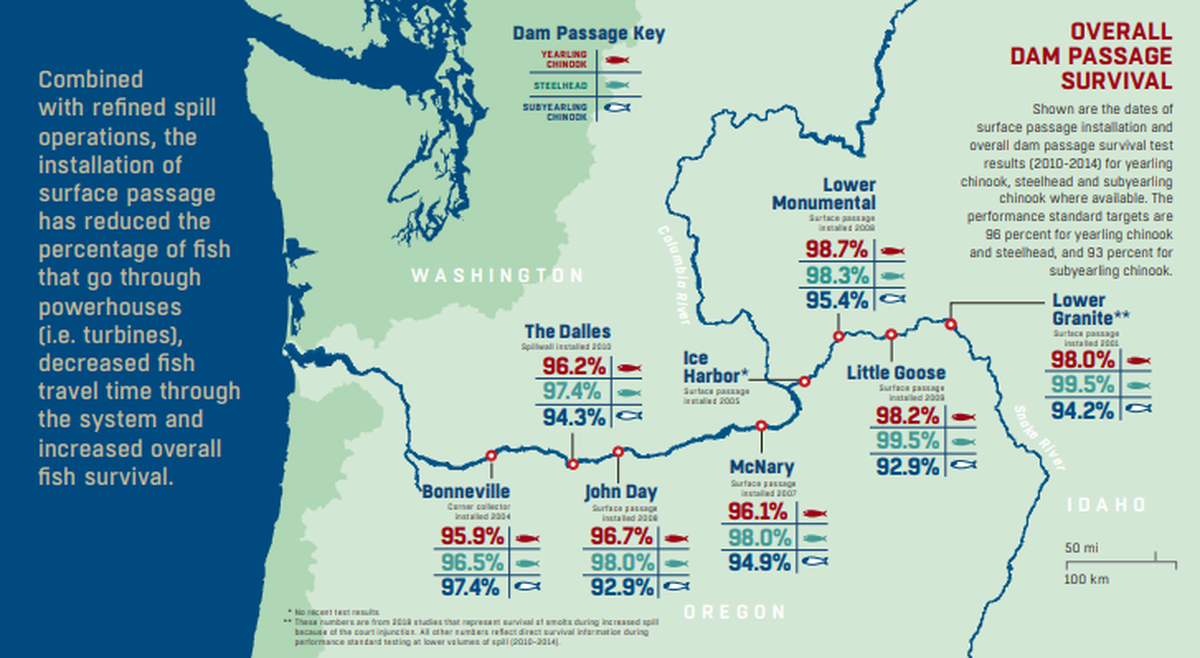
The draft study concluded that spilling water over the dams could help endangered and threatened fish species, without the high economic and social costs that would result from breaching the dams.
A final report will be issued after the federal agencies responsible for the environmental study of the Columbia River hydrosystem consider public comments on the draft findings.
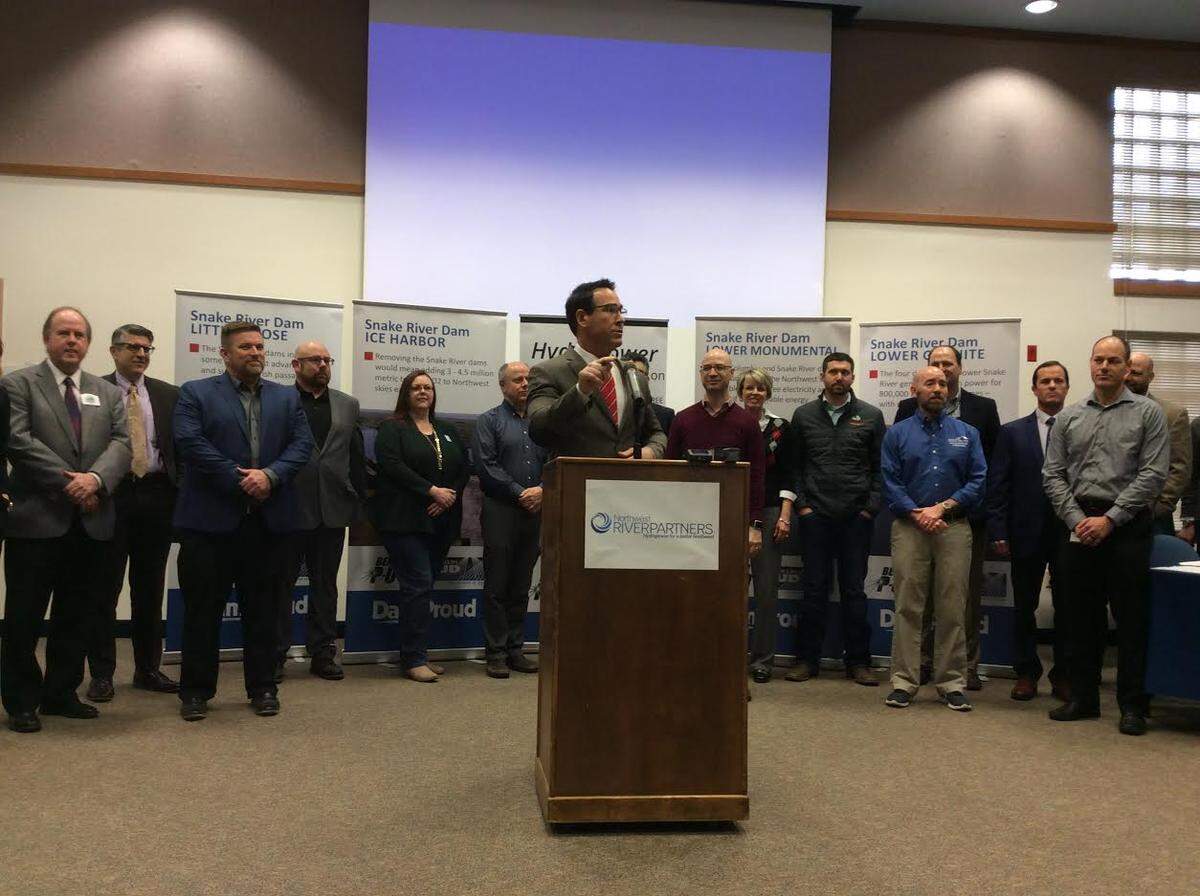
Tri-City-area agencies will be submitting comments in support of keeping the dams and are hoping that residents who agree also will submit comments.
Breaching the dams could increase electric costs up to 30 percent, Gonzalez said. The increase would be devastating for families in the county, many low income and the majority Hispanic, he said.
For the Pasco School District alone it would mean $400,000 annually that would need to be diverted from educational programs to pay for electricity, he said.
Dam-breaching advocates insist that the electricity produced by dams could be replaced with wind and solar production, said Rick Dunn, general manager of the Benton PUD.
But utilities disagree.
Breaching and risk of blackouts
The Snake River dams provide insurance against blackouts, he said.
Without them the probability of regional blackouts in the Northwest would double, according to the draft report.
During last winter’s cold snap wholesale prices for electricity on the open market spiked from $50 per megawatt to $1,000 per megawatt amid tight supply, Dunn said.
Then on the very cold early morning hours of March 4, electricity demand in the Northwest spiked by 4,000 megawatts. That’s more than three times the amount of electricity usually used by the city of Seattle.
The lower Snake River dams were able to meet about 27 percent of the increased demand, at a time when wind turbines were operating at just 11 percent of their installed capacity, Dunn said.
“These are the kind of days that utilities need insurance against blackouts, which are exactly what the Snake River dams provide,” Dunn said.
Wind and solar are intermittent and variable and cannot meet the needs of the grid to have a precise, second-by-second balance of electricity production and electricity consumption, he said.
Although battery storage is being developed to make wind and solar sources more practical, they are far from being economical and having the needed storage capacity for the Northwest with its weather inversions that can last for days or weeks, he said.
More spill over dams
Dunn also is skeptical of the increased water spill over Columbia and Snake river dams that the federal draft study concluded was the best option for endangered and threatened fish species, while preserving benefits of the lower Snake River dams.
Spilling more water would reduce the water available for hydropower production.
“If I knew increased spill was a guaranteed solution to increasing fish survival in a meaningful way, it would be easier to accept less power production,” Dunn said.
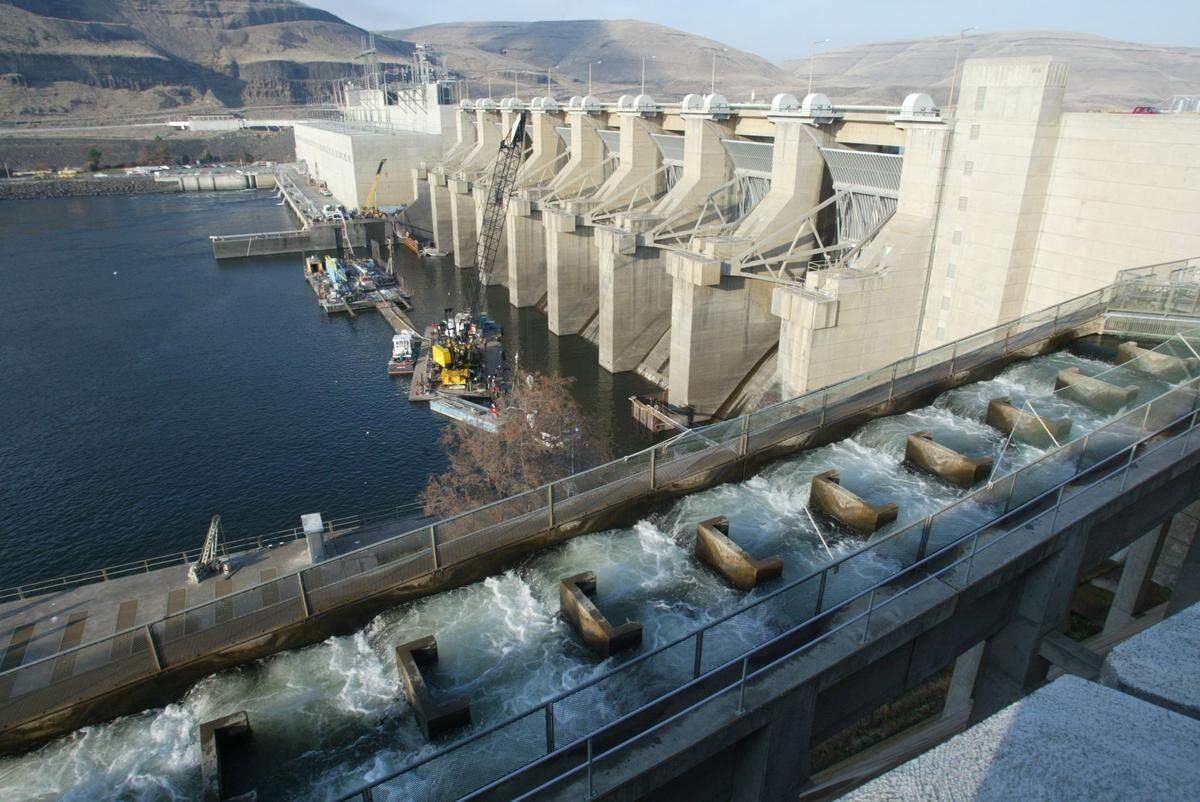
Biologists have been concerned that concentrations of dissolved gases from spilling water over the dams of 115 percent could cause fatal symptoms in young fish, similar to when human divers get the “bends.”
Now increased spills can increase the concentration of dissolved gases up to 125 percent, Dunn said.
Business impacts
If the four lower Snake River dams be breached, the costs to replace their electricity production would be $1 billion, said Colin Hastings, executive director of the Pasco Chamber of Commerce.
Risk of blackouts and high electricity costs would make recruiting new businesses to the area more difficult and higher electricity costs could harm small businesses, he said.
There also would be a ripple effect on businesses with agriculture customers if acreage is taken out of production because of the lack of reliable irrigation water that the Ice Harbor Dam on the Snake River near Pasco makes possible, he said.
Tri-City residents would also see the impact at the gas pump, said Vicki Gordon, a Port of Pasco commissioner.
At certain times of the year 50 percent of the diesel and gas used in the Tri-Cities is barged to Pasco, she said.
Ozone levels already high
If dams are removed and barges could no longer carry agriculture produce and goods up the Snake River because of the dams, shipping would instead be done through the lower Columbia Basin by rail or truck, said Robin Priddy, executive director of the Benton Clean Air Agency.
Some 10 million tons of commercial cargo would be moved onto roads and rails, according to the Washington Association of Wheat Growers.
The Tri-Cities area already is exceeding ozone limits set by the Environmental Protection Agency, with traffic determined to be the main contributor to high levels on hot summer days.
Ozone can aggravate asthma, inflame and scar lung tissue and make people more susceptible to bronchitis and pneumonia.
If EPA determines the Tri-Cities is out of compliance at its next review, possibly in two years, it could impose sanctions that would make acquiring air quality permits more difficult for new or expanding businesses or could require businesses to invest in projects to offset their contribution to the ozone problem.
It also could impact transportation project development, Priddy said.
The draft study released Friday appeared to consider greenhouse gases, carbon dioxide and methane, but not the nitrogen oxide and volatile organic compounds that create ozone when baked in sunlight, she said.
The draft study was done by the Army Corps of Engineers, the Bureau of Reclamation and the Bonneville Power Administration.
A final report is excepted in summer 2020 with the federal government making a decision on adoption of its final recommended actions in September 2020.
Comments on the draft study may be submitted until April 13. They may be left online at comments.crso.info or mailed to U.S. Army Corps of Engineers, Attn: CRSO EIS, P.O. Box 2870, Portland, OR 97208-2870.
They also can be made at public comment meeting on the draft report from 4-8 p.m. March 18 at the Red Lion Hotel in Kennewick.