
Irrigation district threatens to take Tri-Cities family farm. It plans a huge reservoir
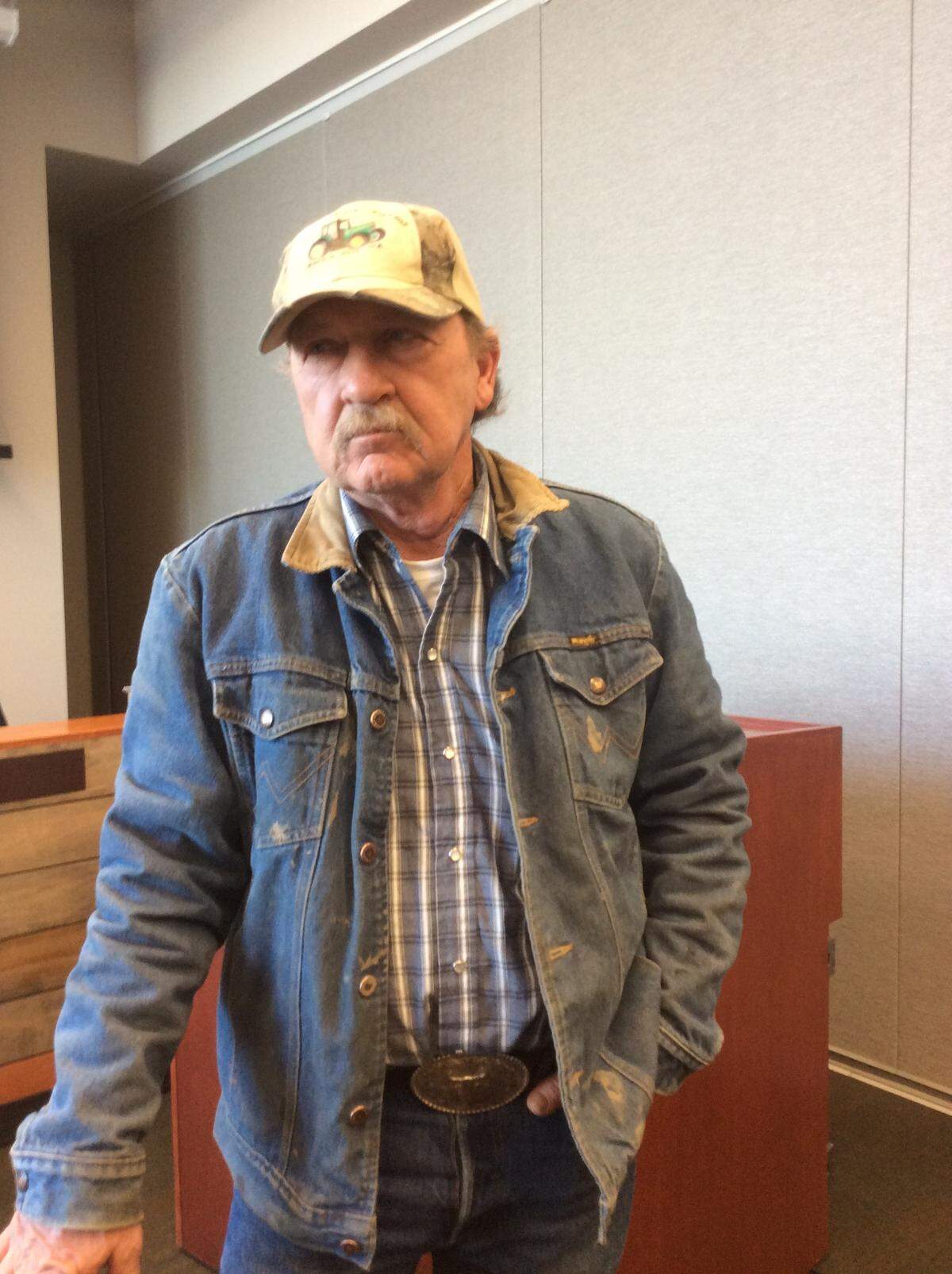
The owner of the four-generation farm in Badger Canyon had only one thing to say to the Kennewick Irrigation District this week.
“Please don’t take my farm,” Robert S. Cox said in an emotional plea.
The owner of a 65-acre family farm was among the 80 people to pack the meeting, many of them angry that the family could lose their land where they grow pumpkins for Pacific Northwest grocery stores.
But irrigation officials contend it’s a critical piece of a major reservoir project needed to deliver water to 65,000 customers at a time of increasingly uncertain water supplies.
The KID board was set to vote Tuesday to condemn and buy the Cox land through an eminent domain process.
KID officials said they had been talking to the family for a year as one of the early steps in the project along the district’s main canal.
The project would be “transformative to the district,” said Charles Freeman, KID manager after the meeting.
The reservoir would store water both to increase operating efficiency during normal times and also to provide its customers water during droughts, like the one in 2015, when flows in the Yakima River are low.
The reservoir could hold as much as 4.5 billion gallons and be 30 to 40 feet deep in places, Freeman said.
KID open house on reservoir
The public irrigation district has been somewhat quiet about the project as it worked to buy about 400 acres without driving land prices up, KID officials said.
Now 123 acres have been purchased and it is in talks to buy another 200 acres.
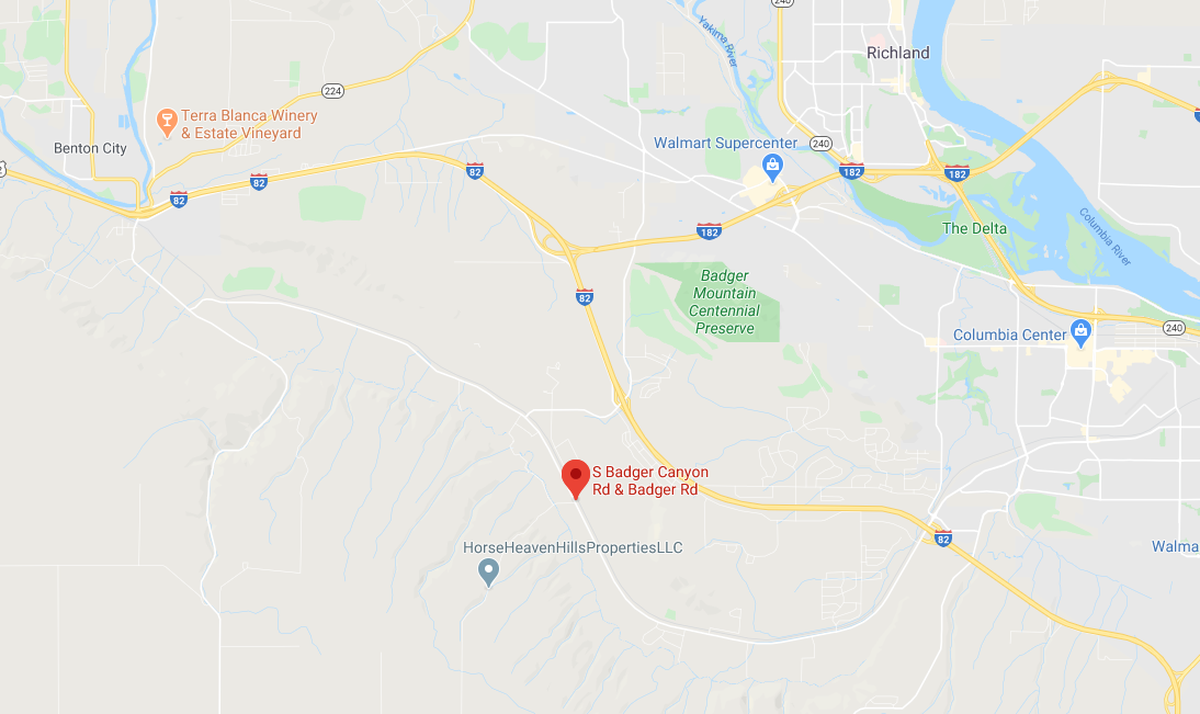
That leaves the 65 acres on the northwest corner of Badger Road and Badger Canyon Road — land that the Cox family holds dear.
The board took no action as planned on Tuesday.
Instead, the board set an open house 4 to 7 p.m. March 26 at the KID office, 2015 S. Ely St., Kennewick, to answer questions about the project.
KID’s still wants to buy the land, rather than condemn it, but either way the family will be paid, explained Jason McShane, KID’s engineering and operations manager.
The 65 acres are assessed and appraised at $1.34 million and the district has offered almost $1.91 million, he said.
KID said the land it picked in Badger Canyon is the rare site where the reservoir would be at the right height for gravity flow in and out, without the additional cost of pumping, and would be close to the main canal.
The Coxes said they already have lost land once to a water project.
Robert S. Cox’s son, Clayne, said his grandfather bought the land in the 1950s when he lost land to the construction of the John Day Dam on the Columbia River.
“Now they are taking another place,” said Clayne Cox, who farms with his father.
The Robert Cox Farms is known for its pumpkins, although it also rotates wheat, hay and corn.
The pumpkins are sold to Walmart, Winco and Yokes and show up in stores from Alaska to Idaho.
Neighbors worry about reservoir
The KID condemnation would also take their home built in 1965 that the family planned to renovate to make it livable again.
Robert S. Cox’s father and grandmother died there, and Robert S. Cox said that’s where he thought he would end his days, too, said his family.
And Robert and Vickie Cox want to pass the land down to their children, they said.
“Money means nothing to us,” said Ashley Elliott, their daughter. “Give us some dirt, and we will keep farming.”
Taking prime farmland for a reservoir is “just wrong,” said Charles Prescott, who lives nearby. Others commented that the water would be used for lawns rather than for food.
Britt Marlin, a neighbor for 40 years, called the Cox land some of the most desirable in Badger Canyon.
He’s also concerned about what the reservoir will mean for his property.
Neighbors don’t know yet whether it will be a huge concrete fenced basin or something “presentable” that kids can visit and go fishing, he said.
He also questioned what it could smell like when the water is drawn down and what it could mean for nearby property values.
Reservoir to hold 4.5 billion gallons
KID officials said a design has yet to be drawn up. They also need to work with the county on the possible environmental review.
And they said after the meeting that the water would benefit all district members, including farmers. The district delivers water to 12,000 acres of agricultural land.
The reservoir could hold as much as 14,000 acre feet of water — about 4.5 billion gallons, Freeman said.
About 500 acre feet of water, possibly held in a separate cell, could fluctuate as it is used to optimize daily operations.
But most would be held in reserve for a drought.
“People build reservoirs because the amount of water in a river varies over time,” said KID board President Kirk Rathbun.
“During very rainy times or when mountain snow is melting, the water in a river rises and sometimes overflows its banks,” he said. “By taking advantage of these times of high flows, water can be stored for later in the summer when river flows are very low.”
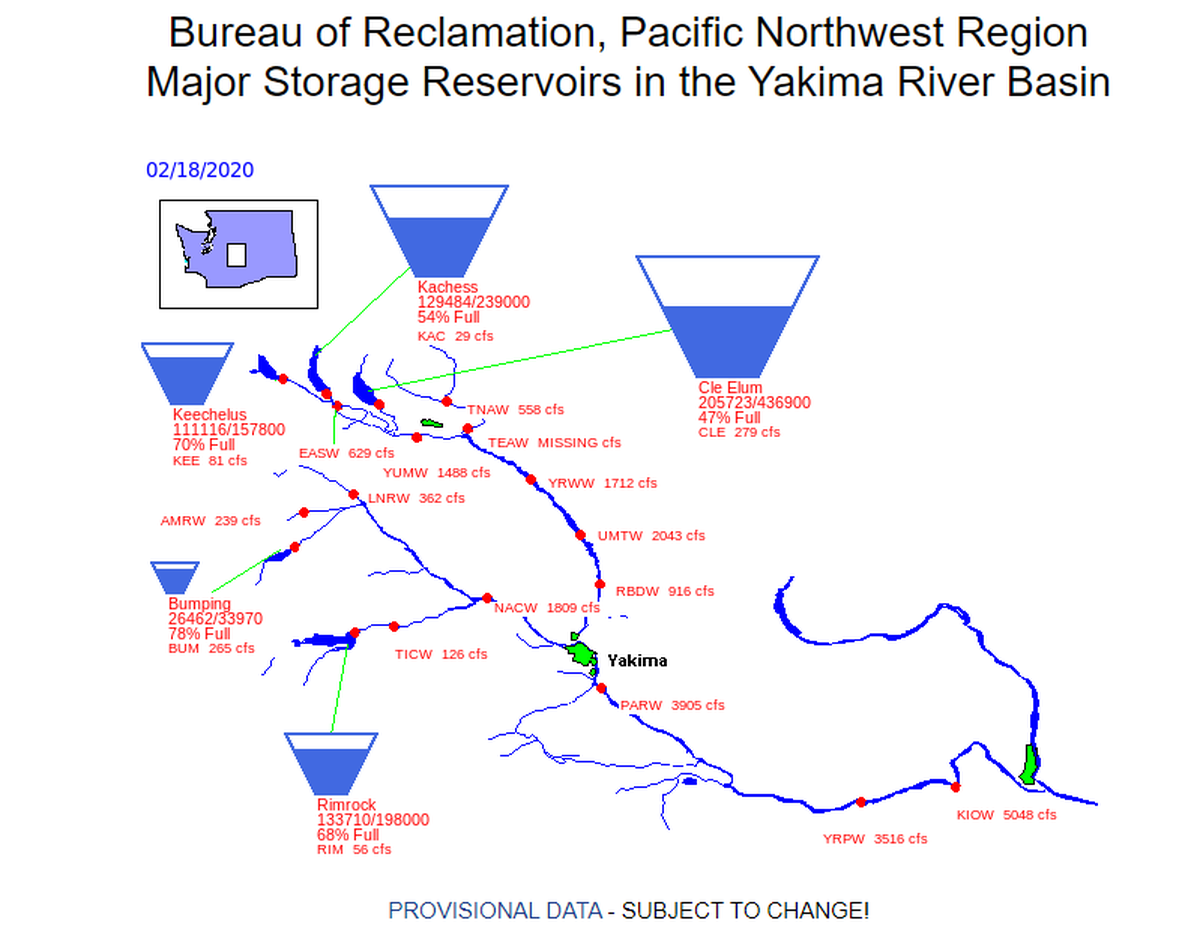
KID gets water from the Yakima River Basin, which is not able to meet user demand for all the districts it supplies.
Drought relief possible
The demand is more than two times the amount of storage available in Bureau of Reclamation mountain reservoirs, including Cle Elum, Kachess and Keechelus.
Kennewick Irrigation District depends on its supply for return flows to the Yakima River from diversions upstream, such as from seepage through the soil.
As conservation of water increases upstream, less return flow makes it back to the river for KID to claim for its customers.
Climate change also is a concern for the future of the district’s water supply.
The last major drought to affect KID was in 2015, when water was reduced to farms, residential property and public property such as schools and parks. Residential users were limited to 30 minutes of water per zone on a schedule twice a week to water their lawns.
If the city had the proposed reservoir then, the water schedule might have been voluntary instead of mandatory and more water would have been available, including to farmers who had no water for their crops some days, Freeman said.
No date has been announced after the open house when the commission will discuss the proposed land condemnation and vote on it.
This story was originally published February 19, 2020 at 12:21 PM.