
This duck is a rare sight in Tri-Cities. She had bird watchers aflutter
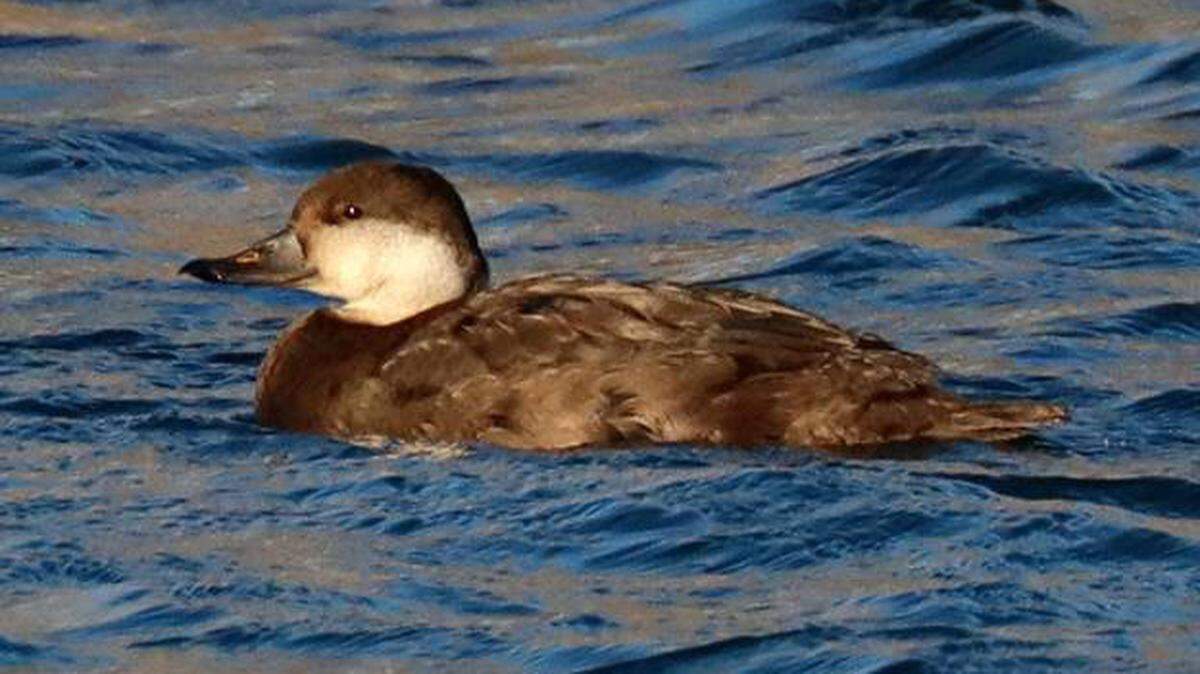
One duck stood out among the nearly 45,800 birds spotted during the annual Tri-Cities bird count.
With her mostly dark brown feathers, dark cap and cream-colored cheeks, it wasn’t immediately obvious she was different.
But soon it was clear, she was a rare find for this area. Maybe the first ever to stop for a visit.
Jason Fidorra, a wildlife biologist with the Washington Department of Fish and Game, was one of the Pasco team members who started at the Tri-Cities Animal Shelter pond on Dec. 28 and worked their way upriver.
They were checking at as many sites along the Columbia River as they could before dark. The count is a 120-year-old traditional for the National Audubon Society.
New York ornithologist Frank Chapman started it as an alternative to a long-time Christmas tradition of hunting birds.
“It takes a lot of patience to identify and count birds while scanning through the thousands of ducks congregated along the river to count each by species, said Fidorra. “There were over 700 birds at the pond, with at least 13 species of waterfowl present.”
About 10:30 a.m. that day, he did a quick count and then circled the pond to get a better view of the Canvasbacks, one of the biggest ducks in the area.
That’s when he noticed a duck he had missed earlier.
She was a black scoter — one of North America’s least known duck species.
It’s a duck never seen before in Franklin County.
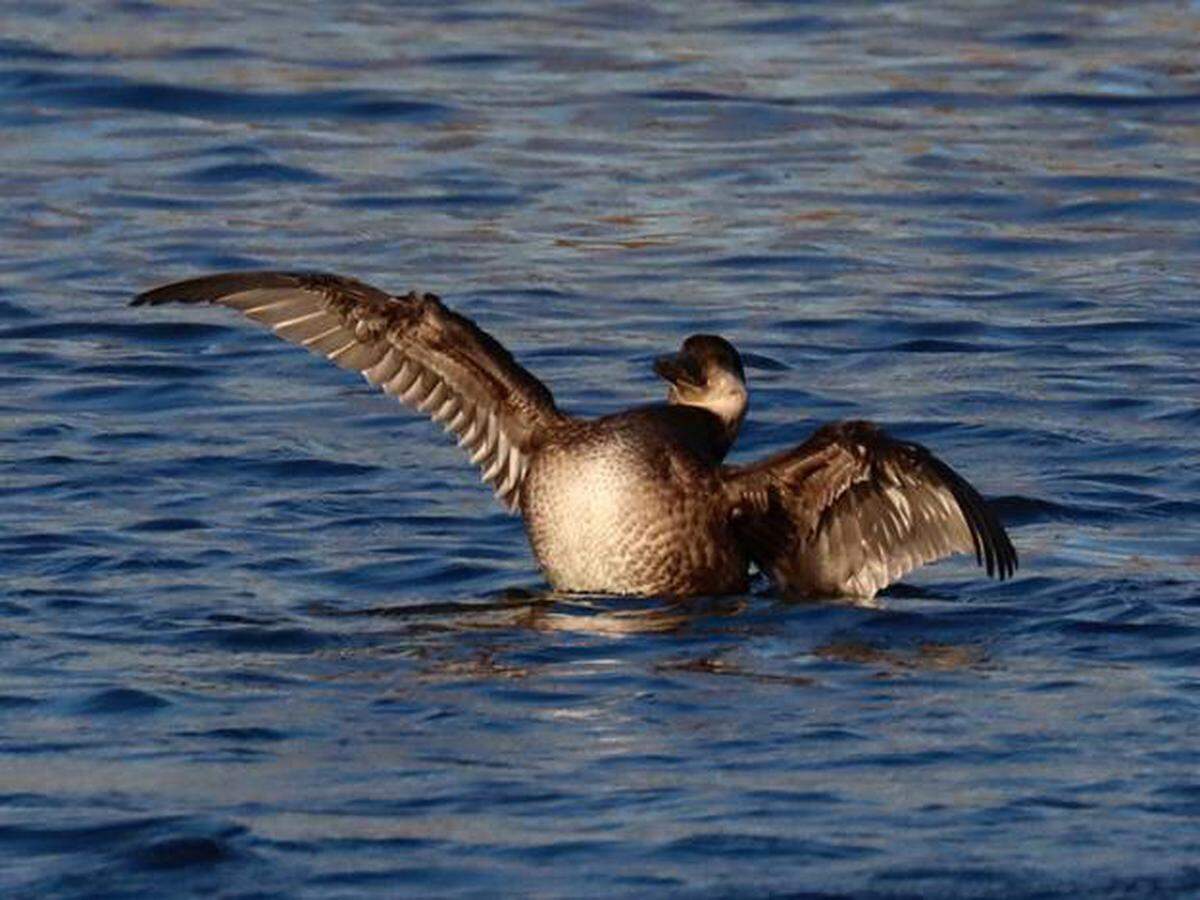
“It’s not a particularly spectacular looking bird, especially considering all the colorful wood duck drakes and hooded mergansers present, but it is a type of sea duck that normally winters on the Pacific Coast but is very rare inland,” he said. “It breeds up in remote western Alaska but commonly winters off the coast in the Pacific Northwest.”
He took some photos then quickly checked his guidebook for anything similar that he might be mistaking it for. Seeing nothing and feeling more confident, he sent a few texts along with a photo to friends who might want to see this unusual species in our area.
Later that night he confirmed the sighting was the first record for Franklin County. And that was a first for the local Christmas bird count.
He shared his discovery on the Tri-Cities Birders page on Facebook.
That got the attention of other birders in the area, and luckily, she hung around so people were able to see her and get photos. She stayed at the same location at least until Jan 6.
Scanning the Columbia River
Clark and Debbie Satre, both members of the Yakima chapter of the Audubon Society, saw the Facebook post and scooted over to Tri-Cities on New Year’s Day to see if they could see her.
It was mostly sunny and about 50 degrees and breezy when they headed to the Pasco pond.
“We arrived at about 10:30 in the morning and spent a good two hours looking for the black Scoter, with no luck. There are hundreds of other birds on that pond and we just could not find her among all the others. We enjoyed seeing the other waterfowl — ring-necked ducks, canvasbacks, buffleheads and hooded mergansers. We also got some great photos of some black-crowned night-herons.”
They took a break for lunch and after another hour of looking — Debbie with binoculars and Clark with his camera and telephoto lens — finally spotted her.
She had her head tucked on her back as others had seen her, but while they were watching she sat up, looked around, and flapped her wings.
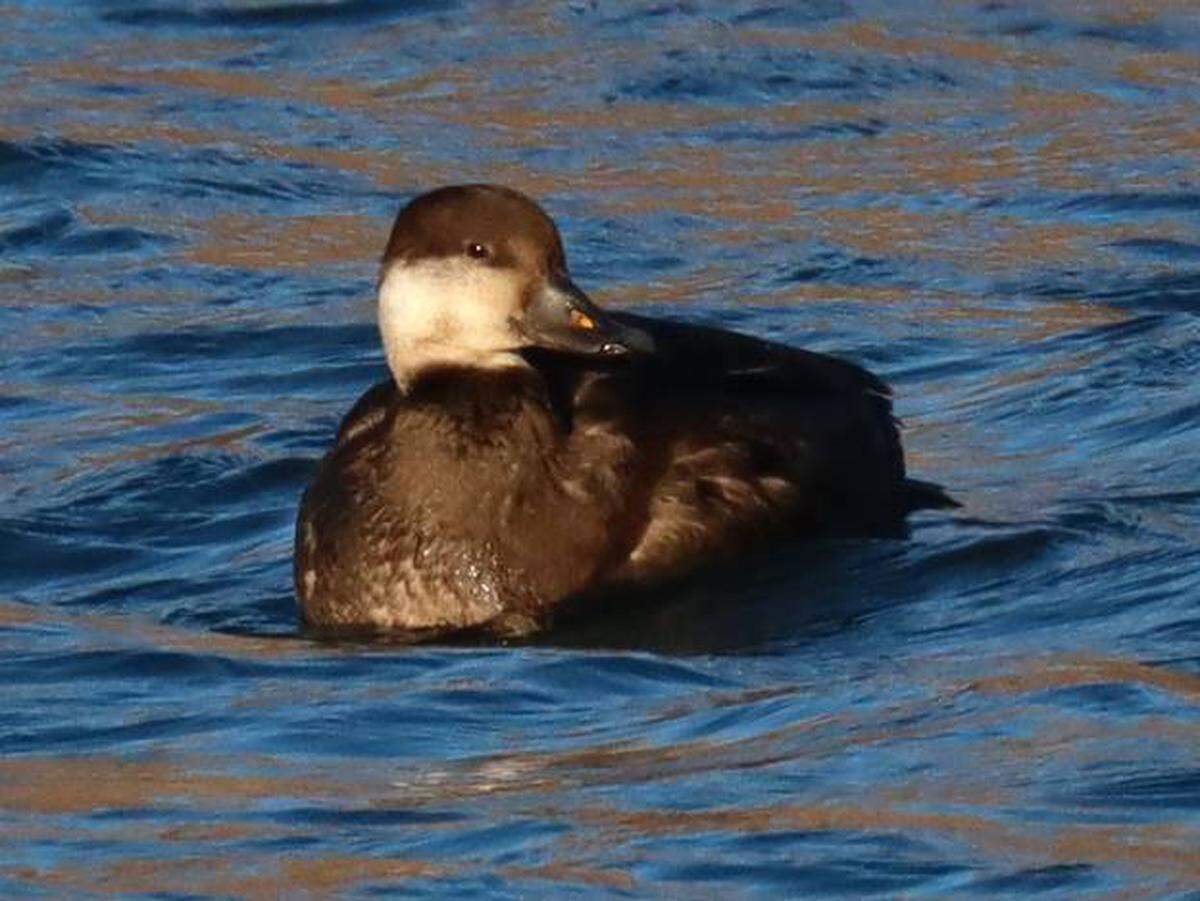
They got their photos about 2:30 p.m. It took them three and a half hours of patiently waiting.
“It was our lucky day,” Clark said. “Finding her active and in the sun. She was not easy to find. But the white cheek patch and dark cap she has separated her from the other birds.”
Annual Christmas bird count
Dana Ward, who has been the Christmas Bird Count Coordinator for the Lower Columbia Audubon Society chapter for 15 years said the first Tri-Cities coun 50 years ago involved 18 people. This year they had 75 participants.
“Christmas Bird Counts are the longest running citizen science project in America,” he said. “The data has been extremely important in tracking the numbers of birds, distribution of birds and bird population trends and more.”
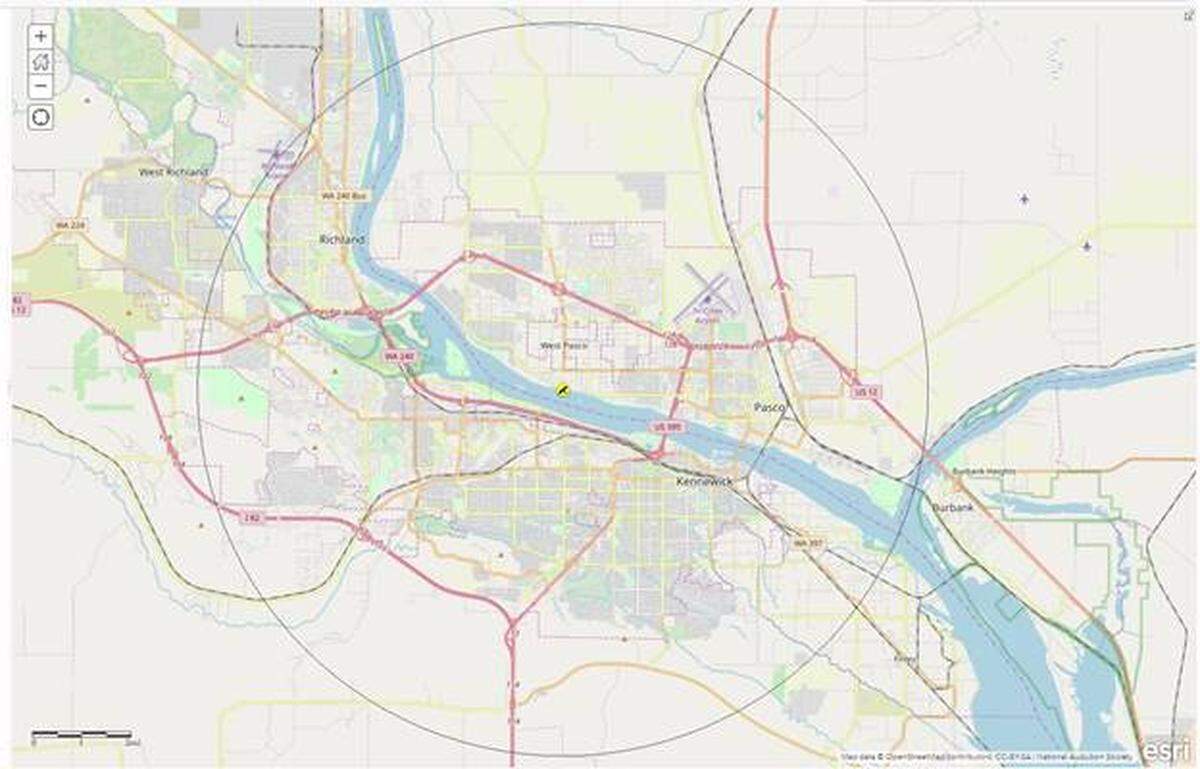
In the Tri-Cities, three team leaders coordinate locally with groups within a 15-mile diameter circle that covers from North Richland, to south Kennewick through the Horse Heaven Hills, and east to Sacajawea Park, then back around Pasco.
Volunteers start counting birds anytime from midnight on. Most met at 7:30 a.m. this time.
The count includes birds seen at feeders at numerous homes and drive-by counts through the windows of warm cars. The participants convened over a potluck dinner at the Grange Hall in Kennewick to tally the lists.
In all 45,748 birds were counted in 24 hours in Richland, Kennewick and Pasco.
That included 8,663 mallards, 6,325 American Widgeon, 4997, American Coots, 4,717 Canada Goose 4717, 619 American crows and 2,625 robins.
There also were 3,150 European starlings, 865 house finches, 798 Eurasian collard doves, 47 bald eagles, 78 American white pelicans.
A total of 110 species were identified.
Many species were represented by just one individual, like the black scoter.
Nationwide bird count database
The information generated by all nationwide counts goes into a database available online. Select the Christmas Bird Count icon. The Tri-Cities count code is WATC.
The Lower Columbia Basin Audubon Society meets monthly and offers free morning bird walks on Bateman Island to observe the surrounding Yakima River delta and Columbia River environs.
They meet on the first Saturday of each month from now through June at the Wye Park on Columbia Park Trail at 8 a.m.
The walks are free and open to the public and they welcome anyone interested in knowing more about birds. Average sightings during the walks are 45 to 50 species.
For more information visit the local Audubon site.
Information about the history and purpose of the Christmas Bird Count and many research activities supported by the National Audubon Society can be found there also.
You can also get a free downloaded eBird Checklist of the birds in Benton County on the site.