
Exclusive: Tri-Cities new astronaut shares her story. Her sights are on the moon and beyond
Over the last two years Kayla Barron of Richland has learned to fly a T-38 jet.
She’s also been on six-hour simulated space walks at Houston’s John Space Center’s 40-foot-deep pool that simulates the weightlessness that astronauts experience during spaceflights.
That was just some of the hands-on training that prepared her to become one of the nation’s 11 new astronauts to graduate Friday from NASA’s astronaut basic training program.
The Richland High grad is now one of just 48 astronauts in the nation.
Barron, 32, was given a silver pin at the ceremony, a tradition dating back to the Mercury 7 astronauts selected in 1959.
Now the dream of those in her class is to exchange it for a gold pin — the pin that they receive after their first spaceflights.
Barron’s astronaut training not only qualifies her for the planned return to the moon — where no woman has yet to go — but there is also the possibility that she or her classmates could be sent to the International Space Station.
“It is what got me excited about being an astronaut in the first place,” Barron told the Herald in a phone interview Friday.
For now the role of all 11 qualified for space flights is to support current and future missions and to train and be ready to fly, Barron said.
Her training class graduates as the first since NASA’s Artemis program was launched in 2017 with a goal of returning humans to the moon by 2024 and then sending people to Mars.
They were picked to start training in summer 2017 from a record-setting pool of more than 18,000 applicants to become astronauts.
Training: underwater and in the sky
She was looking forward to her T-38 jet training when she became an astronaut candidate, and the experience exceeded her expectations.
“I was surprised how much I actually love flying,” she said.
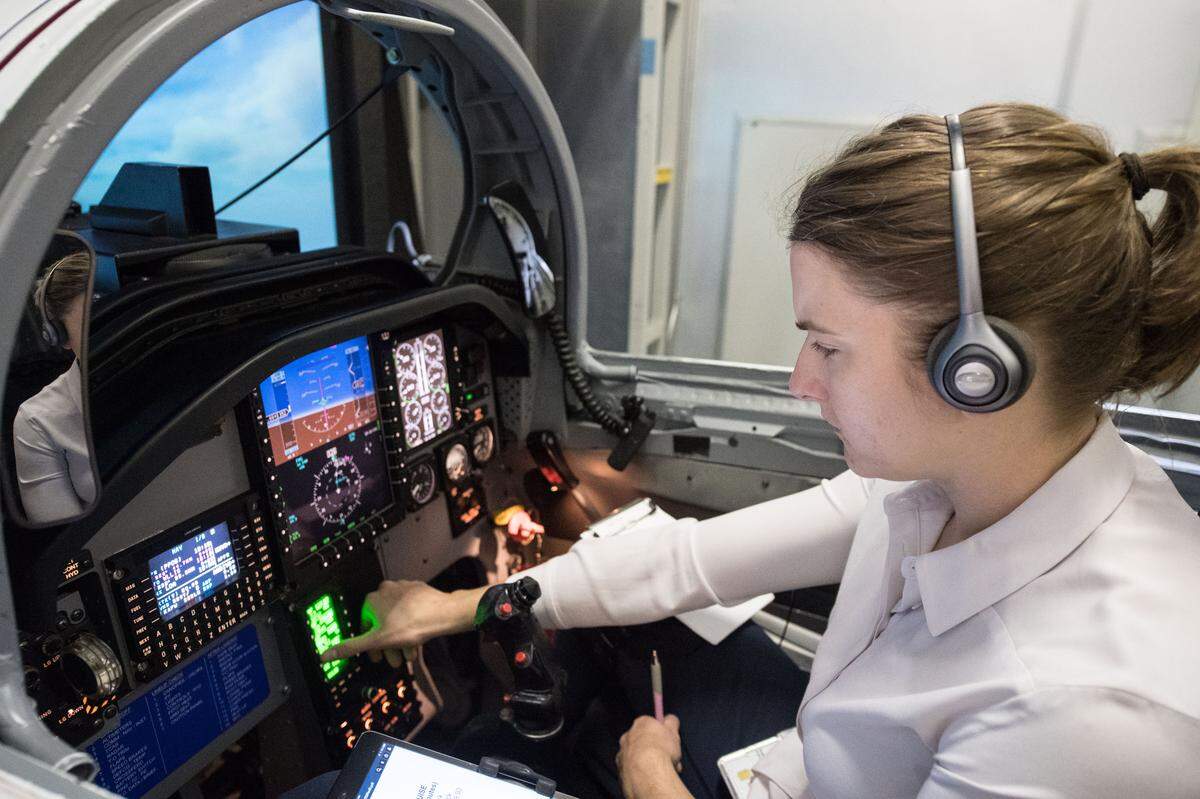
In the two-seat T-38, Barron would take the back with the pilot in the front on training flights.
They split the tasks of flying the jet, talking on the radio and operating the navigation equipment.
“We are taking real risk in a real jet and have to work together to get the mission accomplished,” she said.
The flights practice the skills astronauts need to be successful in a spacecraft — “how to communicate, how to make decisions, how to share information,” she said.
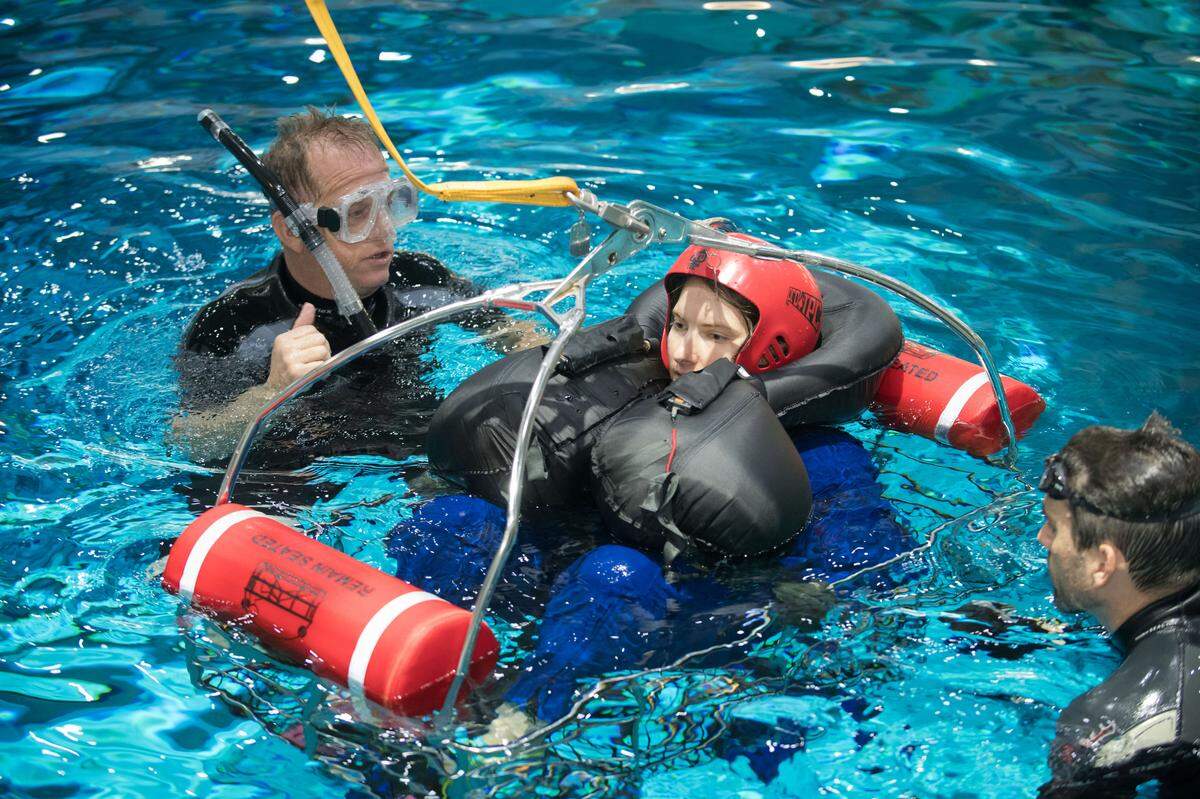
A highlight of training was her time in the Neutral Buoyancy Laboratory, where a life-size mock-up of the space station is housed in 40 feet of water.
“We simulate pretty accurately what it is like to do a real space walk,” she said.
She wore a space suit modified for underwater as a team of scuba divers moved weights or foam pieces on her body to achieve buoyancy to mimic microgravity for mock space walks.
“You get to talk to people in a control room just like . . . when we are out on a space walk,” she said. “You are out there with a teammate — your buddy on the space walk — working to get as much as you can done in that six-hour time period.”
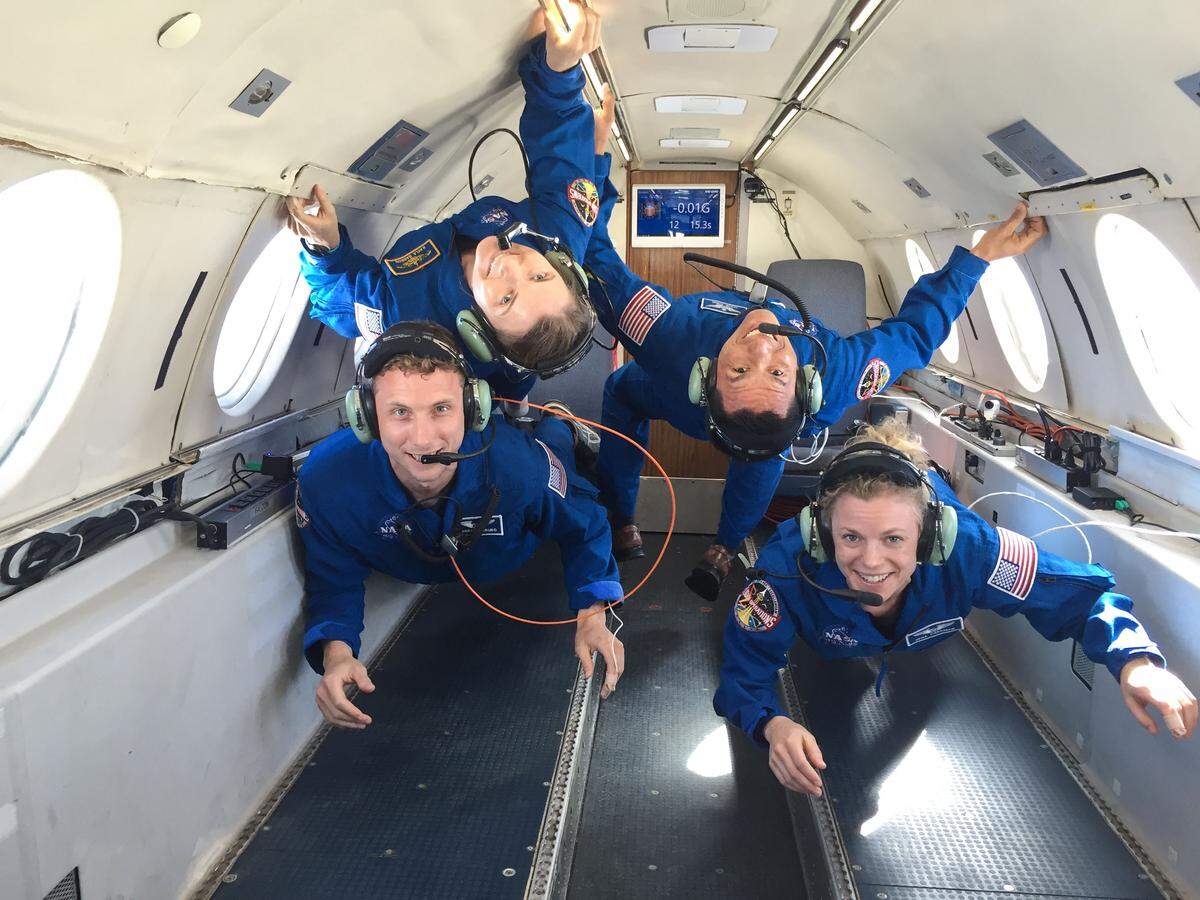
One of the toughest parts of training for her was learning Russian, as she suspected when she was accepted as an astronaut candidate.
The International Space Station is divided into sections operated by Russia and the United States.
“Languages are not my strong suit,” she said. “I show up to every single class and give it my all and have gotten to the point that I can sort of carry on a conversation.”
Other training was challenging in ways she had not expected.
New astronaut helps spacesuit design
“Learning how to operate in a spacesuit for example is a really unique thing that you wouldn’t be doing unless you are in astronaut training,” she said.
“Working with tools while wearing spacesuit gloves and not really being able to operate the way you are used to in gravity on the ground has been really challenging,” she said.
Now Barron’s first assignment as an astronaut is to work with the engineers who are designing and building the spacesuits for the Artemis program.
NASA is working on two suits, one to be worn during the launch and landing when astronauts are inside a space capsule, and a second one to be worn on the next moon walk.
“My role is to kind of be the operational mindset, kind of thinking about how we will use the equipment in real life and helping inform some of the design decision,” she said.
Barron says Navy, NASA alike
She sees parallels with the space station and her previous experience in Navy submarines.
Barron, whose parents Scott and Lauri Sax still live in the Tri-Cities, graduated from the Naval Academy and continues to serve as a Navy lieutenant.
She was a member of the first class of women commissioned to be a submarine officer and completed three deterrent patrols while serving aboard the USS Maine.
“NASA’s way of operating is really similar,” she said.
Like Naval submarines, space flights require operating complicated equipment, communicating with team members, making decisions with input from specialists and then executing tasks, she said.
“We are sending human beings to places that (they) are not really supposed to be living and keeping them alive so they can thrive and accomplish goal missions,” she said.
This story was originally published January 12, 2020 at 5:00 AM.