
A drought in the Tri-Cities this summer is now likely. What you need to know
A drought in the Mid-Columbia is likely this summer into fall, according to the latest seasonal drought outlook released by the National Weather Service.
The Northwest is expected to be the largest area significantly impacted by drought from July 18 through October, according to weather service projections.
The west side and Northern Washington already have drought conditions that are expected to drag on.
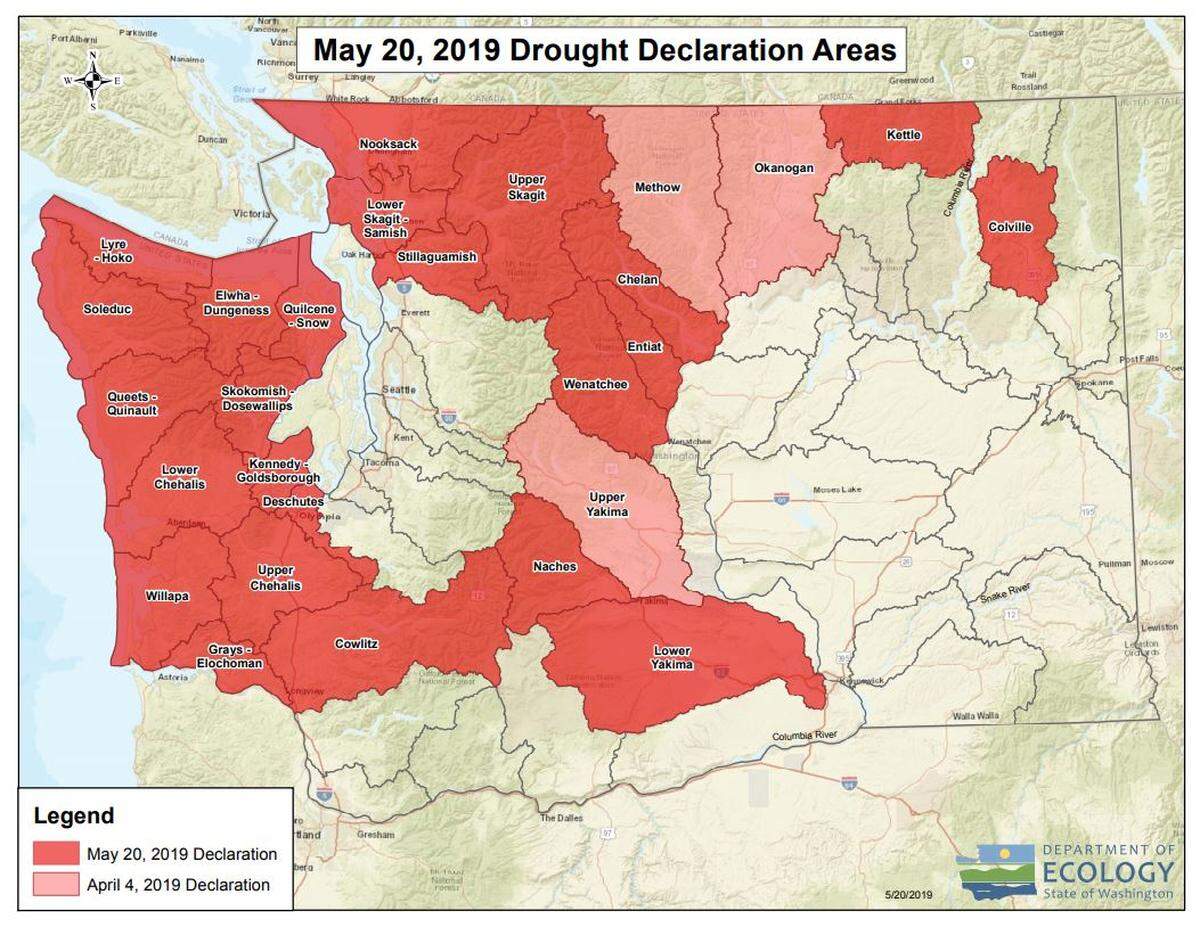
Washington Gov. Jay Inslee this spring declared a drought emergency for nearly half of the state, including the Upper and Lower Yakima Basins, which supply some of the irrigation water for the Tri-City areas.
The weather service now expects almost the whole state will see drought conditions, including the Tri-Cities, and parts of Oregon, Idaho and Montana.
The Bureau of Reclamation reported midweek that the Yakima Basin water supply was holding steady to forecasts made July 1.
Enough water is expected for the irrigation season — June through September — to supply 67 percent of the water that junior water right holders are entitled to use. Senior water right holders will get their full allotment.
Kennewick Irrigation District, which owns mostly junior water rights, has started voluntary water restrictions for residential water users and is working individually with its large water users to conserve water.
Residential users are asked to water lawns just twice a week, for 30 minutes per zone. It’s the same schedule that was mandatory during the 2015 drought.
Residents can still water trees, shrubs, perennials and vegetable gardens with a single hose or high-efficiency device as well as scheduled times for lawns.
Drought resistant lawns
Kennewick Irrigation District customers are being asked to follow a schedule that gives each residential user 30 minutes per zone twice a week to water lawns.
The number of zones depends on your lawn size and your irrigation system.
The last number in your home address will guide what days you should be watering and whether you water in the mornings or in the afternoons and evenings.
Following the schedule will cultivate a deeper root system and help make lawns more drought resistant, says the irrigation district.
KID recommends drip line, micro spray and soaker hoses to irrigate plants more efficiently.
KID is making arrangements with nonresidential water users for conservation measures. They include farms, school districts, and cities with many parks and golf courses.
The voluntary schedule is for houses on less than two acres.
Mandatory rationing was last implemented by the district in the 2015 drought, with watering times restricted to two times a week for 30 minutes for each zone.
This story was originally published July 21, 2019 at 4:30 PM.