
They hoped families were moving into the new duplexes. But it was a farm worker labor camp
Residents of a quiet rural area near Benton City hoped they’d be welcoming new families to their neighborhood this spring.
They believed the 15 duplexes planned near their homes would house two families each.
But this week, as people started to move in to the first duplex, they realized the residents were all men.
That’s when they discovered the barracks-style units were actually temporary housing for workers for area fields, orchards and vineyards.
That doesn’t fit with the character of their community, they argue.
Now they want Benton County commissioners to intervene to force the operators of La Buena Vida Estates to run the duplex community as a residential neighborhood, not temporary farm worker housing.
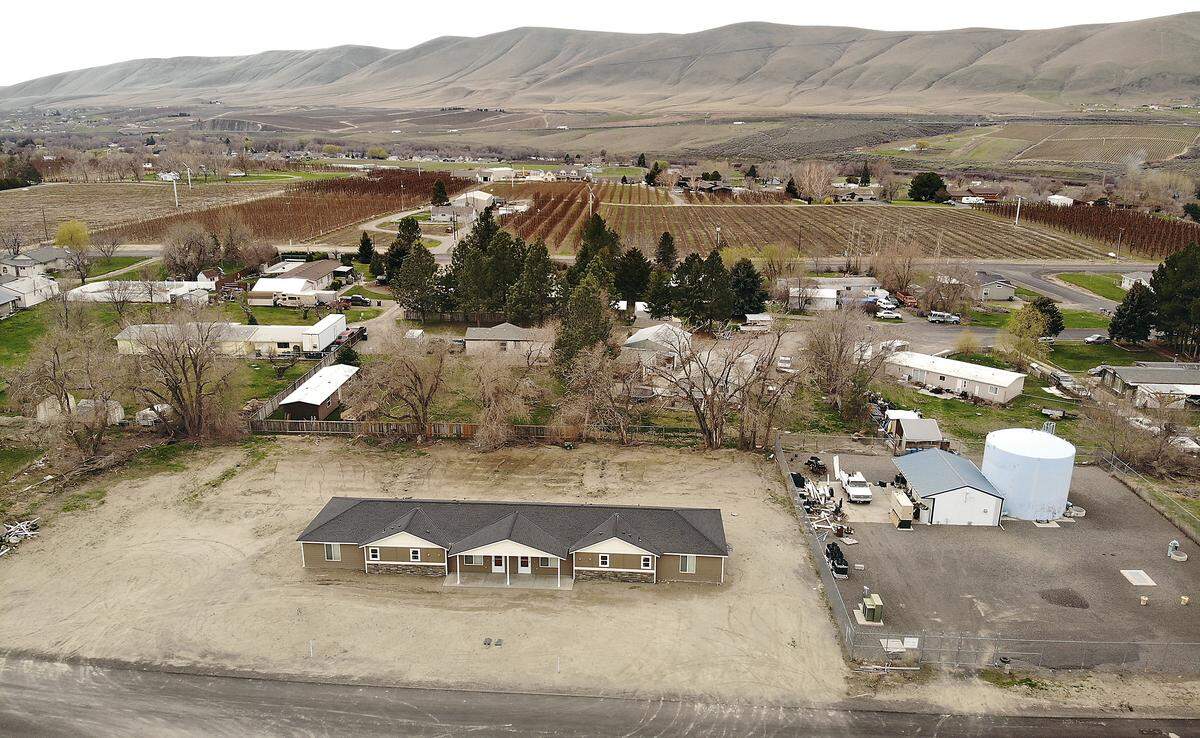
The 21-acre duplex development is on Breezie Lane, near Old Inland Empire Highway and Highland, just west of the Benton City in unincorporated Benton County.
Louetta Shiplet and her neighbors complained this week to the county commissioners and handed over a petition demanding the county enforce codes they say require the duplexes to serve as traditional homes, not temporary worker housing.
Shiplet says their issue is not with the workers, but with the use of the duplexes.
“It was specific that it was two families,” she insisted.
Don’t have to be related
Jerrod McPherson, Benton County’s planning director, confirmed La Buena Vida was permitted as a duplex but cautioned the county doesn’t decide who can live in a home.
A household can be a group of people who are related or not related, he told the commissioners.
County planners granted the project a certificate of occupancy in November and then the state health department issued the owners a license to operate it as a labor camp.
La Buena Vida Estates developer Brian Trimble of Kennewick declined to talk to the Herald about the project.
But a 2016 environmental review submitted to Benton County said the developers indicated each side of each duplex would house up to nine people.
The 15 buildings will have 30 units, housing up to 270 workers. But the occupancy could go higher.
Septic system built for 300
The Benton-Franklin Health District issued a permit for a septic system designed to serve up to 10 people per unit, or 300 on the site.
Each duplex will occupy about an acre and will have its own septic tank and drainage field. Oasis Water Corp., which has a well and tank at the site, provides the water service.
Rick Dawson, the health district’s environmental director, said health officials advised the developer to build a system that can connect to the Benton City sewer system in the future. That’s standard for development when sewer lines are nearby.
Dawson said the health district’s authority ends after ensuring the water and septic plans meet code.
“What they do inside the building is not up to us,” he said.
The property is zoned Urban Growth Residential, which allows single-family dwellings and duplexes.
A Benton County spokeswoman said the county did not know about the “labor camp” designation for the duplexes, but reaffirmed the county does not control who lives where.
“Benton County does not regulate who can live within a permitted residential structure based upon an individual’s occupation,” said Shyanne Palmus.
Out of character for neighborhood
But Shiplet countered that temporary housing for men who are unrelated to one another is out of character in a neighborhood of families.
“This is not about the people,” she said. “Make it a two-family duplex like it’s suppose to be.”
Paul Christensen, who owns Oasis, the private water company that serves the neighborhood, warned the county commissioners that if the development is not in compliance with county codes, he would be required to shut off the water service.
“Bring it back to a duplex and we’re fine,” he told the commission.
Licensed labor camp
The units at La Buena Vida are not built as standard residential units.
The state health department confirmed it licensed La Buena Vida Estates to operate as a labor camp, effective in January. The state health department regulates farm worker and other temporary worker housing.
To qualify for a license, the project had to meet the minimum state and federal standards for temporary worker housing, which govern aspects such as space, privacy dividers between toilets and work space in kitchens.
It includes built-in bunk beds, lockers and dormitory-style bathrooms with multiple showers, toilets and sinks, as well as double sets of washers and dryers.
While the developers wouldn’t discuss the project, La Buena Vida Estates appears designed for guest workers who come to the United States under the H-2A visa program.
The law requires employers to provide housing that is inspected and licensed by the state.
Mike Gempler, director of the Washington Growers League in Yakima, said there’s a need for farm worker housing.
While specifics are fuzzy, there is plenty of construction going on as growers scramble to recruit workers. And proper housing helps woo them.
The growers league operates seasonal communities at Malaga and at Cashmere. Gempler said location matters when it comes to seasonal workers.
“It’s sometimes better for people to live in town. There’s services available, and guest workers don’t have cars,” he explained.
This story was originally published April 6, 2019 at 4:01 PM.