
Steelhead on the Reach: Love, loss and Dr. Bill
Pound-for-pound, no freshwater fish fights harder than a steelhead.
They swim faster and jump higher than Pacific salmon. Some have the capacity to migrate over 2,000 miles to the ocean and back, spawn, and survive all obstacles to do it again.
There’s no greater challenge than to take them on a fly, especially on a year when harvest restrictions are in effect due to a low run size.
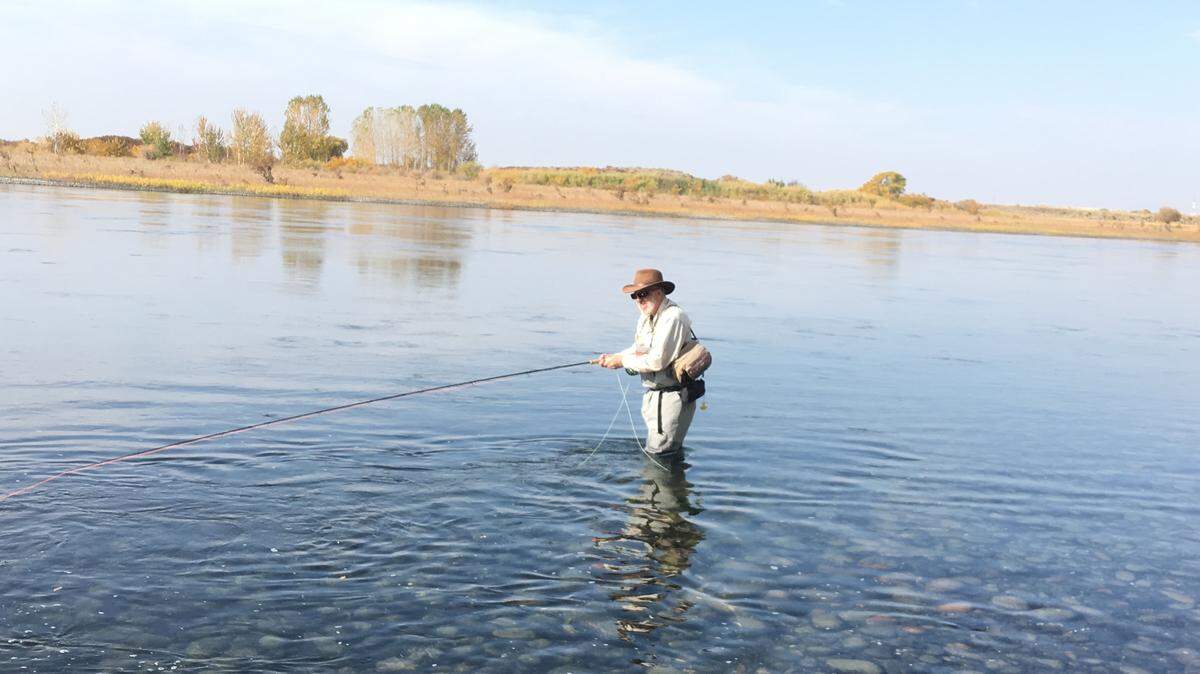
I meet up with fishing buddy Ken for a day of casting for the elusive steelhead. Our destination is a remote stretch of the Hanford Reach upstream of Taylor Flats. Getting there requires we stop to scout safe passage where the unimproved road is washed out.
We rig up our fly rods and hike a narrow trail littered with coyote scat. Large alder, willow and a thick band of reed canary grass cover a cobble shoreline devoid of human traffic.
“I like this spot,” Ken says, staking out a wide shallow riffle that looks fishy. Thinking I got the short end of the deal, I set up a stone’s throw upstream where current breaks along a shoreline point.
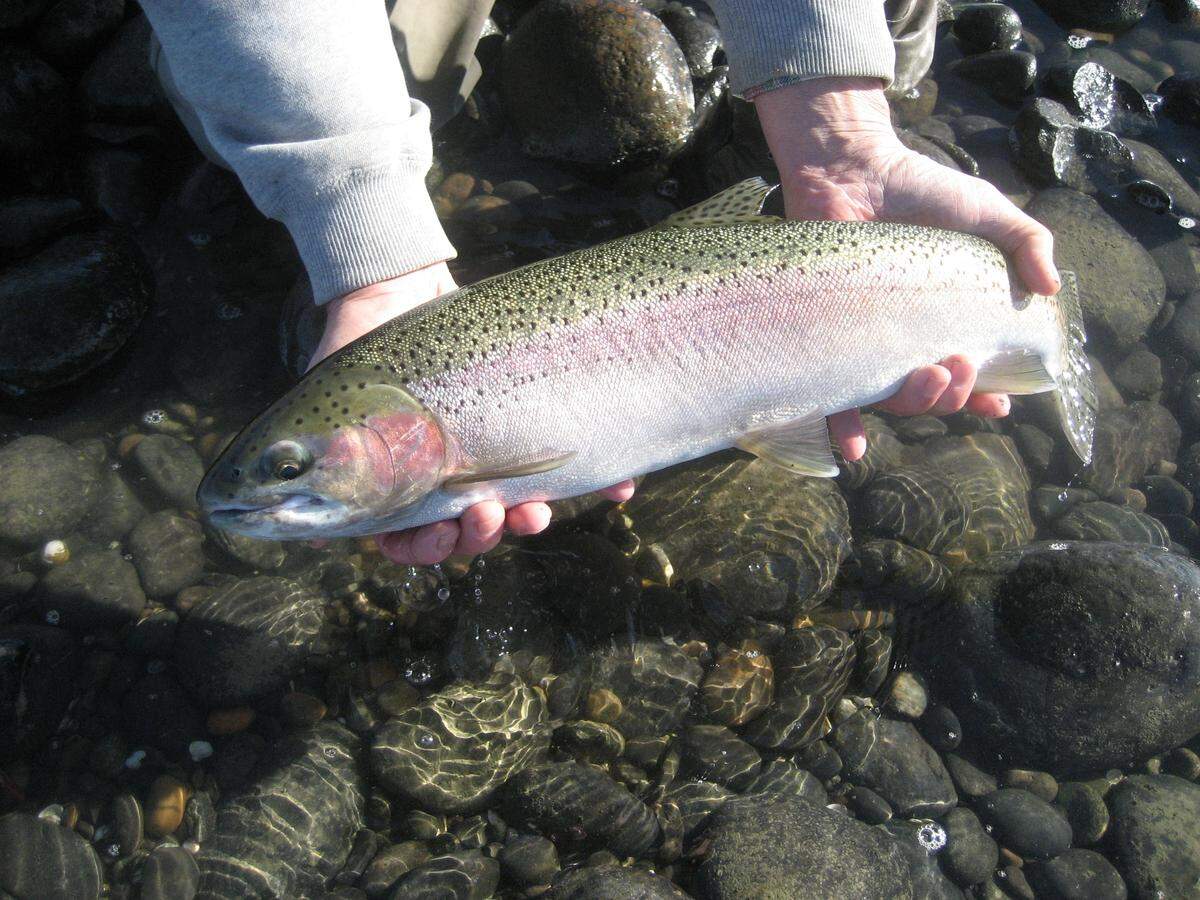
Searching through my box of steelhead flies, I select a Dr Bill. The pattern has a gold bead head and purple hackle with a splash of dyed rabbit tail. The first steelhead I landed on a fly struck a Dr. Bill. There’s something to be gained by staying faithful to your first love.
I scan the water’s surface for eddies and roils, features that indicate a change in bottom elevation where steelhead might find respite from swift current. Hint: they also hide beside submerged boulders and abandoned car body parts.
My tool of choice is a 13-foot long Spey rod. Its extra length allows me to cast further with less effort, which is an advantage on large rivers when wind is in your face. Although I have held a fly rod in my hand since I was 10, I am a novice in the art of two-handed Spey casting. I liken my skill to how I downhill ski: It ain’t pretty, but I get the job done.
A voice in my head reminds me: one step, three casts. Unfortunately, I rarely place three good casts in a row, and some places look good enough to merit several casts. Regardless, I shuffle my feet, move downstream and reposition.
The strike of a steelhead often comes in a moment of inattention. Blame it on my attention deficit disorder.
I watch clouds stack up on the eastern horizon to crowd out the morning sun. I inhale the musky odor of decaying algae and listen to two dickie birds in the brush. I let my fly swing across swift current and wonder how it might look to a steelhead. Would its size, shape, motion trigger a steelhead’s feeding instinct?
Granted, no natural prey comes in the color purple.
Halfway down the shallow run, I feel a tug. My line tightens and the surface water explodes. The drag on my reel sings to the tune of a deep-bodied steelhead that takes out line fast.
Things get out of control when it reverses and makes a long arcing run toward the shoreline. Operating in panic mode now, I back up to retrieve slack, pirouette on my good leg and almost go down. Luckily, I recover in time to find the fish is still on.
Another long run followed by a second spectacular leap, and the steelhead holds position on the inside of a current seam. It’s stage two of the battle now, and I’m feeling confident enough to lead it to shore. Unfortunately, the fish shakes loose from the source of its torment and swims free.
It was as if the prettiest girl on the dance floor picked me to walk her home, only to toss her curls and say goodbye before we reached the front porch steps.
“So much for a photo op,” I say to Ken, who wandered up to watch the action.
“That’s too bad,” he replies. “What fly were you using?”
Three hours, 100 steps and more than 300 casts later, we quit for the day. There’s an old adage that states it’s better to have loved and lost than never to have loved at all.
The same notion rings true when it comes to chasing the elusive steelhead.
This story was originally published November 4, 2018 at 12:29 PM with the headline "Steelhead on the Reach: Love, loss and Dr. Bill."