
This longtime Kennewick cop is a model for police chiefs. He's celebrating 40 years on the job
No matter what Ken Hohenberg has done while on duty at the Kennewick Police Department, he’s never had a bad day at work.
“I’ve had challenges over the years, and I’ve had disappointments, but I’ve never had a bad day, because I’ve always been able to have something happen that is good, that has made a difference,” he said.
As of this week, that’s 40 years of good days.
And the silver-haired lawman has racked up an impressive series of accomplishments along the way.
Hohenberg is the city’s longest serving employee. He’s the police chief other chiefs look to for advice, and the only one from the Tri-Cities to lead the state chiefs association.
His tireless support to community initiatives — either as chief or private citizen — led to being named Benton-Franklin United Way Volunteer of the Year, Kennewick Man of the Year and Tri-Citian of the Year.
Hohenberg, 62, is quick to credit quality people who help make his department one where governors drop by to ask about community policing.
“The department has always been a good department,” he said. “I honestly believe that the department has been a very good department since I started.”
‘Ever since I could talk’
Hohenberg told the Herald that he doesn’t remember when the urge to join law enforcement began.
“Ever since I could talk, I wanted to be a cop,” he said, though being a forest ranger also was on the list once.
He started as a patrol boy at Marcus Whitman Elementary School in Richland, eventually named Patrol Boy of the Year.
Then in the summer of 1970, he got his first chance to work with the Richland Police Department.
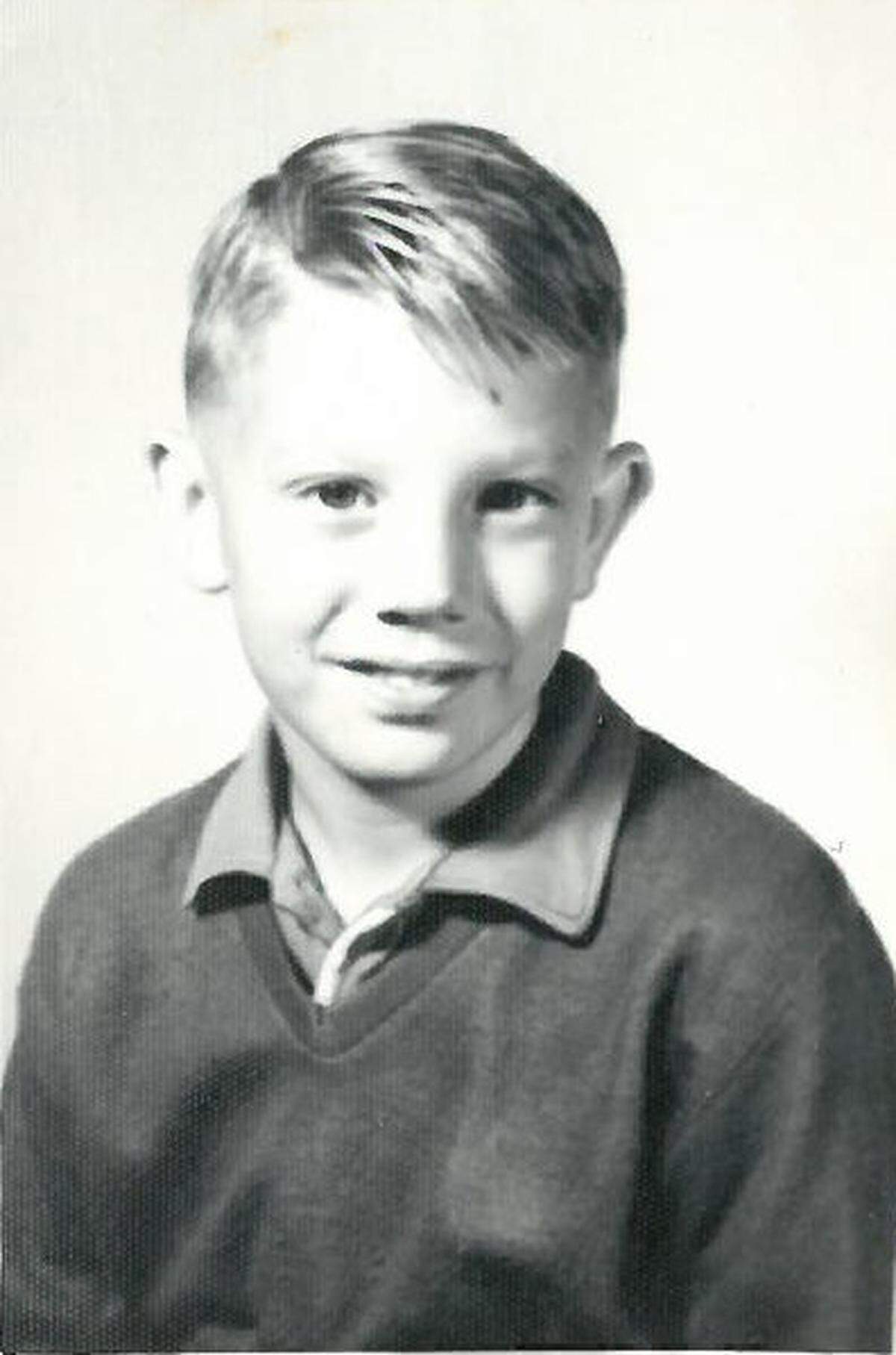
Then-Chief Dave Walsh started a cadets program, where 50 boys ages 14 to 18 could volunteer.
“My dad wasn’t necessarily overly keen on it because I did fairly well in school, and he thought, ‘If you’re interested in law, then go to school and become a lawyer,” Hohenberg said. “He gave his approval because he thought I would get it out of my system.”
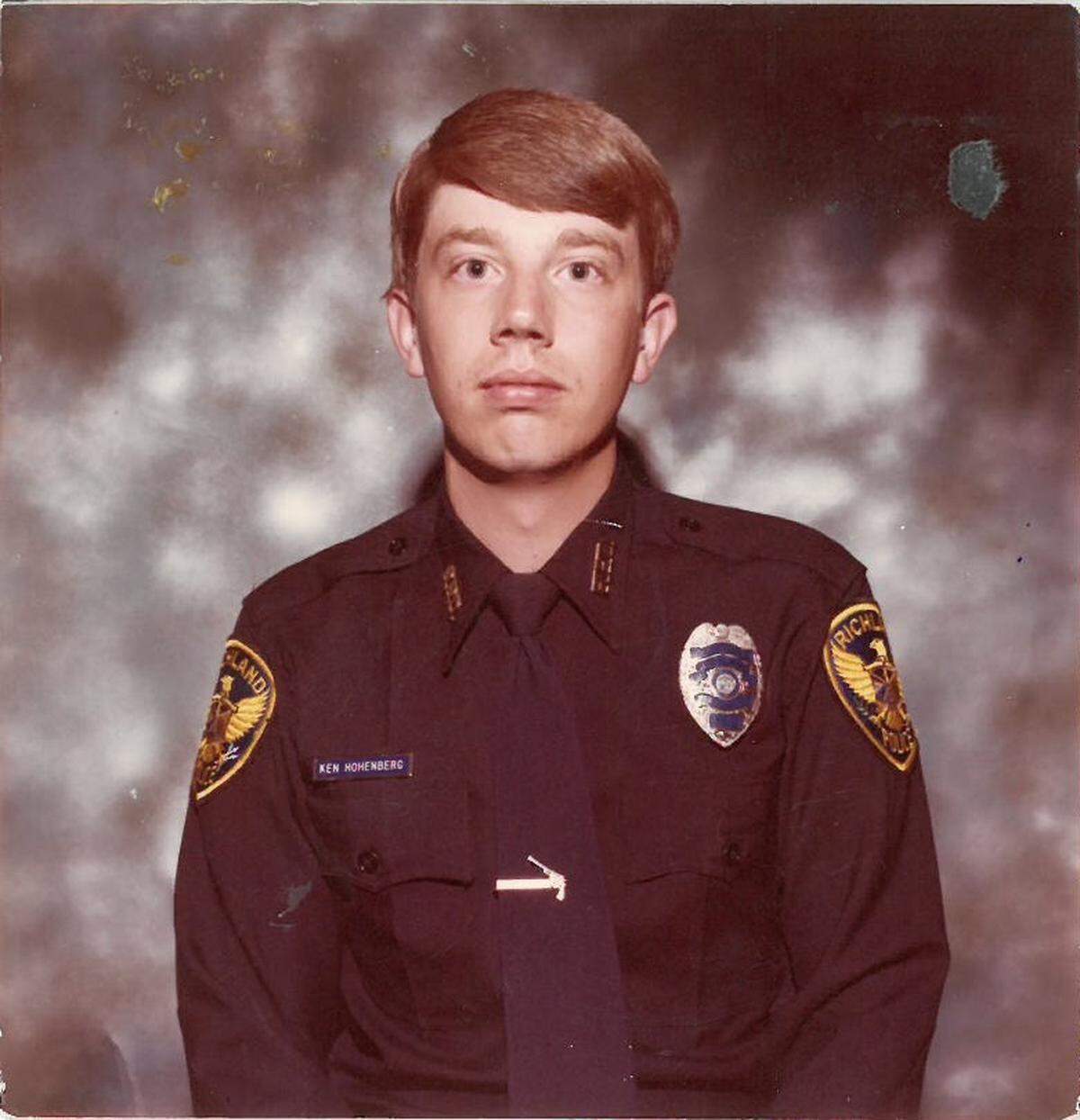
Hohenberg got on first as a volunteer cadet, then a paid cadet, before becoming a dispatcher for Richland police.
He was so focused on getting his dream job — as a Richland police officer — he took the tests for Kennewick police and the Benton County Sheriff’s Office to practice for Richland’s exam.
And Kennewick called first to offer him a job.
At 22, Hohenberg was the department’s youngest officer.
On his first day, the captain handed him a dirty long-sleeved shirt to wear that was four times too big. It was a sharp contrast to Richland, which had given him four new cadet uniforms.
“He told me to take it up and have the sleeves cut off of it. Of course, I had to pay for it myself,” he said. “I get all of this equipment and it’s all used equipment, and I think, ‘Man, I’ve just gone to work for F-Troop.’”
But soon he found he enjoyed Kennewick. It was 1978 and the city had about 23,000 people, few sidewalks and a lot of gas stations, he said.
Hohenberg said his first five years, when everything was new, were some of the most enjoyable of his career.
He was breaking up construction workers, farmers and motorcyclists fighting in downtown bars on the weekends.
But even back then, Hohenberg said people knew him, so he always had help.
An interesting place to work
In his first six years, Hohenberg married his wife Trish, got a bachelor’s degree from Central Washington University and welcomed their first of two daughters.
He spent 12 years as a patrol officer, including as a motorcycle cop and a DARE education officer.
“(The motorcycle training) was some of the hardest training I’ve ever done,” he said, which included riding eight hours a day for five days. “It really was just the freedom of being out there and you could pull up at a stop sign and you could talk to somebody. You weren’t locked in.”
As the city’s first DARE officer for two years, he interacted with students in a way most officers had never done before.
Around 1984, Hohenberg was promoted to sergeant and switched to the graveyard shift.
As he was eating dinner with his family in his uniform, his daughter asked if he got in trouble at work.
“And I said, ‘No honey, I got promoted,’” he said. “From a 7-year-old, she’s like, ‘Why are you going to work at night?’ ”
Hohenberg kept rising through the ranks. He became lieutenant in 1993, leading the internal affairs’ quality assurance unit and helping create a process for handling officer complaints.
He made captain in 1996 and took over detectives and youth services, then supervised the patrol division in 1998.
He attended the FBI National Academy in 2000 — an honor only a fraction of American police receive. A year later, he would step into the assistant chief’s role and then was named chief in 2003.
A chief’s chief
When new chiefs reach out looking for advice, Steve Strachan, executive director of the Washington Association of Sheriff’s and Police Chiefs, tells them to talk to Hohenberg.
Strachan could offer it himself — he once served as police chief in Kent and Bremerton, but he calls Hohenberg “one of the most respected chiefs in the state and one of the most respected chiefs that I’ve ever known.”
“He’s a formal leader, but just as importantly, he’s an informal leader,” he said.
As the new chief, Hohenberg said he worked through personnel changes for seven years while also ushering in a state-of-the-art police station.
He credits the people he hired, saying he believes in bringing on the best and the brightest.
“Even our unions have come to the conclusion that ... they would rather work short-handed, then for us to hire the wrong people,” Hohenberg said. “When we hire the wrong people it creates more work for the rest of us.”
He said he tries to focus on hiring those who will stay and creating a place where good people can work their way into leadership.
“I go to work every day realizing that my job is to support the people who work for the Kennewick Police Department,” he said.
The right thing to do
Hohenberg’s long history as a volunteer for Columbia Center Rotary Club, United Way, the Boys and Girls Clubs or with the March of Dimes and others was heavily influenced by his mother.
“There has to be a balance between leading internally in the department and being engaged in the community, so people know who you are,” he said.
“When people know who you are and when people realize that you will take care of an issue, whether it’s a crime issue or a personnel issue or some kind of challenge within the community, I think, at times, they’re not so quick to criticize.”
Bud Knore, who helped nominate Hohenberg for 2009 Tri-Citian of the Year,” wrote: “When most are too busy, Ken is always available. When most are too tired, Ken is ready and eager to get started. When most think they have done their share, Ken is looking for more opportunities.”
Hohenberg said those community relationships helped him create the Community Care Fund, which allows officers to use donations to help people down on their luck and in need of small things like gas, groceries or a motel room.
“I tell police officials, if you think it’s the right thing to do in your hearts, then just go do it,” he said.
This is where my family is
Even with other job offers, Hohenberg has stayed in the Tri-Cities. His mother and father and two sisters still live here.
Both daughters teach in Kennewick, and he is still happily married to Trish.
“My wife has been a great supporter of me, “ he said. “We had a house built in 2000 and three days after moving into the house I went to the FBI academy for 11 weeks and left my wife and two teenage daughters to unpack.”
He plans to keep working for at least a few more years, but he’s already planning to make good on the pledge he made when he joined Kennewick police — retire as chief.
“It’s just gone by in a blink of an eye,” he said.