
Pasco police got free Spanish training. This Latino group wants the chief fired over it
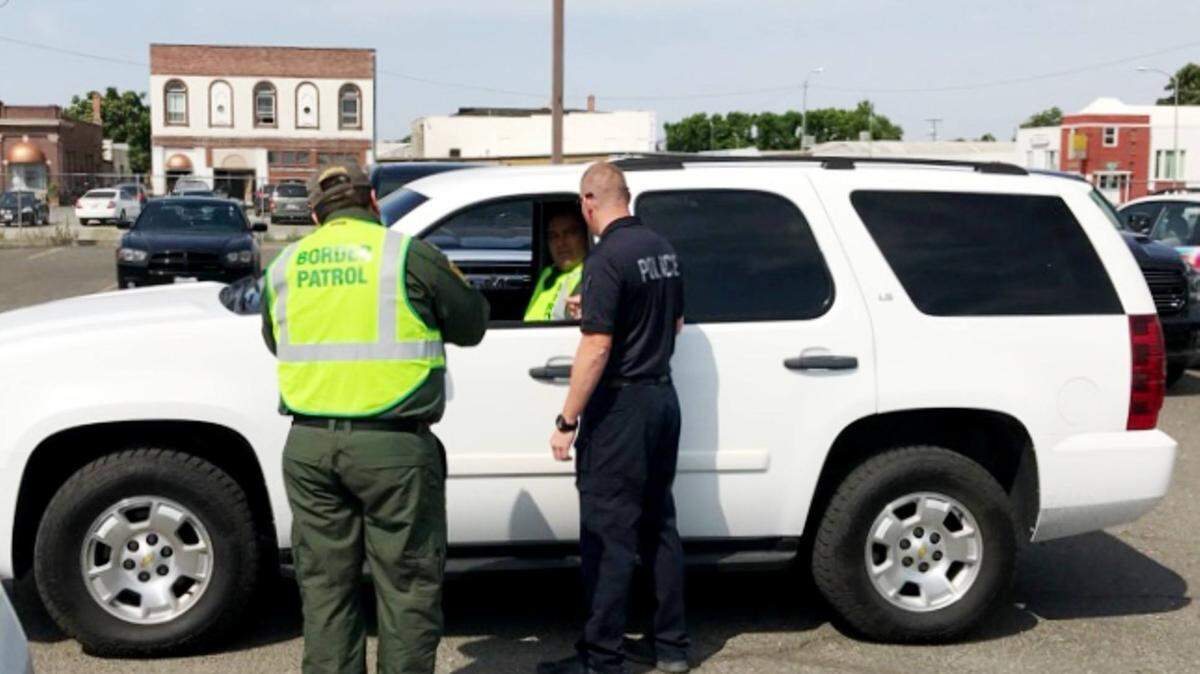
The Latino Civic Alliance is calling for Pasco to fire its police chief because of Spanish-language training from U.S. Border Patrol instructors.
The statewide nonpartisan organization sent a letter to city leaders saying the 40-hour training that Pasco officers received from border agents was intended to "insult and frighten the Latino community in Pasco and the Tri-Cities."
The four instructors from New Mexico spent a week in early June teaching 21 police officers and three Franklin County sheriff's deputies to speak Spanish well enough to avoid escalating potentially stressful situations.
"We've been attempting to increase our communication with our non-English speaking populations," Police Chief Bob Metzger told the city council during a recent meeting. "We've increased our bilingual staff by over 40 percent."
However, officers sometimes still don't have anyone on hand who speaks Spanish.
The chief spent the past three years looking for a way to teach officers "survival Spanish" so they can talk with victims, witnesses and suspects well enough to confirm what they mean.
Metzger said he found a lot of regional programs and people who could teach conversational Spanish. But he couldn't find one with an eye toward law enforcement.
"We needed something that was dynamic and included role-playing where we could use what we learned to reinforce these language skills," he said.
Metzger said the difference comes in how the language is used.
When an officer stops a car, it can be a stressful experience — even if the stopped driver speaks English. The situation can escalate if the officer and driver have a language barrier.
With an understanding of law enforcement and the language, officers are able to keep situations from spiraling out of control.
This is as true with victims as it is with suspects, Metzger said.
The Border Patrol program trains law enforcement for free.
Nina Martinez, the alliance board chairwoman, and Gabriel Munoz, the vice chairman, dismissed any argument in support of using Border Patrol agents.
"This action is evidence of collaboration between the Border Patrol and Pasco Police," the alliance officials said in their letter. "Chief Metzger's decision will increase distrust of law enforcement among Latinos who will believe that police officers have learned techniques to raid home and share information about immigrants or undocumented people," the letter said.
Metzger told the Herald the alliance's letter was a surprise. He would have explained what happened if they had contacted him.
The department was open about the training, sharing posts on their Facebook and invited media to report on it, including a 5-minute spot on a local Univision station.
The posts and broadcast so officers using Spanish while doing things like mock traffic stops.
While the training did receive raise concerns, it did not erase the three years of work the department has done to improve relations with the Latino community, said Leo Perales, the vice chairman of Consejo Latino.
Perales and others do question whether it was necessary to look outside of Pasco for people to teach the language.
Metzger said the Border Patrol's training was the only program that combined the primary aspects he wanted — teaching the language in a law enforcement context, and offered for free.
There are other programs that teach Spanish to law enforcement, including an ICE program, but they either don't offer practice using situational roleplay, take weeks or months to finish, require travel or come at a cost.
Generally, the training resulted in positive feedback from police and residents, Metzger said. It is inspiring officers to learn Spanish.
"The officers were excited about it because they feel like they're more comfortable dealing with these situations," the chief told the city council. "My officers felt like it was the best training they ever had."