
Trapper defends killing coyote pup. 'Drowning is the cleanest way of doing it'
A Kennewick trapper who killed a coyote pup by drowning it in his backyard said he was doing the most humane thing he could.
"Drowning is the cleanest way of doing it, I feel," said Don Caraway, a state-licensed wildlife control operator for 17 years. "Done in one and a half minutes."
But as criticism has grown for his methods and the state continues its investigation, Caraway blamed the homeowner for not opening a door and scaring it away.
Caraway captured the 1-month-old pup Monday inside Jake McChesney's house in Kennewick. McChesney found the animal curled up in his kitchen when he got home from work.
He called Kennewick police, who called Caraway.
Caraway caught the pup and told McChesney and police that he planned to release it in the Horse Heaven Hills.
"I knew I probably couldn't," Caraway told the Herald on Friday. "But I wanted to call (the state Department of Fish & Wildlife) and be sure."
Caraway said state officials told him it was against wildlife control operator regulations to relocate the pup without a permit.
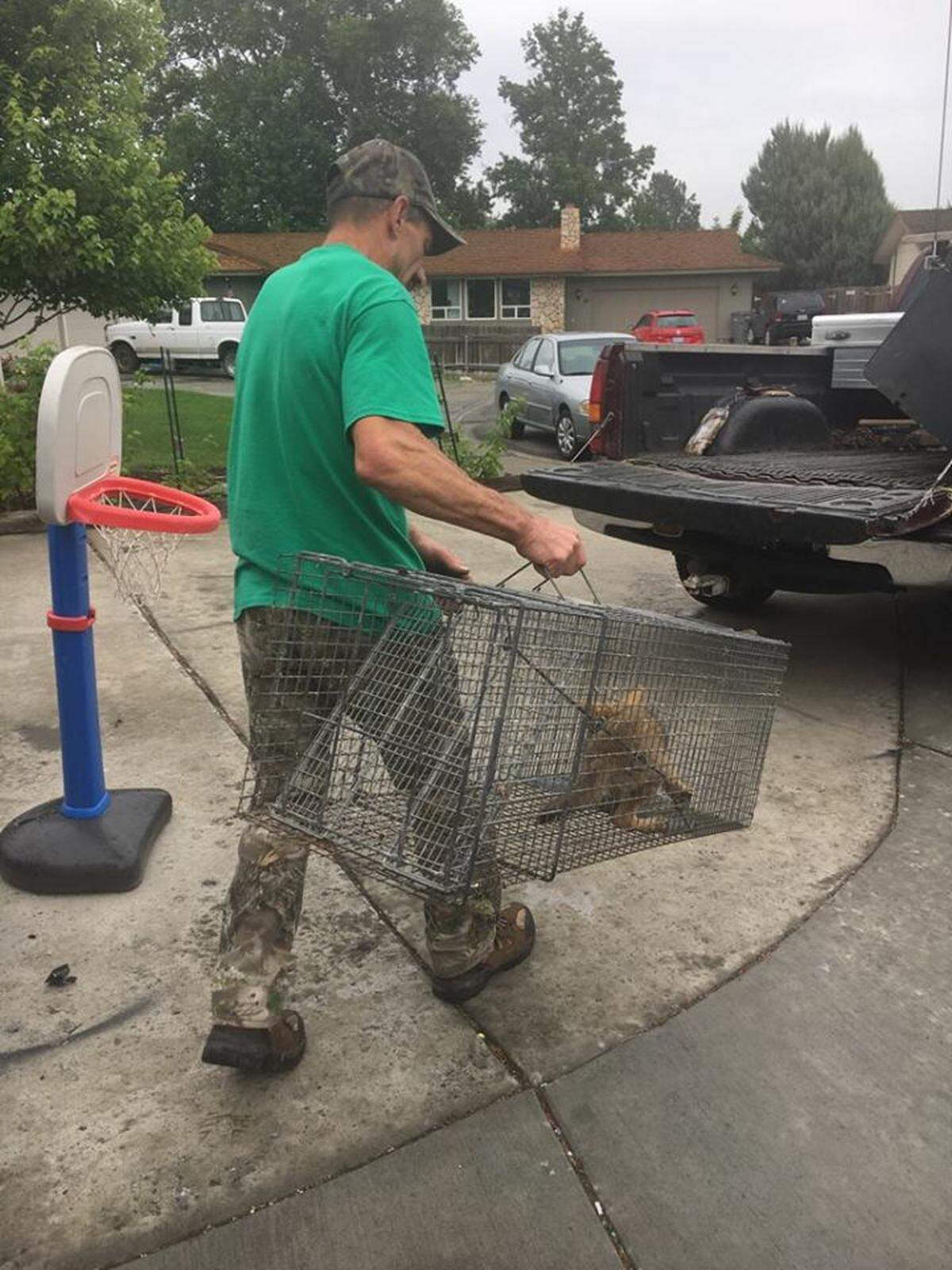
The 54-year-old trapper admitted he has never had a transport or relocation permit and didn't know he needed one.
Caraway said he thought his license let him transport animals back to his east Kennewick home to kill them, and he didn't know he needed permission.
He also said he didn't know he wasn't allowed to kill the animal without the homeowner's permission, which McChesney now says he never would have agreed to. His friends had even found a rescue location to take the pup.
Also, when it comes to killing methods, Dan Brinson, the agency's wildlife conflict manager in Olympia, told the Herald an operator can't kill an animal "inhumanely."
"Inhumane and unacceptable methods of euthanasia include live burial, freezing a live animal,or drowning an animal," said Brinson.
Humane methods include, but aren't limited to gassing an animal inside a box or shooting it in the head, he said.
Caraway said he thinks both those methods are inhumane. CO2 gas "takes too long" to kill the animal, he said, while a shot to the head doesn't immediately kill them either.
Drowning lets the animal "see the sky above them" before their heart stops, he said.
Caraway said he didn't believe he was allowed to shoot any animal while inside the Kennewick city limits, including at his home.
Kennewick police Sgt. Chris Littrell said that firing a gun on private property isn't a violation of city ordinances by itself. The key ordinance bans firing a gun in a public place or "any place where any person might be endangered."
Littrell said that Caraway could possibly have shot the pup on his property in a way that wouldn't put people at risk and avoided breaking city noise laws.
Caraway maintained he isn't going to shoot nuisance animals to euthanize them.
Besides being inhumane, the method is messy and could spread disease if the animal is infected, for example, with rabies.
"It attracts bees, looks gross — looks like a slaughterhouse," said Caraway, who said he's been trapping for most of his life.
However, when told of the state investigation, Caraway said he was considering no longer being a wildlife control operator.
"If I'm not allowed to drown them, I'll get out of this business," he said. "I'll do that in a heartbeat."
This story was originally published June 22, 2018 at 5:41 PM with the headline "Trapper defends killing coyote pup. 'Drowning is the cleanest way of doing it'."