‘Extreme’ low tides bring unique chance to spot Whatcom sea critters. Here’s your guide
Whatcom tide pool enthusiasts can rejoice: Exceptionally low tides caused by a wobble in the moon’s orbit mean a slew of sea critters will be more visible than usual on Wednesday, June 15, and Thursday, June 16.
Low tides at this time of year typically hover around -2 to -3 feet, anything below which is considered “extreme,” said Casey Cook, facility coordinator at Port of Bellingham’s Marine Life Center.
Wednesday’s low tide in Bellingham at 12:22 p.m. is predicted to be -3.71 feet, and Thursday’s low tide at 1:11 p.m. is a predicted -3.56 feet, according to the National Oceanic and Atmospheric Administration.
“It doesn’t sound like much of a difference, but it’s a lot,” Cook said. “It will expose animals we don’t see as often and more of them.”
That includes sea cucumbers, sea stars, snails, crabs, shrimp, fish and chiton, an ancient type of marine mollusk that Cook describes as “essentially living fossils.”
Friday’s low tide at 2:01 p.m. is predicted to be -3.03 feet, with Bellingham’s low tide returning to normal on Saturday, at a predicted -2.17 feet.
Tides are influenced by the moon’s orbit around Earth, and the cause of this week’s exceptionally low tides is that the 18.6-year lunar nodal cycle is approaching the bottom of its cycle in 2025.
Tide pooling tips
Marine Park in Fairhaven is a prime spot to head out on a tide-pooling adventure during these exceptionally low tides, Cook said. She recommends beachgoers head left along the shoreline when facing the water, following the railroad.
The park is home to an eelgrass estuary, making it a perfect nursery for salmon, Dungeness crab and flatfish such as flounder. There are also clams that can squirt water up to three feet high.
“This time of year a lot of things are laying eggs on the eelgrass,” Cook said.
There are currently pipefish spawning in the eelgrass at Marine Park. This cousin of the seahorse is “very charismatic” and beloved by children, Cook said. Tide poolers can also see gunnell, an eel-like fish, and plainfin midshipman.
“They are named that because they look like they have shiny buttons, like a midshipman from back in the day,” Cook said.
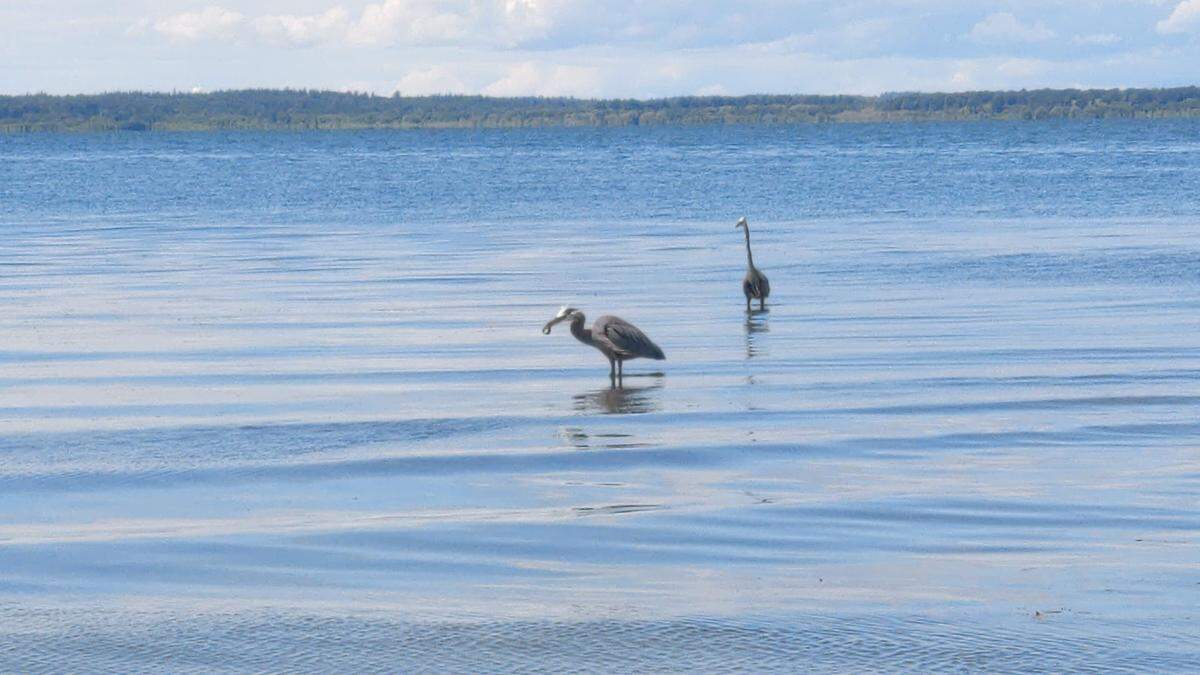
The marine creatures left exposed by exceptionally low tides will attract more birds to beaches. Marine Park sits next to Post Point Heron Colony, the only known heron nesting site in Bellingham, and there is a pair of bald eagles living in the conifer trees above the park, Cook said.
There are also thousands of sand dollars at Marine Park, she said.
Other prime locations for tide pooling include Semiahmoo Park in Blaine, where Cook said a number of local schools’ classrooms were headed on Wednesday, as well as Birch Bay, which has both sandy and rocky areas to explore.
Larrabee State Park, where beachcombers can often find big families of sea stars, is another option.
“It takes an extreme tide to see the stuff at Larrabee,” Cook said.
For the best experience, hopeful tide poolers should arrive at the beach one to two hours before low tide, Cook said. Waters quickly creep up after low tide, and many animals don’t want to get caught in the return tide, since it can make the water murky with turbidity.
People should be gentle with sea critters they find, and leave everything just as they found it, Cook said. Walk around eelgrass beds, rather than through them, she recommends. Eelgrass is a plant, and once it’s uprooted, it doesn’t just drop back down and re-root.
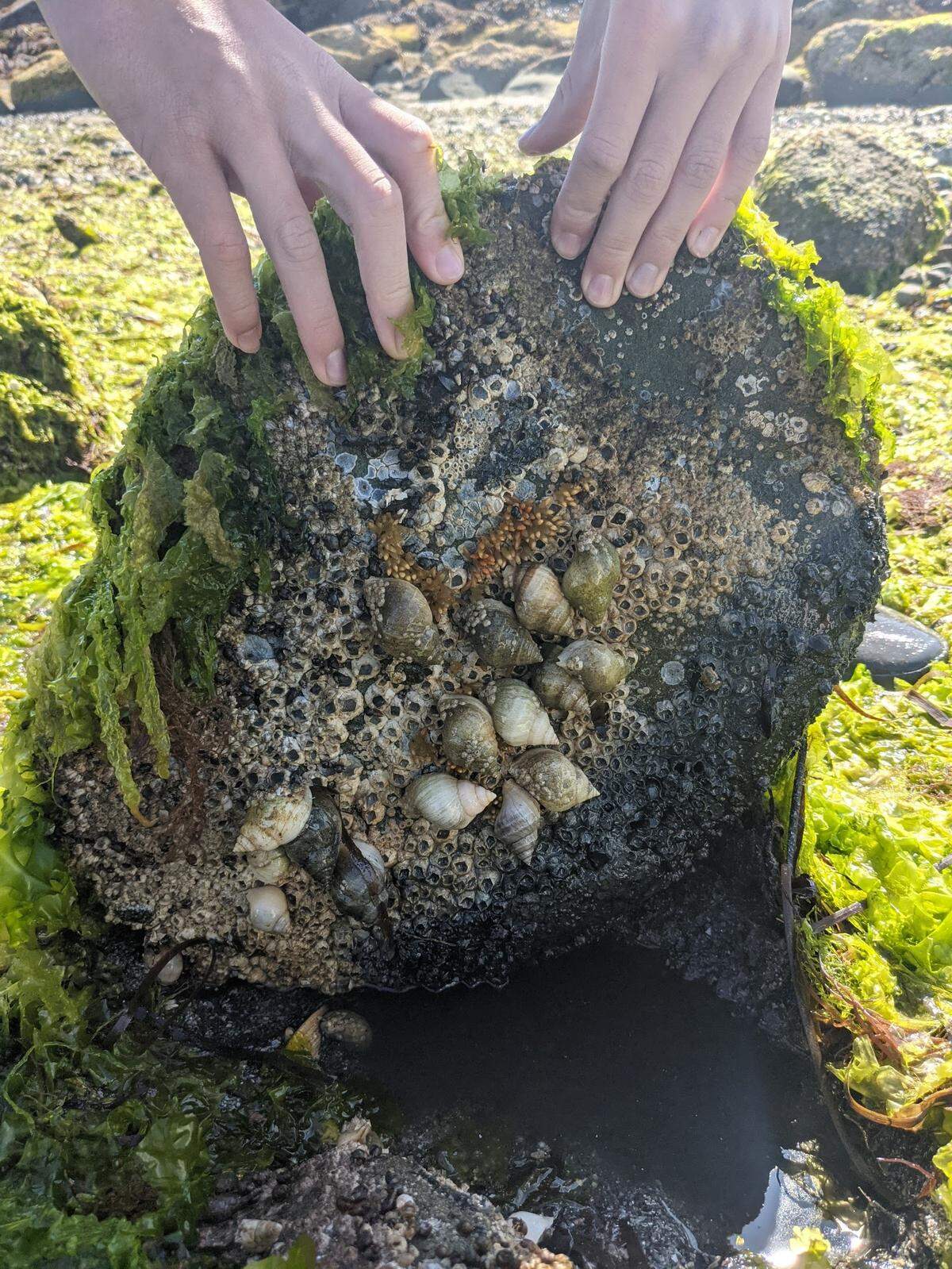
While it’s not illegal to take rocks and shells home from Washington beaches, they create important habitat for sea critters. When old shells break down, they feed calcium back into the ecosystem, which allows the next generation of animals to build their own shells, Cook said.
“You are stealing the animal’s chemistry for their biological needs,” she said.
The weather forecast for the coming days is ideal for tide pooling: Cool, but not pouring rain. When temperatures are too high at low tide, it can kill intertidal organisms not able to survive such heat. But too much rain can send critters retreating to deeper, saltier waters, where they are tougher to spot.
“This is the perfect week to have these low tides,” Cook said.
There is a lot of plankton in the water at this time of year, which can attract jellyfish, and Cook recommends that people avoid swimming. She recommends wearing rainboots or close-toed sandals to protect against sharp barnacles.
If people wear sunscreen that might wash off into the water, it should be a reef-safe product, Cook said.
This story was originally published June 15, 2022 at 12:20 PM with the headline "‘Extreme’ low tides bring unique chance to spot Whatcom sea critters. Here’s your guide."