
CDC gives Tri-Cities one of worst WA COVID ratings in WA. More deaths reported
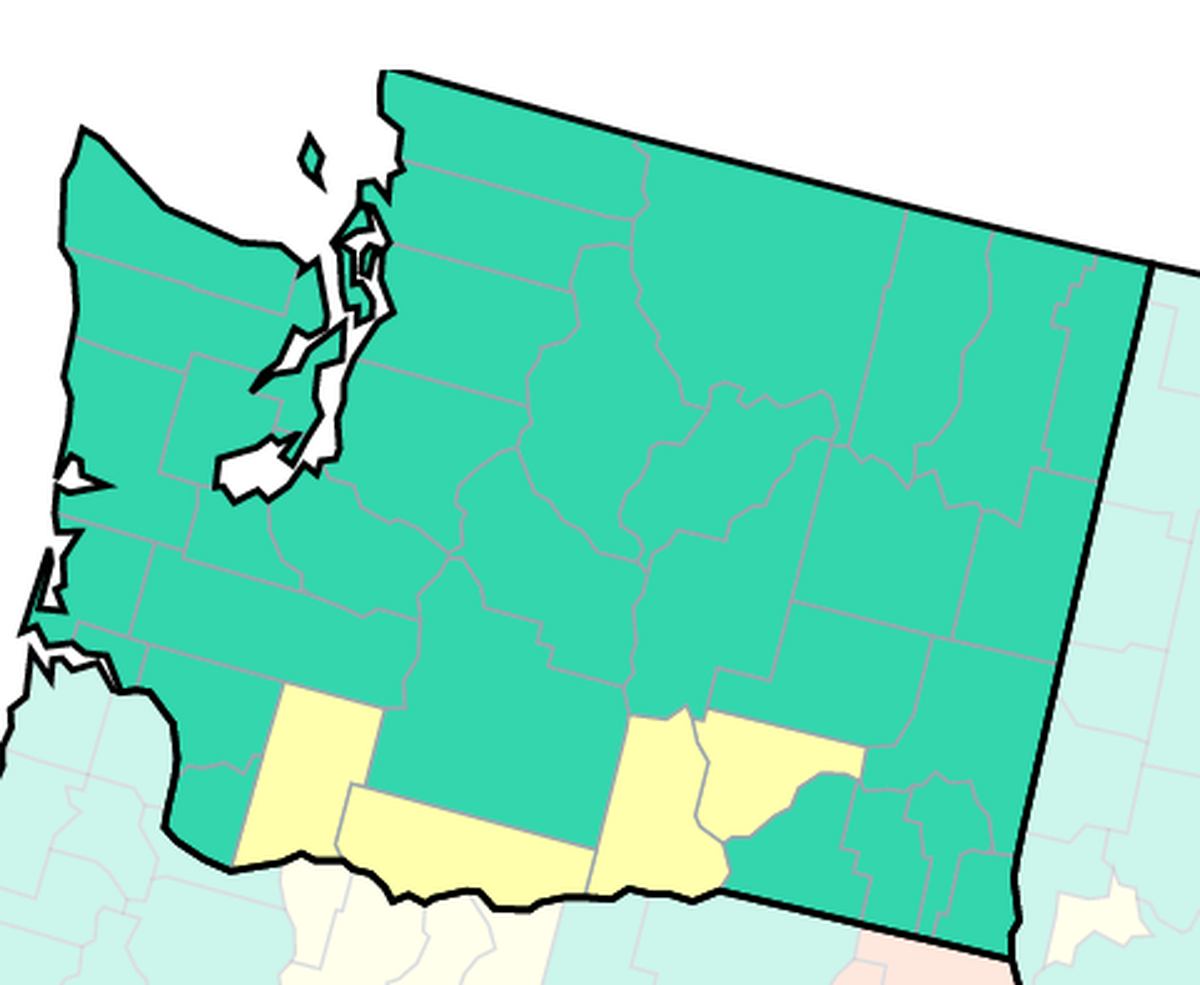
The Centers for Disease Control and Prevention has downgraded the COVID-19 community level rating for the Tri-Cities to “medium,” with most of the rest of Washington state retaining a rating of “low.”
The worse rating comes as schools are open and following Labor Day Weekend, with holidays in the Tri-Cities being followed throughout the pandemic by an uptick in cases.
In addition, two more Tri-Cities area residents died of COVID-19 recently, the Benton Franklin Health District said in its weekly report on Thursday.
Public health officials did not speak to those deaths specifically, but said it is concerning that the Tri-Cities area continues to have multiple people die each week from COVID-19 when deaths can be prevented by vaccination.
So far this month, the Tri-Cities-based health district has announced eight deaths from COVID-19.
Most were elderly. But among the eight were a Benton County woman and a Benton County man in their 40s.
The most recent deaths announced were a Benton County woman in her 80s and a Franklin County man in his 70s.
“The benefit of getting the COVID vaccine really could mean the difference between life and death because people who are dying are unvaccinated or undervaccinated. The data is very clear on that,” said Heather Hill, infectious disease supervisor for the Benton Franklin Health District, speaking this week on the Kadlec on Call podcast.
COVID vaccines, after being given to millions of people, have been proven safe, she said.
The most recent deaths due to COVID-19 in the Tri-Cities area bring total deaths to 724, including 505 residents of Benton County and 219 residents of Franklin County.
Deaths from complications of COVID-19 likely are undercounted, Hill said.
In the Tri-Cities, local public health officials verify that deaths are due to COVID complications by checking for a positive test result and that a coronavirus infection was named as a primary cause of death on the death certificate.
That can mean some deaths of people with COVID-19 go uncounted even though an inflammatory response to COVID-19 could contribute to serious medical events, such as heart attacks and blood clots.
CDC Tri-Cities COVID rating
A week ago all counties in Washington state received a COVID community level rating of “low” from the CDC.
But Thursday the CDC bumped Benton, Franklin, Klickitat and Skamania to a rating of “medium,” leaving the other 35 counties in Washington at “low.”
The CDC bases its COVID-19 community level ratings not only on new case rates, but also hospital beds used by patients with COVID and hospital admissions for people with the disease.
When the community level is “medium,” as it is in the Tri-Cities, those at high risk of serious illness should wear masks. No recommendation is made on masks when community levels are “low.”
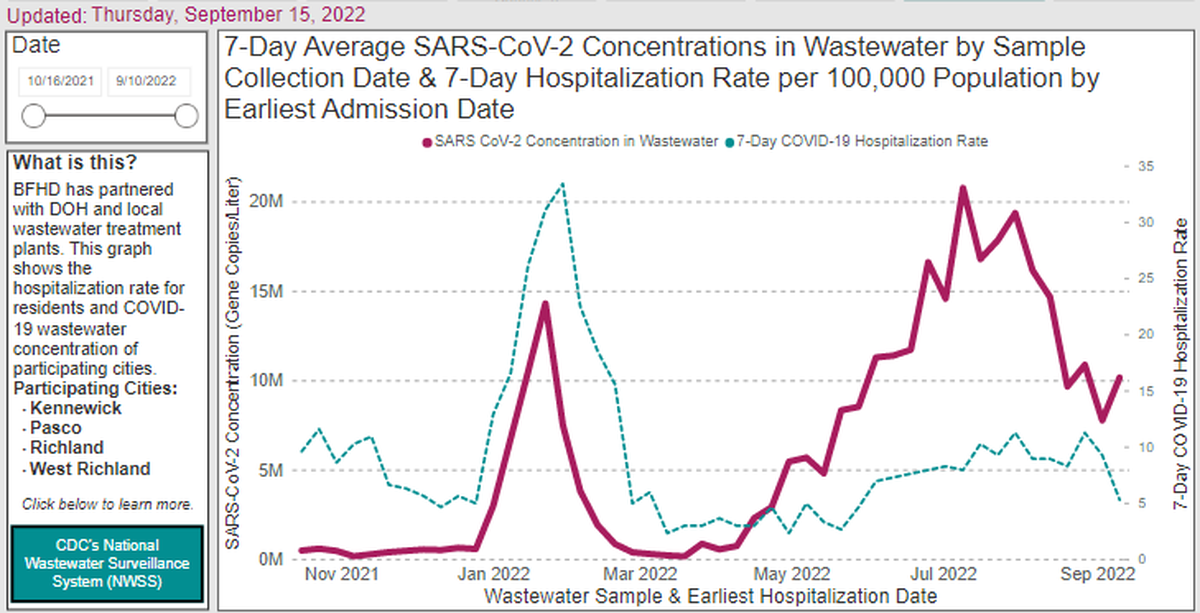
The amount of genetic material from the coronavirus detected in untreated municipal wastewater in Kennewick, Pasco, Richland and West Richland has spiked upward, according to the most recent test results reported by the Benton Franklin Health District.
Testing showed dropping concentrations since late July, but the most recently reported test results show concentrations back up to the level reported three weeks ago.
Hospital data has improved, however.
The Benton Franklin Health District reported 22 new COVID-19 patients admitted over a week in the Richland, Kennewick, Pasco and Prosser hospitals. That’s down from 32 a week earlier.
Vaccine and long COVID
The new COVID-19 booster now is widely available in the Tri-Cities area, including at pharmacies, with more doses shipped each week.
People who are homebound and need a booster shot can call the Benton Franklin Health District at 509-460-4358 to make arrangements.
The new booster is the first of COVID-19 boosters likely to be given annually just like a flu shot, and both can be given at the same appointment.
The current booster is formulated to provide protection against the strains of the omicron variant that are causing most cases in the United States now.
Getting the booster can not only protect against death from COVID-19, but the CDC says it also reduces the risk of getting long COVID.
Some people infected with the coronavirus have no symptoms and some have feel ill for a few days or a week. But some people experience symptoms that linger for months.
Risks for long COVID are similar to risks for severe COVID-19, including people who are unvaccinated, older adults and people with underlying conditions like hypertension and diabetes, said Dr. Janna Friedly in an interview with the Washington state Department of Health.
But there are also reports, and she sees it in her practice, that long COVID seems to affect women more commonly than men, particularly women between 30 and 60.
She treats long COVID patients at the UW Medicine Post COVID Rehabilitation and Recovery Clinic at Harborview Medical Center in Seattle.
COVID booster
To find a new COVID-19 booster, visit Vaccine Locator on line or call the COVID-19 Information Hotline at 800-525-0127.
Before people may get it, they must have their initial COVID-19 vaccinations — currently two doses of the Moderna or Pfizer vaccine.
The new booster made by Pfizer is available for people 12 and older and the new booster made by Moderna is for people 18 and older.
The booster should be given no sooner than two months after the latest vaccine dose.
The American College of Obstetricians and Gynecologists are encouraging pregnant of breast-feeding people to get the latest booster, backing up a recent UW Medicine-led study showing the boosters are well tolerated by both pregnant and nursing women.
“In fact, most participants reported that symptoms with the booster or 3rd dose were less severe than symptoms with their initial COVID-19 vaccine series,” said UW Medicine Dr. Alisa Kachikis, lead author of the study.