
Omicron COVID variant is surging in Tri-Cities. Next 2 weeks could be worse
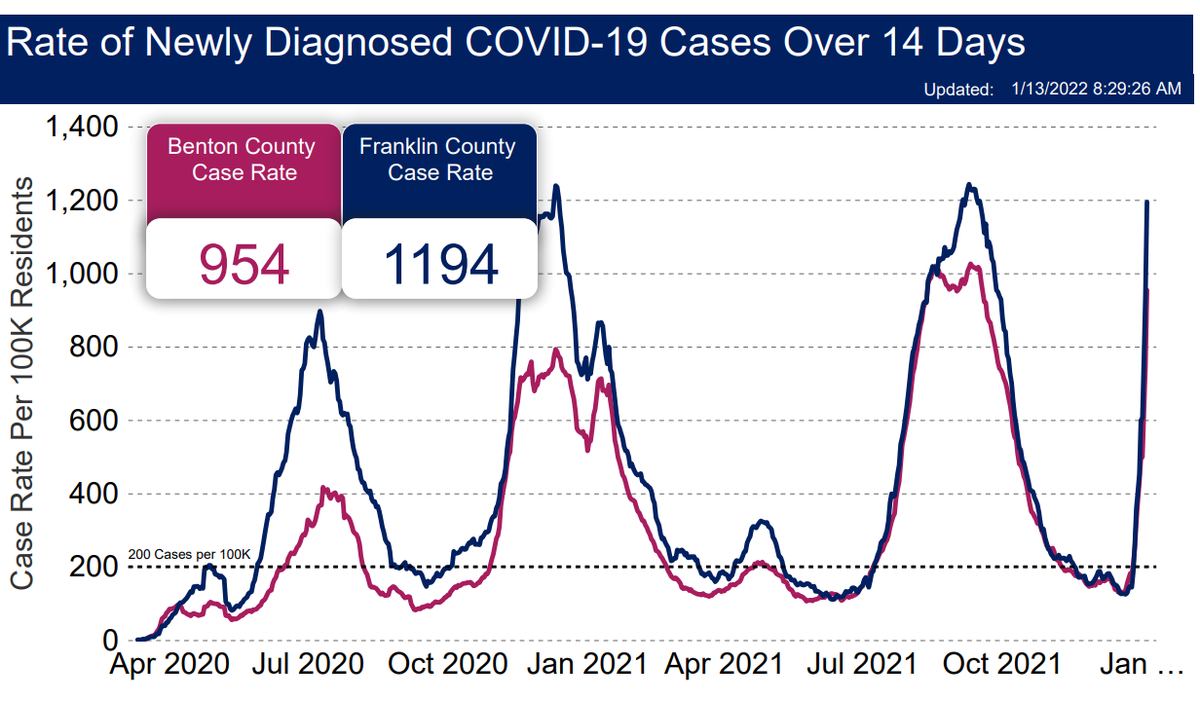
The COVID-19 case rate for the Tri-Cities area has exploded to more than 1,000 new cases per 100,000 people over the past two weeks.
Just over the past week new cases increased nearly 200% in Benton County and nearly 262% in Franklin County, said Dr. Amy Person, health officer for Benton and Franklin counties, at a news media briefing Thursday.
As recently as late December the new case rate for the two counties was below 130 new cases per 100,000 people over two weeks.
Health care experts predict the case rates likely will go higher over the next couple of weeks.
Western Washington may be at or near the peak of the surge from the omicron variant of the coronavirus, said Reza Kaleel, chief executive for Kadlec Regional Medical Center in Richland, on the Kadlec on Call podcast Wednesday.
Eastern Washington, including the Tri-Cities, has had a later spread of the highly contagious omicron variant.
Statewide the omicron variant has accounted for about 90% of the cases of COVID-19 just a month after it was detected in Washington, Dr. Brian York, infectious disease specialist for Kadlec, said on the podcast.
It is likely that in the next month or two nearly everyone in the Tri-Cities area will be exposed to the omicron variant, he said.
Although omicron is far more contagious than the original coronavirus or the delta variant, it does not cause as severe an illness as the delta variant that was responsible for the previous surge in cases in the Tri-Cities area.
A Kaiser Permanente study released this week, which has yet to be peer reviewed, found that in 52,000 recent cases in Southern California, there was a 50% reduction in hospitalizations and a nearly 90% reduction in patients requiring care in intensive care units and dying, York said.
Getting vaccinated remains important, even as the Washington state Department of Health reports a 43% increase in breakthrough cases, or cases in people who are vaccinated against COVID-19, say public health officials.
The Department of Health linked the increase in breakthrough cases to the increase in total cases.
The majority of people with recent confirmed breakthrough cases experienced no symptoms or mild symptoms, but at least 3% were hospitalized for treatment, the Department of Health said.
“If you are already vaccinated, getting a booster dose of vaccine is the best way to decrease your chance of getting a breakthrough infection,” said Dr. Tao Sheng Kwan-Gett, the state’s chief science officer. “Even without a booster dose, those who are vaccinated are less likely to become very ill and need hospitalization, and a booster dose decreases the risk even more.”
Tri-Cities low vaccinations
In Washington state people who are unvaccinated are eight to 11 times more likely to be hospitalized with COVID-19 than vaccinated people, Dr. Person said, citing state Department of Health data released Wednesday.
People ages 65 and older are 15 times more likely to die from COVID-19 if they are unvaccinated, according to state Department of Health data.
“COVID-19 vaccines (are) incredibly successful in preventing deaths due to COVID-19,” she said. “This has been even in the month of December as we saw omicron emerging.”
But the rate of people getting vaccinated in the Tri-Cities area has slowed, with the rate increasing just 0.2% last week, Dr. Person said.
In Washington state, 63% of residents are fully vaccinated against COVID-19. That drops to 52% in Benton County and just under 48% in Franklin County.
Tri-City area hospitals are treating more patients for COVID-19, with the number of patients in the Richland, Kennewick, Pasco and Prosser hospitals increasing to 55 on Wednesday but then dropping to 39 on Thursday.
That’s up from a recent low of 15 patients in mid December, but far below a high of 127 patients in mid September.
Those patients do not include people who are hospitalized for other treatment and then tests show they also have COVID-19.
Change in hospital patients
Of 32 people admitted at Kadlec over the past four days, 14 were admitted for treatment of COVID-19 and 18 were admitted for other reasons but likely also have COVID-19, York said.
The number of COVID-19 hospital patients requiring oxygen has dropped with the surge of the omicron variant, a change from when the delta variant surged and many patients with severe illness needed treatment with ventilators or oxygen face masks, York said.
There were times when every high-flow oxygen devise the Richland hospital had were in use, he said.
With the surge of omicron some patients still require oxygen, but often for shorter periods of time, he said.
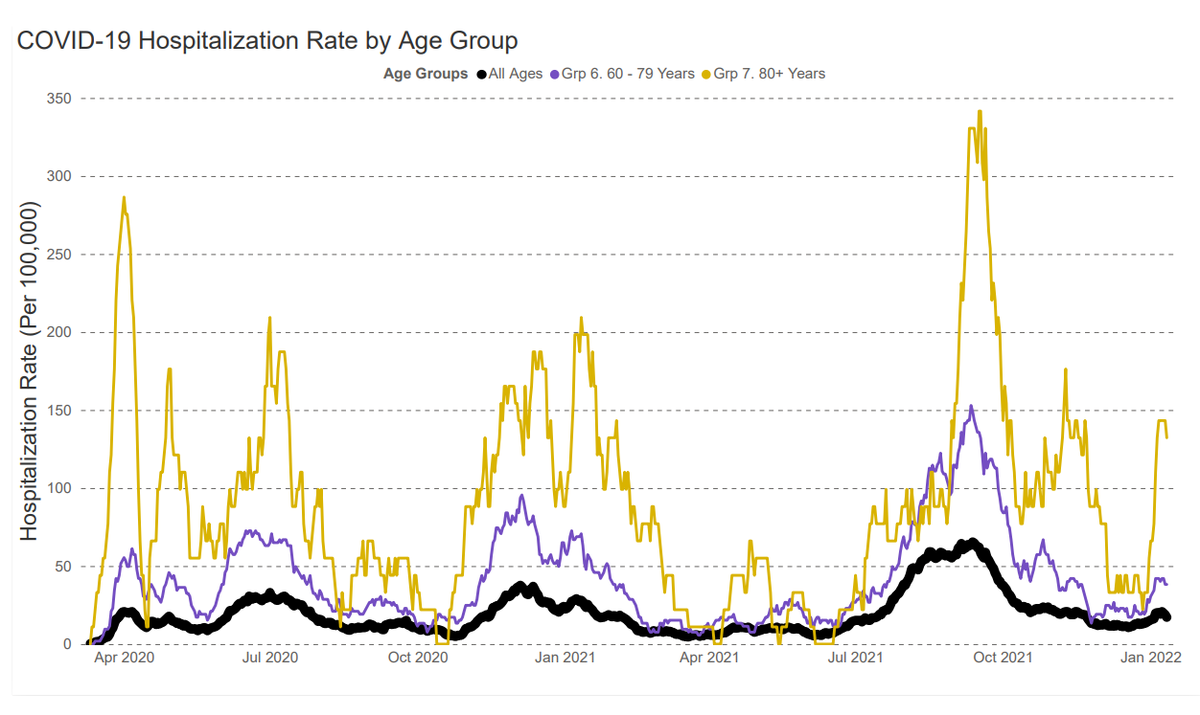
Now patients hospitalized for COVID-19 treatment are increasingly those who are elderly and frail, he said.
“It is very different than what we were seeing a few months ago,” he said.
The higher surge of omicron in Western Washington is limiting Kadlec’s ability to transfer patients who need a higher level of care than offered in the Tri-Cities, Kaleel said.
And the increase in hospital patients is limiting Kadlec’s ability to accept patients who need more care than hospitals in rural areas of the Mid-Columbia can offer, he said.
As of Wednesday 14% of the 399 patients hospitalized in Benton and Franklin counties were there for COVID-19 treatment.
Shortage of healthy workers
The high number of people sick with COVID-19 now or who are quarantining because of exposure is disrupting the community, said Heather Hill, infectious disease supervisor for the Benton Franklin Health District, speaking on the Kadlec on Call podcast Wednesday.
She expects the omicron virus to peak in the next few weeks in the Tri-Cities, she said.
Some businesses already have had to temporarily shut down because they did not have enough healthy workers, she said.
Schools and health care facilities also are stressed and “some of them overwhelmed,” Dr. Person said.
Businesses should be planning for more staff absences and also reminding staff of ways to reduce exposures and transmission of the virus at work, she said.
She recommends working remotely, if possible, and wearing face masks in public places.
Current mask recommendations are to wear a surgical mask under a cloth mask or to wear an N95 or KN95 mask.
This story was originally published January 13, 2022 at 12:43 PM.