Invasive beetles that destroy lawns, roses and crops now found in Mid-Columbia region
An iridescent and green beetle spotted in the Lower Yakima Valley could mean trouble for Tri-Cities area gardens and crops.
“If Japanese beetles were to become established in Washington, it would have serious trade and economic impacts in addition to direct damage to numerous Washington-grown crops,” said the Washington state Department of Agriculture.
It is asking the public to report any sightings of the invasive and highly destructive beetle, including those spotted last summer, by emailing PestProgram@agr.wa.gov or calling 800-443-6684.
The beetles are not native to Washington and threaten more than 300 plants. They can destroy not only roses and lawns, but crops important to the Mid-Columbia, including apples, grapes and hops.
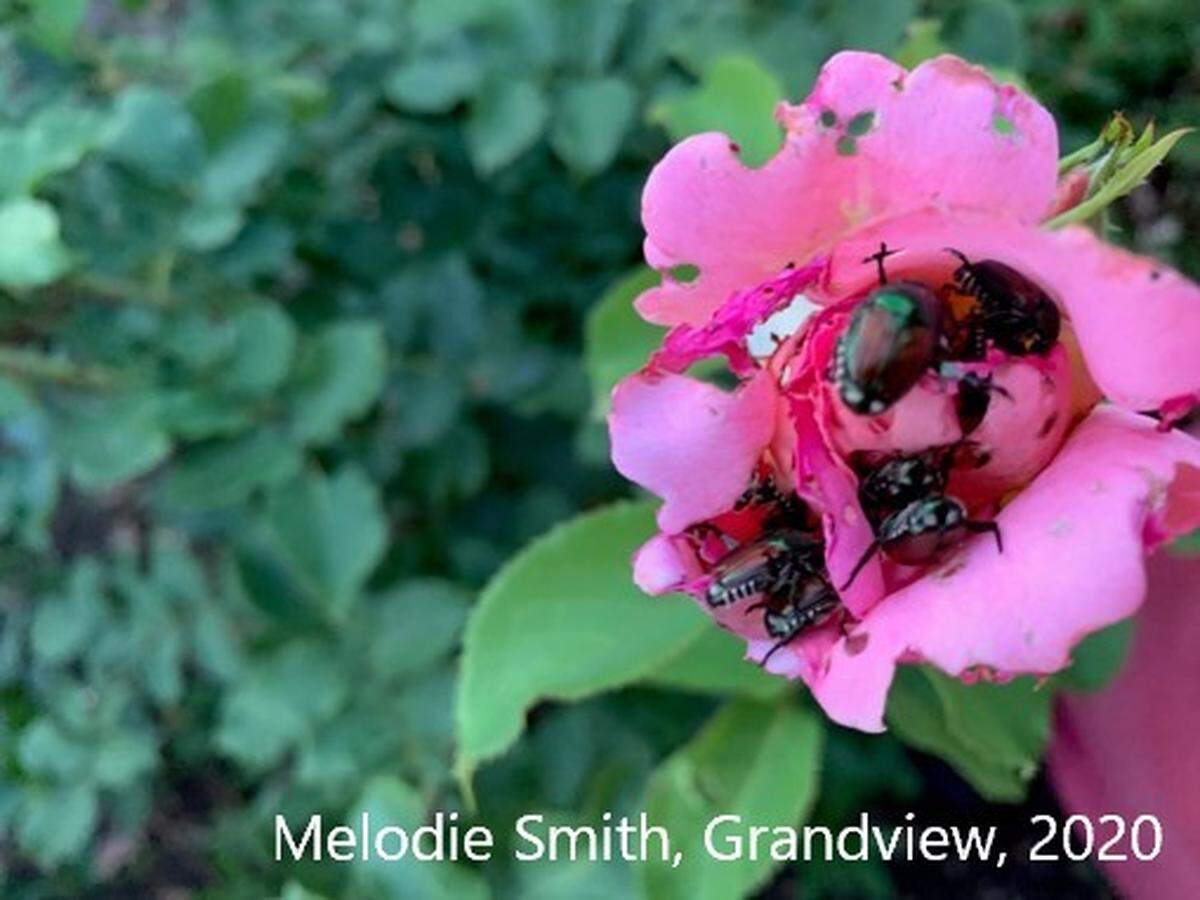
Earlier this month a Grandview resident sent photos to the state agency showing Japanese beetles devouring her roses this past summer. She reported picking as many as 75 beetles off her roses in a single day.
The Department of Agriculture also trapped three Japanese beetles — one in Sunnyside and two in Grandview — last year. Usually they are trapped by the state at ports and other entryways into Washington.
It is unusual to find the beetles this far inland, the agency said.
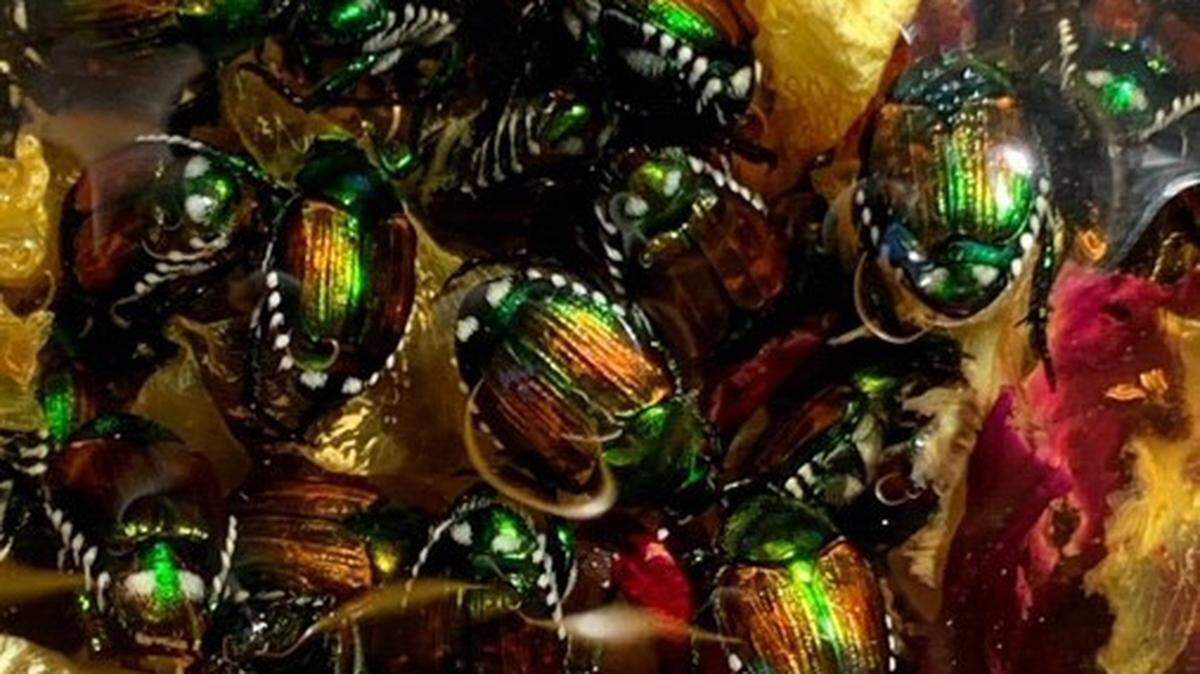
The adults are up to a half inch long and have a metallic green head and thorax and iridescent copper wing covers. White C-shaped larvae with a tan head and visible legs may be seen during the spring.