
U.S. senator blasts Tyson for allowing coronavirus to spread at plant near Tri-Cities
Tyson Foods waited too long to temporarily close its beef processing plant near Pasco, said Sen. Patty Murray, D-Wash., in a letter to the company Monday.
The company knew there were at least 34 cases of COVID-19 at its Tyson Fresh Meats plant in Wallula on April 13, but did not announce a temporary closure until April 23, she said.
She’s heard from Mid-Columbia residents concerned about Tyson worker safety, including a lack of personal protective equipment and inadequate guidance from the company, she told Tyson Foods Chief Executive Noel White.
“Based on your representatives’ answers to the questions my office has asked so far, it is fair to say those fears were well-founded,” she said.
“The more than 1,400 employees in Wallula, the countless members of the surrounding communities, and the millions of consumers of Tyson’s products deserve a swifter and more comprehensive response to the COVID-19 outbreak than they have experienced this far,” Murray said.
The outbreak at the plant is now blamed for 126 COVID-19 cases, including a worker living in the Tri-Cities who died April 20 from complications of the disease caused by the new coronavirus.
The cases are in four counties in two states, with the vast majority, 116, in Benton and Franklin counties.
By the time Tyson announced a temporary closure, the Walla Walla County Department of Community Health had ordered the company to cooperate in testing all workers, who would then be sent home to self-quarantine until their test results return.
“Unfortunately the full scope of the impact of Tyson’s negligence in Wallula will be unknown until testing of the remainder of the employees is completed,” she said.
The outbreak at the plant endangers not only workers, but their families and nearby communities, she said.
Plant closed for testing
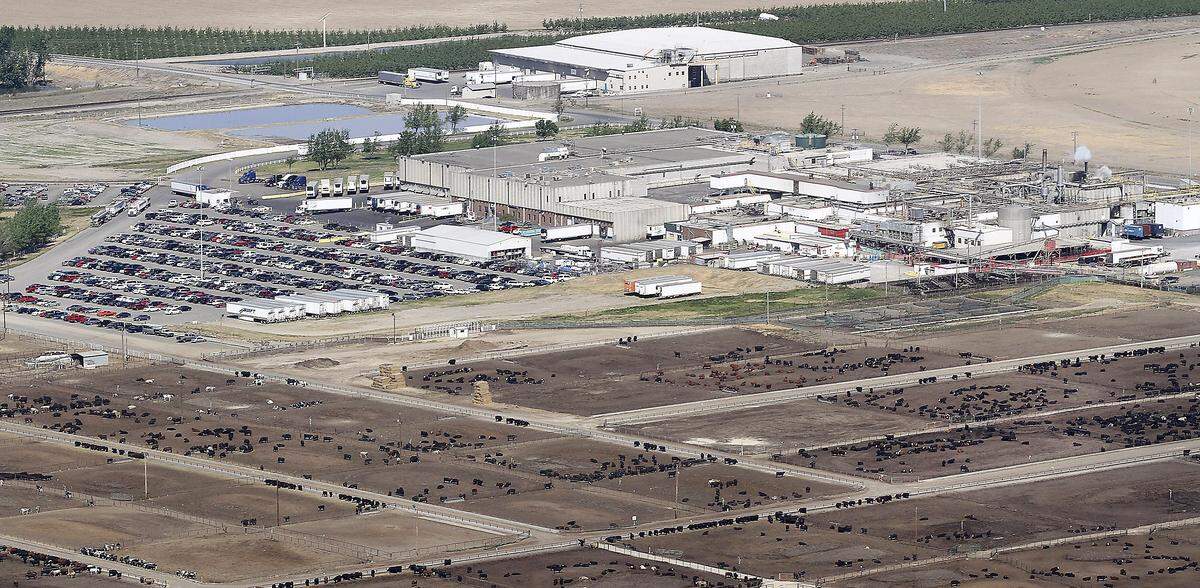
The plant closed on Friday as testing of workers began.
More than 1,100 workers were tested then and about 200 more were tested on Monday, Meghan DeBolt, the Walla Walla County director of community health, told the Tri-City Herald.
She expects the first results from testing to be available Tuesday.
A decision on a plan to resume production will be made after test results are reviewed by health officials in Walla Walla, Benton and Franklin counties, the Washington State Department of Health and Tyson foods.
Part of the decision may depend on whether the plant has enough healthy people to operate, DeBolt said.
The plant produces enough beef in one day to feed 4 million people, according to Tyson Foods.
The first worker at the plant tested positive on April 1, but it took several days before state health officials had the information and relayed it to Walla Walla County officials over a weekend.
At that point Washington state Labor and Industries had not issued guidance for plants like Tyson Fresh Meats to prevent the spread of the new coronavirus.
The company had taken some initial steps by April 6, a Monday, including starting to screen employees for fever. But it did not have masks at that time and obtaining enough masks for its large workforce in Wallula took time, DeBolt said.
Tyson requires masks
The virus by that time was likely spreading through the workforce, including from workers not yet showing symptoms or among those who are infectious but do not develop symptoms.
A requirement that workers wear masks was in place when Tyson had masks available on April 13, DeBolt said.
When health officials toured the plant that day they saw some workers still not wearing them and others not wearing them properly over their noses and mouths.
By a visit on April 21, almost all workers were wearing masks properly and the few that were not were quickly corrected, DeBolt said.
A lack of good information for workers also was an issue initially, she said.
Tyson was not supplying enough information in a way that workers who speak more than 11 languages could understand.
The Walla Walla County Department of Community Health required it to increase communication and education for employees by Monday, April 20.
By that time new state L&I requirements had been released, saying workers must be educated in the language they understand best about the new coronavirus and how to prevent transmission.
Coronavirus spread
Murray told Tyson in her letter Monday that at a minimum it should follow the new coronavirus guidance issued Sunday by the Centers for Disease Control and the Occupational Safety and Health Administration for meat processing facilities.
She also wants Tyson to continue to pay workers their full wages and benefits while the plant is closed.
“Workers’ livelihoods should not be negatively impacted by Tyson’s failure to act,” she told Tyson’s chief executive.
Tyson said on Thursday that it would pay workers while they were self-isolating waiting for their test results.
The Centers for Disease Control said in its new guidance for meat processing plants that busy plants with workers close to each other for hours at a time on processing lines and also when clocking in and out, during breaks and in changing rooms contribute to the risk of workers exposing each other to the new coronavirus.
The common practice of workers carpooling to plants also increases the risk, the CDC said.
The drive from Pasco to Wallula is about 15 miles, with many workers living farther away.
At meat plants like the one in Wallula there are “just a lot of people working in close proximity in a critical infrastructure for agriculture,” DeBolt said.
Walla Walla public health staff believe that the virus spread at the busy plant in places like bathroom lines, the cafeteria, in hallways and in locker rooms where many workers were close together.
When plant reopens
Tyson said last week that it had implemented all recommendations made by local health officials to protect workers and had exceeded CDC guidelines issued then.
Tyson has installed dividers between work stations, added hand sanitizer stations and put up a vented tent outside the plant to give workers more space during breaks.
Shift times also were changed to reduce some congestion.
“We’ve taken both our responsibilities to continue feeding the nation and keeping our team members safe and healthy seriously,” said Steve Stouffer, president of the Tyson Fresh Meats group.
“Unfortunately, the closure will mean reduced food supplies and presents problems to farmers who have no place to take their livestock,” he said. “It’s a complicated situation across the supply chain.”
DeBolt said she is confident that when the plant reopens that it has measures in place to contain another outbreak situation.
Workers should be healthy, wearing masks, separated by barriers, monitored for symptoms and educated on the new coronavirus and how to prevent transmission, she said.
It may be inevitable that there will be another case among the plant’s workforce, but measures are in place now that should better prevent the spread of the new coronavirus, she told the Herald.
Murray has asked that Tyson notify her staff on any decisions related to reopening the Wallula plant.
This story was originally published April 27, 2020 at 8:33 PM.