
Coronavirus to keep Hanford workers at home longer, nuclear reservation manager says
Most Hanford nuclear reservation workers will remain home for another week to help contain the spread of the new coronavirus.
Brian Vance, Department of Energy manager for the Hanford site, sent a memo to employees Thursday afternoon saying work at the site would be limited to only “essential mission critical operations” next week.
It will be the third week with workers on site only for activities needed to maintain the nuclear reservation in a safe condition to protect the public, workers and the environment.
About 60 percent of Hanford’s 11,000 employees are telecommuting from home, working on projects that can be done off the site. An estimated 10 to 15 percent of the workforce continues to report to the site.
Most will continue to be paid during the current limited operation of the site thanks to efforts by Sen. Patty Murray, D-Wash., and Rep. Dan Newhouse, R-Wash., to insert language into the recently approved economic stimulus bill.
It allowed DOE to modify Hanford contracts to pay workers up to 40 hours a week, even if they cannot telecommute. The measure allows eorkers to provide for their families and maintains a stable work force of employees at the site.
“As our nation and region navigate the evolving crisis, we will continue to assess many factors that will be considered before a decision can be made to transition the site posture methodically back towards normal operations,” Vance told workers.
The hands-on work at Hanford makes keeping workers 6-feet apart to prevent the spread of the new coronavirus difficult.
DOE has not reported that any Hanford worker has COVID-19, but several buildings have been closed for a time in recent weeks for cleaning because workers there had symptoms consistent with an infection from the new coronavirus.
On Thursday, a building at the Hanford vitrification building was being disinfected and access there was restricted after a worker assigned to essential operations there was undergoing testing for COVID-19.
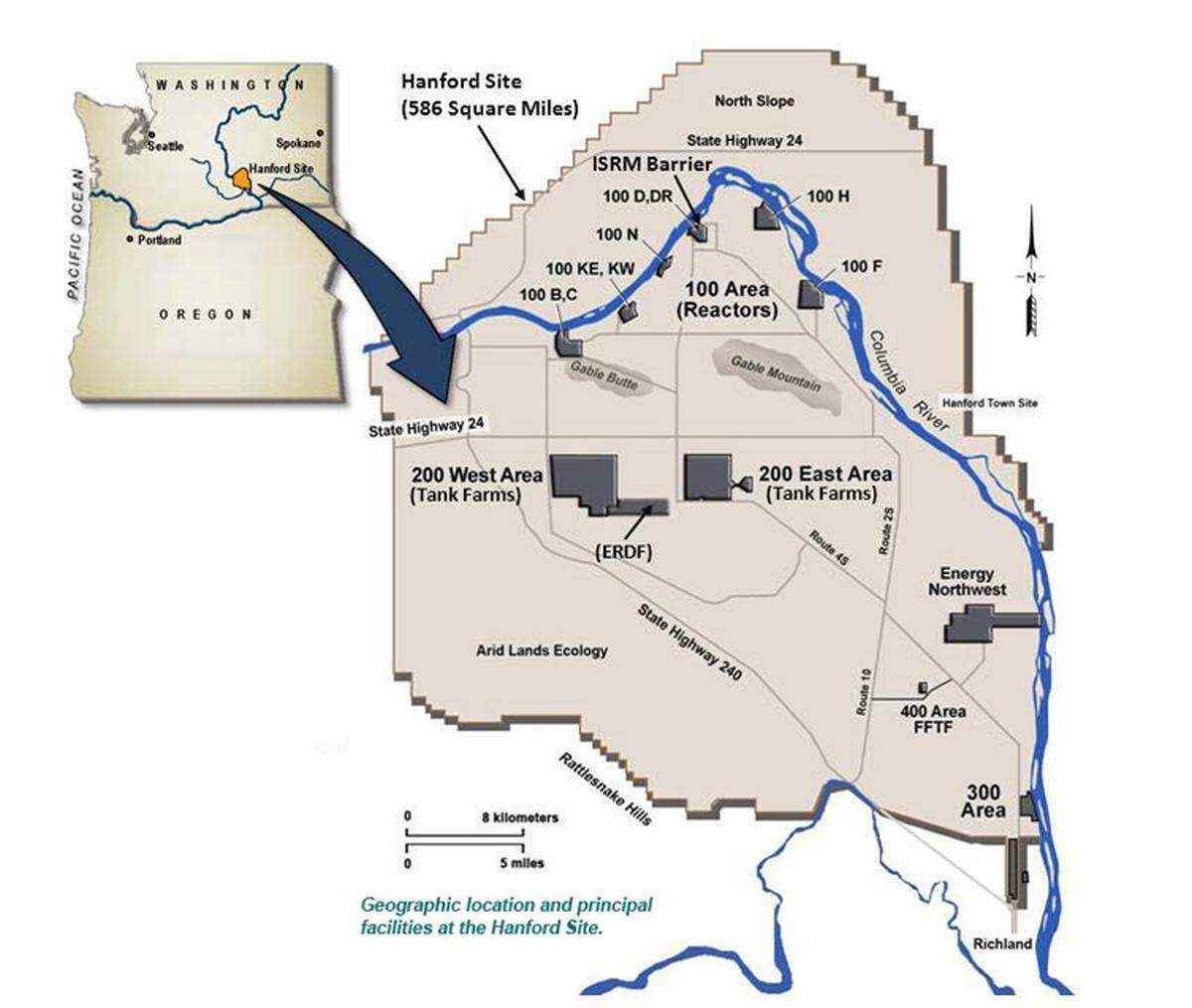
The 580-square-mile nuclear reservation was used during World War II and the Cold War to produce plutonium for the nation’s nuclear weapons program.
The nation now is spending about $2.5 billion a year on environmental cleanup after the site was contaminated with radioactive and hazardous chemical waste.
This story was originally published April 2, 2020 at 3:14 PM.